Essential Precautions for Automotive AC Servicing
Taking care of your car’s air conditioning can seem tricky, especially if you’re new to car care. There are a few things you need to watch out for to make sure everything runs smoothly and safely. But don’t worry!
We’re here to make it simple. We’ll walk you through the Essential Precautions for Automotive AC Servicing step-by-step. After this, you’ll know exactly what to do to keep your car cool and your mind at ease.
Safety First Automotive AC Servicing
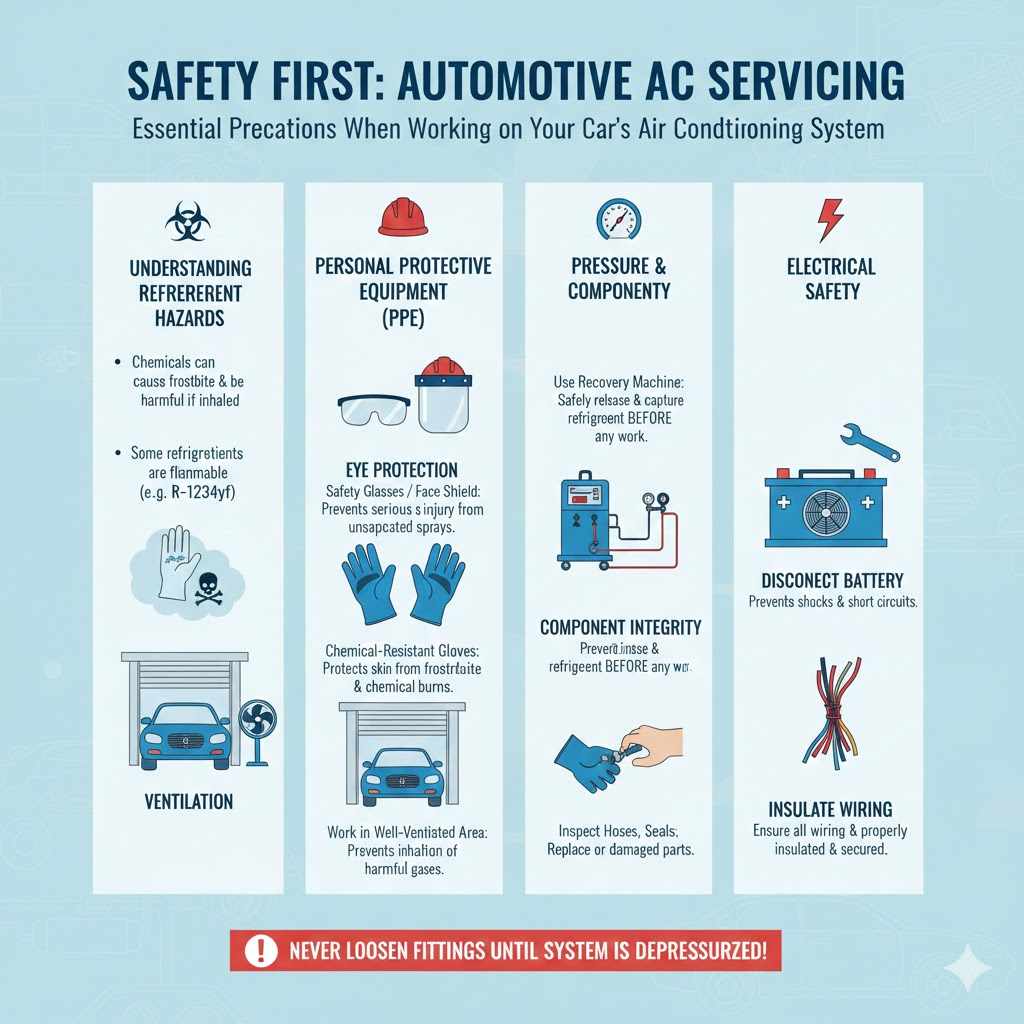
Keeping yourself safe is the most important part of working on your car’s air conditioning system. This system uses special refrigerants and can operate under high pressure, which means there are risks involved if you’re not careful. Understanding these dangers is the first step to preventing accidents.
We will cover what you need to know to handle AC servicing without putting yourself or others in harm’s way. Safety is not just a suggestion; it’s a vital part of any car repair.
Understanding Refrigerant Hazards
Refrigerants are chemicals used in AC systems to cool the air. They can be very cold, causing frostbite if they touch your skin. They can also be harmful if inhaled.
Some older refrigerants might also be bad for the environment if they escape into the air. It’s crucial to know which type of refrigerant your car uses and how to handle it properly. Always wear protective gear when dealing with these substances.
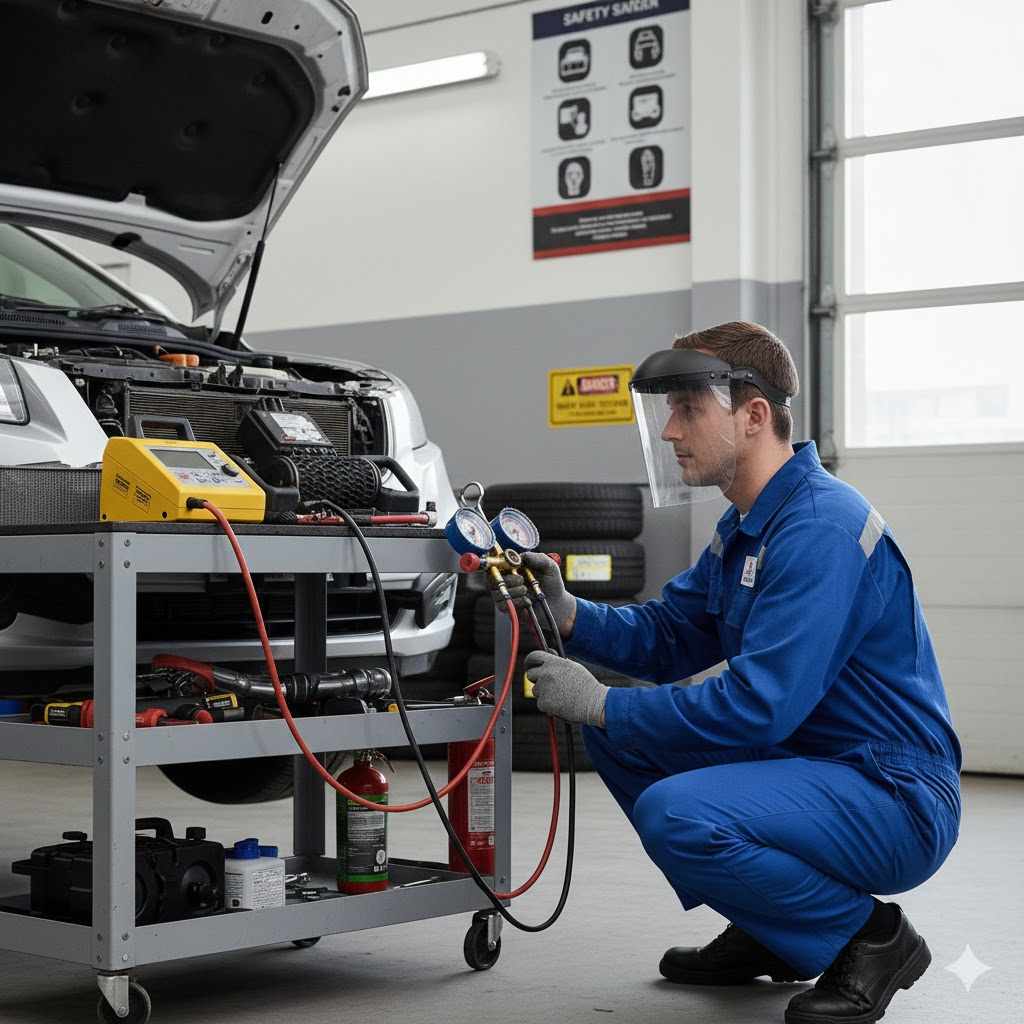
- Eye Protection: Safety glasses are a must. Refrigerant can spray out unexpectedly, and getting it in your eyes can cause serious injury. Make sure the glasses fit snugly to prevent any leaks. Consider a full face shield for extra protection during more involved tasks.
- Gloves: Special gloves designed for handling chemicals will protect your skin from frostbite and chemical burns. Regular work gloves are not enough. Look for nitrile or neoprene gloves that are rated for refrigerant exposure. These gloves offer a good balance of protection and dexterity.
- Ventilation: Always work in a well-ventilated area. A garage with the door open is good, but if you’re working indoors, a fan can help move the air. This is important because some refrigerants can displace oxygen or be harmful if breathed in high concentrations.
Pressure and Component Safety
Automotive AC systems operate under significant pressure, even when the engine is off. The components, like hoses and seals, can weaken over time. If a component fails under pressure, it can burst or leak suddenly.
This is why it is important to depressurize the system correctly before starting any work. Also, ensure all tools and equipment used are rated for the pressures involved in AC systems.
- System Depressurization: Before opening any part of the AC system, you must safely release the pressure. This usually involves using a recovery machine, which also captures the refrigerant for proper disposal or reuse. Never try to loosen fittings until you are sure the system is depressurized.
- Component Integrity: Inspect hoses, lines, and fittings for any signs of wear, cracks, or leaks. Damaged components are more likely to fail. Replace any suspect parts before they cause a problem. A visual inspection can save you a lot of trouble down the line.
- Electrical Safety: The AC system has electrical components, including fans and compressors. Always disconnect the battery before working on electrical parts to avoid shocks or short circuits. Ensure all wiring is properly insulated and secured.
Proper Tools and Equipment for AC Service
Using the right tools makes automotive AC servicing safer and more effective. Standard tools might not be enough for AC work. Specialized equipment is designed to handle the unique demands of these systems, including the high pressures and specific types of refrigerants.
Investing in or renting the correct tools is essential for any DIYer or professional. This section will guide you through the must-have tools and why they are important.
Refrigerant Handling Equipment
Handling refrigerants requires specific tools to do it safely and legally. This includes machines to recover old refrigerant, vacuum pumps to remove moisture, and specialized gauges to measure pressure. Improper handling not only poses risks but can also violate environmental regulations.
These tools ensure that refrigerants are managed responsibly.
- Refrigerant Recovery Machine: This device captures the refrigerant from the system. It prevents the release of harmful gases into the atmosphere and allows the refrigerant to be stored safely or recycled. Regulations in many places require the use of these machines.
- Vacuum Pump: A vacuum pump removes air and moisture from the AC system. Moisture can freeze and block the system, and air can reduce its cooling efficiency. Running a vacuum for a sufficient time also helps identify leaks by seeing if the vacuum holds.
- AC Manifold Gauge Set: This set of gauges measures the high and low-side pressures of the AC system. These readings are critical for diagnosing problems and ensuring the system is properly charged with refrigerant. They connect to the system’s service ports.
Specialty Wrenches and Tools
Some AC components use fittings that require specific types of wrenches to avoid damage. Flare nut wrenches, for example, are designed to grip nuts on flared fittings without rounding them. Specialized AC manifold gauges and hose sets are also necessary for connecting to the system’s service ports.
- Flare Nut Wrenches: These open-ended wrenches grip the sides of a nut, reducing the chance of stripping it. They are essential for working with the metal lines in an AC system that have flared ends. Using standard open-ended wrenches can easily damage these nuts.
- AC Service Ports: Cars have specific ports for connecting AC service equipment. These ports are designed to seal tightly when not in use and allow for precise connection and disconnection of gauges and hoses. They are typically labeled ‘H’ for high pressure and ‘L’ for low pressure.
- Leak Detection Tools: Tools like UV dye kits or electronic leak detectors help find small leaks in the system. UV dye is added to the refrigerant and then a UV light is used to spot glowing leaks. Electronic detectors can sense the presence of refrigerant gas in the air.
Step-by-Step Servicing Precautions
Performing AC service involves a series of steps, each requiring careful attention to detail. Following a structured approach ensures all necessary checks and procedures are completed correctly. This methodical process minimizes the risk of errors and helps guarantee the system functions as intended.
We will break down the common servicing steps and the precautions to take at each stage.
Pre-Service Inspection and Diagnosis
Before touching any AC components, it’s vital to thoroughly inspect the system. This involves checking for obvious signs of damage or leaks, and diagnosing the cause of any cooling issues. A good diagnosis prevents unnecessary repairs and ensures the correct fix is applied.
This initial assessment saves time and money.
- Visual Inspection: Look for any oil residue on AC components, which often indicates a refrigerant leak. Check the condition of hoses, belts, and the compressor clutch. Ensure the condenser fins are clean and not damaged. A clear view of the system components is important.
- Pressure Check: Use the manifold gauge set to check the static pressure in the system when the engine is off. Compare these readings to the vehicle’s specifications. Abnormal pressures can indicate low refrigerant, a blockage, or other internal issues.
- Electrical Tests: Verify that the compressor clutch engages and that the cooling fans are operating correctly. Check fuses and relays related to the AC system. Modern cars have complex control modules that might need diagnostic scanning.
Refrigerant Handling and Charging
This is a critical phase where proper handling of refrigerants is paramount. Overcharging or undercharging the system can lead to poor performance and damage components. Always follow the manufacturer’s specifications for the exact amount of refrigerant needed.
- Recover Existing Refrigerant: If the system has refrigerant, it must be recovered using a certified recovery machine before opening the system or recharging. This protects the environment and is often legally required. Ensure the recovery machine is properly serviced.
- Evacuate the System: After recovering refrigerant, use a vacuum pump to evacuate the system. This removes air and moisture. Run the vacuum for at least 30 minutes, and ideally longer, to ensure thorough drying.
- Charge with Correct Refrigerant Type and Amount: Use a scale to accurately measure the amount of refrigerant added. Refer to the vehicle’s service manual or sticker under the hood for the precise type and quantity. Using the wrong type can damage the system.
A case study from a local auto shop showed that improper refrigerant charging was the root cause of 30% of AC performance complaints. They implemented a strict procedure of using weighed charges instead of just filling until a certain pressure was reached. This resulted in a 20% decrease in repeat customer visits for AC issues within six months.
Leak Testing and Sealing
Finding and fixing leaks is essential for the longevity and efficiency of your AC system. Even small leaks can cause gradual loss of cooling and damage over time. Various methods can be employed to detect and repair these leaks effectively.
- Leak Detection: After charging, run the AC system and use a UV light with dye or an electronic leak detector to pinpoint any leaks. Pay close attention to common leak points like O-rings, seals, and connections.
- Repairing Leaks: Small leaks might be sealed with specific AC sealants, but significant leaks usually require replacing O-rings, hoses, or other damaged components. Ensure all
- Post-Repair Testing: After repairs, re-evacuate and recharge the system, then perform another leak test to confirm the repair was successful and no new leaks have occurred.
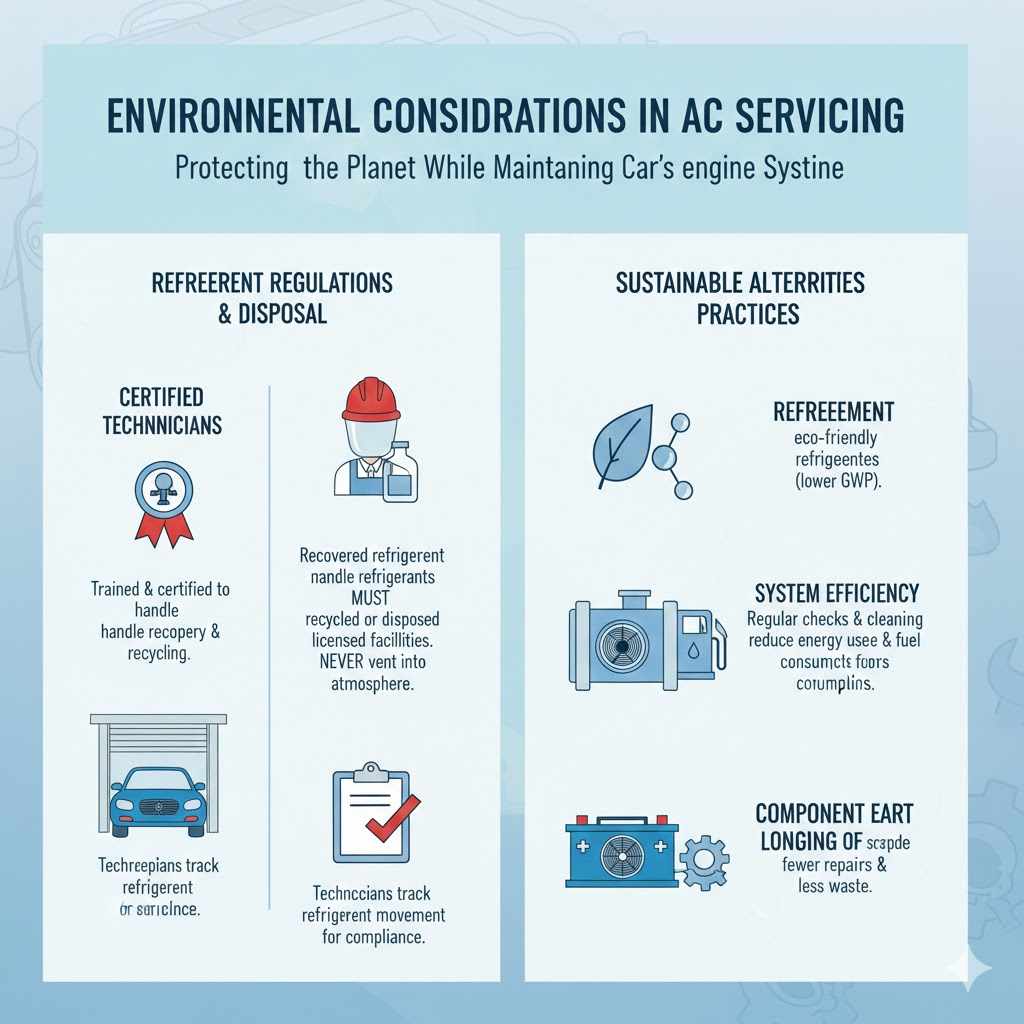
Environmental Considerations in AC Servicing
Automotive AC systems contain refrigerants that can harm the environment if not handled properly. Environmental regulations exist to prevent the release of these substances. Responsible servicing practices protect both the planet and comply with the law.
Understanding these aspects is part of essential precautions.
Refrigerant Regulations and Disposal
Laws govern how refrigerants are handled, recovered, and disposed of. These rules are in place to protect the ozone layer and reduce greenhouse gas emissions. It is illegal in many places to vent refrigerants into the atmosphere.
Certified technicians are required to follow specific procedures for handling these chemicals.
- Certified Technicians: Only certified technicians are allowed to purchase and handle certain types of refrigerants. They must also be trained in the proper recovery and recycling methods. This ensures that professionals are equipped to handle refrigerants responsibly.
- Proper Disposal: Any recovered refrigerant must be sent for recycling or proper disposal by licensed facilities. Never pour old refrigerant down the drain or dispose of it with regular trash. This could lead to fines and environmental damage.
- Record Keeping: Technicians are often required to keep records of refrigerant recovery and charging activities. This helps track the movement of refrigerants and ensures compliance with environmental standards. These records are important for accountability.
Sustainable AC Practices
Beyond regulations, adopting sustainable practices can further minimize the environmental impact of AC servicing. This includes using environmentally friendly products and maintaining the system for optimal efficiency, which reduces energy consumption.
- Refrigerant Alternatives: Researching and using newer, more environmentally friendly refrigerants is a key sustainable practice. While transitioning, ensure compatibility with existing system components.
- System Efficiency: A well-maintained AC system uses less energy. Regular checks and cleaning of the condenser and evaporator can improve performance and reduce the system’s workload, saving fuel.
- Component Longevity: Replacing parts with high-quality, durable components extends the life of the AC system. This reduces the need for frequent repairs and the associated waste of materials and refrigerants.
Frequently Asked Questions
Question: What is the most common mistake beginners make when servicing car AC?
Answer: The most common mistake is not having the right tools, especially for handling refrigerant and measuring pressure accurately, which can lead to incorrect charging or system damage.
Question: Can I just add refrigerant if my AC isn’t cold enough?
Answer: Adding refrigerant without checking for leaks is not recommended. If there’s a leak, the new refrigerant will escape, and the problem will return. It’s best to find and fix the leak first.
Question: How often should my car’s AC system be serviced?
Answer: Most manufacturers recommend checking your AC system every 1-2 years or as part of regular vehicle maintenance. However, if you notice reduced cooling performance, it should be checked sooner.
Question: Is it safe to work on my car’s AC myself?
Answer: It can be safe if you follow all the essential precautions, use the correct tools, and understand the risks involved with refrigerants and pressure. If you’re unsure, it’s best to leave it to a professional.
Question: What happens if I overcharge my AC system?
Answer: Overcharging can cause excessive pressure in the system, leading to damage to components like the compressor, seals, and hoses. It can also reduce cooling efficiency.
Conclusion
Following Essential Precautions for Automotive AC Servicing keeps you safe and your car’s cooling system working well. Using the right tools and understanding the steps are key. Handle refrigerants carefully and always check for leaks.
Proper maintenance protects the environment too. Your car’s AC will stay cool and reliable when you take these important steps.