Boat Horn for Car: Legality, Decibel Facts and 3 Real Picks
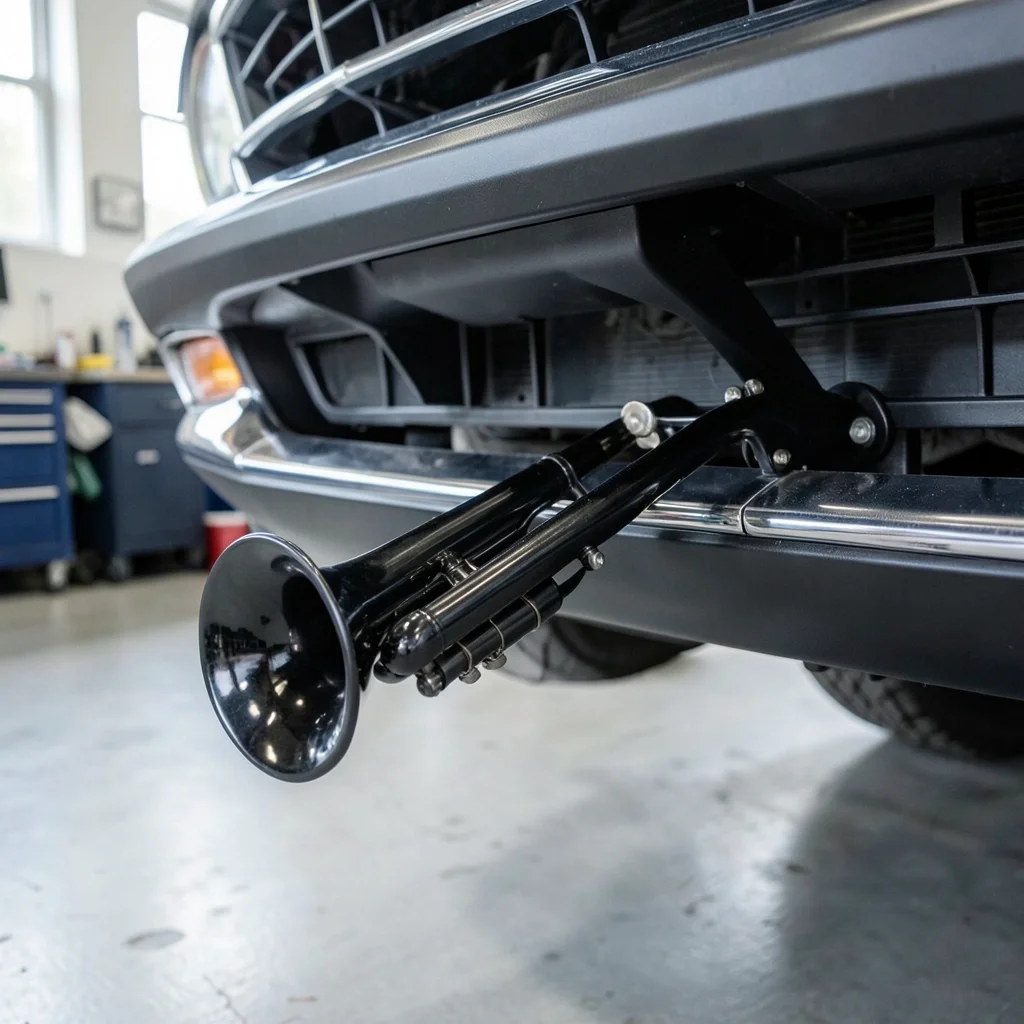
A “boat horn for car” is not an actual marine horn — it’s a loud aftermarket 12V train/air horn kit that manufacturers market as compatible with cars, trucks, and boats alike. It plugs into your car’s 12V electrical system through a small air compressor, and typical kits claim 110–150 decibels, though some marketing numbers go much higher (and aren’t physically possible).
If you searched “boat horn for car,” you were probably comparing one of these dual-purpose air horn kits, not shopping for a real Coast Guard-style vessel horn. Below we cover what these products actually are, whether installing one on your car is legal where you live, why some of the decibel numbers on the listings don’t add up, and three real, currently in-stock kits worth comparing.
What Does “Boat Horn for Car” Actually Mean?
A genuine boat horn is a sound-signaling device required by maritime navigation rules (the U.S. Coast Guard’s Inland and International Navigation Rules) for vessels to signal turns, warn other boats in fog, or call for help. Those horns are rated and tested against marine safety standards, not sold as a car accessory.
The products that show up when you search “boat horn for car” are something different: 12V electric or air-compressor horn kits built for trucks that manufacturers also market as fitting boats, RVs, and motorcycles because the wiring and mounting hardware happens to be universal. They’re not certified marine safety equipment — they’re loud aftermarket car horns with a wide compatibility list on the packaging.
Our Top Pick — Single Trumpet Kit
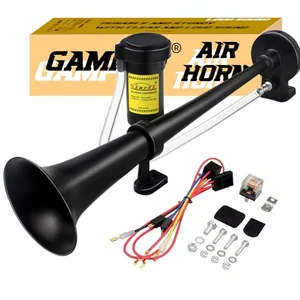 |
GAMPRO 12V 150dB Air Horn Kit – $28.99 This 18-inch single-trumpet kit ships complete with its own compressor, mounting bracket, relay, and wiring harness, so you aren’t left buying extra parts to finish the install.
|
Is It Legal to Put a Train Horn or Air Horn on Your Car?
There’s no federal decibel limit on private vehicle horns in the United States — decibel rules come from state and municipal law. Most states don’t set an exact numeric cap either; instead, they ban a horn that’s “unreasonably loud or harsh,” which a 130–150 dB train-style horn will almost always trigger the moment it’s used on a public road. A handful of states do set an explicit number: New Jersey caps vehicle horns at 95 dB, and California and New York both cap at 110 dB, each measured at 50 feet. For comparison, a stock factory car horn typically measures 100–110 dB.
Most states also separately ban using any horn for anything other than a genuine safety warning — sounding one in a parking lot for fun, or to startle someone, is a citable offense everywhere regardless of how loud it is. And many state vehicle codes specifically prohibit horns that mimic emergency-vehicle or train signals on a non-emergency vehicle. Before installing one of these kits, check your own state’s vehicle code rather than relying on what the seller’s listing implies is fine.
Why “150dB,” “300dB,” and Even “600dB” Air Horn Claims Do Not Hold Up
Sound pressure in ordinary air has a hard physical ceiling: at sea-level atmospheric pressure, roughly 194 dB is the loudest a sound wave can get before it stops behaving like a sound wave and turns into a shockwave. That means any listing advertising 300 dB, or the 600 dB figure that shows up on several newer Amazon horn kits, is not a real acoustic measurement — it’s a marketing number with no physical basis.
Even the more believable 110–150 dB claims are usually measured a few inches from the horn’s bell in a lab, not at a driver’s ear or from the roadside where it actually matters. We found a clear example of this inflation while researching this page: one horn kit’s own product listing has been revised from an advertised “300DB” rating down to a more realistic 110dB — the same physical horn, a very different number. Treat any decibel figure on these listings as a rough marketing comparison between products, not a lab-verified spec.
3 Real, In-Stock Air Horn Kits Compared
All three of the kits below were confirmed in stock with a live price at the time this page was last checked. If you want a longer side-by-side of more train horn kits specifically, our dedicated train horns for cars comparison covers additional options in depth.
| Kit | Advertised dB | Price | Best For |
|---|---|---|---|
| GAMPRO 12V Single Trumpet Kit | 150 dB | $28.99 | A complete, straightforward kit with everything included |
| 150dB Dual Trumpet Kit with Compressor | 150 dB | $27.99 | A fuller, two-tone sound from two trumpets |
| QDONGLAI Compact Snail Horn | 110 dB | $5.97 | The easiest, cheapest bolt-on upgrade over a stock horn |
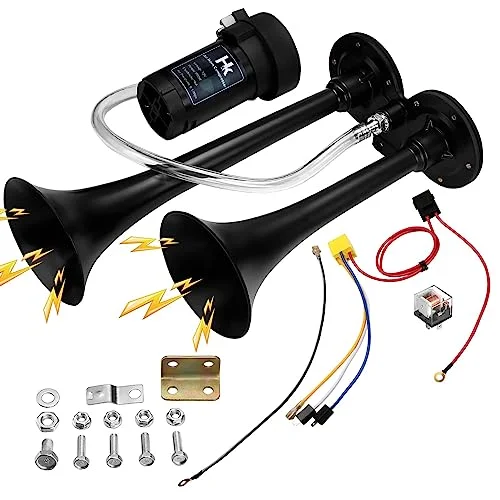
The dual-trumpet kit below produces a fuller, two-tone sound than a single-trumpet kit because it fires two different-length trumpets at once, at the cost of needing more mounting space under the front bumper.
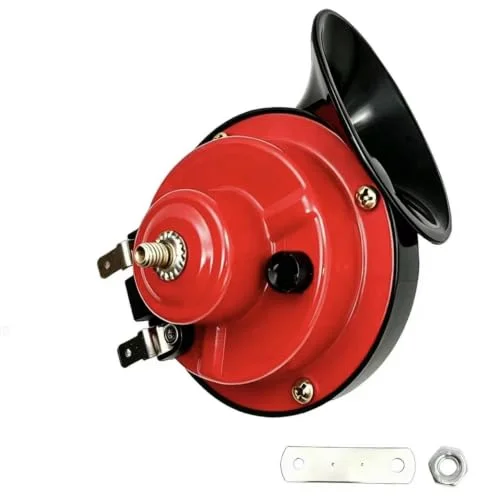
If you just want a louder factory-style horn without the compressor, wiring relay, and trumpet-mounting hassle, a compact electric snail horn like this one bolts straight onto most existing horn brackets and needs no separate compressor.
How to Install a 12V Air Horn Kit on Your Car
- Mount the compressor somewhere in the engine bay away from direct exhaust heat, using the included bracket, with the air outlet facing downward so water can drain out.
- Bolt the trumpet(s) to the included mounting bracket, angled slightly downward so rain and road spray don’t collect inside the bell.
- Wire the compressor through the included relay, not directly to your factory horn button — the button’s wiring isn’t rated to carry a compressor’s full current, and skipping the relay can melt the switch or blow a fuse.
- Connect the relay’s trigger wire to your factory horn wire (or a separate switched 12V source if you want to keep the stock horn working too), and ground the compressor to bare metal on the chassis.
- Test the horn with the hood up before buttoning everything back together, and confirm the compressor doesn’t rub against any moving engine components.
If your stock horn has stopped working and you’d rather troubleshoot it first before adding an aftermarket kit, see our guide on how to fix a car horn that stopped working.
Frequently Asked Questions
What Is a Boat Horn for a Car, Really?
It’s an aftermarket 12V train- or air-horn kit that manufacturers market as fitting cars, trucks, and boats because the mounting hardware and wiring are universal — it isn’t a certified marine safety horn.
Is It Legal to Put a Train Horn or Air Horn on My Car?
It depends on your state. Most states ban a horn that’s “unreasonably loud or harsh,” which a 130–150 dB train-style horn will usually violate on a public road, and a few states set a hard cap (New Jersey at 95 dB; California and New York at 110 dB, measured at 50 feet). Check your own state’s vehicle code before installing one.
How Loud Is a Stock Car Horn Compared to These Kits?
A stock factory car horn typically measures 100–110 dB. See how loud is a car horn for a full breakdown of factory horn decibel ratings.
Are the 300dB or 600dB Ratings on These Horns Real?
No. Around 194 dB is the physical maximum a sound wave can reach in ordinary air at sea level before it becomes a shockwave, so any listing claiming 300 dB or 600 dB is a marketing number, not a measured spec. Treat these figures as a rough relative comparison between products rather than a lab-verified rating.
Do I Need a Separate Compressor for Every Air Horn Kit?
Only for true air-powered trumpet horns, which need a small 12V compressor to build pressure. Compact electric “snail” horns, like the budget pick above, use an electric diaphragm instead and don’t need a separate compressor.
How Do I Install an Air Horn Kit on My Car?
Mount the compressor in the engine bay away from heat, bolt the trumpet(s) to their bracket angled downward, and wire the compressor through the included relay rather than straight into your factory horn button so the wiring isn’t overloaded.
Conclusion
A “boat horn for car” isn’t a maritime signaling device — it’s an aftermarket train- or air-horn kit sold as fitting cars, trucks, and boats alike, and the eye-catching decibel numbers on some listings are marketing, not physics. Before you buy one, check whether it’s actually street-legal where you drive, and pick a kit based on real availability and price rather than an inflated dB claim. The GAMPRO single-trumpet kit above is a solid, complete starting point if you just want one that ships with everything you need.
Products related to this article
Sponsored / affiliate links. As an Amazon Associate I earn from qualifying purchases. I may earn additional commission from eligible campaigns.