Extreme Weather Car Warm-Up: The Best Proven Answer
For modern cars with fuel injection (almost any car made after 1995), the best proven answer for an extreme weather warm-up is 30 to 60 seconds. After this brief period, begin driving gently. This method warms up your engine, transmission, and other components efficiently, saving fuel and preventing unnecessary engine wear caused by prolonged idling.
When the temperature plummets and frost covers your windshield, your first instinct might be to start your car and let it idle for ten or even fifteen minutes. It’s a ritual many of us learned from our parents. But what if I told you this long-held tradition is not only unnecessary for modern cars but can actually be harmful?
It’s a confusing topic with a lot of old advice floating around. Don’t worry, I’m here to clear things up. We’ll walk through the simple, proven steps to warm up your car the right way, protecting your engine and saving you money. Let’s get you ready for winter driving with confidence.
The Great Warm-Up Myth: Why We Used to Idle Our Cars
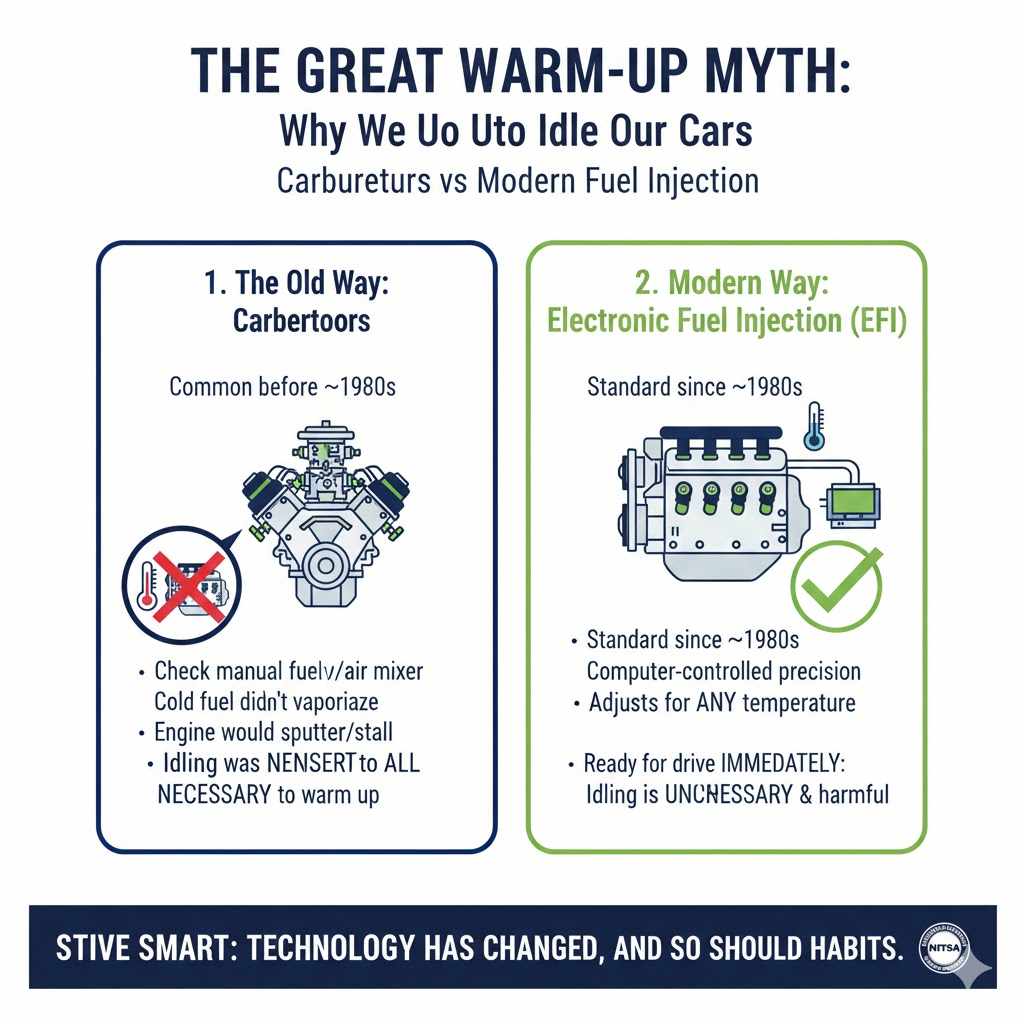
To understand why the advice has changed, we need to take a quick trip back in time. Not too long ago, nearly every car on the road had an engine component called a carburetor. Think of a carburetor as a simple mixer, like a spray bottle, that combines air and gasoline to create a combustible mist for the engine.
The problem was that carburetors were very sensitive to temperature. In the cold, gasoline doesn’t evaporate as easily. A cold carburetor would struggle to create the right air-fuel mixture, often providing too much air and not enough fuel (a “lean” mixture). If you tried to drive away immediately, the engine would sputter, hesitate, or even stall. It was like trying to run a marathon right after rolling out of bed—the system just wasn’t ready.
Letting the car idle for several minutes allowed the engine’s heat to warm up the carburetor. As it warmed, it could properly vaporize the fuel, creating a smooth, stable mixture that allowed the car to drive normally. This is where the “10-minute warm-up” rule came from. It was essential for cars of that era.
How Modern Cars Changed Everything: The Magic of Fuel Injection
Around the mid-1980s and becoming standard by the mid-1990s, automakers replaced carburetors with a far more advanced system: Electronic Fuel Injection (EFI). This was a game-changer for how our cars operate, especially in the cold.
Instead of a simple mechanical mixer, EFI uses a small computer and electronic sensors to manage the fuel. These sensors instantly measure factors like the outside air temperature, engine temperature, and oxygen levels. The computer then calculates the perfect amount of fuel needed and injects it directly into the engine as a fine mist.
When you start your modern car in freezing weather, the computer knows it’s cold. It automatically adjusts the mixture, making it “richer” (more fuel, less air) for a moment to ensure the engine starts and runs smoothly. It does this instantly. Because this system is so precise and adaptive, it completely eliminates the need for a long warm-up period. The technology inside your car handles the adjustments for you.
The Best Proven Answer: Your Simple 3-Step Warm-Up Routine
So, what is the best way to get your car ready on a frigid morning? It’s faster and simpler than you think. This proven method is recommended by automotive experts and even government agencies focused on energy conservation.
- Start Your Car. Turn the key or push the button. Your car’s computer will immediately get to work, adjusting the fuel mix for the cold temperature.
- Wait for 30 to 60 Seconds. This is the most crucial part. This short period isn’t to warm the engine; it’s to allow the engine oil to circulate. When your car sits overnight, oil settles in the oil pan at the bottom of the engine. It takes a few seconds for the oil pump to push that oil up through the engine’s narrow passages to lubricate all the moving parts, like pistons and bearings. Think of it like pouring cold honey—it needs a moment to start flowing. This brief wait ensures vital components are protected before they start moving under load.
- Drive Away Gently. This is the most effective way to warm up your entire vehicle. By driving, you are putting a light load on the engine, which helps it warm up to its optimal operating temperature much faster than idling. But “gently” is the key word. For the first 5 to 15 minutes of your drive, avoid hard acceleration, high speeds, or revving the engine. Keep the RPMs low and be smooth with the gas pedal. This gentle driving warms not just the engine, but also the transmission, tires, suspension, and steering components, getting the whole system ready for normal operation.
Why Idling for Too Long Is Actually Bad for Your Car
Letting your car idle in the driveway for 10 or 20 minutes does more harm than good. It’s a hard habit to break, but understanding the downsides can help you feel confident in the new method.
- It Causes Engine Damage: When your car is idling, the engine isn’t running at its ideal temperature. The gasoline doesn’t combust as completely, and some of that unburned fuel can wash away the protective film of oil on the cylinder walls. This can lead to increased friction and premature wear on critical components like piston rings and cylinder liners. It’s like washing a greasy pan with just cold water—it doesn’t work well and leaves a residue.
- It Wastes a Lot of Fuel: An idling car is achieving zero miles per gallon. According to the U.S. Department of Energy, idling can use a quarter to a half-gallon of fuel per hour, depending on your engine size. Over a winter, that adds up to wasted money and extra trips to the gas station.
- It Creates Harmful Pollution: Idling is a significant source of air pollution, releasing carbon dioxide, nitrogen oxides, and other harmful emissions into the atmosphere without you going anywhere. Many cities and states have even enacted anti-idling laws to reduce this environmental impact.
- It Doesn’t Warm the Whole Car: An idling engine will warm the engine coolant, which is what gives you heat in the cabin. However, it does very little to warm up the transmission, wheel bearings, tires, or suspension. These parts only warm up when they are in motion. Driving away in a car with a warm engine but ice-cold transmission fluid can cause clunky shifts and unnecessary strain.
Warm-Up Time at a Glance: Old vs. New Cars
To make it crystal clear, here’s a simple table comparing the needs of older cars with modern ones. Seeing it side-by-side really highlights the difference in technology.
| Feature | Old Carbureted Car (Pre-1995) | Modern Fuel-Injected Car (Post-1995) |
|---|---|---|
| Fuel System | Carburetor | Electronic Fuel Injection (EFI) |
| Cold Start Logic | Mechanical; needs heat to vaporize fuel correctly. | Computer-controlled; sensors adjust fuel mix instantly. |
| Ideal Idle Warm-Up | 5-10 minutes, or until the engine runs smoothly. | 30-60 seconds to circulate oil. |
| Best Practice | Idle until the engine stops sputtering. | Idle briefly, then drive gently to warm the entire vehicle. |
| Risk of Long Idling | Wastes fuel and pollutes. | Wastes fuel, pollutes, and causes engine wear. |
Does My Car’s Engine Type Matter?
While the 30-60 second rule is a fantastic guideline for most vehicles on the road, there are slight differences to consider based on what’s under your hood.
Gasoline Engines
This is the most common type of engine. If your car runs on regular gasoline, the 30-60 second rule is perfect for you. The electronic fuel injection system is incredibly efficient and doesn’t need any extra help. Just let the oil circulate, then be on your way.
Diesel Engines
Diesel engines are a bit different. They use compression to ignite fuel, and they operate at higher temperatures. In extreme cold, diesel fuel can “gel” or thicken, making it harder to start. Most modern diesel vehicles have glow plugs, which are small heaters in the cylinders that warm the combustion chamber before you start the engine. You should always wait for the “glow plug” indicator light on your dashboard to turn off before starting the engine.
Once started, a diesel engine may benefit from a slightly longer idle time, perhaps 1 to 3 minutes in very cold conditions, to ensure smooth operation. However, just like with gasoline engines, gentle driving is still the best way to warm it up fully.
Electric Vehicles (EVs) & Hybrids
EVs don’t have a traditional internal combustion engine, so they don’t need to be “warmed up” in the same way. The main concern for an EV in the cold is the battery. Cold temperatures can reduce a battery’s range and performance. The best practice for EVs is “preconditioning.” While the car is still plugged into the charger, you can use an app or an in-car setting to warm the battery and the cabin.
This uses power from the grid instead of your battery, preserving your range for the drive ahead. Hybrids have both an electric motor and a gasoline engine. They typically operate like a normal gasoline car when it comes to warming up the engine part of their system.
More Tips for a Smooth Winter Start
Beyond the warm-up, a few other simple checks can make your winter mornings much easier and safer.
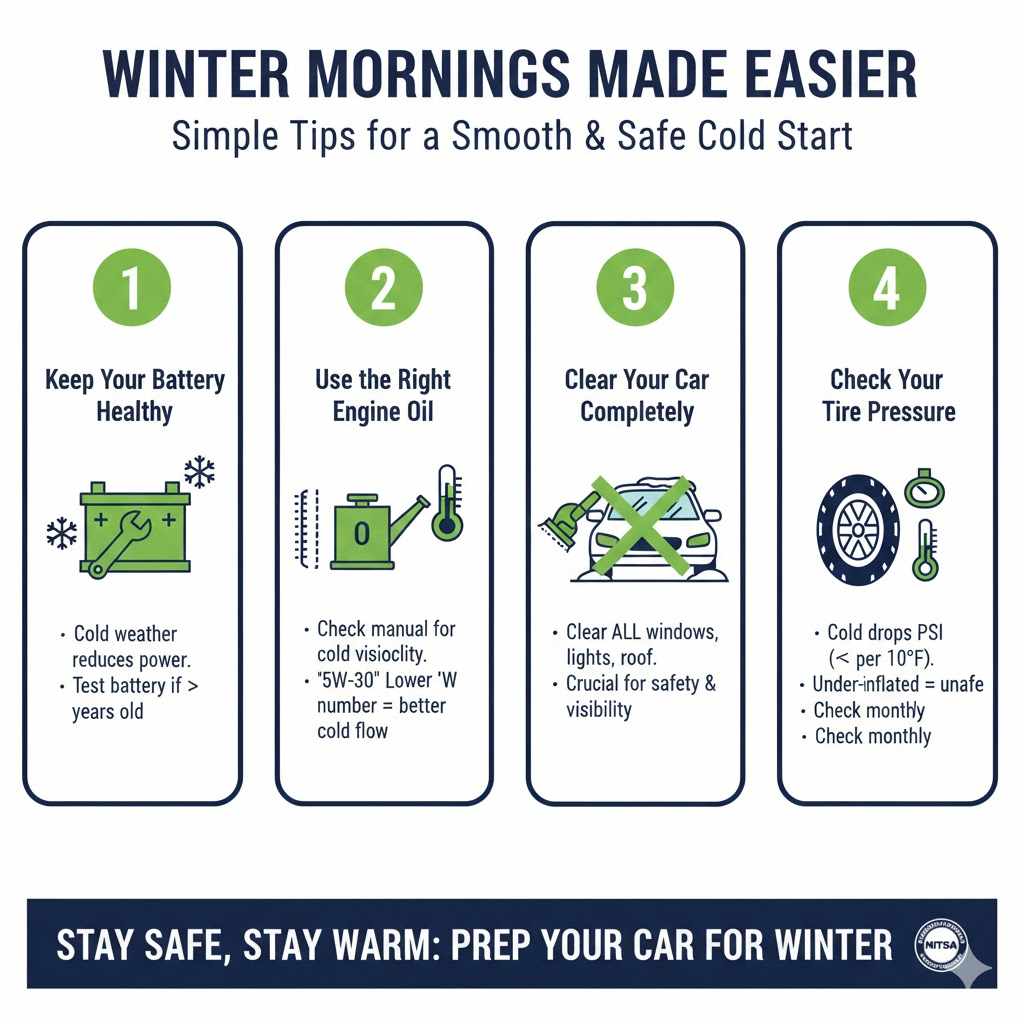
- Keep Your Battery Healthy: A car battery can lose over 30% of its power in freezing weather. If your battery is more than three years old, have it tested at an auto parts store (most do it for free) to ensure it’s holding a strong charge.
- Use the Right Engine Oil: Check your owner’s manual for the recommended oil viscosity for cold weather. Most modern cars use a multi-viscosity oil like 5W-30. The “W” stands for “winter,” and the number before it (5W) indicates how well the oil flows when cold. A lower number is better for cold starts.
- Clear Your Car Completely: This is a non-negotiable safety rule. Use a brush and scraper to clear all snow and ice from every window, mirror, light, and sensor. Don’t forget to clear the roof—a sheet of ice flying off your car on the highway is extremely dangerous for drivers behind you.
- Check Your Tire Pressure: For every 10-degree drop in temperature, your tire pressure can drop by about 1 PSI. Under-inflated tires are unsafe and reduce fuel economy. Check your tire pressure regularly throughout the winter.
Frequently Asked Questions About Warming Up Your Car
Is it bad to drive my car immediately after starting it in the cold?
It’s not ideal. The best practice is to wait at least 30 seconds. This short period allows the engine oil to circulate from the oil pan to the top of the engine, ensuring all moving parts are lubricated before they come under the load of driving. Driving away instantly puts stress on a “dry” engine.
How long is considered too long to idle my car?
Generally, anything over a minute or two is unnecessary and starts to become counterproductive. After 60 seconds, your car is ready for gentle driving, which is a much more effective and efficient way to warm up the entire vehicle system.
Does revving the engine help it warm up faster?
Absolutely not! This is one of the worst things you can do to a cold engine. Revving a cold engine puts major stress on its internal components before the oil has had a chance to properly lubricate them. It can cause significant wear and damage. Always let the engine idle normally and then drive gently.
What if I need to defrost my windshield? It takes a long time.
This is a common and practical concern. It’s okay to idle your car for the time it takes to get clear visibility. Safety comes first. While you wait for the defroster to work, use an ice scraper to clear as much as you can manually. Once you have a safe line of sight, you can start driving gently, and the rest of the ice will melt much faster as the engine warms up under load.
Is it okay to use a remote starter to warm up my car?
Remote starters are great for convenience, especially for warming up the cabin so you don’t have to get into a freezing car. However, the same rules apply. Let it run for just a few minutes to get the heat going and circulate the oil, not for 15 or 20 minutes. Extended use of a remote starter just wastes fuel and contributes to engine wear.
Do electric cars need to be warmed up?
Electric cars (EVs) don’t have an engine that needs warming up. Instead, the focus is on the battery. In extreme cold, it’s best to “precondition” the battery and cabin while the car is still plugged in. This uses house power to get the systems to an optimal temperature without draining the car’s battery, maximizing your driving range.
Will my car’s heater work faster if I idle the engine longer?
While idling does generate some heat, your engine warms up to its operating temperature significantly faster when you are driving. This means your cabin heater will actually start blowing hot air sooner if you follow the 30-60 second idle and then gentle driving method, compared to just letting it sit in the driveway.
Your Confident Winter Driving Plan
The days of the 15-minute warm-up are officially a thing of the past, thanks to modern automotive technology. For almost any car on the road today, the answer is simple, fast, and effective: start your engine, wait about 30 seconds for the oil to flow, and then drive away gently.
By adopting this simple habit, you are doing so much more than just saving time. You are actively protecting your engine from premature wear, conserving fuel, saving money, and reducing your impact on the environment. You now have the knowledge to confidently care for your car in the coldest weather, separating fact from fiction.
So next time you see that frosty morning, you can feel good knowing you have a smart, proven plan. Start it up, buckle up, and get on your way. Your car, your wallet, and the air we breathe will all thank you for it.