Best Rings for Street Use (2026): Based on Specs and Reviews
For most rebuilds, choose the ring set that matches your exact bore size, piston groove width, and cylinder finish. If the bore or hone spec is off, compression drops, oil control suffers, and ring life shortens. A bad fit can force a second teardown. This guide compares cast, moly, and steel ring options and shows how to match them to street, boost, or race use.
Quick comparison
| Product | Badge | Best for | Price | ||
|---|---|---|---|---|---|
 |
H-631CP Hypereutectic 2Vr Piston and Ring set compatibleGeneric | Our pick | 4.030 bore · hypereutectic pistons · moly rings | $295.37
Price as of 23 Oct 2026
|
View |
 |
Mahle Motorsports 4045ML-043 4.040" Bore .043 – .043-3.0mmMAHLE | Also great | 4.040 bore · .043 rings · MAHLE set | $158.21
Price as of 23 Oct 2026
|
View |
 |
Total Seal CR3690-30 Classic Race 4.030" Bore Piston RingTotal Seal | Pair with it | 4.030 bore · classic race · Total Seal | $164.63
Price as of 23 Oct 2026
|
View |
The fastest path is simple: match the actual bore, then match ring material to load and break-in plan. If the engine family fits but the bore or finish does not, stop and recheck the measurement.
How we chose
This roundup starts with fitment. Each pick had to list a specific engine family, a stated bore or size class, and a clear use case.
Also check the ring details that matter in a rebuild: moly or plasma-moly top rings, Napier second rings, and oil ring rail or expander design. A set without clear application limits is a poor buy for a fit-critical part.
Finally, the recommendations had to cover common rebuild goals: stock-bore repair, OEM-style replacement, street use, and higher-load service.
Michigan Motorsports 2M4978: best for stock-bore LS 4.8L and 5.3L
This set is the best match for stock-bore LS-based 4.8L and 5.3L rebuilds that need a standard 3.779 in / 96mm size. It fits LM7, LY5, L33, and similar GM codes, and the moly-coated steel top ring is meant for quick seating with durable sealing.
The 3.0mm oil ring uses a steel rail and stainless expander. That matters when you want steady oil control during break-in and normal street service. For a common GMT800 or early LS truck rebuild, that is a practical spec stack.
The drawback is the same thing that makes it useful: it is size-specific. If your block is overbored or the cylinder finish has been changed for a different ring package, this is no longer the safe pick.
Mahle 41859CP: best for early GMT800 4.8L and 5.3L
This is a strong standard-bore option for 1999-2002 GMC Truck 4.8L and 5.3L engines. Its SAE 9254 high alloy steel construction, Napier second ring, and CP-20 oil ring point to a set built for controlled oil scraping and steady sealing in a stock-bore rebuild.
That Napier second ring design helps manage oil that gets past the cylinder wall on the downstroke, which is one reason it appears in many OE-style packages. For a builder trying to stay close to factory behavior, this is the more conservative choice.
The drawback is fitment scope. It is tied to a specific early-GM application window, so you should verify the exact engine code and bore condition before ordering.
Hastings 2M4860: best for 6.0L LQ4 and LQ9
This plasma-moly set fits 1999-2006 GM 6.0L LQ4 and LQ9 engines and is sized for stock-bore use. That makes it a better match for higher-load service than a generic street ring set when the block stays standard and the build goal includes harder use.
Plasma-moly coatings are often chosen where heat and load are higher, because the surface treatment can help with wear resistance while still supporting good seating. That does not rescue a bad hone or wrong end gap, but it can make sense in a boosted or heavy-duty 6.0L plan.
The drawback is the same one that applies to all premium rings: if the bore finish is wrong, the coating cannot fix it. The cylinder still has to match the ring package and the builder’s gap spec.
DNJ PR1163: best for OEM-spec HEMI rebuilds
DNJ PR1163 fits 2009-2015 Chrysler, Dodge, Jeep, and Ram 5.7L V8 HEMI engines and is sold as a standard-size, complete-engine service ring set. That makes it a sensible choice when the goal is factory-style replacement rather than a performance upgrade.
For a HEMI owner who wants the engine back in service with OEM-spec intent, that is a good sign. It is the sort of set you buy when exact replacement matters more than a harder, more specialized coating choice.
The drawback is that it is not a broad “anything HEMI” answer. You still need the exact year range, the correct standard bore, and the right cylinder finish before you treat it as a drop-in solution.
Sealed Power E-251X / E-251K 30: best for broad V8 rebuilds
The Sealed Power E-251X / E-251K 30 ring sets are commonly positioned between basic factory replacement and more aggressive performance parts. They are positioned as premium standard-bore V8 rebuild options with OE-quality fit and finish, which suits street and light-performance work.
That middle position matters for builders who want dependable sealing without moving into race-only parts. If the engine is a daily driver or tow vehicle with a standard bore, this is the kind of set that can make sense when the application is broader than one engine family.
The drawback is that broad coverage is not the same as exact fitment proof. You still need to confirm the bore, ring groove width, and intended use before ordering.
What piston rings do and why fitment matters
Piston rings control combustion sealing, oil control, and blow-by reduction. That is true across every build, from a stock 5.3L truck motor to a boosted 6.0L, but the ring only works when its size, material, and finish match the cylinder and piston package.
Sealing, oil control, and blow-by
The top ring carries most of the sealing load against cylinder pressure. The second ring helps with added sealing and oil control, and the oil ring package scrapes excess oil back down the bore while leaving enough film for protection.
A Napier second ring has a stepped or hook-like profile that helps move oil off the cylinder wall. The oil ring rails and expander work together to meter oil, and if either piece is wrong for the groove or bore, consumption can rise fast.
Why bore size and finish come first
Exact bore match is non-negotiable. A standard-bore ring set belongs in a standard-bore cylinder, while an overbore needs the correct oversize set and the builder’s end-gap target.
Here is the failure path that causes expensive mistakes: the part number matches the engine family, but the block has already been bored, the hone is too rough or too smooth, or the ring gap was never checked. Any one of those can hurt compression and seal life.
What coatings can and cannot fix
Moly coatings help with break-in and wear resistance. Plasma-moly coatings are often chosen for hotter or harder-used engines because they are aimed at durability under load.
Neither coating fixes poor prep. If the bore finish is wrong or the gap is off, a premium ring can still fail early. Coating choice is a support decision, not a replacement for measurement.
Piston ring decision table
| Engine goal | Bore condition | Ring material/coating | Recommended use case | Common failure mode | Red-flag questions to ask before buying |
|---|---|---|---|---|---|
| Factory-correct rebuild | Standard bore, verified with bore gauge | OEM-spec steel or alloy set, often moly-faced top ring | Daily driver, stock compression, long service life | Wrong groove width or wrong end gap | Is the engine still standard bore? Does the listing name the exact year and engine code? |
| Stock-bore street rebuild | Stock bore with fresh hone | Stock-bore moly ring set | Common truck and car rebuilds | Too-tight gap from guessing instead of measuring | Does the set list the exact bore size, not just the engine family? |
| Higher-load or boosted build | Standard bore, properly prepped finish | Plasma-moly with steel or alloy construction | Boosted, towing, or sustained heat load | Ring face glazing from poor hone or wrong break-in | Is the coating meant for load, and does the maker publish the fitment? |
| Budget replacement | Original bore and unchanged pistons | OEM-spec replacement set | Basic service restoration | Buying by engine name only and missing a bore change | Was the block bored, and are the pistons still original? |
| Overbore rebuild | Measured oversize | Oversize ring set matched to machined bore | Machined blocks, custom rebuilds | Standard-bore rings in an oversized cylinder | What is the final bore dimension? What end gap does the builder want? |
Which one should you buy?
For a daily driver with a stock-bore LS 4.8L or 5.3L, start with the Michigan Motorsports 2M4978. It gives you the exact standard size, a moly-coated steel top ring, and a 3.0mm oil ring package that fits the common truck rebuild path.
If the engine is an early 1999-2002 GMC Truck 4.8L or 5.3L and you want a more OE-like build, the Mahle 41859CP is the cleaner match. Its SAE 9254 high alloy steel construction and Napier second ring suit that kind of conservative rebuild.
For a 6.0L LQ4 or LQ9 that will see higher load, the Hastings 2M4860 is the stronger fit because it is plasma-moly and stock-bore specific.
Say your 5.3L LS has standard bores but the last shop left a mixed finish on the cylinders. The ring part number can still be right, yet the wrong finish can stop the rings from seating properly and leave you chasing blow-by after assembly.
Suppose a 6.0L LQ9 is being rebuilt for towing and light boost. A plasma-moly stock-bore set makes more sense than a generic replacement, but only if the bore is still standard and the end gap is set to the builder’s spec.
If you want a broad V8 option that sits between stock replacement and light performance, the Sealed Power E-251X / E-251K 30 sets are the middle-ground pick. They make the most sense when the rebuild calls for OE-quality fit and finish rather than a narrow engine-family fit.
What tools do you need to install piston rings correctly?
You need more than an installer. A correct ring job starts with bore measurement, ring gap checking, and a clean cylinder finish. The installer only helps get the ring onto the piston without twisting or scratching it.
Why the Lisle 33500 fits this job
The Lisle 33500 is a compact piston ring installer made from stainless steel, with a 6.3 mm cutting width and hand-powered operation. That makes it useful for controlled ring installation without relying on power tools or a loose grip that can deform the ring.
It is not a cure-all tool. It helps with handling, but it does not measure bore size, set end gap, or correct a poor hone.
What else to measure before installation
- Confirm the exact bore size with a proper measuring tool.
- Check every ring’s end gap in the cylinder it will run in.
- Verify piston groove width and ring side clearance.
- Inspect the cylinder finish for the ring type you bought.
- Clean the bores and pistons before final assembly.
A common first-timer mistake is buying a ring set by engine code alone and skipping the bore check. The engine family can be right and the ring can still be wrong if the block has been bored or if the finish does not suit the coating.
Frequently asked questions
What are the best piston rings for my engine rebuild?
The best ring set is the one that matches your exact bore size, piston groove width, and intended use. For a stock-bore LS truck rebuild, a moly-coated standard-size set is often the most practical. For hotter or harder-used builds, plasma-moly can be a better fit if the bore and gap are right.
Should I choose moly or plasma-moly piston rings?
Choose moly for common street rebuilds and faster seating, especially when the engine will live a normal life on pump fuel. Choose plasma-moly when the engine will see more heat, load, or boost and the ring set is specifically listed for that use. Neither one fixes poor bore prep.
How do I match piston rings to my bore size?
Measure the bore first, then buy the ring set that lists that exact size or oversize. A standard-bore ring belongs in a standard-bore cylinder, while an overbore needs the correct oversize. After that, verify end gap in the actual cylinder before assembly.
What piston rings are best for an LS 4.8L or 5.3L?
For a standard-bore LS 4.8L or 5.3L, the Michigan Motorsports 2M4978 is the clearest fit among the options here. It is listed for LS-based 4.8L and 5.3L engines with a 3.779 in / 96mm standard bore, and its moly-coated steel top ring suits a common rebuild.
Are OEM-spec piston rings better than performance rings?
OEM-spec rings are often the safer choice when the goal is factory-correct service, long life, and stock drivability. Performance rings make sense when heat, boost, or load is higher and the cylinder prep matches that plan. Better depends on the rebuild goal, not brand hype.
Products related to this article
Sponsored / affiliate links. As an Amazon Associate I earn from qualifying purchases. I may earn additional commission from eligible campaigns.
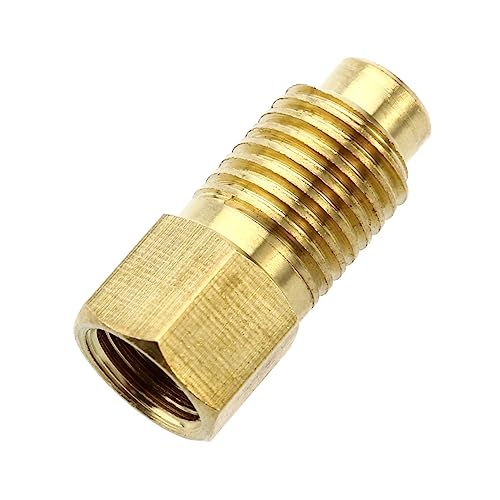 SOPOTUTU Car Adapter SAE to Vacuum Pump Conversion Fitting Durable and Corrosion Resistant Easy Installation for Automotive Use
 2026 Upgrade Crystal Coating for Car, Plastic Parts Crystals Coating, Plastics Parts Crystal Coating Plastic Restorer with Spong, Long Duration Refurbish Coatings Agent for Automotive Plastics (4)