Ghost Lights for Cars: LED Door Projector Lights Guide
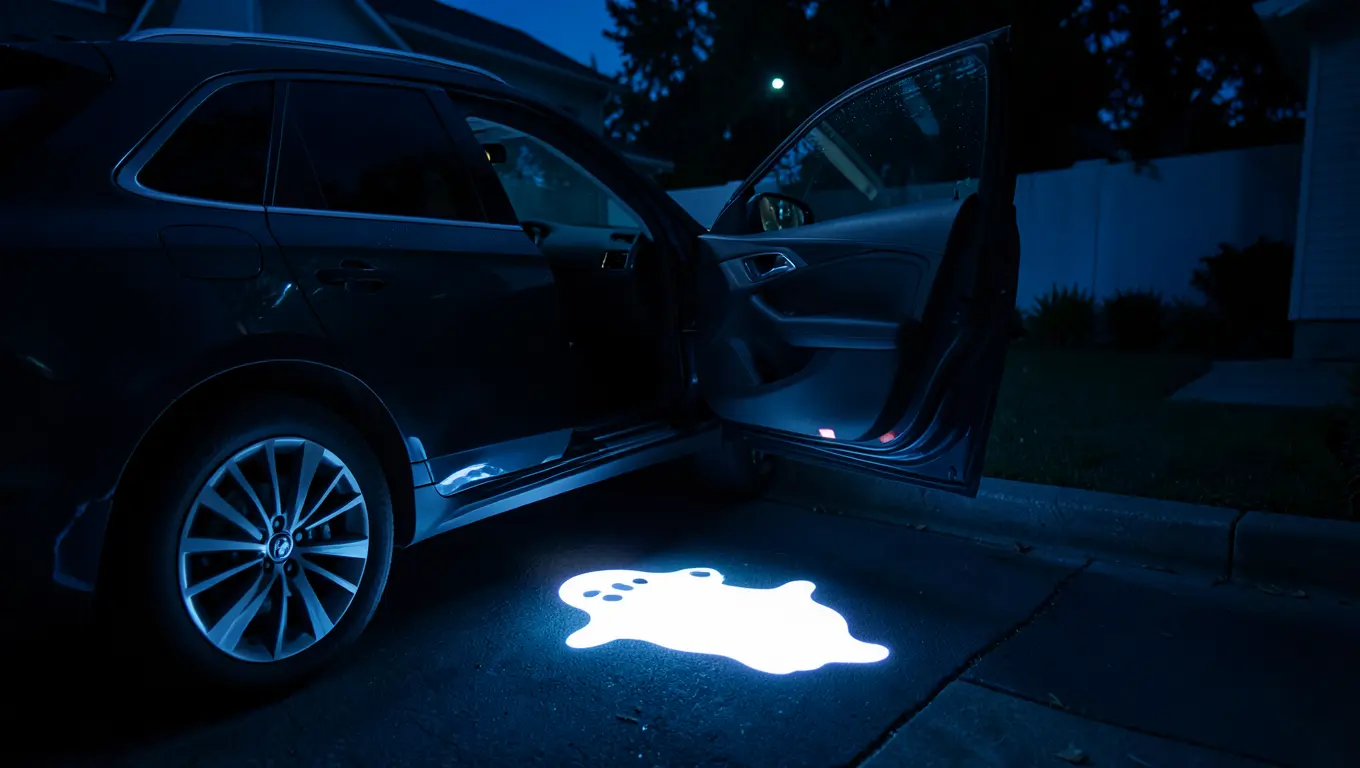
Ghost lights for cars are small LED projector units, usually mounted to the bottom edge of a door or a side mirror, that beam a logo, symbol, or spooky design onto the pavement the instant the door opens.
Most kits cost between $15 and $30, install in under 15 minutes with zero wiring on the wireless versions, and run for months on a single coin-cell or USB charge. Whether you want a subtle courtesy light or a full skull-and-crossbones projection every time you climb out of the car, the category has grown a lot since the plain white “puddle lamp” your grandfather’s Cadillac had.
This guide covers what ghost lights actually are, how the wired and wireless versions differ, how to install one yourself, whether they are legal (including how they differ from underglow lighting), what to check before you buy, and three real kits worth considering.
What Are Ghost Lights for Cars?
“Ghost lights” is the enthusiast nickname for a category of aftermarket door projector lights. A tiny LED sits behind a stenciled lens or a small digital gobo inside a housing about the size of a large coin. When the housing gets power, usually the instant the door opens, the LED shines through the stencil and throws a sharp, shaped image onto the ground below.
The name comes from the huge popularity of horror and Halloween-themed designs, like the Scream mask, a skull, or a floating ghost, but the same hardware is sold with car brand logos, sports team emblems, custom text, or a plain circle of light. Functionally they are all the same product: a small downward-facing LED projector.
Best-Selling Ghost Light Kit
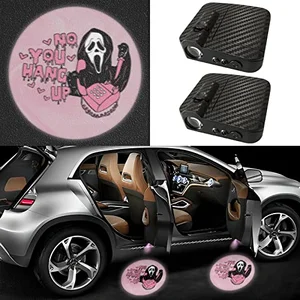 |
Ghost Funny LED Car Door Projector Light, 2-Pack – $15.99 A wireless, battery-powered kit like this is the easiest way to try ghost lights, since it needs no wiring and mounts to the door edge in minutes, as described in the installation section below.
|
How Ghost Lights Work
Every ghost light kit uses the same basic idea: an LED bulb, a lens or stencil that shapes the beam, and a trigger that turns the light on. Where kits differ is in how they get power and how they are triggered.
Wired kits
Wired ghost lights plug into the vehicle’s factory door courtesy light socket, or splice into the door wiring harness. Because they pull power from the car, they turn on automatically whenever the door opens and never need a battery. The tradeoff is installation: you typically have to pop the interior door panel or access the mirror housing to reach the wiring, which is more involved than the wireless option.
Wireless, battery-powered kits
Most kits sold today are wireless. The unit has a built-in motion or gravity sensor, a coin-cell or small rechargeable battery, and a magnetic or adhesive mount. Open the door, the sensor detects the motion or tilt, and the projector fires for a few seconds. Since nothing connects to the car electrical system, installation is just cleaning the mounting spot and sticking the unit in place.
Ghost Lights vs. Puddle Lights vs. LED Door Lights: What Is the Difference?
These three terms overlap so much that shoppers often use them interchangeably, and on most listings they are the exact same physical product. It still helps to know the distinction:
- Puddle lights is the umbrella term for any light that illuminates the ground next to an open door, including plain factory lamps that just cast a soft pool of light with no image at all.
- LED door lights usually refers to the broader family of aftermarket door-area lighting, including logo projectors, interior LED strip kits, and courtesy lights.
- Ghost lights is the more specific, novelty-leaning term for puddle lights that project a shaped image, whether that is a skull, a car logo, or a custom design, rather than just a plain circle of light.
If you want the full rundown of every puddle light style, including the plain factory-style options and OEM upgrades, our dedicated guide to puddle lights for cars covers that ground in more depth. This page focuses specifically on the image-projecting, novelty-driven side of the category.
Are Ghost Lights Legal? How They Differ from Underglow Lighting
Ghost lights are legal to install and drive with in essentially every U.S. state, and the reason comes down to where the light points. A ghost or puddle light aims a narrow beam straight down at the ground directly beneath the door, the same way a factory puddle lamp does on plenty of stock SUVs and luxury sedans. That downward-only beam is not the type of aftermarket lighting most state vehicle codes are written to restrict.
Underglow lighting is a different category entirely, and it is worth knowing the difference before you shop, since some listings and forum threads use the terms loosely. Underglow is a strip of LEDs or neon tubing mounted along the underside of the vehicle’s frame or bumpers that lights up a wide glow around the entire car, visible from a distance to other drivers. Because that glow is far more visible on the road and can be mistaken for emergency lighting in certain colors, underglow is the type of lighting that actually triggers state-by-state restrictions.
| Ghost / Puddle Door Light | Underglow Lighting | |
|---|---|---|
| Where it mounts | Door edge, mirror, or rocker panel | Vehicle frame, bumpers, or chassis |
| What it shows | A narrow image on the ground under the door | A wide glow around the whole vehicle |
| Visible to other drivers | Rarely, only when the door is open | Yes, from a distance while driving |
| Typical legal status | Legal in essentially all states | Legal in most states with color/flash limits; banned outright in a handful |
A few states, including Illinois, Massachusetts, Maine, Virginia, and Washington, restrict any exterior lighting beyond factory equipment fairly broadly, which is the one scenario where it is worth double-checking your local vehicle code before installing even a door light. Everywhere else, the practical rule of thumb is simple: skip red and blue light colors, since those can be mistaken for emergency vehicles regardless of where the light is mounted, and stick to white or a single custom color for anything else.
How to Install Ghost Lights on Your Car
Installation depends entirely on whether you bought a wired or wireless kit. Wireless kits are the faster option and are what most first-time buyers choose.
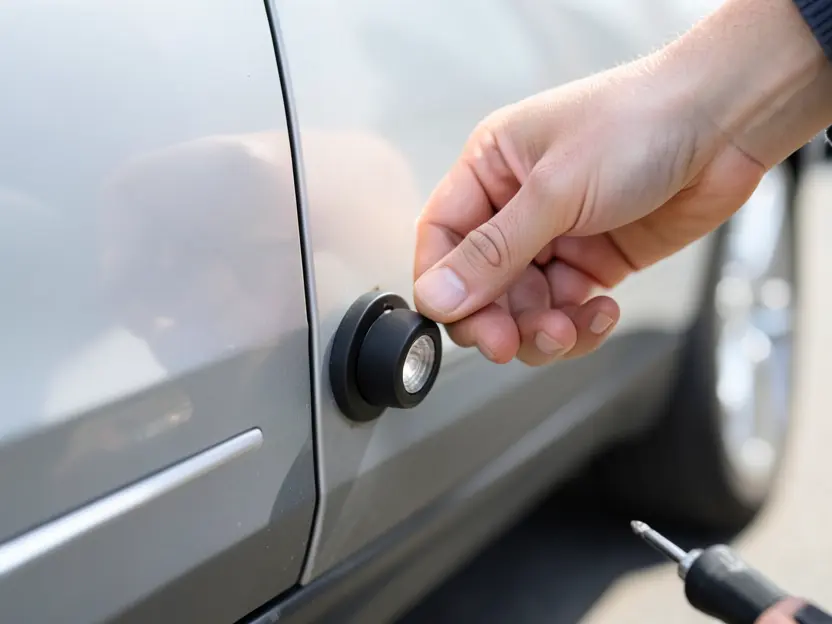
Installing a wireless kit
- Clean the mounting spot on the door edge, mirror housing, or rocker panel with rubbing alcohol so the adhesive or magnet sits flush.
- Test-fit the unit with the door open to confirm the projected image lands on flat pavement, not on the door sill or your own shoe.
- Peel the adhesive backing (or position the magnetic mount) and press the unit firmly in place for the time listed in the instructions, usually 30 to 60 seconds.
- Close and open the door a few times to confirm the motion sensor triggers reliably before you consider the install finished.
Installing a wired kit
- Remove the interior door panel or access the mirror housing following your vehicle’s specific removal steps, since this varies by make and model.
- Locate the factory courtesy light wiring or the door-open switch circuit and connect the new light using the supplied wire taps or connectors.
- Route the wire to the projector unit’s mounting location and secure it with zip ties or adhesive clips so it cannot rattle or get pinched when the door closes.
- Reassemble the door panel, then test the light through several open-close cycles before calling the job done.
If you are not comfortable pulling a door panel, the wireless route gets you nearly the same result with none of the wiring risk, which is why it is the more popular choice for a weekend upgrade.
What to Look for When Buying Ghost Lights
- Power type: wireless for a quick, reversible install; wired if you want the light to never need a battery change.
- Water resistance: look for an IP65 rating or better if the unit mounts anywhere it will see rain or road spray, such as a rocker panel or mirror housing.
- Mounting method: magnetic mounts are the easiest to remove or reposition; adhesive mounts are more permanent but hold better on rough surfaces.
- Battery type: replaceable coin-cell batteries are cheap and simple to swap; USB-rechargeable units avoid buying batteries but need to be recharged periodically.
- Design and brightness: a sharper lens and a higher-output LED will throw a crisper, more visible image, especially in daylight or under bright parking lot lighting.
Three Ghost Light Kits Worth Considering
All three of the following are wireless, battery-powered projector kits sold in pairs, so both doors get the same design.
| Kit | Design | Price |
|---|---|---|
| Ghost Funny LED Car Door Projector Light (2-pack) | Scream mask / horror design | $15.99 |
| NewL Custom Logo LED Projection Shadow Light (2-pack) | Customizable logo or text | $19.99 |
| SPOBODY LED Car Door Light Projector (2-pack) | Rechargeable, HD ghost shadow lamp | $21.99 |
The Scream-style kit above is the simplest starting point if you just want a fun, ready-made design out of the box. If you would rather project your own car brand logo or a custom shape, a customizable kit like the NewL option is the better fit, and if you want to skip buying replacement batteries entirely, a USB-rechargeable option like the SPOBODY kit is worth the few extra dollars.
Frequently Asked Questions
What are ghost lights for cars?
Ghost lights for cars are small LED projector units, usually mounted to the bottom edge of a door or side mirror, that cast a logo, symbol, or spooky design onto the pavement the moment the door opens. They are also sold as door projector lights, welcome lights, or shadow lights.
Are ghost lights the same as puddle lights?
They are close cousins. Puddle lights is the broader term for any light that illuminates the ground beside a car door, including plain factory-style lamps. Ghost lights are a subset of puddle lights that specifically project a shaped image, such as a skull, logo, or design, rather than just a plain pool of light.
Do ghost lights work on any car?
Most aftermarket ghost lights are designed to be universal and will mount to nearly any door edge, mirror housing, or door sill using adhesive, a magnet, or two small screws. A handful of vehicle-specific kits are built to plug into a factory courtesy light socket on certain makes, so check the listing before buying if you want a plug-and-play fit.
Are ghost lights legal in my state?
In nearly every state, yes. Ghost and puddle lights only aim a narrow beam straight down at the ground beneath the door, the same way a factory puddle lamp does, so they generally are not classified as underglow or auxiliary exterior lighting. To stay safe everywhere, avoid red or blue light colors and confirm your local vehicle equipment statute if you live somewhere with strict aftermarket lighting rules.
Do ghost lights drain the car battery?
Wireless, battery-powered ghost lights run on their own coin-cell or rechargeable battery and do not touch the car electrical system at all. Wired versions tap into the door courtesy light circuit, which only draws power for the few seconds the door is open, so the drain is negligible even after months of daily use.
How long do ghost lights last?
The LED module itself is rated for tens of thousands of hours and will typically outlast the car. The battery is the part that needs attention: a replaceable coin-cell battery generally lasts several months of normal use, while a USB-rechargeable unit usually needs a top-up every few weeks if the doors are opened several times a day.
Conclusion
Ghost lights are one of the cheapest, most reversible upgrades you can make to a car, and unlike underglow lighting, they are legal to run in essentially every state because the beam only ever points straight down at the pavement beneath the door. A wireless kit gets you a fun, personalized welcome light in about fifteen minutes with no wiring involved, while a wired kit trades a bit more install time for a light that never needs a battery. Either way, pick a design you will not get tired of and a mount rated for the weather you actually drive in.
Products related to this article
Sponsored / affiliate links. As an Amazon Associate I earn from qualifying purchases. I may earn additional commission from eligible campaigns.