Glow in the Dark Car Wraps: The Practical Buyer’s Guide
You’ve seen the videos online. A car sits in a dark garage, headlights switch off, and suddenly the whole body glows an eerie neon green. It looks like a movie prop. Then you check the price for a full vehicle wrap and wonder if it’s actually worth it, or if it’s just a gimmick that fades after a month.
I’ve spent the last few years working with vinyl wraps, both standard films and the newer photoluminescent options. The truth is that glow in the dark car wraps are a niche product with real trade-offs. They are not a replacement for standard vinyl, and they are definitely not a safety feature. But for a show car, a weekend cruiser, or a kid’s toy, they are a lot of fun.

Hot Wheels
Hot Wheels Toy Monster Trucks Glow-in-the-Dark Collection
- Hot Wheels Monster Trucks literally turn out the lights with 10 Glow in the Dark 1:64 scale die-cast vehicles!
- The set includes 5 Hot Wheels Monster Trucks and 5 Hot Wheels cars!
- The glow-in-the-dark feature adds to the already off-the-charts play factor with this instant collection!
This guide covers the practical science behind the glow, what it actually costs to install and remove, how long it lasts, and the legal gray areas you need to know before you commit. You’ll walk away knowing exactly what to buy, what to avoid, and whether this is the right modification for your situation.
If you want to test the glow effect before spending thousands on a full car, the Hot Wheels glow-in-the-dark 10-pack is a cheap way to see the pigment in action. It includes five monster trucks and five cars, all in 1:64 scale, so you can gauge the brightness and duration in a dark room. It’s not the same as a full wrap, but it gives you a feel for the material’s behavior.
What Is a Glow in the Dark Car Wrap?
A glow in the dark car wrap is a vinyl film embedded with photoluminescent pigment, usually strontium aluminate. This pigment absorbs light energy and releases it slowly over time. The wrap looks like a normal colored vinyl during the day, usually a pale green, blue, or white. At night, it emits a soft glow that lasts anywhere from 20 minutes to several hours.
This is not the same as a UV reactive wrap. A UV reactive wrap only shows color under black light. A photoluminescent film charges under any light source, including sunlight, LED, and fluorescent bulbs. The distinction matters because many sellers use the terms interchangeably.
You also need to separate this from reflective vinyl. Reflective wraps bounce light back to the source, like a traffic sign. Luminescent vinyl emits its own light after charging. The two are often confused in online listings.
How Does Photoluminescent Vinyl Actually Work?
The pigment particles in the vinyl absorb photons and excite electrons. When the light source goes away, the electrons return to their normal state and release the stored energy as visible light. This is called phosphorescence.
The quality of the pigment determines everything. Cheap wraps use zinc sulfide, which glows dimly and fades within 30 minutes. Good wraps use strontium aluminate, which is about ten times brighter and lasts much longer. You can tell the difference by looking at the raw pigment color. Zinc sulfide is pale yellow-green. Strontium aluminate is almost white when uncharged.
Charging Time vs. Glow Duration
Charging time directly affects glow duration. A high-quality photoluminescent film needs about 20 to 30 minutes of direct sunlight to reach full charge. Under indoor LED lighting, expect to leave it for 60 to 90 minutes.
Here is what you can realistically expect after a full charge:
- First 10 minutes: The wrap glows brightly, visible from 50 feet away in complete darkness.
- 30 to 60 minutes: The glow drops to about 30 percent brightness. It looks like a dim neon sign.
- 2 to 4 hours: The glow is faint but still visible up close. You can see the outline of the car.
- After 6 hours: Most wraps are effectively dark. You need to recharge.
The brightness curve is not linear. You lose half the glow in the first 15 minutes. If you plan to show the car at night, charge it right before you park.
Brightness Levels and Color Spectrum
Most glow wraps come in three colors: green, blue, and aqua. Green is the brightest because the human eye is most sensitive to that wavelength. Blue looks cool but is about 40 percent dimmer. Aqua sits in between.
You cannot get a red or orange glow wrap that works well. The pigment chemistry does not support those colors with any meaningful brightness. If a seller offers a red glow wrap, it is likely UV reactive, not photoluminescent.
Glow in the Dark Wrap vs. Standard Vinyl: Key Differences
| Feature | Standard Vinyl Wrap | Glow in the Dark Wrap |
|---|---|---|
| Daytime appearance | Full color range, exact match to paint swatches | Limited to pale green, blue, white |
| Night visibility | Dark, only reflects external light | Glows for 2-4 hours after charging |
| Material thickness | Typically 3-4 mil cast vinyl | Often 6-8 mil due to pigment layer |
| Conformability | Stretches well around curves | Stiffer, prone to lifting on complex body lines |
| Lifespan | 5-7 years with proper care | 2-4 years before glow fades significantly |
| Cost per square foot | $8 to $15 installed | $15 to $30 installed |
| Removal | Clean removal with heat | Can leave adhesive residue due to thicker film |
The thickness difference is the biggest practical issue. Standard cast vinyl is thin and flexible. Glow vinyl has a thick pigment layer that makes it stiffer. It does not wrap around side mirrors or bumper contours as cleanly. Plan on extra labor time for installation.
Is a Glowing Wrap Legal for Street Use?
This is the part most articles skip. The short answer is that it depends on your state, but there are some general rules.
Federal DOT regulations do not specifically ban photoluminescent vehicle wraps. However, most states have laws about reflective or luminous materials on vehicles. The concern is that a glowing car could distract other drivers or be mistaken for an emergency vehicle.
Some states, like California and New York, have strict vehicle lighting laws. They prohibit any device that emits light not specifically approved for road use. A glowing wrap could be considered an unapproved light source. Other states, like Texas and Florida, are more lenient as long as the wrap does not flash or mimic emergency lighting.
Your best approach is to check with your local DMV or highway patrol before installing. Many owners get away with it because the glow is not bright enough to attract attention during the day. But if you get pulled over at night, the officer has discretion to issue a fix-it ticket.
One workaround is to use glow wrap only on parts of the car that are not visible while driving, like the interior panels or the trunk lid. This keeps the aesthetic without putting a glowing surface directly in the line of sight of other drivers.
How Much Does a Glow in the Dark Wrap Cost?
Glow vinyl costs more than standard wrap material. A roll of quality photoluminescent film runs $400 to $800 for 50 square feet. That is enough for a motorcycle or a few body panels. A full car needs 250 to 300 square feet.
Labor is also higher because the material is harder to work with. Most shops charge 20 to 30 percent more for glow vinyl compared to standard film.
Price Breakdown by Vehicle Type
- Motorcycle or scooter: $800 to $1,500 for a complete job.
- Compact car (Honda Civic, Toyota Corolla): $2,500 to $4,000.
- Mid-size sedan (Camry, Accord): $3,000 to $4,500.
- SUV or truck: $4,000 to $6,500.
Compare that to a standard wrap, which runs $2,000 to $3,500 for a full car. You are paying a premium of roughly 40 to 60 percent. The material cost is the main driver.
If you install it yourself, you can save on labor but you need a clean garage, a heat gun, and a lot of patience. A full DIY job takes 20 to 30 hours for a beginner. Mistakes are expensive because the vinyl is not forgiving.
How to Choose the Right Glow Wrap for Your Car
Not all glow vinyl is the same. The market has a wide range of quality, and the cheapest options are usually a waste of money.
Color Options and Finish (Matte vs. Gloss)
Glow wraps come in matte and gloss finishes. Matte hides fingerprints and minor imperfections better. Gloss is easier to clean and gives a deeper glow at night.
You can also layer the glow vinyl over a standard matte wrap. This creates a two-tone effect where the glow sections appear only at night. It is a popular technique for racing stripes or accent panels. The trade-off is added cost and complexity.
Quality Indicators (Thickness, Adhesive, Warranty)
Look for three things when buying glow vinyl:
- Thickness: Good material is at least 6 mil. Anything thinner will not hold enough pigment.
- Adhesive: The backing should be a high-tack acrylic adhesive. Low-quality vinyl peels at the edges within weeks.
- Warranty: Reputable brands offer a 2-year warranty against fading and cracking. If the seller offers no warranty, walk away.
Also check the manufacturer’s stated glow duration. A quality product should claim at least 4 hours of visible glow. If the listing says only 30 minutes, that is zinc sulfide pigment and it is not worth your money.
Installation and Removal: What to Expect
Installation follows the same basic process as a standard wrap, but with more caution. The thicker material does not stretch as easily. You need to use more heat and work slower around curves.
Here is a simplified step-by-step for a DIY installation:
- Clean the panel thoroughly with isopropyl alcohol to remove all wax and grease.
- Measure and cut the vinyl with about two inches of excess on each side.
- Peel the backing and position the vinyl with a squeegee, starting from the center and working outward.
- Use a heat gun at 300°F to soften the vinyl around curves. Work slowly to avoid creases.
- Trim the excess with a sharp blade, leaving a small overlap for tucking under edges.
- Post-heat the entire panel to set the adhesive and prevent lifting.
Removal is where glow wraps get tricky. The thick pigment layer can leave a chalky residue on the paint. Use a heat gun to soften the adhesive and peel at a 45-degree angle. If the vinyl tears, use an adhesive remover like Rapid Remover or a citrus-based cleaner. Do not use a razor blade directly on the paint.
Most shops will remove a glow wrap for $500 to $800, depending on the vehicle size. Factor this into your total cost of ownership.
Maintenance and Longevity
Glow wraps require more care than standard vinyl. The pigment layer is sensitive to UV degradation and abrasive cleaners.
Cleaning Do’s and Don’ts
- Do use a pH-neutral car shampoo and a microfiber mitt.
- Do dry the car with a soft towel to avoid water spots.
- Don’t use a pressure washer above 1500 PSI, as it can lift the edges.
- Don’t use wax or polish containing abrasives. They will scratch the pigment layer.
- Don’t use automatic car washes with stiff brushes.
Preventing Premature Fading
The glow intensity will decrease over time. UV light from the sun is the main culprit. A quality wrap should maintain 80 percent of its glow for the first two years. After that, the decline is noticeable.
You can slow this down by parking in the shade or using a car cover. Also, apply a ceramic coating designed for vinyl. It adds a UV barrier and makes cleaning easier. Just make sure the coating is compatible with photoluminescent film.
Frequently Asked Questions
How long does a glow in the dark wrap actually glow?
After a full 30-minute charge in direct sunlight, expect 2 to 4 hours of visible glow. The first 15 minutes are bright, then it fades to a dim level. Under streetlights, it will not glow at all because the ambient light overpowers it.
Can I drive with a glow in the dark wrap at night?
Yes, you can drive, but the wrap will not glow while you are moving. The headlights of other cars and streetlights are not strong enough to charge the pigment. The wrap only glows after you park in a dark area, following a period of light exposure.
Will the wrap damage my paint when removed?
Not if the paint is in good condition and the wrap is removed properly with heat. The risk is higher than with standard vinyl because the thicker film can pull clear coat off if the paint is already failing. Get a professional removal if you have any doubts.
Can I put a glow wrap over an existing wrap?
Technically yes, but it is not recommended. The adhesive bonds to the top layer of the existing wrap, and removal becomes a nightmare. You will have to peel two layers and clean residue twice. It is better to remove the old wrap first.
Is a glow wrap suitable for a daily driver?
It is not the best choice for a daily driver. The glow effect fades faster with constant sun exposure, and the thicker material is more prone to rock chips. It works best on weekend cars that stay in a garage most of the time.
Final Verdict: Is It Worth It?
Glow in the dark car wraps are a niche product with a specific audience. If you want a unique show car that turns heads at night meets, it is worth the premium. If you are looking for a practical, long-lasting daily driver modification, you will be disappointed.
Here are the key points to remember:
- Expect to pay 40 to 60 percent more than a standard wrap, with full car jobs running $3,000 to $6,500.
- Charge time is 20 to 30 minutes in direct sunlight for a 2 to 4 hour glow.
- Green is the brightest color; blue and aqua are dimmer but look cooler.
- Check your state laws before installation. Glow wraps are a legal gray area.
- Lifespan is 2 to 4 years, about half that of standard vinyl.
- Removal can leave residue, so budget for professional removal.
- Test the effect with a small vinyl sample or a toy set before committing to a full wrap.
The technology is improving every year. Pigment quality is better now than it was five years ago, and prices are slowly dropping. If you are on the fence, wait a bit and see if the next generation of film lasts longer. For now, treat it as a fun, temporary modification rather than a permanent upgrade.
Products related to this article
Sponsored / affiliate links. As an Amazon Associate I earn from qualifying purchases. I may earn additional commission from eligible campaigns.
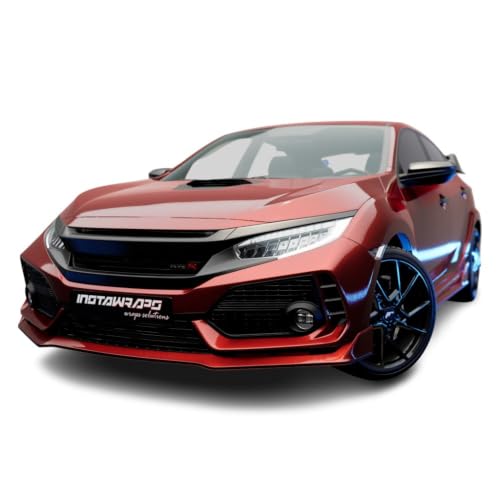 3M Car Wrap Roll 2080 Gloss Red Metallic | G203 | (5ft x 10ft (50 Sq/ft)) | Automotive Vinyl Wrap for Cars - Car Interior Wrap & Exterior | w/Free Instawraps Pro Glove
 AD Car Wrap Roll SW900 Gloss Red Diamond | 426-D | (5ft x 15ft (75 Sq/ft)) | Automotive Vinyl Wrap for Cars - Car Interior Wrap & Exterior | w/Free Instawraps Pro Glove