The Science Behind Auto Repair: What Technicians Actually Do
You hear a clunk from the front suspension when you hit a pothole. Or the check engine light glows steady on a Tuesday morning. Most drivers see a trip to the shop as a black box: you drop the car off, get a call with a number, and hope the fix holds. But the person on the other side of that counter isn’t just turning bolts. They’re applying physics, chemistry, and electronics to a machine that generates controlled explosions thousands of times per minute.
This article walks through a working technician’s day through the lens of hard science. You’ll see how torque specs prevent catastrophic failures, why coolant systems rely on fluid dynamics, and how a $40 code reader can save you from a $1,200 guess. You’ll also learn where the trade is heading as electric vehicles and driver-assistance systems demand skills that didn’t exist ten years ago.

ANCEL
ANCEL AD310 Classic Enhanced Universal OBD II…
- CEL Doctor: The ANCEL AD310 is one of the best-selling OBD II scanners on the market and is recommended by Scotty Kilmer, a YouTub…
- Sturdy and Compact: Equipped with a 2.5 foot cable made of very thick, flexible insulation. It is important to have a sturdy scann…
- Accurate Fast and Easy to Use: The AD310 scanner can help you or your mechanic understand if your car is in good condition, provid…
If you’re just getting started with diagnostics, a reliable OBD-II scanner is the single best investment you can make. The ANCEL AD310 plugs into your car’s diagnostic port and reads engine trouble codes in seconds. It won’t rebuild a transmission, but it will tell you why the check engine light is on and let you clear codes after a fix. For home mechanics and pros alike, it’s the first tool you grab.
The Scientific Method in the Garage: More Than Just Wrenches
Real diagnosis starts with a hypothesis, not a part order. A customer complains about a vibration at 65 mph. A parts-store employee might sell them new tires. A technician trained in the scientific method asks questions first: Does the vibration change with engine speed or road speed? Does it happen under braking? Is it worse when the steering wheel is turned one way?
Those answers split the problem into domains. Road-speed vibration points to tires, wheels, driveshaft, or differential. Engine-speed vibration points to the crankshaft damper, accessory belt, or a misfire. Brake-pedal pulsation points to rotor thickness variation. Each branch has a set of tests, and each test has a measurable outcome.
The process mirrors a lab protocol. Observe the symptom, gather data, form a hypothesis, test it, and verify the fix. Skipping steps leads to the classic failure mode: replacing a mass airflow sensor because a code said so, only to find the real problem was a vacuum leak upstream. The code was a symptom, not the disease.
This is why ASE certification matters. The tests aren’t just about memorizing torque specs. They force you to think through systems: why a lean condition code appears, what sensors feed the engine control module, and how a faulty ground can mimic a dead fuel pump. The certification validates that you can reason, not just wrench.
Physics in Motion: Torque, Inertia, and the Internal Combustion Engine
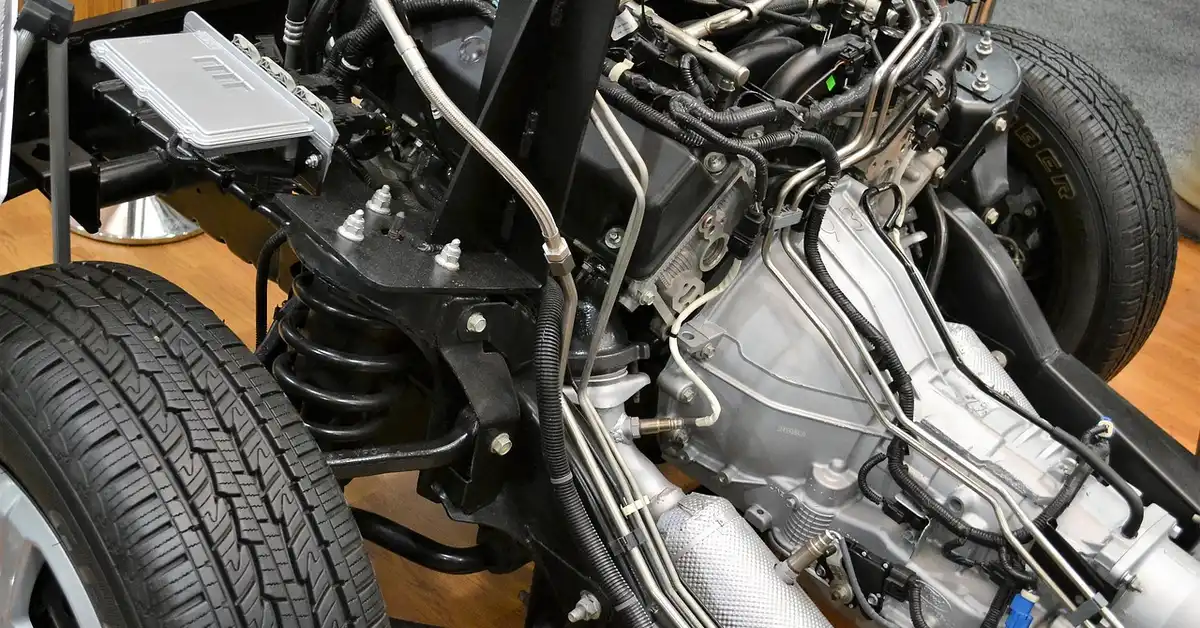
An internal combustion engine is a heat engine. It converts chemical energy in fuel into thermal energy through combustion, then into mechanical work through pressure on the pistons. But the numbers are staggering. A typical four-cylinder at 3,000 rpm fires each cylinder 25 times per second. The piston accelerates from zero to roughly 40 mph and back to zero in about 8 milliseconds.
Torque is the rotational force the engine produces, measured in pound-feet. Horsepower is a calculation of torque over time: (torque × rpm) ÷ 5,252. That’s not an opinion; it’s the formula. A diesel truck engine makes massive torque at low rpm because its long stroke and high compression ratio create more leverage per combustion event. A motorcycle engine makes less torque but revs higher, so it produces comparable horsepower.
Technicians respect torque specs because they understand what happens without them. Over-tighten a head bolt, and you stretch it past its yield point. The bolt becomes a spring with less clamping force, and the head gasket leaks. Under-tighten it, and the gasket can’t seal combustion pressure. Either way, you’re doing the job twice. Torque specs exist because the engineering team already calculated the exact clamping force needed for the joint to survive thousands of heat cycles.
Inertia plays a role too. A flywheel stores rotational energy to smooth out the pulses between firing strokes. A heavier flywheel makes the engine feel lazy but helps with low-speed crawling in a truck. A lightweight flywheel lets an engine rev faster but can stall easier. When a technician replaces a dual-mass flywheel with a solid one to save money, they’re changing the vehicle dynamics. The car will vibrate more at idle and may be harder to drive smoothly. The physics don’t care about your budget.
Fluid Dynamics: From Braking Systems to Cooling Systems
Brake fluid is a hydraulic medium. It doesn’t compress. When you press the pedal, the master cylinder pushes fluid through the lines, and that pressure acts on the caliper pistons. The math is simple: pressure equals force divided by area. A small master cylinder piston pushing on a larger caliper piston multiplies force. That’s how a 100-pound pedal press can generate over 1,000 psi at the caliper.
Water in brake fluid ruins this system. Water boils at 212°F, but brake fluid can reach 400°F under hard use. When water boils, it creates vapor. Vapor compresses. Your pedal goes to the floor because the energy is compressing gas instead of moving pistons. This is why technicians use a brake fluid tester that measures the boiling point, not just look at the color. The fluid may look clean but contain 3% water by volume.
Cooling systems follow the same principles. A water pump moves coolant through the engine block, radiator, and heater core. The thermostat restricts flow until the engine reaches operating temperature, typically 195°F to 220°F. But the real science shows up in the radiator cap. It raises the system pressure to about 15 psi, which raises the boiling point of the coolant to roughly 260°F. Without that pressure, the coolant would boil at 212°F, creating steam pockets that cause hot spots and engine damage.
Bernoulli’s principle shows up in fuel delivery. A carburetor uses a venturi—a narrowed section—to speed up airflow and drop pressure. That low pressure pulls fuel from the float bowl into the airstream. Fuel injection replaced carburetors for precision, but the same physics governs how a fuel pressure regulator works. It maintains a constant pressure differential across the injector, so the amount of fuel sprayed depends only on injector pulse width, not on manifold vacuum.
Regenerative braking on hybrids and EVs adds a twist. Instead of wasting kinetic energy as heat in the brake rotors, the electric motor runs as a generator, converting motion back into battery charge. The hydraulic brakes still exist for hard stops, but the transition between regen and friction braking must be seamless. If the calibration is off, the pedal feels like a light switch—grabby or dead. Technicians need to understand both the hydraulic system and the electric motor’s torque curves to diagnose a poor brake feel.
The Invisible Science: Electrical Circuits and Signal Diagnosis
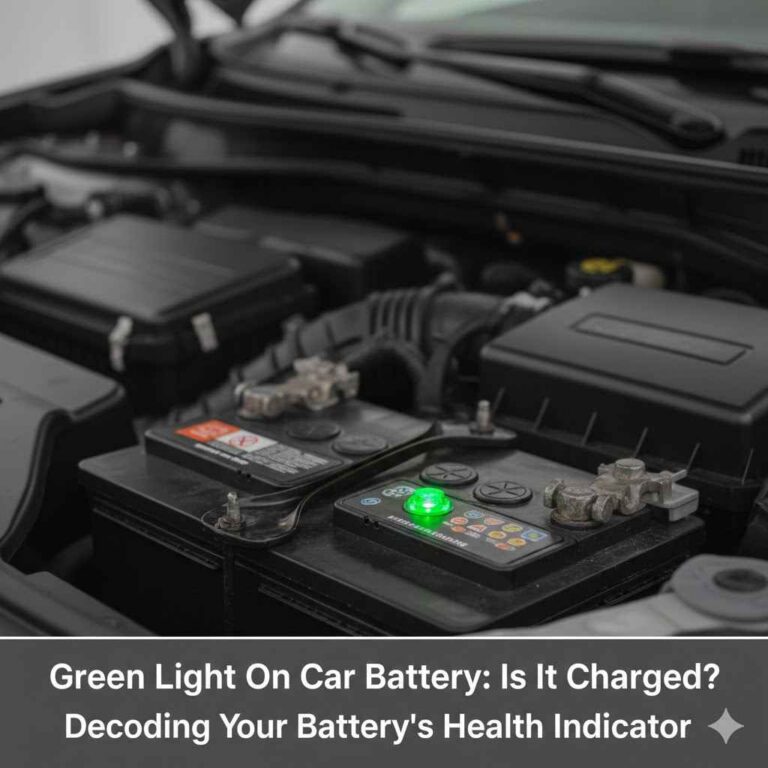
Electrical faults are the most common reason a modern car gets misdiagnosed. A battery with 12.4 volts can still fail to crank the engine if it can’t deliver cold cranking amps. A voltage drop of 0.5 volts across a cable can halve the current available to a starter motor. Technicians use a multimeter to measure voltage, current, and resistance, but the real skill is knowing where to probe.
Consider a parasitic drain. The battery dies overnight, but a load test says the battery is healthy. The technician connects a multimeter in series with the battery cable to measure current draw. A normal draw is 20 to 50 milliamps to keep the clock and memory alive. A drain of 300 milliamps will kill a battery in a few days. The technician starts pulling fuses one by one, watching the current drop. When it drops, they’ve found the circuit. Then they trace the circuit to find the faulty module, a stuck relay, or a glovebox light that won’t turn off.
Using Oscilloscopes to Read Sensor Data
A multimeter shows an average value. An oscilloscope shows the actual waveform. That’s a critical difference when diagnosing a crank sensor or a variable valve timing solenoid. A crank sensor should produce a clean square wave as the reluctor wheel passes. If the waveform has glitches or missing pulses, the sensor may be failing, or the air gap may be wrong. A multimeter would show a voltage that looks acceptable, but the scope reveals the signal is dropping out at specific rpm.
Fuel injector waveforms tell a similar story. A healthy injector shows a sharp voltage spike when it closes—the flyback voltage from the coil collapsing. If that spike is weak or missing, the injector coil is shorted. You can’t see that with a scan tool. You need a scope and the knowledge to interpret the pattern.
Materials Science: Metallurgy and Polymer Chemistry in Body Repair
Modern cars use a mix of steel, aluminum, and high-strength plastics. Each material behaves differently under stress, heat, and collision. A technician welding a frame rail on a 2026 truck needs to know the metal’s yield strength and whether it’s high-strength low-alloy steel or boron steel. Welding the wrong material with the wrong heat can weaken the structure, turning a safe repair into a hazard.
Aluminum body panels are common on hoods and liftgates. Aluminum doesn’t rust, but it corrodes. It also conducts heat far better than steel, so welding it requires different settings and technique. A steel weld on an aluminum panel won’t stick. An aluminum weld on a steel panel will crack. Technicians need to identify the base metal before striking an arc.
Plastic repairs are a chemistry lesson. Bumper covers are usually polypropylene, which resists most adhesives. If you don’t use a plastic adhesion promoter, the repair fails in weeks. Other parts are polyurethane or ABS, each requiring different prep and adhesive. A technician who skips the identification step is gambling with the customer’s money.
Tribology: The Science of Friction and Lubrication
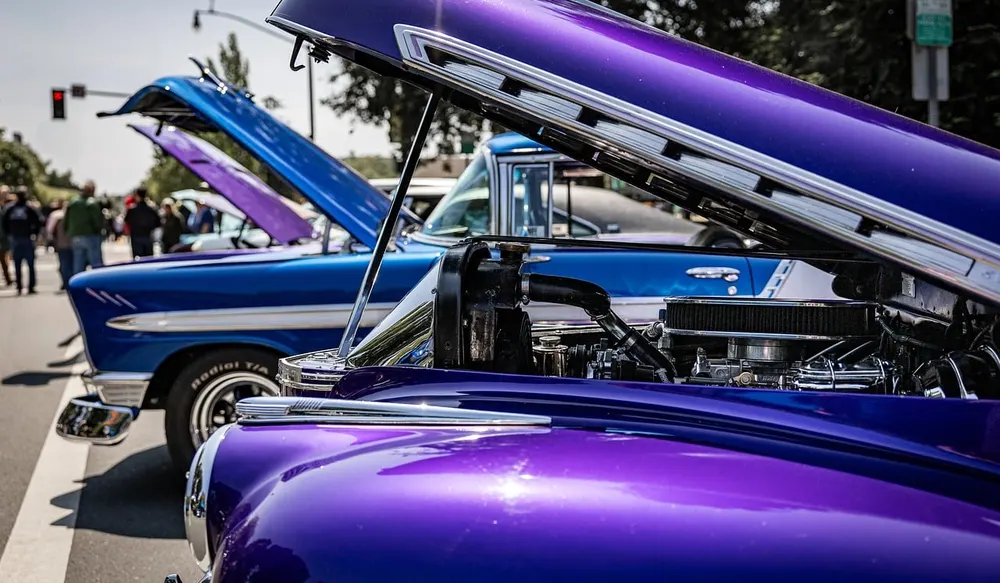
Tribology is the study of wear, friction, and lubrication. It’s the reason your engine doesn’t destroy itself in the first minute of operation. Engine oil forms a thin film between moving parts, preventing metal-to-metal contact. The film thickness depends on the oil’s viscosity and the load on the bearing. That’s why oil viscosity ratings matter.
A 0W-20 oil flows easily at cold temperatures (the “0W” part) but thickens enough at operating temperature to maintain a film (the “20” part). A 10W-40 is thicker at both ends. Using the wrong viscosity can cause problems. Too thin, and the film breaks down under high load, causing bearing wear. Too thick, and the oil doesn’t flow to critical parts at cold start, causing wear on the first few revolutions.
Technicians see the results of tribology failures daily. An engine with sludge buildup has restricted oil passages, so bearings run dry. A transmission with burnt fluid has lost its friction modifiers, so the clutches slip and shudder. The fix isn’t just an oil change; it’s understanding why the oil degraded. Short trips prevent the oil from reaching full operating temperature, allowing condensation and fuel dilution to accumulate. That’s a scientific explanation, not a guess.
The New Frontier: ADAS Calibration and EV Battery Chemistry
Advanced Driver-Assistance Systems (ADAS) have changed what it means to be a technician. A windshield replacement on a car with a forward-facing camera isn’t just glass. The camera must be recalibrated so it can accurately judge distance and lane position. If the calibration is off by a few millimeters, the adaptive cruise control might brake too late or the lane-keeping system might drift.
Calibration requires specific targets, level floors, and manufacturer procedures. Some systems use a static calibration in the shop with a target board placed at a precise distance from the windshield. Others require a dynamic calibration, which means a test drive with the scan tool connected to verify the system is learning correctly. This isn’t a parts-changer’s job. It requires understanding optics, geometry, and the vehicle’s specific software.
Electric vehicle batteries introduce chemistry into the daily workflow. A technician needs to know that lithium-ion cells degrade faster when kept at 100% charge or exposed to high heat. They need to understand how the battery management system balances cells and why a single weak cell can reduce the entire pack’s capacity. High-voltage safety is non-negotiable: a 400-volt battery can kill you if you don’t follow proper lockout procedures. The science here is literal life-or-death.
The Future of the Trade: Data Science and Predictive Maintenance
The cars are getting smarter, and so is the diagnostic process. Modern vehicles generate gigabytes of data. The onboard diagnostics system records not just trouble codes but freeze frame data—the exact conditions when the code was set, including rpm, speed, coolant temperature, and fuel trim. That data is a scientific record of the failure event.
Predictive maintenance is the next step. Instead of replacing a part when it fails, the system analyzes sensor data to predict when it will fail. For example, a crankshaft position sensor might show a slightly erratic signal for months before it fails completely. The ECU may not set a code, but the waveform data shows a trend. A technician with access to this data can recommend a replacement before the car leaves the driver stranded.
This shift means the technician’s role evolves from repair to analysis. You’re not just fixing what’s broken; you’re interpreting trends and recommending interventions. That’s data science applied to a 2-ton machine. The technicians who embrace this will have job security for decades. The ones who refuse to learn will struggle.
What This Means for Your Next Visit
You now know the science behind the repair. Here’s how to use it.
- Ask for the diagnostic data. A good technician will show you the freeze frame or the live data that led to the diagnosis.
- Invest in a basic OBD-II scanner like the ANCEL AD310. It won’t replace a pro, but it gives you a starting point and helps you avoid panicking over a loose gas cap code.
- Respect torque specs. If a shop doesn’t use a torque wrench on critical fasteners, find another shop.
- Follow the maintenance schedule, especially for fluids. Tribology is real; oil degrades and loses its protective properties.
- Understand that ADAS calibration is not optional after a windshield replacement. If a shop says they can do it without recalibration, they’re cutting corners.
- For older cars, check the auto repair services cost before approving work. The science doesn’t change the bill, but knowing the process helps you ask better questions.
- If you’re considering a career in this field, know that the job is more brain than brawn. The profitable repair shop strategies hinge on accurate diagnosis, not just fast labor.
The science of auto repair isn’t a secret. It’s a discipline. The best technicians treat every car like a lab experiment, and they’re happiest when the data confirms their hypothesis. That’s the difference between a parts swapper and a true professional.
Frequently Asked Questions
Do I need a science degree to be an auto repair technician?
No. Most technicians learn through vocational programs and on-the-job training. But you need a solid grasp of high school physics and chemistry. You’ll use Ohm’s law, torque formulas, and basic thermodynamics daily. If you struggled with those subjects, you can still succeed, but you’ll need to study them in the context of automotive systems.
Why does my car need a special diagnostic tool that the parts store scanner can’t read?
Generic OBD-II scanners read engine codes on all cars. But they often can’t access manufacturer-specific codes for the transmission, ABS, airbags, or body control modules. Those systems use different communication protocols and data formats. A professional-grade scan tool costs more because it has the software licenses to talk to every module in your specific vehicle.
What is the difference between a code reader and a scan tool?
A code reader like the ANCEL AD310 reads and clears generic powertrain codes. It’s perfect for a check engine light. A scan tool goes deeper. It reads live data from all sensors, performs bidirectional tests (like commanding a fuel pump on), and can access all modules. Scan tools cost hundreds or thousands of dollars. Code readers cost less than a tank of gas.
Can I fix my car myself using a code reader and YouTube?
Sometimes. If the code points to a simple part like an oxygen sensor or a gas cap, you can often do it yourself. But you risk misdiagnosis. A code reader tells you the circuit is out of range, not why. The wiring could be chafed, the connector corroded, or the sensor could be fine but the fuel trims are off due to a vacuum leak. If you’re not comfortable using a multimeter and reading wiring diagrams, leave the complex diagnosis to a professional.
Why is ADAS calibration so expensive?
It requires specialized equipment and software. The target boards, the scan tool, and the manufacturer-specific procedures are expensive to maintain. The technician needs training to perform the calibration correctly. It’s a specialized skill, and you’re paying for the knowledge and the equipment, not just the labor. Skipping it after a windshield replacement can make your safety systems unreliable, so it’s not an area to cut corners.
Products related to this article
Sponsored / affiliate links. As an Amazon Associate I earn from qualifying purchases. I may earn additional commission from eligible campaigns.