How Do Cooling Car Seats Work: Proven Comfort
Cooling car seats work by circulating air or using thermoelectric cooling to draw heat away from your body, providing a comfortable and dry experience, especially in warm weather. They use fans or special materials to achieve this cooling effect directly where you sit.
Feeling that sticky, uncomfortable heat on a long drive? You’re not alone! Many car owners wish for a way to stay cool and dry, especially when AC struggles or on sweltering days. Thankfully, cooling car seats are a real game-changer for comfort. These fantastic features actively work to keep you cool, making those hot commutes or road trips much more enjoyable. You might wonder, “How do these seats actually work?” It’s simpler than you think, and today, I’ll break it down for you in easy terms. Get ready to discover the secret to proven seating comfort!
The Heat is On: Why We Need Car Seat Cooling
We all know that feeling. You get into your car after it’s been sitting in the sun, and the seats feel like a hot stove. Over time, this can lead to discomfort, sweat, and a generally unpleasant driving experience. Even with your car’s air conditioning blasting, sometimes the heat builds up right where you’re sitting, especially on traditional fabric or leather seats. This is where the magic of cooling car seats comes in. They offer a personal cooling solution right under you, making a huge difference!
How Do Cooling Car Seats Work? The Science Explained Simply
Cooling car seats aren’t just a myth; they’re a clever piece of automotive technology designed to keep you comfortable. There are two main ways they achieve this amazing feat: active ventilation and thermoelectric cooling. Let’s dive into each one so you can understand exactly what’s happening to keep you from overheating.
1. Active Ventilation: The Fan-Powered Approach
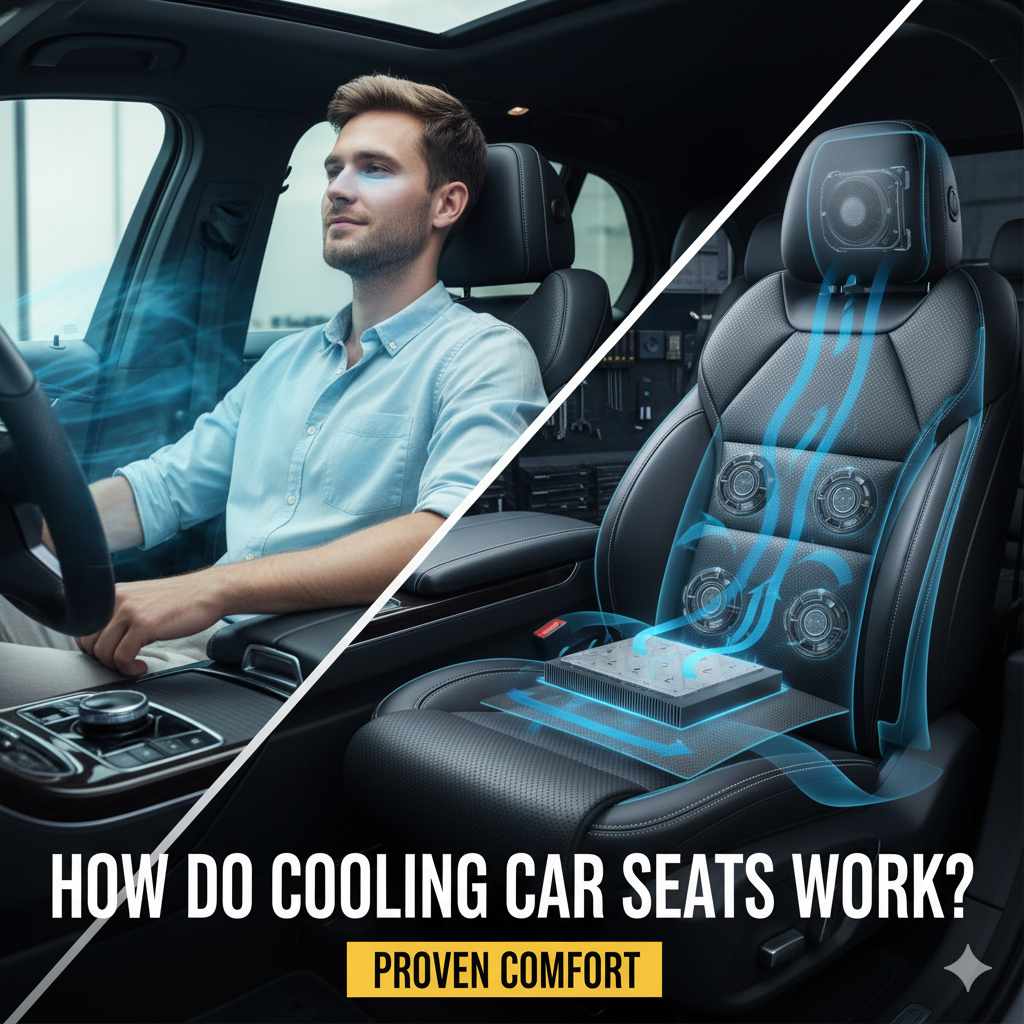
This is the most common and straightforward method used in many vehicles today. Think of it like a gentle breeze circulating right where you sit. Here’s how it works:
- Small Fans: Inside the seat cushion and backrest, there are several small, quiet fans. These fans are strategically placed to move air.
- Airflow Channels: The seat itself has a network of channels or a perforated surface. These are designed to guide the air from the fans.
- Drawing Heat Away: The fans gently pull warm air from your body and the surface of the seat. They then push cooler air through the perforations in the seat cover. This constant movement of air helps evaporate sweat and prevents heat buildup.
- Comfortable and Dry: The result is a feeling of fresh, cool air circulating around you, keeping your back and legs dry and much more comfortable, even on the hottest days. It’s a lot like having a personal, built-in fan that keeps your seat from becoming a sweaty mess.
Many modern luxury vehicles offer this type of cooling system. It’s effective, relatively quiet, and uses energy efficiently. The perforated upholstery on these seats is key, allowing the cool air to reach your skin.
2. Thermoelectric Cooling (TEC): The Advanced Method
While less common in everyday vehicles than active ventilation, thermoelectric cooling is another effective way to achieve seat cooling. This technology uses something called the Peltier effect. It sounds complex, but the concept is surprisingly neat:
- The Peltier Effect: This is a scientific phenomenon where an electric current is passed through two different types of semiconductors. When this happens, it causes one side to get cold and the other side to get hot.
- Cooling Module: In a thermoelectric cooling seat, a special device called a Peltier module is installed within the seat. When electricity flows through it, one side of the module becomes cool to the touch.
- Heat Transfer: This cool side of the Peltier module is placed in contact with the seat’s surface materials. It actively draws heat away from the occupant and the seat itself.
- Heat Dissipation: The “hot” side of the Peltier module needs to dissipate its heat. This is often done using a small heatsink and fan, similar to those found in computers, to move the heat away from the seat and into the cabin or under the seat.
Thermoelectric cooling can provide a more intense cooling sensation than fans alone because it actively removes heat rather than just circulating air. However, it can be more energy-intensive and might generate a bit more heat that needs to be managed.
What’s Inside a Cooling Car Seat? A Look Under the Upholstery
To better understand how these seats work, let’s peek behind the curtain, so to speak. The components are cleverly integrated to provide comfort without being bulky or noticeable.
| Component | Function |
|---|---|
| Fan(s) | To draw in ambient air or move cooler air from within the seat structure. |
| Air Channels / Ducts | A network that directs airflow through the seat cushion and back. |
| Perforated Upholstery | Special fabric or leather with small holes that allow cool air to escape and reach the occupant. |
| Peltier Module (for TEC) | The core component that uses electricity to create a temperature difference (one side cold, one side hot). |
| Heatsink and Fan (for TEC) | To dissipate the heat generated by the TEC module. |
| Wiring and Control Module | Connects the system to your car’s power and allows you to adjust settings (e.g., fan speed, cooling level). |
These components work together seamlessly. When you turn on the cooling feature, the fans start spinning (or the Peltier module activates), air channels guide the flow, and the perforated upholstery delivers the cool relief directly to you. It’s a sophisticated system designed for one purpose: your comfort.
Are Cooling Car Seats Worth It? Pros and Cons
Like any automotive feature, cooling car seats have their advantages and disadvantages. Understanding these can help you decide if it’s a feature you value or would seek out in a new vehicle.
Pros of Cooling Car Seats:
- Enhanced Comfort: This is the biggest benefit. Say goodbye to sweaty backs and legs during hot weather.
- Improved Driving Experience: Staying cool and comfortable can lead to less fatigue and a more pleasant drive, especially on long journeys.
- Drier Seat Surface: The airflow helps to reduce moisture and stickiness, keeping the seat feeling drier.
- Luxury Feel: Often found in higher trim levels or luxury vehicles, they add a touch of premium comfort.
- Potential Health Benefits: For individuals sensitive to heat or with certain medical conditions, consistent cooling can be a significant comfort aid.
Cons of Cooling Car Seats:
- Cost: Vehicles equipped with cooling seats are typically more expensive.
- Energy Consumption: The fans and modules draw power, which can slightly impact fuel efficiency, though usually minimally.
- Complexity and Maintenance: More components mean more potential for things to go wrong. Repairs can be more complex and costly than for standard seats.
- Upholstery Restrictions: The perforated material required for airflow can sometimes be less durable or harder to clean than solid upholstery.
- Noise: While usually quiet, you might hear the faint hum of the fans in some systems.
Ultimately, the “worth” of cooling seats depends on your personal priorities, climate, and budget. For many who live in hot regions, they are an invaluable feature.
Keeping Your Cool: How to Use and Maintain Cooling Seats
Once you have cooling seats, using them correctly and doing a little basic maintenance can ensure they work well for a long time. It’s not complicated, but a few tips can go a long way.
Using Your Cooling Seats:
- Locate the Controls: These are usually found on the side of the seat, near the power seat adjustments, or integrated into your vehicle’s infotainment system.
- Select the Mode: You’ll typically have options for “Cool,” “Heat,” and sometimes “Ventilation” or “Fan Speed” settings. Choose “Cool” or the appropriate fan setting.
- Adjust Fan Speed: If available, start with a higher fan speed to feel the cooling effect quickly. You can then lower it to a comfortable level.
- Patience is Key: It might take a minute or two for the cooling system to start working effectively. Don’t expect instant icy cold, but rather a gradual sense of relief.
- Combine with AC: For maximum effect, use cooling seats in conjunction with your car’s regular air conditioning. The AC cools the cabin, and the seats cool you directly.
Maintaining Your Cooling Seats:
Maintaining active ventilation cooling seats is generally straightforward. The biggest thing is to keep the airflow pathways clear.
- Avoid Blockages: Don’t place large objects or heavy items directly on the seat that could block the air channels or perforations.
- Clean Upholstery Properly: When cleaning your car’s interior, use cleaning products recommended for your specific upholstery type (leather, cloth). Be gentle around the perforated areas. Use a slightly damp (not wet) cloth. Specialized automotive upholstery cleaner sprays are your best friend here. For a more in-depth guide on car interior cleaning, check out resources from automotive detailing experts.
- Check for Debris: Occasionally, check the perforations for any dust or debris that may have accumulated. A soft brush or a vacuum cleaner with a brush attachment can gently clean these areas.
- Listen for Strange Noises: If the fans start making unusual grinding or rattling sounds, it could indicate a problem with a fan motor or a foreign object.
- Professional Inspection: If you suspect a malfunction (e.g., no airflow, unusual heat buildup), it’s best to have it checked by a qualified automotive technician. Unlike routine maintenance, these are specialized systems. The National Highway Traffic Safety Administration (NHTSA) offers general safety tips that can be relevant when considering any automotive repair or feature.
For thermoelectric systems, maintenance is similar, with an added note to ensure the small heatsink/fan assembly (if present) remains free of dust. Think of it like keeping a computer’s fan clean to prevent overheating. Regular dusting and avoiding obstructions are the best preventative measures.
Aftermarket Solutions: Add Cooling to Any Seat
Not every car comes with built-in cooling seats. But don’t worry if your ride doesn’t have this feature – you can still get a taste of that cool comfort! There are several aftermarket options available that can be added to virtually any car seat.
Types of Aftermarket Cooling Seat Cushions:
- Fan-Cushion Systems: These are the most common. They are essentially seat cushions that contain small, electric fans. You plug them into your car’s 12V power outlet (cigarette lighter). They work on the principle of active ventilation, blowing air through small holes in the cushion.
- Thermoelectric Cushions: Less common than fan-based ones, these use Peltier modules for active cooling. They also plug into the 12V outlet but can sometimes draw more power.
- Water- or Gel-Based Cushions: While not “active” cooling in the electronic sense, some specialized cushions use water or gel to absorb heat from your body. They don’t blow air but can offer a cooler surface compared to standard seats.
These aftermarket solutions are a great way to add comfort without the expense of buying a new car. They are usually portable and easy to install. Simply place the cushion on your seat, route the power cord, and plug it in.
Choosing an Aftermarket Cooling Seat:
When shopping for an aftermarket cooling seat, consider these points:
- Power Source: Most run off the car’s 12V outlet. Check the power draw to ensure it won’t overload your car’s electrical system (though this is rare for typical seat cushions).
- Fan Speed Settings: Look for options to adjust the fan speed for personalized comfort.
- Comfort and Fit: Ensure the cushion is comfortable to sit on and doesn’t interfere with driving posture or safety.
- Upholstery Material: Breathable mesh is usually best for allowing airflow.
- Durability and Reviews: Read reviews from other users to gauge the product’s longevity and effectiveness.
Aftermarket cooling seat cushions are an accessible and effective way to beat the heat. They are a perfect solution for drivers who want to enhance their comfort without major vehicle modifications.
Frequently Asked Questions (FAQ)
Q1: Do cooling car seats make you wet?
No, the opposite is true! Cooling car seats are designed to keep you dry. By circulating air or actively removing heat, they help evaporate sweat and prevent moisture buildup, keeping you comfortable and dry.
Q2: How much power do cooling car seats use?
Built-in cooling seats are designed to be quite efficient and have a minimal impact on your car’s electrical system and fuel economy. Aftermarket cushions vary, but most are designed to run safely off a standard 12V car outlet without causing issues.
Q3: Can I add cooling seats to my car if it doesn’t have them?
Yes! You can easily add cooling comfort with aftermarket cooling seat cushions. These plug into your car’s 12V outlet and offer a significant cooling effect.
Q4: Are cooling seats noisy?
Most built-in cooling seats are very quiet, with just a faint hum from the fans. Some aftermarket cushions might be slightly more audible, but generally, the noise is minimal and not distracting for most drivers.
Q5: Is it okay to use cooling seats in winter?
Generally, cooling seats are designed for warm weather. In winter, the airflow might feel drafty or unnecessary. For most systems, you simply turn the cooling feature off. Many vehicles with cooling seats also have heating functions, which you would use in colder months.
Q6: How do I clean a cooling car seat?
For built-in seats, clean the upholstery as you normally would, being careful around the perforated areas. For aftermarket cushions, follow the manufacturer’s instructions, but typically a damp cloth and mild soap or upholstery cleaner are suitable. Ensure the cushion is dry before using it again.
Conclusion: Your Ticket to a Cooler Drive
Understanding how cooling car seats work reveals a smart blend of engineering focused on enhancing your driving experience. Whether through the gentle circulation of air from small fans or the more advanced thermoelectric cooling, these seats are designed to combat heat and humidity, offering a much-needed oasis of comfort on hot days. They transform uncomfortable commutes into more pleasant journeys, allowing you to focus on the road and arrive at your destination feeling refreshed.
From integrated systems in modern vehicles to accessible aftermarket cushions, the technology is readily available. By knowing the basics of their operation and simple maintenance tips, you can ensure your cooling seats perform at their best, providing reliable comfort season after season. So, if you’re looking to beat the heat and elevate your drive, exploring cooling car seat options is a proven path to proven comfort. Stay cool out there!