How Does CarMax Make Money: Proven Strategies
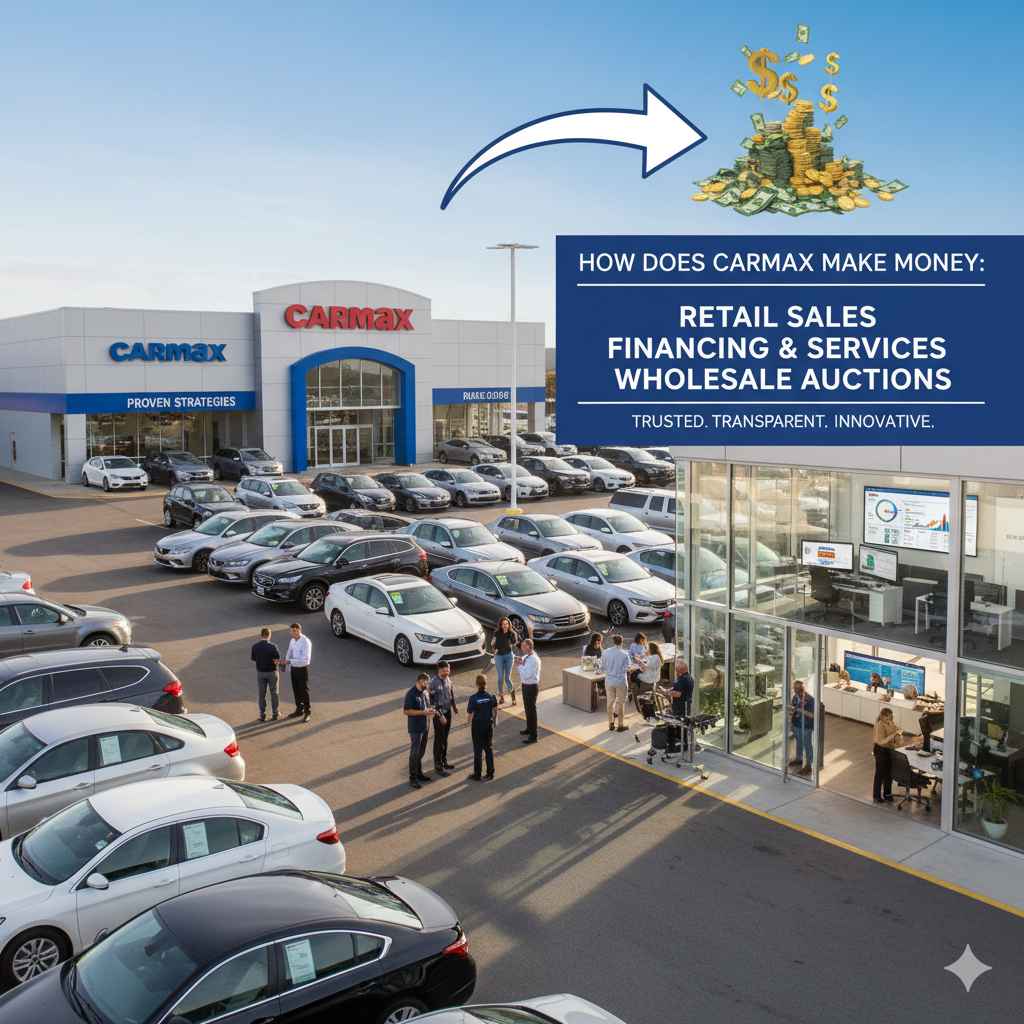
CarMax primarily makes money by buying used cars at a wholesale price and selling them to customers at a retail price, profiting from the markup. They also generate income through financing (CarMax Auto Finance), selling extended warranties (MaxCare), and offering wholesale auctions for cars they don’t retail.
Ever wondered about the magic behind CarMax? You know, that giant used car dealer where you can walk in, pick a car, and drive away feeling pretty good about it? It’s a common question to ask, especially when you’re thinking about buying or selling a car. Figuring out how a business like CarMax keeps its doors open and serves so many people can seem a bit mysterious. Don’t worry, though! I’m here to break it down in a way that’s easy to understand, just like checking your tire pressure. We’ll explore the smart strategies CarMax uses to turn those pre-owned vehicles into happy customers and a thriving business. Get ready to see how they make it all work!
Understanding the CarMax Business Model: More Than Just Selling Cars
CarMax isn’t your typical neighborhood used car lot. They’ve built a reputation on transparency and a no-haggle pricing model, which definitely appeals to a lot of folks. But beneath that customer-friendly exterior lies a well-oiled machine designed for profitability. Let’s peel back the layers and see what makes this model tick. Think of it like understanding how your car runs – once you know the parts, it’s much less intimidating.
The Core Profit Engine: Buying Low, Selling High
At its heart, CarMax operates like most retailers: they buy a product, add some value or presentation, and sell it for more than they paid. For CarMax, that product is used cars.
Acquisition Strategy: CarMax buys cars from a variety of sources. This includes:
Customer Trade-ins: When someone buys a car from CarMax, they often trade in their old vehicle. CarMax evaluates these and offers a price.
Direct Car Purchases: You can also sell your car to CarMax directly, even if you don’t plan to buy from them. They make an offer based on the car’s condition and market value.
Auctions and Wholesale: They also acquire vehicles from wholesale auctions and other sources to keep their inventory stocked.
The key here is their evaluation process. They have sophisticated systems to assess a car’s value, condition, and potential repair costs, allowing them to make competitive offers that still leave room for profit.
Reconditioning and Preparation: Before a car hits the lot, CarMax invests in making it presentable and reliable. This involves:
Rigorous multi-point inspections.
Necessary repairs and maintenance (like oil changes, new tires, brake work).
Comprehensive cleaning and detailing.
This investment is crucial. It justifies their retail price, assures customers about the car’s quality, and reduces the likelihood of immediate post-purchase problems. According to CarMax’s own statements, they recondition nearly every vehicle they sell, which is a significant operational undertaking.
Retail Pricing and Margin: CarMax then sets a retail price for each vehicle. This price is typically higher than what they paid for it, creating the primary profit margin. Their no-haggle pricing means the sticker price is the price, which simplifies the buying experience for customers. This strategy also means they have to price competitively enough to attract buyers while ensuring their markup covers costs and generates profit.
The Power of Volume: Selling Many Cars Efficiently
CarMax sells a massive volume of cars. Their large inventory, vast network of stores, and efficient sales process allow them to move a lot of vehicles, which multiplies their per-car profit.
Nationwide Inventory: CarMax’s unique ability to transfer cars between locations allows customers to access a much larger selection than a single dealership could offer. This broad appeal drives more sales.
Streamlined Sales Process: Their fixed-price model and focus on a low-pressure environment create a more predictable and often quicker buying experience, which can lead to higher sales conversion rates.
Beyond the Sale: Ancillary Revenue Streams
While the markup on car sales is the main driver, CarMax has several other revenue streams that contribute significantly to their bottom line. These are often referred to as “F&I” products (Finance and Insurance) in the automotive world, and CarMax has mastered them.
1. CarMax Auto Finance (CAF): The Interest Game
This is a huge part of their profit. When a customer buys a car but needs financing, CarMax offers its own loan service.
Interest Income: CarMax Auto Finance loans money to buyers and earns interest on those loans. The interest rate is set based on the buyer’s creditworthiness and market rates. This generates a steady stream of income long after the car has been sold.
Risk Management: CAF manages the risk associated with lending by underwriting loans and setting appropriate interest rates. They also benefit from potential government-sponsored enterprise (GSE) securitization of auto loans, which can reduce their capital requirements and increase profitability, similar to how banks operate.
Customer Loyalty: Offering in-house financing can also make the purchasing process smoother for customers, potentially increasing sales conversion and customer satisfaction.
2. MaxCare Extended Service Plans: Peace of Mind for a Price
Understanding that used cars can sometimes bring unexpected repair bills, CarMax offers extended warranties, marketed as “MaxCare.”
High-Margin Product: These service contracts are typically very profitable. The premiums collected from customers generally exceed the actual costs of repairs covered over the contract period.
Customer Confidence: MaxCare provides customers with assurance, making them more comfortable buying a used car. This is a critical element of CarMax’s value proposition.
Underwriting Expertise: CarMax, like any insurer, underwrites these plans. They analyze vast amounts of data on car reliability and repair costs to price the plans appropriately, aiming to make a profit while still being competitive.
3. Wholesale Auctions: Monetizing Undesired Inventory
Not every car CarMax acquires is suitable for its retail lots. Some might be too old, have too many miles, or require extensive and costly reconditioning.
Selling to Dealers: CarMax sells these cars in bulk to other used car dealers at wholesale auctions.
Recouping Investment: This process allows CarMax to recoup some of their acquisition costs for vehicles they don’t plan to sell directly to consumers, minimizing losses on those units and keeping their own inventory fresh.
4. Other Services and Potential Future Revenue
While not as prominent as the above, CarMax may also generate smaller amounts of revenue from:
Document Fees: Standard administrative fees charged for processing vehicle sales.
Accessories and Aftermarket Products: While less emphasized than at traditional dealerships, there might be opportunities to offer floor mats, phone mounts, etc.
Operational Efficiency and Technology: The Invisible Strengths
CarMax’s success isn’t just about buying and selling; it’s heavily reliant on efficient operations and smart use of technology.
Logistics and Reconditioning Centers: They operate large, centralized reconditioning facilities that allow for economies of scale in inspecting, repairing, and detailing vehicles. This is far more efficient than having every single store do it all.
Data Analytics: CarMax leverages data heavily to inform pricing, inventory management, purchasing decisions, and loan underwriting. Understanding market trends, customer preferences, and vehicle depreciation is key.
Online Presence: Their robust website and app allow customers to browse inventory, get quotes, and even start the financing process online, streamlining the customer journey.
CarMax vs. Traditional Dealerships: Key Differences in Making Money
Comparing CarMax to a traditional franchise dealership (like a Ford or Toyota dealer) highlights their unique model:
| Feature | CarMax Model | Traditional Dealership Model | How it Impacts Profitability |
|---|---|---|---|
| Pricing | No-haggle, one-price model. | Negotiated pricing with dealer discretion. | CarMax keeps margins consistent but may miss higher-profit negotiation opportunities. Traditional dealers can earn more per car through negotiation but may lose customers who dislike haggling. |
| Inventory Focus | Primarily used cars; wide variety of makes/models. | New cars tied to one brand + used trade-ins. | Used cars offer higher markup potential for CarMax. Traditional dealers profit from new car incentives, volume bonuses, and manufacturer programs. |
| Financing | In-house financing (CarMax Auto Finance). | Mix of third-party lenders and manufacturer’s captive finance companies. | CarMax profits directly from loan interest. Traditional dealers earn a smaller commission (finance reserve) instead of full interest income. |
| Service Dept. | Limited service; mainly reconditioning for retail. | Full service center (maintenance, repairs, warranty). | CarMax reduces operational cost but misses big service revenue. Traditional dealers make huge long-term profit from their service departments. |
| Brand Affiliation | Independent — no manufacturer ties. | Must follow manufacturer rules, standards, and facility requirements. | CarMax saves on compliance and has sourcing freedom. Traditional dealers benefit from brand marketing but face higher overhead and restrictions. |
How CarMax Handles Cars It Doesn’t Sell
It’s important to consider what happens to the vehicles that don’t make the cut for CarMax’s retail lots. Their strategy ensures these cars are still turned into a financial asset.
Wholesale Auctions: As mentioned, many vehicles are sold at wholesale auctions. CarMax has dedicated auction events and partners with third-party auction houses. This is a crucial part of their inventory management.
Returns and Buy-Backs: CarMax prides itself on its “30-Day Money-Back Guarantee” (with some restrictions on mileage, etc.). Cars returned under this policy are carefully evaluated. If they can be reconditioned and sold profitably, they go back into inventory. If not, they may be channeled to wholesale.
Scrap and Salvage: In rare cases, a vehicle might be too damaged or uneconomical to repair for resale or wholesale. These could be sold for scrap value, though this is a very small portion of their business.
The Role of Customer Trust in CarMax’s Profitability
You might be wondering, “How does trust relate to making money?” For CarMax, it’s everything.
Reduced Customer Acquisition Cost: When people trust a brand, they are more likely to choose it. This means CarMax spends less on marketing and advertising per sale compared to a brand that has to constantly convince new customers.
Willingness to Pay Retail: Customers are often willing to pay CarMax’s non-negotiable retail price because they trust:
The quality of the inspection and reconditioning.
The fairness of the price (no games).
The transparent purchasing process.
The 30-day return policy.
Upsell Opportunities: Trust makes customers more receptive to add-on services like MaxCare and financing through CarMax Auto Finance. They see these as valuable services offered by a trusted provider.
This focus on customer experience, while seemingly a cost, is a strategic investment that underpins their entire profit-making model.
FAQ: Your CarMax Questions Answered
Q1: Does CarMax really inspect every car they sell?
A1: Yes, CarMax has a rigorous inspection process. Nearly every vehicle they plan to sell undergoes a detailed, multi-point inspection and reconditioning to ensure it meets their standards for quality and reliability before it’s put on the lot. This commitment is a key part of their brand promise.
Q2: How does CarMax Auto Finance make them money?
A2: CarMax Auto Finance makes money by providing loans to car buyers and earning interest on those loans. They set the interest rates based on market conditions and the buyer’s credit history. This interest income is a significant profit driver for the company.
Q3: Are the prices at CarMax negotiable?
A3: No, CarMax operates on a no-haggle, fixed-price model. The price you see on the sticker is the price you pay. This simplifies the buying process and ensures consistency across their inventory.
Q4: What is MaxCare, and how does it help CarMax make money?
A4: MaxCare is CarMax’s extended service plan, similar to an extended warranty. CarMax collects premiums from customers for these plans, and these premiums are typically higher than the cost of the repairs they cover. This difference represents profit for CarMax.
Q5: Where does CarMax get all its cars?
A5: CarMax acquires cars from several sources, including customer trade-ins when people buy cars from them, direct purchases from individuals who are selling their cars, and through wholesale auctions. They aim to acquire a wide variety of makes and models.
Q6: What happens to cars that CarMax doesn’t sell at its dealerships?
A6: Cars that are not suitable for retail sale, perhaps due to age, mileage, or condition, are typically sold at wholesale auctions to other car dealers. This allows CarMax to recover some of its investment and keep its retail inventory fresh and appealing.
Q7: How does CarMax’s business model differ from a traditional new car dealership?
A7: The main differences are CarMax’s focus on used cars, its no-haggle pricing, and its in-house financing as a primary profit center. Traditional dealerships make significant money on new car sales, manufacturer incentives, and have robust service departments, whereas CarMax relies more on used car markups and financing.
Conclusion: A Smart Blend of Operations and Customer Focus
So, when you look at how CarMax operates, it’s clear they’ve built a successful business model through a smart combination of strategies. They excel at acquiring used cars at good prices, preparing them to high standards, and selling them at a retail markup. But they don’t stop there. The significant profits from their in-house financing arm, CarMax Auto Finance, and the high-margin extended service plans like MaxCare, add substantial layers to their revenue.
Their operational efficiency, driven by technology and large-scale reconditioning, allows them to handle a huge volume of cars. And importantly, their commitment to a transparent, no-haggle process builds trust. This trust encourages customers to buy, to finance with CarMax, and to purchase those valuable extended warranties. It’s this blend of smart business operations and genuine customer focus that truly explains how CarMax makes money and stands out in the competitive automotive market. They’ve figured out how to make the used car buying experience less stressful and profitable at the same time.