
Car Service Benefits: The Financial and Mechanical Case for Regular Maintenance
The check engine light is a master of bad timing. It flickers on during your morning commute, a week before a big trip, or right after you spent your disposable income on something other than the car. You pull over, dig out the owner’s manual, and find nothing but vague warnings about emissions and engine performance. Panic sets in. Is it a loose gas cap or a catastrophic failure? The difference between those two outcomes often comes down to how well you’ve kept up with routine maintenance.
This article walks through the practical car service benefits, not the marketing fluff. You’ll learn what a full service actually includes, how much it costs versus what it prevents, and why skipping it is a gamble with poor odds. We’ll cover the mechanical checklist, the financial math, and the modern wrinkles like digital service records and electric vehicle maintenance. By the end, you’ll know exactly what to ask for at the shop and why it matters for your wallet.

ANCEL
ANCEL AD310 Classic Enhanced Universal OBD II…
- CEL Doctor: The ANCEL AD310 is one of the best-selling OBD II scanners on the market and is recommended by Scotty Kilmer, a YouTub…
- Sturdy and Compact: Equipped with a 2.5 foot cable made of very thick, flexible insulation. It is important to have a sturdy scann…
- Accurate Fast and Easy to Use: The AD310 scanner can help you or your mechanic understand if your car is in good condition, provid…
Having a basic code reader at home changes the conversation. A tool like the ANCEL AD310 scanner lets you see what the engine computer is complaining about before you call the shop. It reads and clears diagnostic trouble codes, which means you can check if that check engine light is a loose gas cap or something that needs a professional. It’s not a replacement for a service, but it gives you information and leverage when you talk to a mechanic.
What Exactly Is a Full Car Service?
A full car service is a scheduled, comprehensive inspection and maintenance event. It follows a checklist defined by the vehicle manufacturer, and it’s designed to keep the car running reliably, safely, and efficiently. Think of it as a physical exam for your car, where the mechanic checks everything from fluid levels to brake pad thickness.
The scope is broad. A technician will inspect the engine, transmission, brakes, suspension, steering, exhaust, and electrical systems. They’ll replace consumable items like engine oil, oil filters, and air filters. They’ll check the condition of belts and hoses. They’ll look for leaks, worn components, and anything that could fail soon. The goal is to catch small problems before they become big, expensive ones.
There is a difference between a service and a repair. A service is preventative. A repair is reactive. A service replaces a worn serpentine belt before it snaps. A repair replaces that belt after it breaks and leaves you stranded, possibly after it damages other engine components. The car service benefits come from being proactive, not from fixing things after they break.
Full vs. Interim vs. Major: Decoding the Tiers
Not all services are the same. Shops typically offer three tiers, and understanding the difference is the first step to avoiding overspending or under-servicing.
- Interim Service: Usually recommended every 6,000 miles or 6 months. It’s a basic check focused on the essentials: oil and oil filter change, checking fluid levels, inspecting tires, brakes, lights, and wipers. It’s designed for high-mileage drivers or older cars that need more frequent attention.
- Full Service: Typically recommended every 12,000 miles or 12 months. This is the comprehensive one. It includes everything in the interim service plus a much deeper inspection. The mechanic checks the suspension, steering, exhaust, fuel system, and battery. They’ll inspect the condition of the drive belts, hoses, and wiring. This is the service that follows the manufacturer service schedule most closely.
- Major Service: Recommended every 24,000 to 30,000 miles, or every 2 to 3 years. This is the big one. It includes the full service plus additional replacement items that wear out over longer intervals. That usually means spark plugs, fuel filter, cabin air filter, and possibly brake fluid replacement. On some cars, it includes the timing belt replacement, which is a critical and expensive job.
- A full service catches worn brake pads before they destroy rotors, saving you hundreds of dollars.
- It inspects the serpentine belt and hoses, preventing a breakdown that could leave you stranded and facing an engine repair.
- It maintains a documented service history, which is the single best way to protect your resale value and prove you followed the manufacturer service schedule.
- It covers silent failures—suspension bushings, exhaust leaks, and coolant condition—that don’t trigger warning lights but can cause expensive damage.
- It keeps your vehicle roadworthy, ensuring the brakes, steering, and tires are safe for you and your passengers.
- It adapts to modern technology, whether that’s a digital service record or the unique battery and coolant needs of an EV or hybrid.
- It’s a legal safeguard. A professional service record is your proof of maintenance if a warranty claim is ever questioned.
Choosing the right tier depends on your car’s age, mileage, and your driving habits. A car that sits in a garage most of the year might only need a full service annually. A daily commuter racking up 20,000 miles a year might need an interim service every six months. Check your owner’s manual for the manufacturer service schedule and follow it.
The Complete Full Service Checklist (What Mechanics Actually Check)
You’re paying for a service, so you should know what you’re buying. Here’s a breakdown of what a competent mechanic does during a full service, split by where the work happens.
Under the Hood: Fluids, Filters, and Belts
The engine bay gets most of the attention. The engine oil and oil filter are always replaced. The mechanic will check the condition and level of the coolant, brake fluid, power steering fluid, and windshield washer fluid, topping them off as needed. They’ll inspect the drive belts for cracks or fraying and check the tension. A worn serpentine belt is a common failure point that doesn’t trigger a warning light until it breaks.
Air filters are next. The engine air filter gets inspected and replaced if it’s dirty. A clogged filter restricts airflow, which can reduce fuel economy and throttle response. The cabin air filter, which cleans the air you breathe inside the car, is also checked. It’s a cheap part that many people forget about until the vents start smelling musty.
Finally, the mechanic will inspect the battery and its connections. They’ll test the charge and check for corrosion on the terminals. A weak battery is a leading cause of unexpected breakdowns, especially in cold weather.
Under the Car: Suspension, Brakes, and Exhaust
The car goes up on the lift, and the real inspection begins. The mechanic checks the brake pads and rotors for wear. They’ll measure the pad thickness and look for scoring or warping on the rotors. They’ll also inspect the brake lines and calipers for leaks.
The suspension gets a thorough going-over. They’ll check the shock absorbers and struts for leaks, inspect the bushings for cracks or play, and check the ball joints and tie rod ends for wear. These components wear out gradually, and a full service catches them before they cause a dangerous failure or uneven tire wear.
The exhaust system is inspected from the manifold to the tailpipe. The mechanic looks for rust, holes, or loose hangers. A small exhaust leak can let fumes into the cabin and reduce fuel economy. The tires are checked for tread depth, uneven wear patterns, and proper inflation. Tire rotation is often part of a full service to promote even wear.
The Real Cost of a Full Service (And the Math That Justifies It)
Let’s talk money. A full service at an independent garage typically costs between $200 and $400. A dealership will charge more, often in the $400 to $800 range. A major service with spark plugs and a timing belt can easily exceed $1,000. It’s a real expense, and it’s fair to question the value.
Now consider what a service prevents. Worn brake pads are a perfect example. A set of front brake pads costs about $50 to $100 in parts. Replacing them at a shop costs $150 to $300. That’s a routine service item. But if you ignore the worn pads, the metal backing plate will grind into the brake rotor. Now you need new rotors too, which adds another $100 to $200 in parts. The total repair bill jumps to $400 to $600. Skipping a $200 service just turned a $300 brake job into a $600 one.
The math gets worse with other components. A failing serpentine belt can shred and wrap around the engine’s crankshaft pulley. That can cause the engine to overheat or suffer internal damage. A $50 belt replacement becomes a $1,500 engine repair. A dirty cabin air filter is a $20 part. Replacing it takes five minutes. Ignoring it can lead to a clogged evaporator coil in the HVAC system, which costs over $1,000 to fix because the entire dashboard has to come out. The consequences of missing a service are rarely cheap.
Here’s a simple comparison of the cost of neglect versus the cost of prevention:
| Component | Routine Service Cost | Cost If Neglected | Failure Mode |
|---|---|---|---|
| Brake Pads | $150 – $300 | $400 – $600 | Damaged rotors from metal-on-metal contact |
| Serpentine Belt | $50 – $100 | $500 – $2,000+ | Engine overheating or internal damage from shredding |
| Engine Oil | $50 – $100 | $3,000 – $5,000 | Engine seizure from sludge and lack of lubrication |
| Cabin Air Filter | $20 – $50 | $800 – $1,500 | Clogged HVAC evaporator coil requiring dashboard removal |
| Coolant Flush | $100 – $150 | $500 – $1,000 | Overheating, blown head gasket, or cracked engine block |
The pattern is clear. Routine maintenance is the cheapest way to own a car. It’s an insurance policy with a guaranteed payout: you either pay a little now or a lot later.
How a Service Protects Your Warranty and Resale Value
A full service history is one of the strongest signals of a well-maintained car. When you sell a used car, a documented service history adds real value. Buyers are willing to pay a premium for a car they can trust. A car with a complete service logbook is easier to sell and commands a higher price than an identical car with no records.
The warranty angle is more nuanced. Car manufacturers cannot legally void your warranty just because you didn’t get your car serviced at a dealership. The Magnuson-Moss Warranty Act protects you here. However, they can deny a specific warranty claim if they can prove that a lack of maintenance caused the failure. If your engine seizes and you can’t prove you changed the oil regularly, the warranty claim will be denied. The burden of proof is on you, and a stamped service logbook is your evidence.
This is where digital service records are changing the game. Paper logbooks get lost. They get forgotten in glove compartments. Modern cars and many independent shops now log service data digitally. You can access your vehicle’s service history through manufacturer portals or third-party apps. This digital trail is harder to lose and easier to verify. When you’re selling a car, being able to pull up a complete digital record on your phone is a powerful negotiating tool. It proves the car was maintained, and it signals to the buyer that you’re transparent.
Check your owner’s manual for the exact maintenance schedule. Follow it, and keep every receipt. If you do your own oil changes, log the date, mileage, and oil type used. That record is your proof if you ever need to make a warranty claim.
The Silent Failures: What a Service Catches Before You Break Down
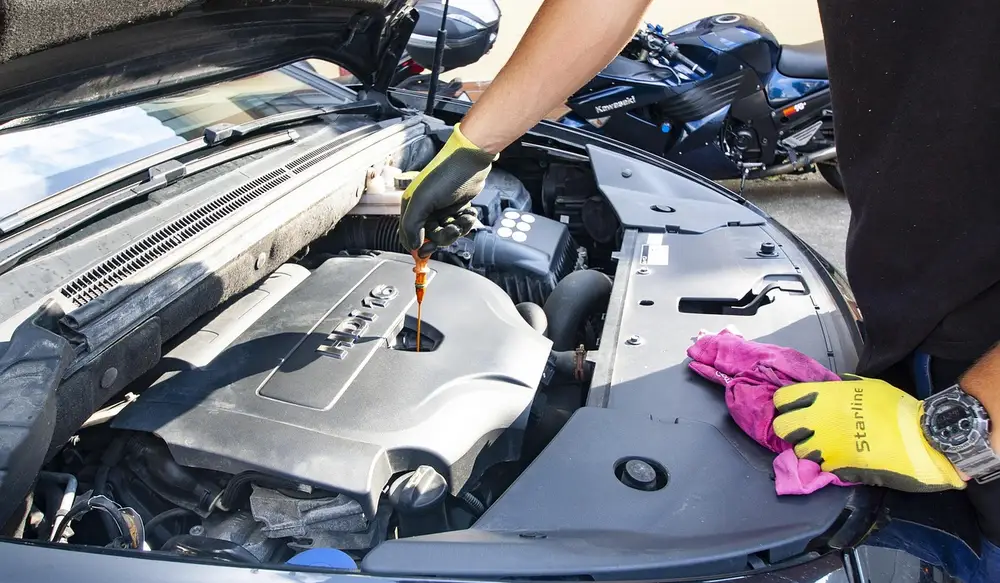
Most drivers assume the car will warn them when something is wrong. That’s true for the engine and emissions systems, which have sensors and warning lights. It’s not true for many mechanical components. These are the silent failures that a service catches early.
Suspension bushings are a prime example. They’re rubber components that absorb road shock and allow the suspension to move. They wear out slowly over years of driving. There’s no warning light for a worn bushing. You might notice a subtle clunk over bumps or slightly vague steering, but many drivers dismiss these as normal. A worn bushing leads to uneven tire wear, which shortens tire life. Left unchecked, it can cause premature failure of the ball joint, leading to a dangerous loss of steering control.
The serpentine belt is another silent time bomb. It drives the alternator, power steering pump, and water pump. It’s made of rubber and it cracks with age and heat. A visual inspection during a service reveals those cracks long before the belt snaps. The same goes for the coolant hoses. They look fine on the outside but can be weak and swollen on the inside, ready to burst when the engine is under load.
A full service is the only way to catch these issues. A mechanic physically inspects these parts and can feel play in a suspension joint or see a crack in a belt. The risks of skipping a service go beyond the check engine light. They’re the breakdowns that happen without any warning at all.
EV and Hybrid Servicing: How the Checklist Changes
Electric vehicles have fewer moving parts, but they still need servicing. The traditional engine oil, spark plugs, and fuel filter are gone. In their place are different maintenance items that are just as critical.
The battery is the most expensive component on an EV. A service will include a health check of the high-voltage battery pack. The technician uses diagnostic software to check the state of health and look for any cell imbalances. They’ll also inspect the cooling system for the battery. Many EVs use liquid coolant to manage battery temperature, and this coolant needs to be checked and replaced on a schedule. Neglecting it can lead to battery degradation or, in extreme cases, thermal runaway.
The brake system is different too. EVs use regenerative braking, which captures energy during deceleration. This means the physical brake pads wear much slower than on a gas car. However, the brake calipers can seize from lack of use. A service will include a brake caliper inspection and often a cleaning and lubrication of the slide pins.
The rest of the service is similar. Tires, suspension, cabin air filter, and wiper blades all need attention. The 12-volt auxiliary battery still needs testing. So while the checklist is shorter, it’s not empty. Skipping an EV service is just as risky as skipping one on a gas car, especially for the battery’s health and the vehicle’s resale value.
DIY vs. Professional: The Legal and Technical Truth
There’s a common fear that doing your own maintenance voids the warranty. That’s a myth. The Magnuson-Moss Warranty Act makes it illegal for a manufacturer to void a warranty simply because you performed maintenance yourself. They can only deny a claim if they can prove your work caused the damage.
So, can you do your own oil changes and call it a service? Technically, yes. Practically, you’re missing most of the car service benefits. A DIY oil change addresses the oil and filter, but it doesn’t include the 50-point inspection that a professional service provides. You’re not checking the brake pads, suspension bushings, or drive belts. You’re not looking for fluid leaks or exhaust corrosion. You’re only doing a fraction of the job.
There’s also the matter of the service stamp. A professional service leaves a record. Whether it’s a stamp in the logbook or a digital entry, it’s documented proof that a qualified mechanic inspected the car. A DIY oil change, unless you meticulously log it, is invisible. When you sell the car, a professional service history is worth more than a box of receipts for oil filters.
For basic tasks like checking tire pressure or replacing wiper blades, DIY is fine. For the full service, a professional with a lift, the right tools, and the experience to spot a failing component is worth the money. The inspection is the real value, not the oil change.
How Often Should You Book One? (Mileage vs. Time)
The standard advice is every 12 months or 12,000 miles, whichever comes first. That’s a good baseline, but it’s not universal. The manufacturer service schedule in your owner’s manual is the definitive guide. Some cars have service intervals of 10,000 miles, while others go 15,000 miles between services.
Driving conditions matter more than most people think. Severe driving conditions—short trips, extreme temperatures, dusty roads, stop-and-go traffic—require more frequent servicing. Your engine oil degrades faster in these conditions. Your brakes wear faster in the city. Your air filter clogs faster on dirt roads. If you fall into any of these categories, consider an interim service at the 6-month mark.
Time is just as important as mileage. Even if you only drive 3,000 miles a year, the oil still breaks down over time. Brake fluid absorbs moisture, which lowers its boiling point and reduces braking performance. That moisture also causes internal corrosion in the brake system. A car that sits for a year still needs its fluids and filters replaced. The 12-month rule exists for a reason.
If you’re unsure about your car’s specific needs, check the cost and frequency of car services to get a better idea of what you should budget for. When in doubt, err on the side of more frequent servicing. The cost of an extra oil change is trivial compared to the cost of a major repair.
Final Thoughts: The Service as an Investment, Not an Expense
It’s easy to see a $300 service bill as a waste of money. It’s harder to see it as a down payment on avoiding a $1,500 repair. But that’s exactly what it is. The car service benefits are real, measurable, and significant.
Treat the service as a strategic asset. It’s not just an oil change; it’s an annual health check, a warranty protection plan, and a resale value booster all rolled into one. Skipping it to save a few hundred dollars is a gamble with bad odds. The house always wins.
Products related to this article
Sponsored / affiliate links. As an Amazon Associate I earn from qualifying purchases. I may earn additional commission from eligible campaigns.