What Car Service Do You Actually Need? Mileage Rules
Choose the service level from mileage, symptoms, and records. Low-mileage or recently serviced cars often need only an interim service. Around 12,000 miles or about 12 months often points to a full service, while warning lights or fluid leaks usually mean diagnostics should come first. Pick the wrong package and you may pay for checks you do not need, or miss wear that turns into breakdowns and bigger repairs. This guide matches service intervals, warning signs, and maintenance history to the right service for your car.
Check Service History and Symptoms First
Start with mileage, last service date, and service history
Do not start by shopping for “the best” package. Start by asking three things: when it was last serviced, how far it has travelled since then, and whether the history is complete. A manufacturer service schedule should override guesswork because it sets time-based and mileage-based requirements for your model.
If the car has clear records and no symptoms, the next due item is often easy to identify. If the records are patchy, the safer choice is usually a fuller inspection rather than a bare minimum oil change.
Use symptoms to separate service from diagnosis
A service maintains known wear items. Diagnostics look for faults. Warning lights, no-start problems, smoke, misfires, leaks, brake noise, and weak air conditioning suggest a fault check first, rather than booking a generic package without checking.
That split matters. A dashboard light can mean an engine fault, a battery issue, brake wear, or an emissions problem. A service may still be needed later, but the fault scan should come first.
Default to the manufacturer service schedule when it is available
The model-specific schedule is the clearest guide. It tells you when time-based work is due, when mileage-based work is due, and which items are due on that particular car. If the schedule says a larger milestone is due, do not downsize it because the car “seems fine.”
If the schedule is unavailable, use history, current symptoms, and usage pattern to choose the smallest package that still covers the needed checks.
📊 ServiceMyCar lists a major service starting at AED 349. Source: Servicemycar.
Interim service, full service, or major service
Interim service is the lighter maintenance tier, and it is often used for higher-mileage or frequently used cars with shorter service intervals. Full service is the broader annual or mileage-based option. Major service is the deeper scheduled tier for larger milestones, with broader replacement and inspection work.
Interim service
An interim service suits cars that cover a lot of miles, do frequent short trips, or follow shorter service intervals. It usually focuses on oil and filter checks, plus the basic maintenance needed to keep a busy car on schedule.
Use this when the car is due a light touch between larger services, not when there are warning lights or major symptoms. It is maintenance, not fault finding.
Full service
A full service is the common middle ground when the history is unclear or the car is due its regular annual or mileage-based maintenance. It is more comprehensive than an interim service and usually covers fluids, brakes, tyres, battery, and filters.
This is often the practical default when the car needs a proper inspection and there are no active fault symptoms. It gives a broader health check without jumping straight to a major milestone package.
Major service
A major service is the deeper scheduled option. It is used at larger mileage or time milestones and includes broader component inspection and replacement work, along with items the manufacturer schedules less often.
Choose it when the service book or manufacturer schedule says those larger-interval items are due. Do not buy it simply because the car is old.
When you need diagnostics before you book a service
Warning lights, no-start issues, misfires, smoke, leaks, and brake noise are not normal service requests. They need vehicle diagnostics or inspection first, because the problem may be electrical, mechanical, or safety-related rather than routine wear.
Warning lights mean a fault scan should come first
Dashboard indicators are not decoration. They can point to engine faults, battery issues, brake system problems, or emissions faults. A vehicle diagnostics scan reads stored error codes and tells the garage where to begin.
Book diagnostics first if the light is on now or has returned after clearing. A service package may include a scan, but the question is whether the car needs fault finding before maintenance.
No-start, misfire, smoke, or leak symptoms are not routine service items
If the car will not start, runs rough, smokes, or leaves fluid under the car, those are inspection problems. A service does not replace diagnosis, and a package oil change will not solve every starting or running fault.
Fluid leaks also matter because they may involve engine oil, coolant, brake fluid, or another system. That changes both urgency and the work required.
Brake noise or poor stopping needs inspection, not a standard package assumption
Brake noise, vibration, or longer stopping distances call for a brake inspection. Pads, discs, wear, and stopping performance are safety-critical, so this should not be treated as a routine add-on unless the inspection shows normal wear.
Say your hatchback starts squealing only when slowing from motorway speeds. That is not a “book any service” moment. It is a brakes-first inspection moment.
Use this decision table to pick the right service level
Use the table below as a booking filter. Match the car’s last service date, mileage, history, warning lights, and symptoms to the smallest package that fits. If the row says inspect first, do not prepay for a bigger service until the fault is identified.
| Scenario | Last service date | Annual mileage | History gap? | Warning lights or symptoms | Recommended service level | Book now vs inspect first |
|---|---|---|---|---|---|---|
| Recently serviced commuter car | Within 6 months | Under 6,000 | No | None | Interim service | Book now |
| Annual service due with no faults | 10 to 12 months ago | 8,000 to 12,000 | No | None | Full service | Book now |
| Overdue car with unclear records | More than 12 months ago | Unknown or uneven | Yes | None or minor concerns | Full service | Book now |
| High-mileage car used daily | Recent, but short interval schedule | Over 12,000 | No | None | Interim service | Book now |
| Large mileage milestone due | Due for scheduled major work | According to schedule | No | None | Major service | Book now |
| Dashboard warning light on | Any | Any | Any | Engine, battery, brake, or emissions light | Diagnostics first | Inspect first |
| Leak, smoke, or misfire | Any | Any | Any | Fluid leak, smoke, rough running | Diagnostics or inspection first | Inspect first |
| Brake noise or weak stopping | Any | Any | Any | Squeal, grind, pull, longer stopping | Brake inspection first | Inspect first |
| Low-mileage weekend car | Over 12 months ago | Under 3,000 | Maybe | None | Full service or schedule-based item list | Book now after schedule check |
What a service should cover at each level
Whatever package you choose, the key checks are the ones tied to safety and wear: fluid checks, brake inspection, tyre inspection, and battery testing. The service level changes how much depth you get, not whether those basics matter.
Fluid checks
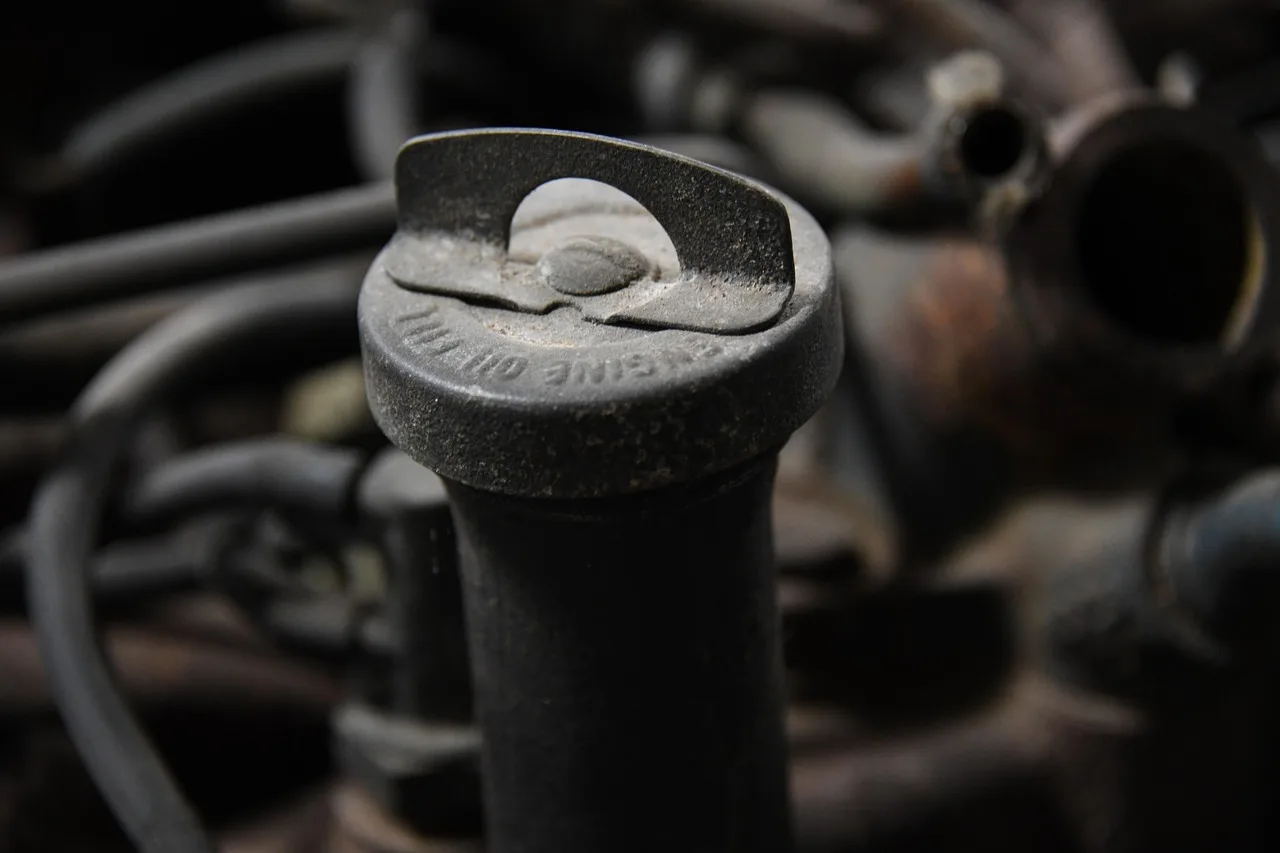
Fluid checks should include engine oil, coolant, brake fluid, and other scheduled top-ups or replacements. Oil and filter replacement is standard maintenance on many services, but the schedule decides which fluids need attention and when.
Brake inspection
A brake inspection should check pads, discs, wear, noise, and stopping performance. That matters even if the car still stops “well enough,” because braking changes slowly and problems often appear before the driver feels a major difference.
Tyre inspection
Tyre inspection should cover tread depth, pressure, damage, and uneven wear. Uneven wear can point to alignment, suspension, or inflation problems, so tyres are not just a rubber item on the checklist.
Battery testing and starting-system checks
Battery testing matters on cars that crank slowly, sit for long periods, or refuse to start on cold mornings. A proper service may include battery testing, but a no-start complaint can justify a dedicated electrical diagnosis instead.
ServiceMyCar, for example, lists three named tiers: Major Car Service, Premium Car Service, and Super Luxury Car Service. It lists a major service starting at AED 349, a premium service at AED 499, a super luxury service at AED 2000, and car service contracts starting from AED 1799.
Its published process has three steps: get a quote, make a booking, and they repair. The page also says the service includes complete vehicle inspection of the engine, brakes, suspension, tyres, battery, fluids, and other components, plus computer diagnostics for warning lights and electronic or mechanical issues.
That kind of menu helps only if you match the package to the car’s actual need. A bigger service is not better if the schedule calls for less. A diagnostic scan is not a substitute for a scheduled major service.
Does your car type change the answer?
Yes. Mileage and age matter, but so does how the car is used. Low-mileage cars, older cars, EVs, hybrids, and severe-use vehicles all need different thinking because the service trigger is not the same for each one.
Low-mileage cars and cars that sit for long periods
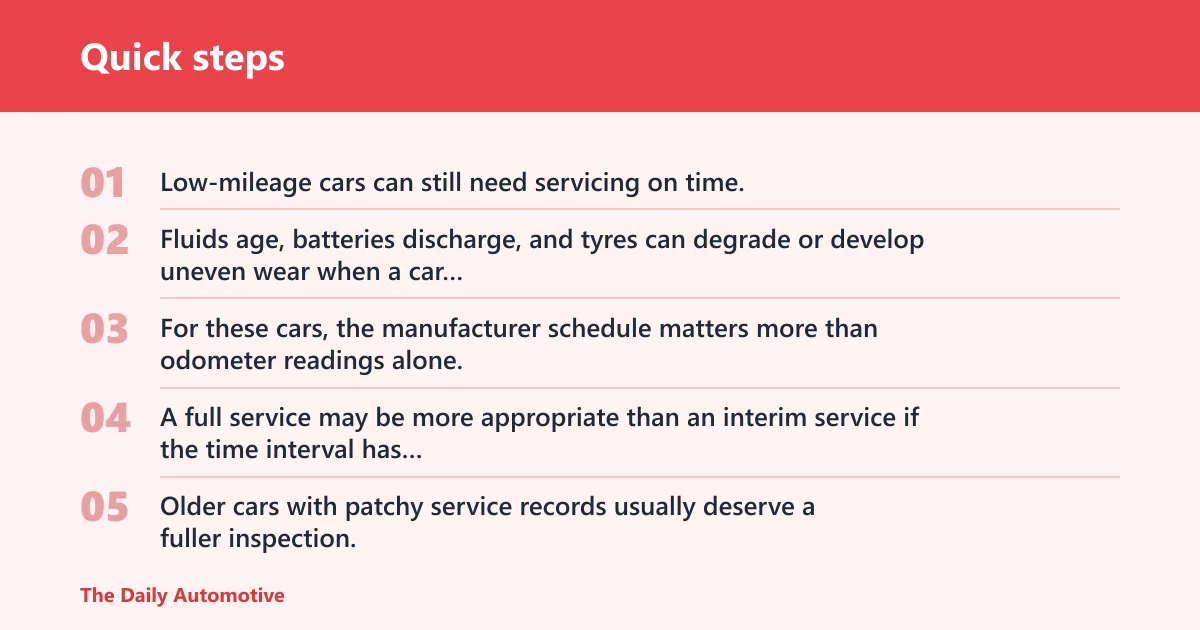
Low-mileage cars can still need servicing on time, even if they have not covered many miles. Fluids age, batteries discharge, and tyres can degrade or develop uneven wear when a car is parked for long periods.
For these cars, the manufacturer schedule matters more than odometer readings alone. A full service may be more appropriate than an interim service if the time interval has been missed.
Older cars with uncertain maintenance records
Older cars with patchy service records usually deserve a fuller inspection. The issue is not age by itself; it is uncertainty. If you cannot prove when fluids, brakes, filters, or battery checks were last done, a full service is the safer starting point.
Picture a 14-year-old saloon that has no folder of receipts and a service light due. A full service is the sensible baseline, with diagnostics added if any light, leak, or noise is present.
EVs and hybrids with model-specific maintenance needs
EVs and hybrids still have tyres, brakes, fluid checks, and battery-related items, but their schedules are model-specific. The manufacturer service schedule should tell you what applies, because the maintenance list can differ from a petrol or diesel car.
Do not assume a standard engine-oil-based package fits an EV. Some routine items are different, and the right package depends on the vehicle’s exact service plan.
Severe-use cars with short trips, heavy loads, or constant stop-start driving
Taxis, delivery vehicles, family cars used mainly for short trips, and cars that tow or carry heavy loads wear faster than light-use cars. They may need interim services more often because oil, battery charge, brakes, and tyres work harder in repeated stop-start use.
For severe-use cars, mileage alone can understate wear. Frequent use and harsh duty cycles can bring service work forward.
How to avoid over-servicing your car
Do not buy a bigger package than the schedule calls for. Match the work to documented history, symptoms, and due items, then ask for an inspection list before you approve extras. That keeps you from paying for duplicate checks or early replacement work.
- Check the manufacturer service schedule first.
- Compare it with the last service date and mileage.
- Separate normal maintenance from warning lights or fault symptoms.
- Choose interim, full, or major service only if the due items fit.
- Ask the automobile repair shop to list any extra findings before authorising them.
If the garage recommends more work than the schedule shows, ask which item is worn, overdue, or tied to a fault code. That question is the simplest way to avoid buying a service package that exceeds the car’s current need.
Frequently asked questions
What car service do I need
Use three inputs: last service date, annual mileage, and symptoms. A recently serviced, low-mileage car often needs an interim service, while a car due by time or mileage with no faults usually fits a full service. If warning lights, leaks, or rough running are present, start with diagnostics or inspection.
Does my car need a service?
Your car needs a service if it is due by the manufacturer schedule, has missed a time or mileage interval, or shows wear in fluids, brakes, tyres, or battery performance. If it has a warning light, smoke, a leak, or a no-start fault, it needs diagnosis first, not a blind service booking.
Does my car need a full service?
A full service is the common choice when history is unclear, the annual interval is due, or the car needs a broader maintenance check without a major milestone. It is broader than an interim service and usually covers fluids, brakes, tyres, battery, and filters. Use it when the car needs a proper general inspection.
When does my vehicle need a service?
Service timing comes from the manufacturer schedule, not mileage alone. Many cars follow both time-based and mileage-based intervals, so a vehicle can be due even if it has not travelled far. High-mileage or frequent-use cars may need interim servicing sooner, while major services arrive at larger scheduled milestones.
What should a car service include?
A service should include the checks tied to the car’s current maintenance level: fluid checks, brake inspection, tyre inspection, and battery testing. Depending on the tier, it may also include oil and filter replacement and other scheduled items. If the car has symptoms, a diagnostic scan or inspection may be needed first.
Should I get my car serviced?
Yes, if the car is due by time or mileage, has an incomplete history, or is used hard in short trips or stop-start traffic. Service helps catch wear early and keeps scheduled maintenance on track. If a warning light or leak is present, sort the fault first and then book the correct maintenance level.
Products related to this article
Sponsored / affiliate links. As an Amazon Associate I earn from qualifying purchases. I may earn additional commission from eligible campaigns.