How Does SiriusXM Radio Work? Satellites, Signal & Receiver Tech Explained
Quick Answer
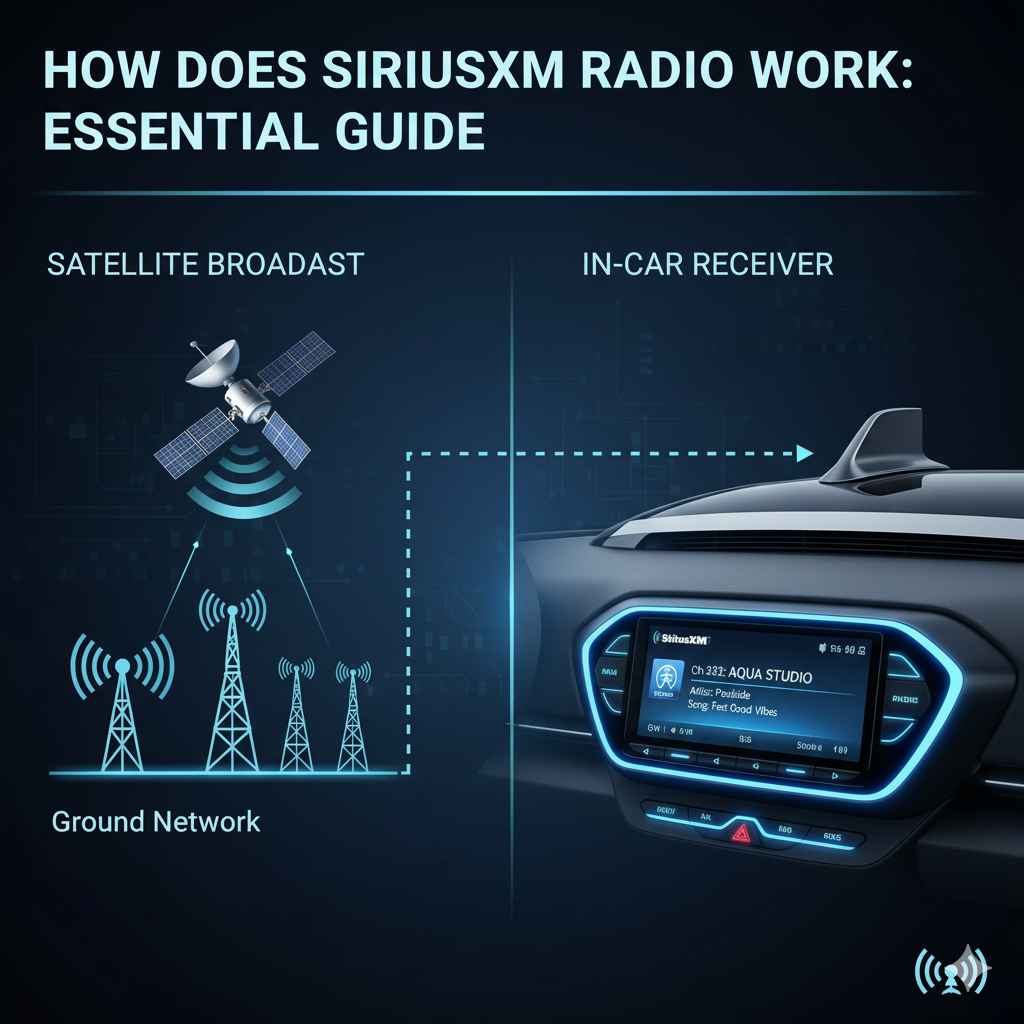
SiriusXM radio works by broadcasting digital audio from a fleet of geostationary satellites to a small receiver chip built into your car, backed up by ground-based repeater towers in cities and tunnels where the satellite signal cannot reach. Your subscription unlocks a decryption key that lets the receiver decode the channels you have paid for, turning that signal into the music, news, and talk you hear through your speakers.
Ever wondered what is actually happening between the moment a DJ speaks into a microphone and the sound coming out of your car speakers, hundreds of miles away, with zero static? SiriusXM is not broadcasting the way a local FM station does. It is beaming a digital signal down from satellites parked over 22,000 miles above the equator, then catching the gaps with ground towers, and finally decoding all of it through a dedicated chipset built into your radio. Here is exactly how each piece of that chain works, and how it differs from the setup and activation steps you would follow to actually get SiriusXM running in your car.
The Technology Behind SiriusXM: Satellites, Repeaters & Receivers
SiriusXM is not your typical radio. It uses a smart combination of technology to ensure you have a consistent listening experience, whether you are cruising through the city or driving across the country. It is built on two main delivery systems: satellites and ground-based towers, plus a receiver chipset that turns the signal into sound.
The Satellite Network: From Elliptical Orbits to a Geostationary Fleet
The “S” in SiriusXM stands for “Satellite.” This is the primary way your radio gets its signal, but the orbit type has actually changed since the two original companies merged in 2008. This history matters because it explains why the current system is so reliable.
- The original Sirius approach (retired 2016): Before the merger, Sirius Satellite Radio used three satellites in a highly elliptical “Tundra” orbit, inclined relative to the equator rather than sitting directly over it. Each satellite spent roughly 16 hours a day positioned high over the continental United States before handing off to the next one in the constellation.
- XM’s geostationary approach (the one used today): XM Radio instead used satellites parked in a fixed geostationary orbit roughly 22,236 miles above the equator, always in the same spot in the sky. After the 2008 merger, the combined company standardized on this geostationary approach, and the last of the original elliptical-orbit Sirius satellites was decommissioned in 2016.
- Today’s fleet: SiriusXM currently operates seven satellites in geostationary orbit. The newest, SXM-11, was built by Maxar Space Systems and launched on a SpaceX Falcon 9 rocket to join the existing fleet, replacing aging spacecraft and adding capacity.
Ground-Based Repeater Towers: Filling in the Gaps
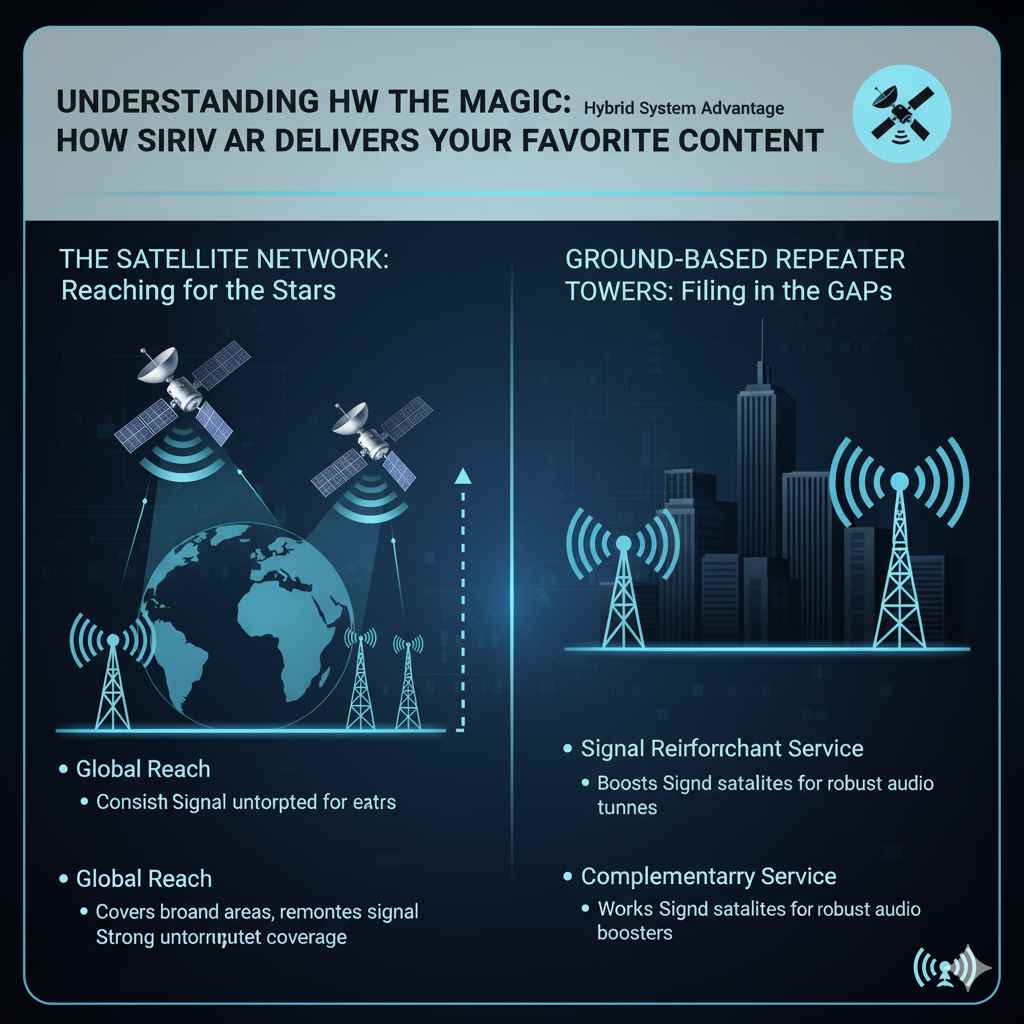
While satellites are fantastic, there are a few situations where they are not the whole story. In certain environments, like deep urban canyons with tall buildings or within tunnels, the satellite signal might get blocked. To overcome this, SiriusXM also uses a network of thousands of ground-based repeater towers concentrated in major metro areas.
- Signal Reinforcement: These towers are strategically placed in areas where satellite signals might be weaker or obstructed. They essentially “repeat” the same digital signal on a slightly different frequency, boosting it to ensure your receiver gets a clear transmission.
- Complementary Service: Think of these towers as backup singers for the lead satellite. They work in tandem with the satellites to provide the most robust and reliable audio experience possible, especially in tricky spots.
- Hybrid System Advantage: This hybrid approach, satellites plus repeaters, is what makes SiriusXM so dependable. It combines the broad coverage of space with localized signal boosters for a truly seamless listening experience.
The Receiver: How Your Car Decodes a 2.3 GHz Signal Into Sound
Every SiriusXM-equipped car has a special receiver built into the infotainment system or as a separate unit. This device is designed to pick up the specific signals sent by SiriusXM satellites and repeaters, then convert that raw radio signal into audio you can actually hear.
SiriusXM broadcasts on the S-band, specifically the 2332.5 to 2345.0 MHz range, a slice of spectrum the FCC set aside for satellite digital audio radio services. Your car’s antenna, usually a small fin on the roof or sometimes integrated into the windshield, is tuned to pick up exactly that frequency range. Inside the receiver unit sits a dedicated chipset that immediately downconverts the incoming 2.3 GHz signal to a much lower intermediate frequency the electronics can actually process, then decodes the specific digital channel data you have selected and feeds it to your car’s speakers as ordinary audio.
Why a Subscription Is Required to Unlock the Signal
It is important to remember that SiriusXM is a subscription service, much like streaming music platforms, and this is enforced at the decoding level, not just billing. Every receiver has a unique Radio ID, and when you subscribe, SiriusXM sends an activation signal that authorizes your specific receiver to decrypt the channels included in your plan. Without an active subscription, the receiver still picks up the broadcast, but it cannot decode it, so you will typically see a message indicating it needs activation or service.
You can manage your subscription directly through the SiriusXM website. If you need the actual walkthrough for finding your Radio ID and activating a new receiver, see our step-by-step SiriusXM setup and activation guide since this article focuses on how the technology works, not the account-setup process.
What Makes SiriusXM Different from Regular Radio?
The way SiriusXM works gives it several advantages over traditional AM/FM radio. Understanding these differences can help you appreciate the technology and decide if it is the right fit for your driving needs.
| Feature | SiriusXM Satellite Radio | Traditional AM/FM | Phone Streaming (LTE/5G) |
|---|---|---|---|
| Signal source | Geostationary satellites plus ground repeaters | Local terrestrial towers | Cell towers / Wi-Fi |
| Coverage range | Nationwide, including remote highways | Limited to local broadcast radius (about 30-60 miles) | Depends on carrier coverage, gaps in rural areas |
| Fading/static | Rare, brief drops in tunnels or dense urban canyons | Frequent as you leave a station’s range | Buffering when signal is weak |
| Cost | Subscription required (from $10.99/mo) | Free | Free with existing data plan, uses cellular data |
| Channel variety | Hundreds of channels, many commercial-free | Limited to local station lineup | Unlimited (any app), but not curated live radio |
A Vast Array of Exclusive Channels
Traditional AM/FM radio stations are limited by their broadcast range and licensing. SiriusXM offers hundreds of channels, many of which are commercial-free music across every genre imaginable, plus exclusive talk shows, news channels from around the world, and live sports coverage you just will not find on local radio, including Howard Stern’s uncensored shows, artist-dedicated channels, 24/7 news, and play-by-play coverage of the NFL, NBA, MLB, and NHL.
Commercial-Free Listening
A significant draw for many users is the amount of commercial-free content. While some channels do have ads (often for SiriusXM itself or related services), a large portion of the music channels offer an uninterrupted listening experience, a stark contrast to the frequent ad breaks on many FM stations.
SiriusXM Subscription Plans and 2026 Pricing
Since the receiver only decodes channels your subscription authorizes, the plan you choose directly determines which content your hardware can unlock. SiriusXM updated its rates on February 24, 2026; here is what each tier currently costs and includes.
Our Top Pick
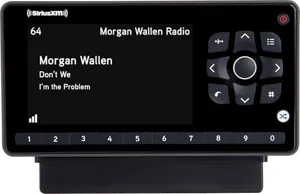
SiriusXM Onyx EZR with Vehicle Kit
Best for: Adding SiriusXM’s own dedicated receiver hardware to any car that does not already have a factory tuner.
Why we picked it: It is SiriusXM’s official standalone receiver, using the same satellite/repeater reception and S-band decoding chipset explained in this article, with a full car mounting and antenna kit included.
Main drawback: Still requires an active SiriusXM subscription to unlock any channels; the hardware alone does not include service.
View Our Pick on Amazon
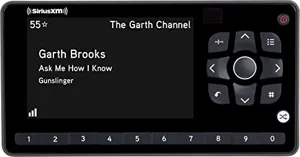 Onyx EZR (Tuner Only) Best for: Owners who already have a compatible dock or mount and just need the receiver unit itself. Why we picked it: Same receiver chipset as the vehicle kit, at a lower price if you do not need the mounting hardware. Main drawback: No car mount or antenna included, so it only works if you already own compatible accessories. |
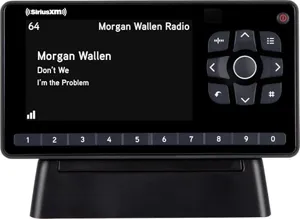 Onyx EZR with Home Kit Best for: Listeners who want the same subscription and receiver to work in the car and at home. Why we picked it: Includes a powered speaker dock so you can pick the receiver up from the car and continue listening indoors. Main drawback: Bulkier than the vehicle-only kit if you only plan to use it in the car. |
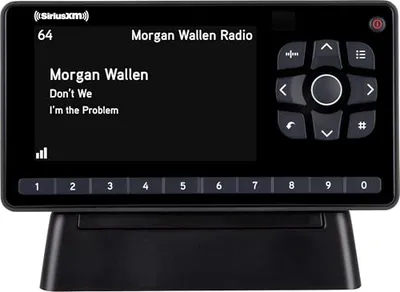 SiriusXM Onyx EZR Satellite Radio with Home Kit (SXEZR1H1) Best for: Upgraders who want SiriusXM’s newer receiver model with app-connected streaming features. Why we picked it: A more modern take on the same S-band receiver technology, with easier pairing to the SiriusXM app. Main drawback: Sold with a home kit by default; a separate vehicle kit or mount may be needed for car use. |
| Package Name | Monthly Price (2026) | Typical Content |
|---|---|---|
| Mostly Music | $10.99 | Music channels across all genres, mostly commercial-free, with limited talk or sports. |
| SiriusXM Select | $16.99 | Music channels plus a selection of popular talk, news, and entertainment channels. |
| SiriusXM All Access | $21.99 | Every music channel, every talk channel, all sports (NFL, MLB, NBA, NHL), comedy, and news. |
It is always a good idea to check the official SiriusXM plans page for the most current offerings and pricing, since promotional rates and packages can change. If you are setting up a subscription for the first time or moving your Radio ID to a different car, our SiriusXM setup and activation guide walks through that process step by step.
Why the Signal Sometimes Drops: Quick Troubleshooting
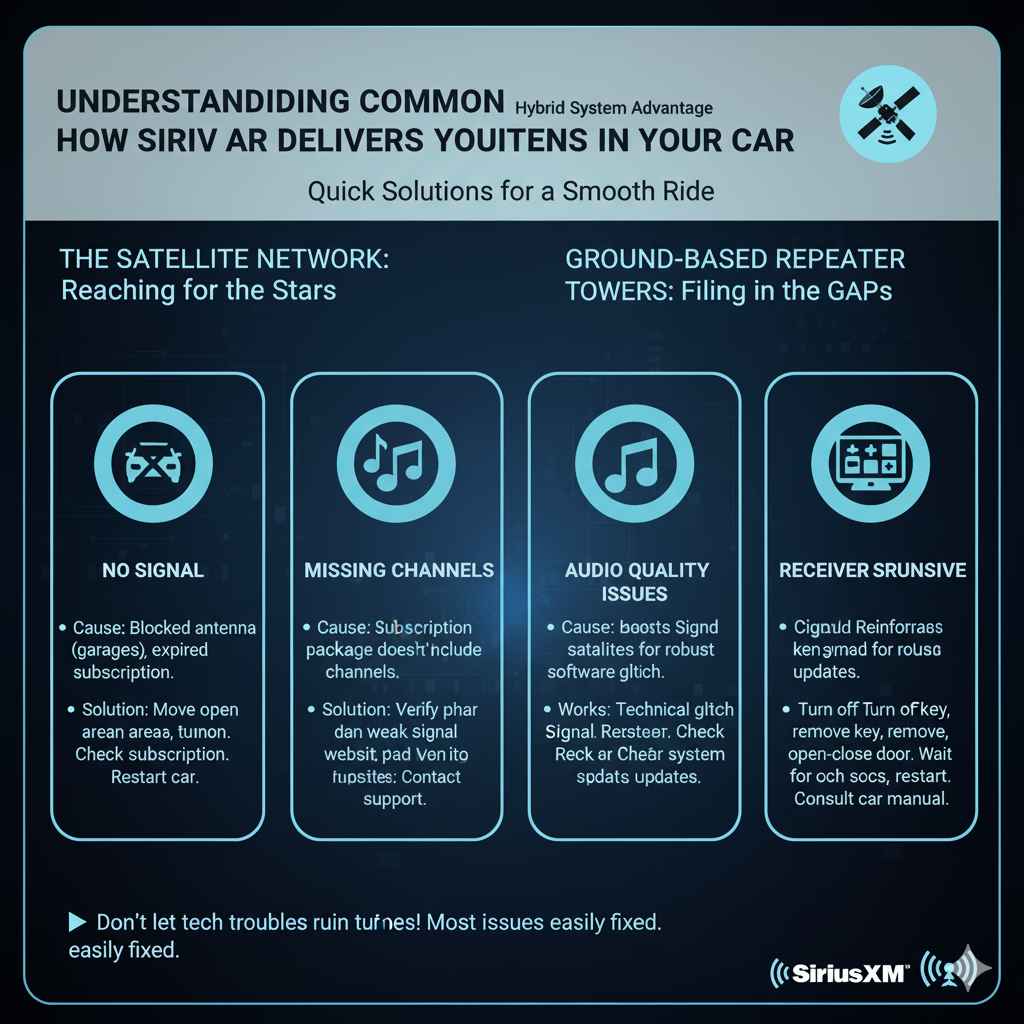
Even with the satellite-plus-repeater design explained above, you might occasionally see a “No Signal” or “Acquiring Signal” message. This almost always means your receiver has temporarily lost line-of-sight to both the satellites and the nearest ground repeater at the same time, which typically happens in covered parking garages, long tunnels, or dense urban canyons between tall buildings. Moving to a more open area, checking that the roof antenna is not blocked or damaged, and confirming your subscription is active will resolve the vast majority of signal issues. For a complete troubleshooting table covering missing channels, audio glitches, and a frozen receiver, see our full SiriusXM setup, activation & fixes guide, which covers those step-by-step fixes in depth.
Frequently Asked Questions About How SiriusXM Radio Works
How do I get SiriusXM in my car if it doesn’t have a built-in receiver?
You can purchase portable SiriusXM radios that come with car mounts and antennas, or a satellite radio tuner that integrates with your existing car stereo. These often require a subscription just like the built-in units, and the receiver hardware works the same way described above regardless of whether it is factory-installed or aftermarket.
Is SiriusXM’s satellite in geostationary orbit or a different type of orbit?
Today’s fleet of seven satellites is geostationary, parked about 22,236 miles above the equator so each one stays in a fixed spot in the sky. That was not always the case: the original Sirius satellites (retired in 2016) used a highly elliptical, inclined orbit instead.
What frequency does SiriusXM broadcast on?
SiriusXM broadcasts in the S-band, specifically between 2332.5 and 2345.0 MHz, a slice of spectrum the FCC allocated for satellite digital audio radio services in the U.S.
Can I use my SiriusXM subscription in multiple cars?
A standard subscription is typically tied to a single Radio ID. If you have multiple vehicles, you will usually need separate subscriptions, or you might be able to add an additional radio to your account for a discounted rate, depending on SiriusXM’s current policies.
What is the difference between SiriusXM and satellite radio in general?
SiriusXM is a brand name for a company that provides satellite radio service. Satellite radio is the underlying technology itself, so SiriusXM is a specific type of satellite radio, currently the only one operating in North America since Sirius and XM merged in 2008.
Do I need to keep my engine running for SiriusXM to work?
No, your SiriusXM receiver simply needs power. As long as your car’s accessory power is on, which often allows the radio to play without the engine running, your SiriusXM will function.
Can I listen to SiriusXM online or on my phone instead of in my car?
Yes. Most SiriusXM subscriptions include access to the SiriusXM app for smartphones, tablets, and computers, which streams over the internet rather than the satellite/repeater network, letting you listen to most channels outside of your vehicle.
What happens if I don’t pay my SiriusXM bill?
If your subscription lapses without payment, your receiver stops being authorized to decode the channels in your plan. You may be able to tune into a limited number of free preview channels for a while, but your full lineup will be unavailable until your account is reactivated.
The Bottom Line
SiriusXM radio works by combining a fleet of geostationary satellites, thousands of ground-based repeater towers, and a dedicated S-band receiver chipset that decodes only the channels your subscription authorizes. That hybrid design is what lets it deliver a consistent, largely commercial-free signal across the entire country in a way traditional AM/FM simply cannot match. If you are ready to actually set one up, activate a Radio ID, or fix a specific problem in your car, our SiriusXM setup, activation & fixes guide covers that process from start to finish.
Products related to this article
Sponsored / affiliate links. As an Amazon Associate I earn from qualifying purchases. I may earn additional commission from eligible campaigns.