How Long Does Car Air Conditioning Last? 8-10 Years, Usually
A car’s air-conditioning system can run 10 to 15 years without ever needing a recharge, as long as the sealed refrigerant loop has no leak. The parts that actually wear out on a predictable schedule — the compressor, hoses, and seals — typically need attention around 8 to 10 years or 100,000 to 150,000 miles.
Most confusion about AC lifespan comes from mixing up those two things. The refrigerant charge itself isn’t a wear item — it shouldn’t run low on its own, so needing a top-off every year or two is a symptom of a leak, not routine maintenance. The compressor and its supporting parts are the ones that age out over time. This guide covers both: the warning signs of each, what repairs actually cost, and the maintenance that genuinely extends the system’s life.

Lifespan of Car AC Systems
BEST FOR CONFIRMING AN AC LEAK BEFORE YOU RECHARGE
 |
Vansky 100 LED UV AC Leak Detector Kit – $22.99 This is the fastest way to confirm whether your AC actually has a leak before paying for another recharge that won’t hold.
|
Two different clocks are running here. The refrigerant charge in a sealed R-134a or R-1234yf system is designed to last the life of the vehicle — 15 years or more isn’t unusual if the system never develops a leak, since refrigerant doesn’t get “used up” through normal operation the way oil or gasoline does.
The compressor is a different story. It’s a mechanical pump with a magnetic clutch and internal bearings, and those parts wear the same way any other engine-driven component does. Most compressors are good for 8 to 10 years or 100,000 to 150,000 miles before they need rebuilding or replacing, though a well-maintained system that’s never run low on refrigerant can go well past that.
What shortens either lifespan: running the AC constantly in extreme heat, letting the system sit unused for long stretches (which lets seals dry out and shrink), and skipping the periodic checks that would otherwise catch a small leak before it drains the whole charge.
Signs of AC System Wear
A handful of symptoms show up before an AC system fails outright, and catching them early usually keeps the repair cheap.
Weak airflow with normal-feeling temperature at the vents often means a failing blower motor or a clogged cabin air filter, not the AC system itself. Airflow that’s fine but never gets cold points toward low refrigerant, a bad compressor clutch, or a stuck expansion valve.
Noises tell you where to look: a squeal when the AC first kicks on usually traces back to the compressor clutch or a loose belt, while grinding or rattling from the compressor itself is a warning that it’s failing internally.
A musty smell from the vents is almost always mold or mildew growing in the evaporator core — common in humid climates, and worth clearing out, but not a sign the whole system is dying. And a wet patch or puddle under the car after the AC has been running is normal condensation draining off the evaporator; refrigerant doesn’t pool visibly the way water does, so an oily residue near the compressor or hose fittings is the actual leak indicator to watch for, not a puddle of clear water.
Maintenance for Longevity
A few habits keep an AC system running for its full lifespan instead of failing early.
Run the AC for a few minutes at least once every couple of weeks, even in winter. The compressor’s shaft seal stays lubricated by refrigerant oil circulating through the system, and long stretches of disuse let those seals dry out and shrink — which is exactly what creates the small leaks behind a “needs a recharge” complaint down the road.
Replace the cabin air filter every 12,000 to 15,000 miles, or roughly once a year for most drivers. A clogged filter doesn’t just weaken airflow — it restricts air across the evaporator, which can make it ice over and stop cooling entirely.
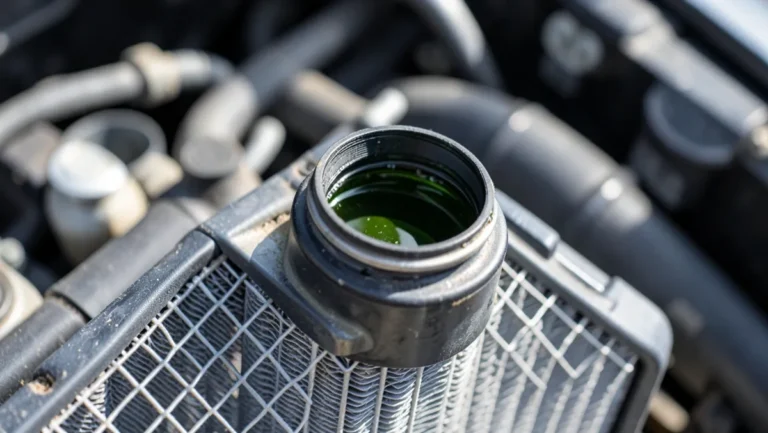
Don’t confuse AC refrigerant with engine coolant; they’re two separate closed systems, and refrigerant isn’t something to top off yourself the way you’d add coolant to a radiator. If cooling performance drops, that’s a sign to have the system pressure-tested, not a DIY top-off job.
Have the system checked during routine service, especially before summer. A shop can catch a small leak or a compressor that’s starting to make noise well before it leaves you without AC on a 95-degree day.
Professional Inspections
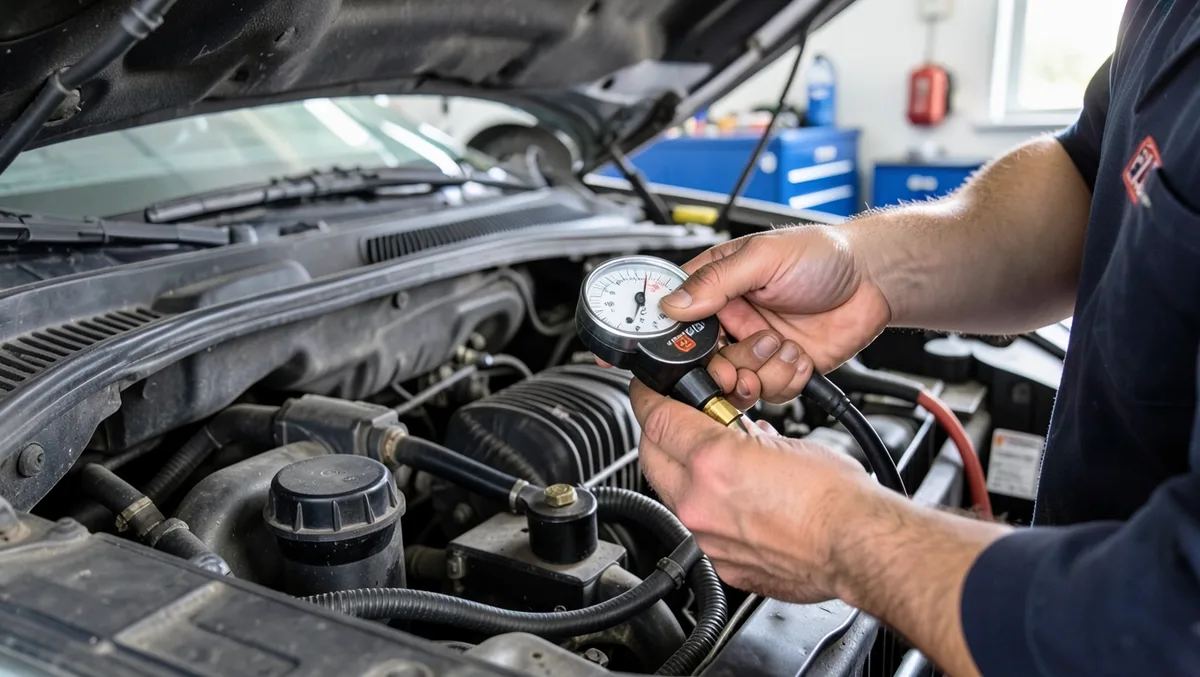
A professional inspection is the fastest way to tell a normal age-related repair from a leak that’s about to get expensive. Most shops build this into an AC performance check for $40 to $100, separate from any repair work.
When to Seek Help
Book an inspection if the air stops getting cold, if you hear a new noise the moment the compressor clutch engages, or if the vents start smelling musty. None of these mean the whole system is done — but ignoring them usually turns a $150 fix into a $1,000 one. A tech can also tell you within a few minutes whether reduced cooling is a refrigerant issue at all, since a weak blower motor or a failing heater control valve can mimic the same symptom.
What to Expect
A proper AC inspection checks system pressure on both the high and low side with a manifold gauge set, looks for UV dye or oil residue at hose fittings and the condenser, and tests the compressor clutch under load. Expect the technician to walk you through what they found before recommending a recharge, a specific part, or nothing at all — a good shop won’t push a top-off on a system that clearly has a leak, since the refrigerant will just leak back out.
Common AC System Issues
Refrigerant leaks are the single most common reason an AC system stops cooling, and they almost always show up at a connection point — the o-rings where hoses attach to the compressor, condenser, or evaporator — rather than through the metal lines themselves. Rubber seals and o-rings shrink and crack with age and heat cycling, and once one starts seeping, the system loses just enough refrigerant that cooling performance drops off gradually rather than all at once. A shop finds these with UV dye or an electronic sniffer, since the leak itself is usually too small to see or hear.
The compressor is the only moving mechanical part in the system, and it’s the most expensive thing to replace. It’s driven off the engine by a belt and an electromagnetic clutch, so early failure often sounds like a squeal or a knock right when the AC is switched on. Running a compressor with too little refrigerant is one of the fastest ways to kill it — refrigerant carries the lubricating oil through the system, so low charge means poor lubrication, which is why a leak left unrepaired for too long can turn a simple recharge into a full compressor replacement.
Cost of Repairs and Replacements
Repair costs scale with what’s actually broken. A straightforward recharge with a UV dye leak-check runs $100 to $200. Fixing the leak itself — replacing an o-ring, hose, or seal — typically adds $150 to $500 depending on which part needs to come out. A full AC system repair that includes the compressor lands between $500 and $1,200 or more, since the compressor is the priciest single part and often requires evacuating and recharging the whole system afterward.
Typical Repair Costs
Small jobs — topping off refrigerant, replacing an o-ring, or fixing a minor leak — usually run $150 to $300 including parts and labor. Bigger jobs that involve the condenser, evaporator, or expansion valve typically run $500 to $1,000, since those parts sit deeper in the system and take more labor to access. Get a diagnosis before agreeing to a repair; a shop should confirm exactly what failed, not just recharge the system and hope the leak was minor enough to hold.
Replacement vs. Repair
Replacing the compressor outright often costs $1,200 or more once parts, labor, and a full system recharge are included, but it can be the better call on an older system where multiple components are near the end of their life. A straight repair is cheaper up front and fine for an isolated failure, but stacking several small repairs on an aging system can add up to more than a single replacement would have cost. A mechanic who’s inspected the whole system is in the best position to make that call — ask for the full picture, not just a quote for the part that failed today.
Energy Efficiency Considerations
Running the AC does cost fuel, since the compressor draws its power from the engine. The effect is largest at low speed and on short trips, where the engine spends proportionally more effort on the compressor instead of moving the car; it’s much less noticeable on the highway, where aerodynamic drag dominates fuel use far more than the AC does — which is also why cracking the windows open at highway speed usually costs more fuel than just running the AC.
A few habits reduce that penalty without giving up cooling: park in the shade or use a windshield sunshade so the cabin doesn’t start superheated, vent the hot air out through open windows for the first 20 to 30 seconds before switching to AC, and keep the cabin air filter clean so the system doesn’t have to work harder to push air through it.
R-134a vs. R-1234yf Refrigerant
Cars built before the early 1990s used R-12, commonly called Freon, before it was phased out for ozone-layer reasons — see our guide on whether cars still use Freon for that older history. Most cars built before roughly 2013 to 2014 use R-134a instead; most built since then use R-1234yf, a newer refrigerant automakers adopted because it breaks down in the atmosphere far faster if it ever does leak. That switch matters for your wallet: R-1234yf costs noticeably more per pound than R-134a, and a growing number of shops need specific certified equipment to service it, which can push recharge and repair costs higher on newer vehicles.
You can check which one your car uses on the AC system label — a sticker under the hood, usually near the compressor or on the underside of the hood itself — which lists the refrigerant type along with the system’s fill capacity. That’s worth checking before you shop around for repair quotes, since not every shop is equipped to handle both types.
Frequently Asked Questions
How Often Should Car AC Be Replaced?
There’s no fixed replacement interval for a working AC system — most shops recommend replacing components only when they actually fail or when repairs start stacking up on an older system. A compressor commonly needs replacing around 8 to 10 years or 100,000 to 150,000 miles, but plenty run well past that with regular use and no leaks.
How Long Should Car AC Last?
The sealed refrigerant charge should last the life of the car if there’s no leak, while the compressor and other mechanical parts typically hold up for 8 to 10 years before needing service. Climate, how often you run the AC, and how well it’s maintained all shift that range in either direction.
How Often Does Car AC Need to Be Recharged?
It shouldn’t need a recharge on any regular schedule at all. A properly sealed system holds its refrigerant charge for the life of the car, so needing a top-off every year or two means there’s a leak somewhere — not that the refrigerant simply wears out. Repeated recharges without finding and fixing the leak just mean paying for the same refrigerant to leak out again.
Is It Normal to Need a Recharge Every Year?
No. A refrigerant recharge only restores what’s been lost, and a correctly sealed AC system doesn’t lose refrigerant on its own. If a shop is recharging your AC annually without ever mentioning a leak, ask them to pressure-test the system or check for one with UV dye — that’s the only way to stop paying for the same fix repeatedly.
How Expensive Is It to Replace AC in a Car?
A full AC system repair that includes replacing the compressor typically runs $500 to $1,200 or more once labor and a full system recharge are included. Smaller repairs — an o-ring, hose, or minor leak fix — usually cost $150 to $500. Price depends heavily on the vehicle, whether the shop needs to handle R-134a or the pricier R-1234yf refrigerant, and how much labor it takes to reach the failed part.
Conclusion
A car’s AC system doesn’t have one single lifespan — the refrigerant charge should outlast the car itself if the system stays sealed, while the compressor and its supporting parts commonly need service around 8 to 10 years or 100,000 to 150,000 miles. Catch the early signs — weak cooling, a new noise, a musty smell — and a small repair stays small. Keep paying for recharges without asking why the refrigerant keeps running low, and a cheap fix turns into a compressor replacement.
Products related to this article
Sponsored / affiliate links. As an Amazon Associate I earn from qualifying purchases. I may earn additional commission from eligible campaigns.