How to Adjust a Car Door: Hinge, Striker Plate & Gap Fix Guide
A misaligned car door is fixed by adjusting either the hinges (for sagging or uneven gaps) or the striker plate (for a door that won’t close tightly). Most adjustments take 20–30 minutes with a 12mm socket and Torx T40 bit. Left unfixed, a misaligned door lets in water and wind noise, wears out door seals prematurely, and puts extra stress on the latch mechanism.
This guide covers how to diagnose which part needs adjusting, how to use the witness marks method on the striker plate, and how to get the door gap even again — with a 7-step process and the paper test to verify the seal.
If the door sags or has uneven gaps: loosen the 4–6 hinge-to-body bolts (12mm socket), support the door with a floor jack, reposition, then torque to 20–25 ft-lbs. If the door won’t close tightly or rattles: use a Torx T40 to loosen the striker plate bolts, apply masking tape to the striker (witness marks method), close the door to see the contact point, then shift the striker in 1mm increments until it latches flush. Lubricate hinges after any adjustment.
Tools Required
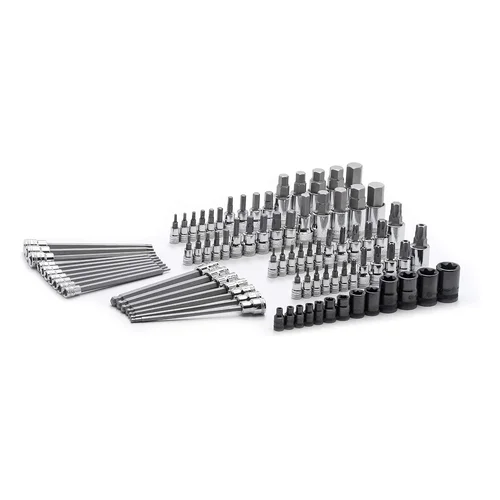 Socket Wrench Set (12mm + Torx T40)
The core tool for all hinge and striker bolt adjustments. Look for a set with both metric sockets and Torx bits to cover all vehicle types.
View on Amazon →
|
||
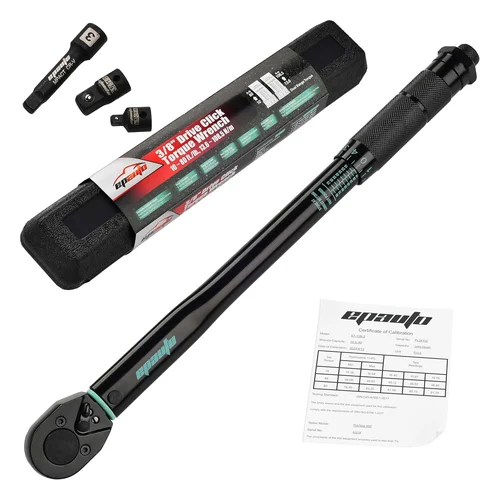 Torque Wrench Torque hinge bolts to 20–25 ft-lbs for a proper fit. Amazon → |
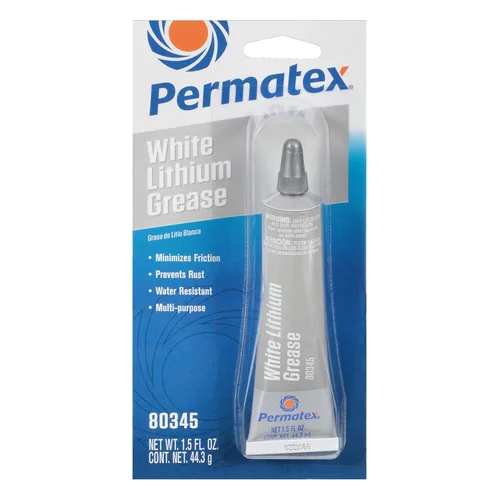 Hinge Lubricant Spray White lithium grease or WD-40 to silence hinge squeaks. Amazon → |
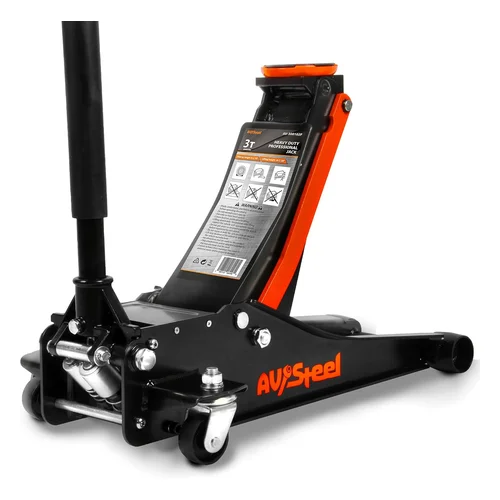 Low-Profile Floor Jack Support the door’s weight (40–80 lbs) while hinge bolts are loose. Amazon → |
To adjust a car door, you need some basic tools. A 12mm socket and ratchet handle most hinge bolt adjustments. A Torx T40 or T50 bit is needed for striker plate bolts on most modern vehicles. A torque wrench ensures you retighten to spec (20–25 ft-lbs for most door hinges). A floor jack supports the door’s weight during hinge adjustment — the door can weigh 40–80 lbs and will sag dangerously if unsupported. Lubricant spray (WD-40 or white lithium grease) prevents corrosion and smooths hinge movement. Safety glasses and gloves protect against rust dust and sharp bolt edges. A marker or masking tape creates witness marks on the striker plate.
How to Diagnose Why Your Car Door Won’t Close Properly
Before loosening any bolts, identify which component is causing the problem. Different symptoms point to different fixes — adjusting the wrong part wastes time and can make alignment worse.
| Symptom | Likely Cause | Fix |
|---|---|---|
| Door sags — top gap wider than bottom gap | Worn or loose hinge pins/bolts | Hinge adjustment or hinge pin replacement |
| Door sticks out at the back edge (flush at front) | Hinge bolts loose on body side | Loosen body-side hinge bolts, push door in, retighten |
| Door closes but rattles or feels loose | Striker plate too far out | Move striker plate inward in 1mm increments |
| Door requires extra force to close | Striker plate misaligned (too high/low) | Witness marks test → adjust striker up or down |
| Uneven gap all around (top, bottom, front, rear) | Hinge bolts loose on both sides | Full hinge re-alignment with floor jack support |
| Wind noise / water leak at closed door | Door seal gap or striker too loose | Striker adjustment first; replace seal if gap persists |
Safety Precautions
Always wear protective gloves when working on a car door — bolt heads and hinge edges are sharp. Use eye protection like goggles to guard against rust dust. Make sure the car is on a flat surface with the parking brake engaged. Turn the engine off and remove the key before beginning. Never loosen hinge bolts without a floor jack in place — an unsupported door can drop suddenly and crush fingers or crack the door frame. Have a first aid kit nearby. Work with a helper if possible: one person holds the door, one turns the wrench.
Identifying Issues
Car doors show specific signs when adjustment is needed. A door that sags — where the top trailing edge drops below the body line — has a worn or loose hinge. A door that won’t latch unless slammed has a misaligned striker plate. A door that rubs the frame on closing has shifted forward or backward on the hinges. Hearing a wind whistle at highway speed usually means the striker plate is too loose and the door doesn’t pull fully against the seal.
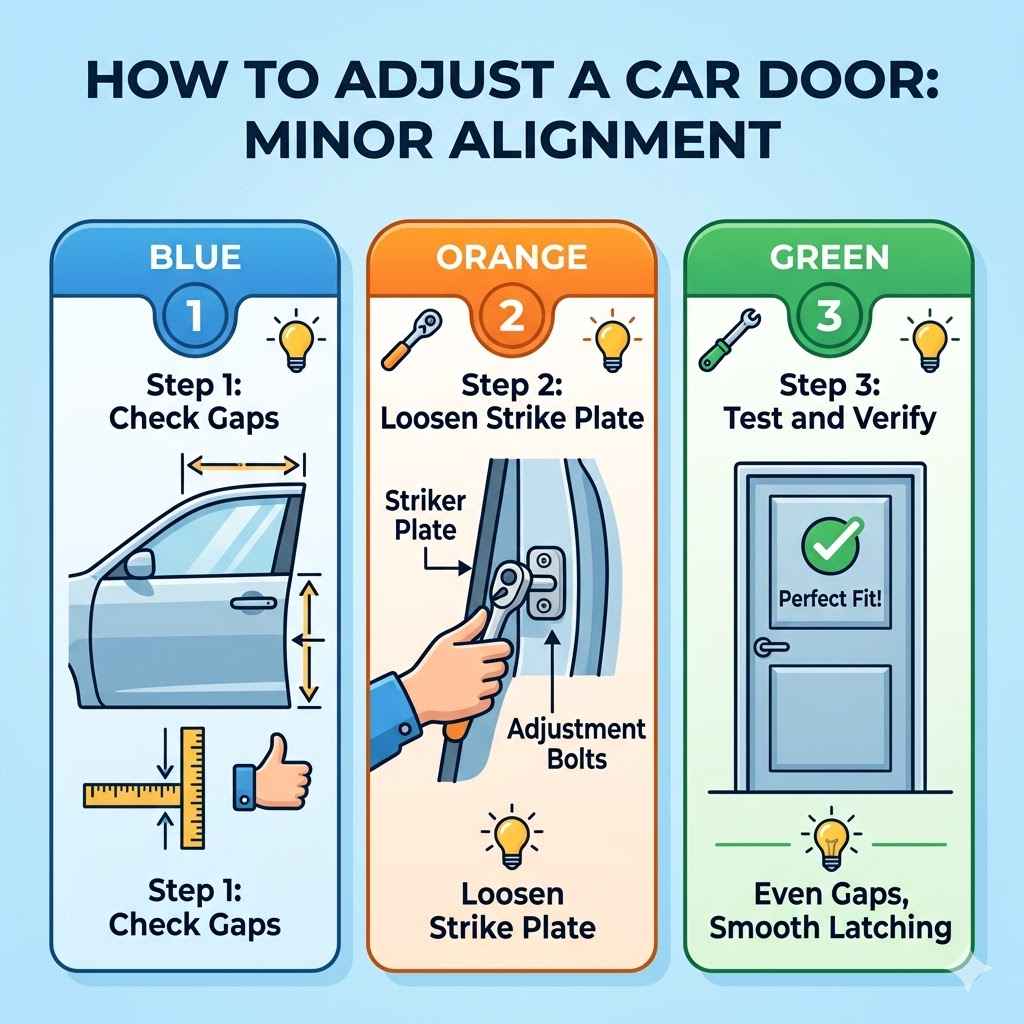
Look closely at the door gaps — the space between the door and the surrounding body panels. A correctly aligned door has even gaps of 4–5mm all the way around. Gaps that are wider at one end than the other, or that pinch closed at one point, indicate which direction the door has shifted. Use this gap pattern as your guide before touching any bolts.
Preparing The Car Door
Cleaning the area is very important before any adjustments. Wipe down the hinge area and striker plate with a clean rag. Dirt on bolt heads strips them. Use a wire brush to remove surface rust from hinge bolts before attempting to loosen them — a rounded bolt head wastes hours. Ensure the door edges are spotless to avoid scratches when repositioning.
Marking original positions is a critical prep step most guides skip. Before loosening anything, trace the outline of the hinge plates and striker plate with a permanent marker or grease pencil. This gives you a reference to return to if the adjustment goes wrong. Small marks take 30 seconds and save you from starting over.
Loosening Door Bolts
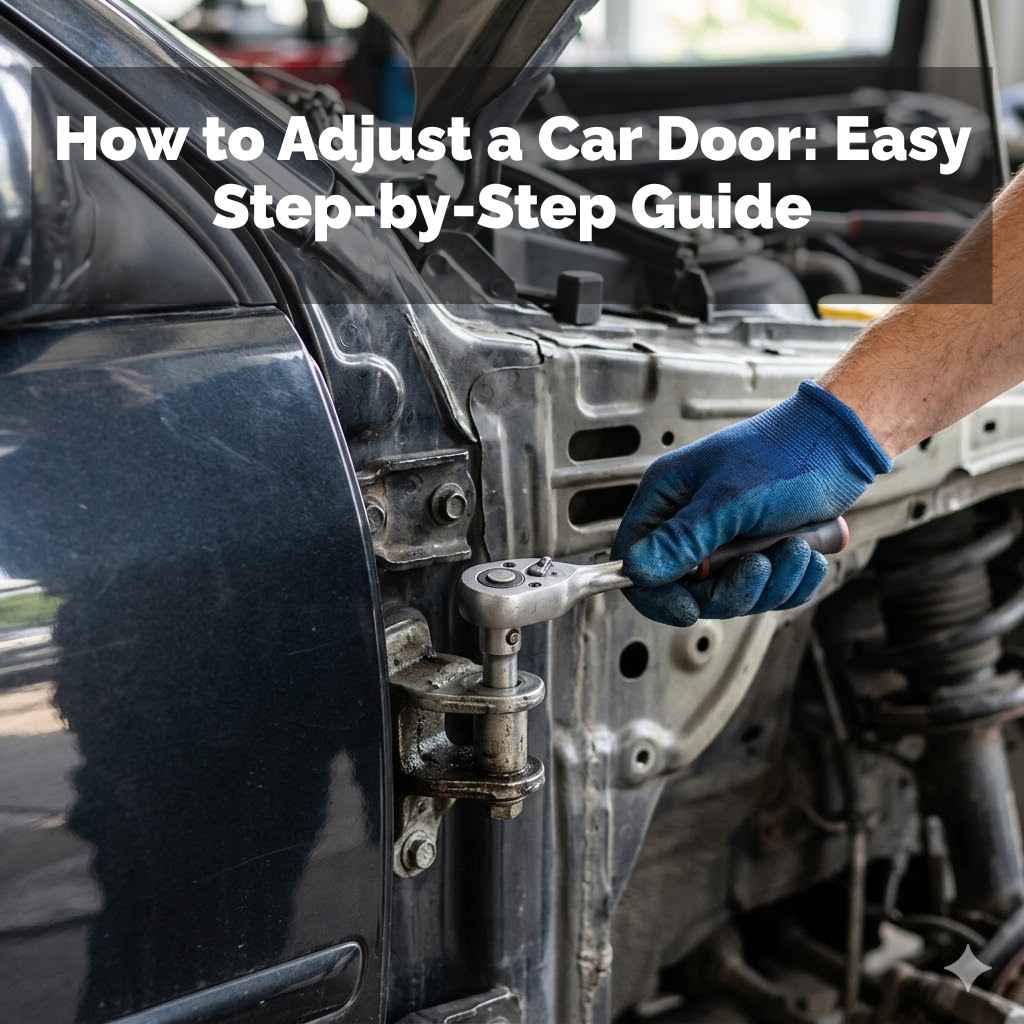
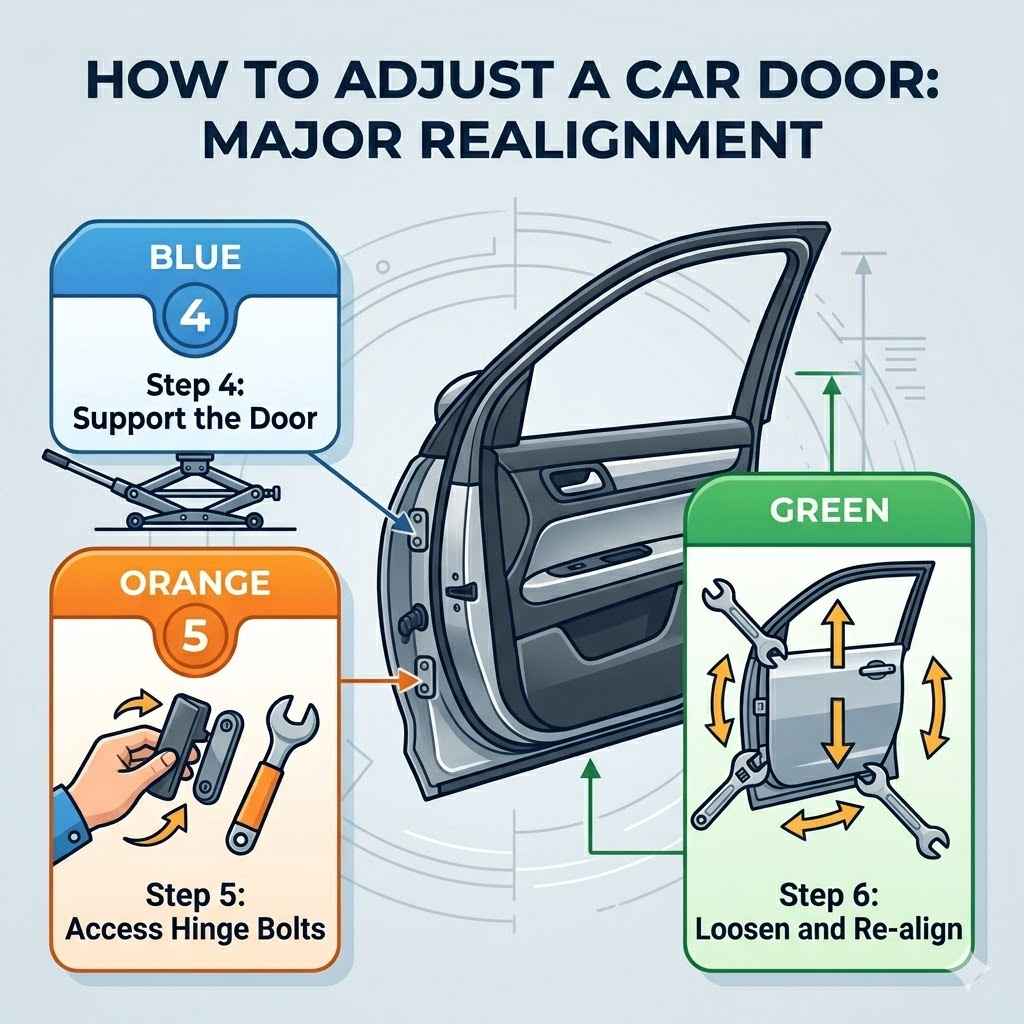
Open the car door fully to access the hinges on the door’s front edge. Most vehicles have two hinges, each secured by 2–3 bolts on the door side and 2–3 bolts on the body (A-pillar) side — giving 4–6 total bolts per hinge set. Use a 12mm socket for most OEM hinge bolts. Some vehicles (Ford, GM trucks) use Torx T40 bolts.
Only loosen the bolts — do not remove them. Loosen each bolt one half-turn at a time. Place your floor jack under the door’s inner edge (use a rubber pad or folded cloth to protect the paint) before loosening the final bolt. The door needs to be supported before it’s free to move.
Adjusting The Door
With bolts loosened and door supported, you can reposition it. For a sagging door (gap wider at top-rear than bottom-rear), lift the door slightly with the floor jack while pushing the trailing edge upward. Aim for a uniform 4–5mm gap at both top and bottom of the trailing edge. Make adjustments in increments of 1mm or less — small movements have significant visual impact on door gaps.
For forward/backward misalignment — where the door sticks out at the trailing edge or sits recessed — loosen the body-side hinge bolts instead of the door-side bolts. Push or pull the door in the correct direction, keeping it supported on the jack. Once positioned, hand-tighten one bolt to hold the door in place, then check the gap before fully tightening.
Ensure the door latch and lock engage correctly after repositioning. A door that is properly gap-aligned but won’t latch also needs striker plate adjustment (see the section below).

How to Adjust Your Car Door to Close Tighter (Striker Plate Method)
If your door gaps look correct but the door still rattles, feels loose, or requires extra force to close, the problem is the striker plate — not the hinges. The striker is a U-shaped metal loop bolted to the B-pillar (the body panel the door closes against). The latch on the door grabs this striker when you close the door. If the striker is too far out, the door closes loosely. If it’s too high or low, the latch has to fight to engage it.
The witness marks method is the most reliable way to diagnose striker position. Wrap a strip of masking tape around the striker plate. Close the door at normal speed and open it again. The tape will show an impression — a scuff mark — where the latch made contact. If the scuff is off-center (too high, too low, or to one side), that tells you exactly which direction to move the striker.
- Open the door and locate the striker plate on the B-pillar (the vertical body panel the door closes against).
- Wrap masking tape around the striker. Close the door at normal speed. Open and examine the tape impression.
- Use a Torx T40 bit (or 12mm socket) to loosen the striker bolts — just enough to slide it, not remove it.
- Move the striker in one direction only at a time, in increments of less than 1mm.
- Hand-tighten the bolts, close the door, and test. Repeat until the door closes with a solid single click and sits flush.
- Once aligned, torque the striker bolts firmly (typically 18–22 ft-lbs — check your vehicle’s service manual).
Tightening The Bolts
Car doors need firm bolts to hold alignment. Once the door position is correct, tighten the hinge bolts in a crisscross pattern — alternate between top and bottom bolts — to prevent the door from shifting as you tighten. Use a torque wrench to finish at 20–25 ft-lbs for most passenger car door hinges. Pickup truck and SUV doors with heavier doors may require 25–35 ft-lbs — check your vehicle’s service manual.
Check the door’s fit before calling the job done. Look at the gaps around the entire door perimeter. Gaps should be even (4–5mm all around). Uneven gaps after tightening mean the door shifted during the tightening process — loosen slightly, reposition, and retighten. Over-tightening can crack paint around the hinge area or strip bolt threads.
Testing The Adjustment
Testing the adjustment of a car door involves checking its fit, closure, and seal integrity. Ensure the door aligns with the car body with even gaps on all sides. Listen for unusual sounds when closing. Adjust hinges or striker if necessary for a smoother operation. Proper alignment prevents air leaks and increases driving comfort.
Checking Door Closure
Open the car door gently. Close it at normal speed — not a slam, not slowly pushed. The door should shut with one solid click. Two clicks, a thud, or the need to push harder than normal means the striker is still misaligned. Check the alignment visually. Look at the gaps around the door — they should be even. Ensure the latch catches without force. A well-adjusted door closes quietly and flush.
Evaluating Seal Integrity
Use the paper test: insert a piece of paper or a dollar bill in the door jamb and close the door fully. Try to pull the paper out with the door latched. If it slides out easily, there’s a gap in the seal at that point — the door isn’t pulling tight against the weatherstrip. Move around the door perimeter testing at multiple points. A well-sealed door should grip the paper firmly all the way around. If the door alignment is correct but the paper test still fails, inspect the door seal/weatherstrip for cracks or flat spots and replace if needed.
Troubleshooting Common Issues
Even after careful adjustment, some door problems persist. Knowing what to look for prevents repeated disassembly.
Persistent Misalignment
Misalignment that returns after adjustment usually means worn hinge pins, not just loose bolts. Hinge pins wear oval over time, allowing the door to sag by 5–10mm — more movement than bolt adjustment can compensate for. Lift the door by its trailing edge by hand with the door open: if it moves more than 2–3mm vertically, the hinge pins need replacement (typically $40–$120 per hinge at a shop). If the door still doesn’t align after hinge and striker work, the door frame or body may be bent — consult a body shop.
Noise And Vibration
Car doors should open and close smoothly. Rattling at highway speed means the striker is too loose — the latch is bouncing against the striker rather than holding it firmly. Tighten the striker inward 1mm at a time until the rattle stops. Squeaking when opening or closing is hinge friction — apply white lithium grease or spray lubricant to the hinge pivot pins. Wind noise on a properly aligned door usually means the weatherstrip has compressed over time — pressing it back into the channel or replacing it resolves this without any bolt adjustments.
Maintenance Tips
Check the car door hinges for rust every 6 months. Rust seizes hinge pins and eventually causes sagging. A few drops of penetrating oil applied to the hinge pivot points prevents this. Use white lithium grease on the door latch mechanism and striker plate — it lasts longer than WD-40 and doesn’t attract dirt. Check the weather strip for cracks or flat sections. A damaged strip lets in water and wind. Inspect the door lock — it should engage smoothly without grinding. Test each door by closing it and confirming it requires no extra force.
Frequently Asked Questions
How Do I Adjust My Car Door?
To adjust your car door, first identify the problem: sagging or uneven gaps = hinge adjustment; door rattles or won’t close tightly = striker plate adjustment. For hinges, loosen the 4–6 hinge bolts (12mm socket), support the door with a floor jack, reposition for even 4–5mm gaps, then torque to 20–25 ft-lbs. For the striker, use the witness marks method — tape the striker, close the door, read the impression, then move the striker in 1mm increments until the door closes with a single solid click.
How Do I Know If I Need Hinge vs. Striker Adjustment?
If the door sags or has uneven gaps around the perimeter — wider at the top than the bottom, or the trailing edge sticks out — you need a hinge adjustment. If the door closes but rattles, feels loose, or requires extra force to latch despite even gaps, you need a striker plate adjustment. If you lift the door’s trailing edge by hand and feel 3mm+ of vertical play, the hinge pins themselves are worn and need replacement, not just tightening.
How To Fix A Misaligned Door In A Car?
Check for loose hinges and tighten them first. Adjust the door striker by loosening bolts and using the witness marks method to align it correctly. Inspect door seals for compression issues. If the misalignment returned after a previous adjustment, check for worn hinge pins — lift the door trailing edge to test for vertical play. If the frame itself is bent (usually from a collision), a body shop alignment is required.
How To Fix A Door That Is Misaligned?
To fix a misaligned door, loosen the hinge bolts and check for loose screws on both the door-side and body-side hinge plates. Adjust the hinges using a floor jack to support the door. Ensure the door frame is not bent. After hinge work, use a chisel or wrench to adjust the striker plate if the latch doesn’t catch cleanly. Lubricate all pivot points when finished.
How To Make A Car Door Close Smoothly?
Clean the door latch and apply white lithium grease to ensure smooth operation. Adjust the striker plate alignment by tightening it inward if the door requires force to close. Inspect weather stripping for flat or cracked sections and replace if necessary. Test with the paper test (insert paper in the door jamb, confirm it grips firmly when closed). Regular lubrication of the hinge pins every 6 months prevents issues and promotes smooth, quiet closing.
How Do I Adjust Car Door Gap?
Car door gaps should be uniform at 4–5mm around the entire perimeter. To adjust: loosen the hinge bolts (12mm socket), support the door with a floor jack, and move the door in the direction that equalizes the gap. A gap wider at the top = lift the door. Wider at the bottom = lower it. Gap wider at the rear = push the door forward on the hinge. Always tighten to 20–25 ft-lbs after repositioning and recheck all four sides of the gap before finishing.
Conclusion
Most car door alignment problems come down to two things: loose hinge bolts causing sag, or a misaligned striker plate causing poor closure. The diagnosis takes two minutes — check the gap pattern and test whether the door rattles. The fix takes 20–30 minutes with basic tools. Fixing it promptly protects your door seals and prevents water intrusion. If the door keeps misaligning after adjustment, suspect worn hinge pins rather than repeating the bolt adjustment.
For doors with deeper problems — a jammed car door or a broken latch mechanism — see our related guides. And if your door seal is damaged and letting in water even after alignment, follow our guide on how to replace a car door seal.
Products related to this article
Sponsored / affiliate links. As an Amazon Associate I earn from qualifying purchases. I may earn additional commission from eligible campaigns.