How Long Does Car Oil Last? Your Full Guide
How long does car oil last is a critical question for every vehicle owner looking to maintain engine health and longevity. Understanding your car’s oil lifespan isn’t just about remembering an arbitrary date; it directly impacts your car’s performance, fuel efficiency, and the prevention of costly repairs. This comprehensive guide will break down all the factors that influence oil life and provide clear, actionable advice to keep your engine running smoothly.
Simply put, car oil life depends on a combination of mileage and time, with most conventional oils lasting around 5,000 miles or 6 months, and synthetic oils often extending to 10,000 miles or 12 months, though driving habits and conditions significantly alter these estimates. Always consult your owner’s manual for the most accurate recommendation for your specific vehicle.
Key Takeaways
- The lifespan of car oil is determined by both mileage and time, not just one factor alone.
- Conventional motor oils typically need changing every 5,000 miles or 6 months, while synthetic oils can last up to 10,000 miles or 12 months.
- Driving conditions, such as frequent short trips, stop-and-go traffic, and extreme temperatures, can significantly shorten oil life.
- Always refer to your vehicle’s owner’s manual for the manufacturer’s specific oil change recommendations.
- Regular oil changes are crucial for engine lubrication, cooling, cleaning, and preventing wear and tear.
What is Engine Oil and Why Does It Matter?
Engine oil is the lifeblood of your car’s engine. Its primary role is to lubricate moving parts, reducing friction and wear. Without proper lubrication, metal-on-metal contact would quickly lead to severe damage and engine failure.
Beyond lubrication, engine oil performs several other vital functions. It helps cool the engine by carrying heat away from critical components, such as pistons and cylinders. It also acts as a cleaning agent, suspending dirt, debris, and byproducts of combustion to prevent them from accumulating and forming sludge.
The oil also forms a seal between the piston rings and cylinder walls, improving compression and engine efficiency. Furthermore, it protects engine parts from rust and corrosion. The quality and condition of your engine oil directly influence your car’s performance, fuel economy, and overall lifespan.
Understanding the Factors Affecting Oil Lifespan
Several key factors influence how long your car’s oil will remain effective. While mileage and time are the most common metrics, your driving habits and environment play a substantial role. Understanding these elements helps you make informed decisions about when to schedule your next oil change.
The type of oil you use is paramount. Conventional oils are derived from crude oil and are generally less refined than synthetic oils. Synthetic oils, on the other hand, are chemically engineered to offer superior performance, better resistance to extreme temperatures, and longer intervals between changes.
The quality of the oil filter also contributes to the oil’s lifespan; a clogged filter can restrict oil flow and reduce its effectiveness.
Beyond the oil itself, the operating conditions of your engine are significant. Short trips where the engine doesn’t reach optimal operating temperature are particularly harsh on oil. This is because condensation can build up, mixing with the oil and creating corrosive byproducts.
Stop-and-go city driving, frequent hard acceleration or braking, and towing heavy loads also put more stress on the oil, causing it to break down faster.
Conventional vs. Synthetic Oil: Lifespan Differences
The choice between conventional and synthetic oil is one of the most significant determinants of how long you can go between oil changes. This distinction is rooted in their manufacturing processes and inherent properties.
Conventional motor oil is refined directly from crude oil. It’s a more traditional and generally less expensive option. While it provides adequate lubrication and protection for many engines, it tends to break down more quickly under high temperatures and extreme conditions.
For conventional oil, a general rule of thumb for oil changes is every 3,000 to 5,000 miles or every 6 months, whichever comes first. However, modern conventional oils have improved, with some recommending up to 5,000 miles.
Synthetic oil is engineered in a laboratory to have a more uniform molecular structure and fewer impurities. This results in superior performance characteristics. Synthetic oils offer better resistance to thermal breakdown, meaning they maintain their viscosity and lubricating properties at higher temperatures.
They also provide better flow at low temperatures, ensuring easier startup in cold weather. Because of these advantages, synthetic oils can typically last much longer, often ranging from 7,500 to 10,000 miles or even up to 15,000 miles for some high-performance synthetics. The recommended time interval for synthetics is usually 12 months.
| Oil Type | Typical Mileage Interval | Typical Time Interval | Key Benefits |
|---|---|---|---|
| Conventional | 3,000 – 5,000 miles | 6 months | Cost-effective, widely available |
| Synthetic Blend | 5,000 – 7,500 miles | 6 – 9 months | Good balance of performance and cost |
| Full Synthetic | 7,500 – 15,000+ miles | 12 months | Superior protection, longer intervals, better in extreme temps |
The choice of oil type directly influences the recommended change interval. Synthetic oils offer longer protection and are often worth the higher initial cost in the long run due to fewer oil changes and better engine health.
The Impact of Driving Conditions on Oil Life
Your driving habits and the environment in which you operate your vehicle can dramatically alter how long your engine oil lasts. What might be a safe interval for one driver could be too long for another, even in the same vehicle.
Frequent short trips are particularly detrimental. When you only drive for a few miles, the engine doesn’t get hot enough to burn off condensation that forms inside the crankcase. This moisture can mix with the oil, leading to the formation of sludge and acids that degrade the oil and corrode engine parts.
Experts often recommend changing oil more frequently (e.g., every 3,000 miles) if your driving primarily consists of short trips.
Stop-and-go traffic, common in urban areas, also adds to the stress on your oil. Constant acceleration and braking generate more heat and put greater mechanical strain on engine components and, consequently, the oil. Similarly, towing trailers, carrying heavy loads, or driving in mountainous terrain requires your engine to work harder, leading to increased oil temperatures and faster oil degradation.
Extreme temperatures, both hot and cold, also affect oil. High temperatures can cause oil to thin out and break down, losing its lubricating properties. Cold temperatures can make oil thicker and less able to flow freely, especially during startup.
While synthetic oils generally handle these extremes better than conventional oils, they still experience wear over time.
How to Determine When to Change Your Car’s Oil
The most reliable way to know when to change your oil is to consult your vehicle’s owner’s manual. Manufacturers conduct extensive testing to determine the optimal oil type and change intervals for their specific engines. They provide guidelines based on the type of oil recommended (conventional, synthetic blend, or full synthetic).
However, your owner’s manual often provides a range or a “severe” service schedule. If your driving habits fall into the “severe” category – which includes frequent short trips, stop-and-go traffic, towing, dusty conditions, or extreme temperatures – you should adhere to the more frequent interval. For instance, a car might have a standard recommendation of 7,500 miles but a severe schedule of 5,000 miles.
Many modern vehicles are equipped with oil life monitoring systems. These systems use algorithms to track your driving habits, engine operating conditions, and temperature fluctuations to estimate the remaining oil life. They typically display a percentage or a countdown in miles.
While these systems are sophisticated, they are not foolproof. It’s still wise to cross-reference their recommendations with your owner’s manual and consider your actual driving conditions.
If your vehicle doesn’t have an oil life monitor or you want an extra layer of assurance, consider using an oil drain plug with a built-in thermometer or an oil analysis kit. Oil analysis, though more involved, can provide a detailed report on the condition of your oil and the health of your engine. It can detect abnormal wear and suggest whether the oil still has life left or needs immediate replacement.
Signs Your Car Needs an Oil Change
Ignoring the recommended mileage or time intervals can lead to noticeable signs that your engine oil is due for a change. Paying attention to these indicators can help prevent premature engine damage.
One of the most common signs is the check engine light or a specific oil pressure warning light illuminating on your dashboard. While these lights can indicate various issues, low oil level or degraded oil causing poor lubrication is a frequent cause. If the light appears, it’s best to check your oil level immediately and consider an oil change if it’s low or dirty.
You might also notice changes in your engine’s sound. An engine running with old, degraded oil may start to sound louder, rougher, or even make knocking noises. This is because the oil’s lubricating properties have diminished, allowing metal parts to rub against each other more aggressively.
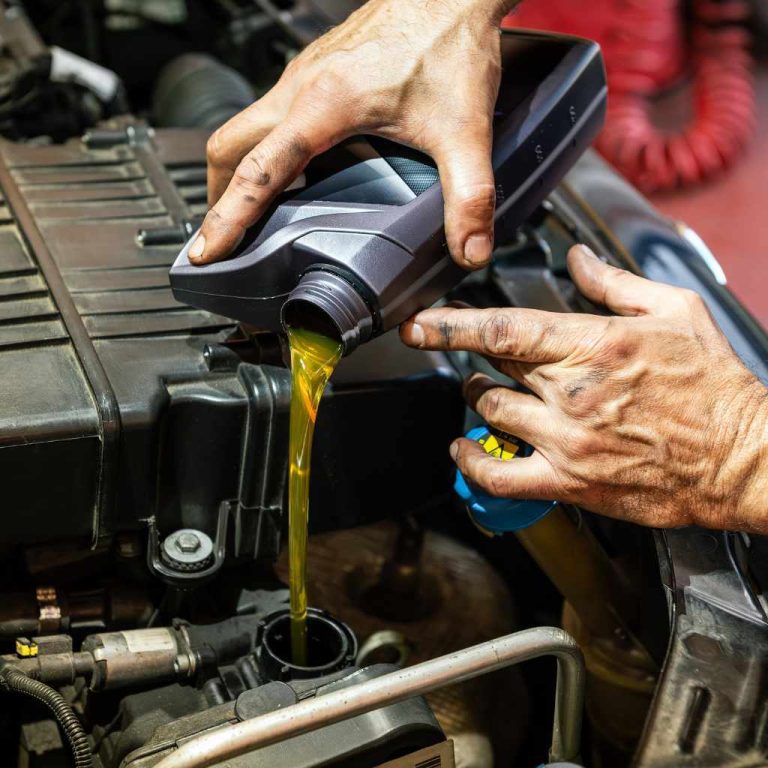
A visual inspection of the oil can also be telling. If you check your oil dipstick and the oil appears dark, gritty, or has a thick, sludgy consistency, it’s definitely time for a change. Fresh oil is typically amber or golden in color and relatively clear.
Over time, it darkens as it picks up combustion byproducts and dirt.
Another indicator can be a change in exhaust. If you notice blue smoke coming from your exhaust pipe, it could mean oil is burning, which is often a sign of internal engine issues related to poor lubrication or worn seals, which can be exacerbated by old oil. Increased exhaust emissions or a burning smell under the hood are also potential warnings.
- Dark or Gritty Oil: Fresh oil is amber. If it’s black, murky, or contains visible particles, it’s worn out.
- Engine Noise: Louder or knocking sounds indicate reduced lubrication.
- Warning Lights: Check engine or oil pressure lights are critical indicators.
- Exhaust Smoke: Blue or dark smoke from the tailpipe can signify burning oil.
- Fuel Economy Drop: Reduced lubrication can lead to increased friction and lower MPG.
- Smell of Burning Oil: A distinct burning odor can point to leaks or internal oil consumption.
The Consequences of Neglecting Oil Changes
Skipping oil changes is one of the most detrimental things you can do for your vehicle’s engine. The consequences range from reduced performance to catastrophic engine failure.
The most immediate impact is increased wear on engine components. Engine oil’s primary job is to create a protective film between moving parts like the crankshaft, camshafts, pistons, and cylinders. As oil ages, it loses its viscosity and lubricating properties.
This means more friction, more heat, and accelerated wear on these critical parts. Over time, this wear can lead to reduced engine performance, decreased fuel efficiency, and ultimately, costly repairs.
Sludge formation is another significant problem. Old oil can collect dirt, carbon deposits, and byproducts of combustion, thickening into a tar-like substance called sludge. This sludge can clog oil passages, starving vital engine components of lubrication.
It can also build up in the oil pan, preventing new oil from circulating properly. A severely sludged engine is prone to overheating and premature failure.
Engine overheating is also a common consequence. While oil helps cool the engine, old, degraded oil is less effective at heat transfer. Combined with increased friction from poor lubrication, this can lead to the engine running hotter than it should, potentially causing damage to gaskets, seals, and other components.
In extreme cases, it can lead to a blown head gasket or even a seized engine.
Ultimately, neglecting oil changes can lead to complete engine failure. A seized engine, where the internal moving parts lock up due to lack of lubrication and excessive heat, is often irreparable and requires a complete engine replacement – a repair that can cost thousands of dollars. This is why adhering to a regular oil change schedule is one of the most cost-effective maintenance practices for any car owner.
Oil Change Frequency for Different Vehicle Types
While general guidelines exist, the optimal oil change frequency can vary significantly based on the type of vehicle you own. Luxury cars, performance vehicles, and even older models might have different needs than a standard commuter car.
Standard Commuter Cars: For most everyday cars, following the owner’s manual’s standard recommendation is usually sufficient. This often falls within the 5,000-7,500 mile range for conventional oil and 7,500-10,000 miles for synthetic oil. If these vehicles are used primarily for highway driving, they might even exceed these numbers.
Performance Vehicles: High-performance cars, especially those with turbocharged engines or designed for track use, often demand more frequent oil changes, even when using synthetic oil. The intense heat and stress placed on the engine during spirited driving cause the oil to degrade faster. Manufacturers of these vehicles often recommend much shorter intervals, sometimes as low as 3,000-5,000 miles, regardless of oil type.
Always consult the manual for these specialized vehicles.
Older Vehicles: Cars that are more than 10-15 years old may benefit from more frequent oil changes, especially if they have accumulated significant mileage. The seals and gaskets in older engines might not be as robust, and more frequent lubrication can help prevent wear. Using a high-mileage synthetic oil formulation can also be beneficial, as these contain special additives to condition seals and reduce oil consumption.
Heavy-Duty Vehicles/Towing: Vehicles regularly used for towing heavy loads or for commercial purposes, such as trucks and SUVs, are considered to be under severe service conditions. Even if they use synthetic oil, they will require more frequent changes. The owner’s manual will typically outline a severe service schedule with shorter intervals.
For example, a truck that regularly tows might need an oil change every 3,000-5,000 miles.
| Vehicle Type | Typical Oil Type Recommendation | Standard Mileage Interval | Severe Service Interval |
|---|---|---|---|
| Standard Commuter | Conventional or Synthetic Blend | 5,000 – 7,500 miles | 3,000 – 5,000 miles |
| Performance/Sports Car | Full Synthetic | 7,500 – 10,000 miles | 3,000 – 5,000 miles |
| Older Vehicle (10+ Years) | High-Mileage Synthetic Blend | 3,000 – 5,000 miles | 2,000 – 3,000 miles |
| Truck/SUV (Towing/Heavy Load) | Synthetic or Synthetic Blend | 5,000 – 7,500 miles | 3,000 – 5,000 miles |
Always prioritizing your owner’s manual ensures you provide your specific vehicle with the best possible care. Using the correct oil and adhering to appropriate intervals protects your investment.
Can I Extend My Car’s Oil Life?
While there are limits to how long oil can effectively perform, certain practices can help optimize its lifespan and ensure it performs optimally for as long as possible. These methods focus on reducing stress on the oil and engine.
Using the correct type and viscosity of oil recommended by your vehicle manufacturer is the most fundamental step. Opting for a high-quality synthetic oil will inherently provide longer protection than conventional oil, especially under demanding conditions. Ensure the oil meets the specific API (American Petroleum Institute) and SAE (Society of Automotive Engineers) viscosity grades specified in your owner’s manual.
Minimizing engine idling time can also help. Idling is a form of stop-and-go driving where the engine is running but not covering distance, leading to less efficient combustion and potential for condensation buildup. If you’re stuck in traffic for extended periods, it might be more beneficial to turn off the engine if it’s safe to do so.
Another effective strategy is to drive more smoothly. Avoiding rapid acceleration and hard braking reduces the strain on the engine and the oil. Consistent, moderate driving puts less thermal and mechanical stress on the oil, allowing it to maintain its properties for longer.
Regularly checking your oil level and condition between scheduled changes is also crucial. If you notice the oil level is low, topping it up promptly with the correct type of oil can prevent the oil from being too diluted and overheating. Observing the oil’s color and consistency can give you early warnings that it might be breaking down prematurely.
- Use High-Quality Oil: Opt for synthetic or synthetic blends recommended by your manufacturer.
- Drive Smoothly: Avoid aggressive acceleration and braking.
- Reduce Idling: Turn off the engine during prolonged stops when safe.
- Monitor Oil Level: Check and top up oil regularly between changes.
- Maintain Tire Pressure: Properly inflated tires reduce engine load.
- Keep Air Filter Clean: A clean air filter ensures efficient combustion, reducing engine strain.
While these tips can extend the effective life of your oil, always remember that oil is a consumable. It degrades over time and use, and a scheduled change is still necessary for optimal engine health.
Frequently Asked Questions
What is the general rule of thumb for how long does car oil last?
Generally, conventional oil needs changing every 5,000 miles or 6 months, while synthetic oil can last up to 10,000 miles or 12 months. However, this is a broad guideline and your specific vehicle’s owner’s manual should always be consulted for the most accurate recommendation.
Can driving in heavy rain reduce how long my car oil lasts?
Heavy rain itself doesn’t directly reduce oil life. However, driving in heavy rain can sometimes lead to conditions like increased stop-and-go traffic or driving on wet roads where you might brake more, both of which can indirectly increase engine strain and shorten oil life over time compared to steady highway driving.
What happens if I don’t change my car oil for a very long time?
If you don’t change your car oil, it will lose its lubricating properties, become contaminated with debris and acids, and thicken into sludge. This leads to increased engine wear, overheating, reduced performance, poor fuel economy, and eventually, severe engine damage or complete failure.
How often should I change the oil in a car that I barely drive?
Even if you barely drive your car, oil still degrades over time due to oxidation and moisture buildup. It’s generally recommended to change the oil at least once a year, or according to the time interval specified in your owner’s manual, even if you haven’t reached the mileage limit.
Is it okay to use a different brand of oil than what’s recommended, as long as it’s the same type?
Yes, it’s generally okay to use a different brand of oil as long as it is the correct type (conventional, synthetic blend, full synthetic), viscosity grade (e.g., 5W-30), and meets the API (American Petroleum Institute) specifications recommended in your owner’s manual. Different brands may have slightly different additive packages, but adhering to the manufacturer’s specifications is the most important factor.
Final Thoughts
Understanding how long car oil lasts is essential for preserving your engine’s health. While mileage and time are key indicators, your driving conditions and the type of oil you use play a significant role. Always prioritize your owner’s manual recommendations, and pay attention to your car’s signals.
Regular oil changes are a small investment that yields substantial returns in engine longevity and performance, preventing costly repairs down the line.
Products related to this article
Sponsored / affiliate links. As an Amazon Associate I earn from qualifying purchases. I may earn additional commission from eligible campaigns.