How Long to Defrost a Car From Snow?
Winter weather can be tricky. When snow piles up on your car, you might wonder, How Long Does It Take to Defrost a Car From Snow? It’s a common question for many, especially those new to handling frosty mornings. Getting this right saves you time and makes sure you can get going safely.
This guide breaks down the process simply so you can handle snow with confidence. We’ll cover everything you need to know to clear your car quickly and effectively.
Understanding Snow and Ice on Your Car
When winter hits, snow and ice can quickly cover your car. This isn’t just a little annoying; it can make driving unsafe. Understanding why snow sticks and how ice forms helps us figure out the best ways to get rid of it. It’s all about temperature and moisture working together to create a frosty mess.
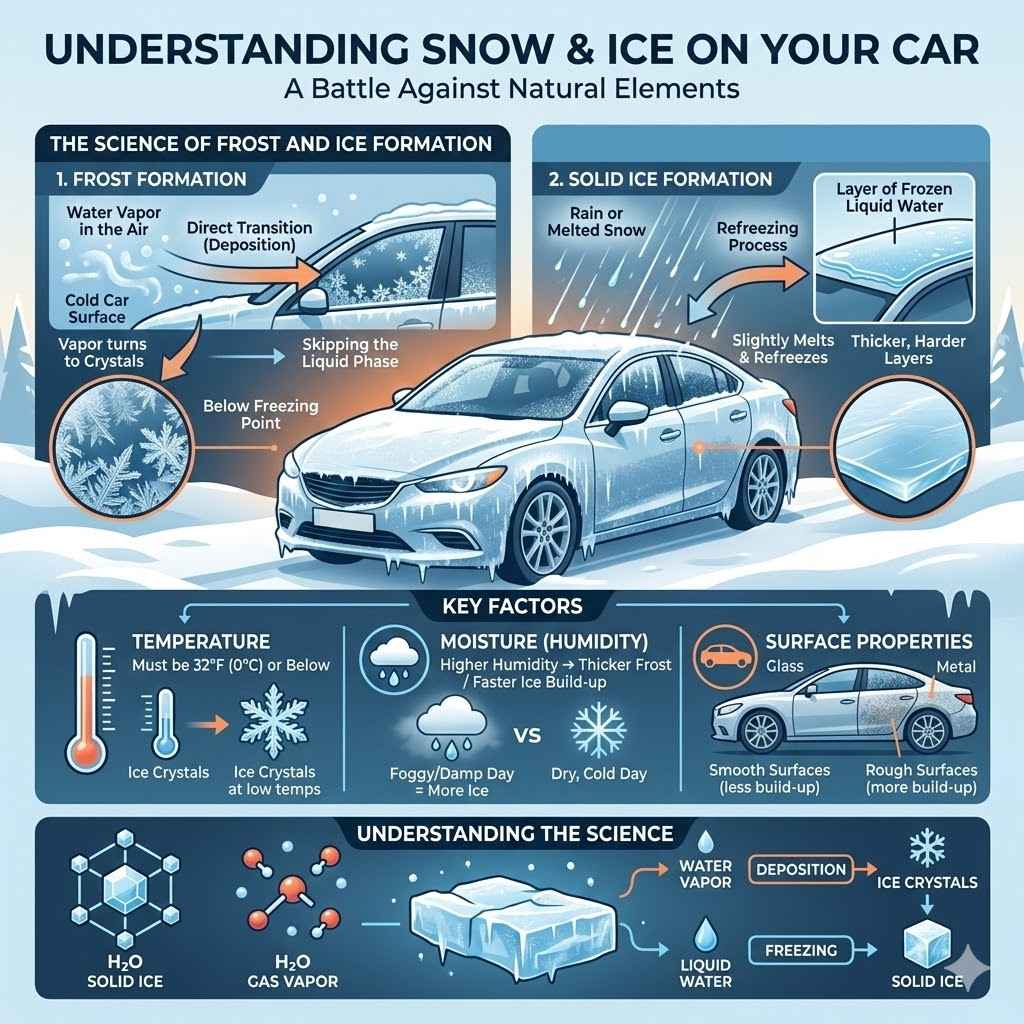
The Science of Frost and Ice Formation
Frost forms when the air near a surface, like your car’s windows, cools below the freezing point. Water vapor in the air then turns directly into ice crystals on the surface. This happens without the water first becoming liquid.
Ice on your car is usually frozen liquid water. This can happen if rain freezes on contact or if snow melts slightly and then refreezes. The temperature of the car’s surface and the surrounding air are key factors.
Temperature and Moisture
The air needs to be at or below 32 degrees Fahrenheit (0 degrees Celsius) for ice and frost to form. If it’s colder, the water vapor in the air can freeze onto surfaces.
Humidity also plays a big role. Higher humidity means there’s more water vapor in the air. This can lead to thicker frost or faster ice build-up. A foggy or damp winter day can create more challenging conditions than a very dry, cold day.
Surface Properties
The material of your car’s surface can also affect how quickly ice forms. Smooth surfaces tend to get less ice build-up than rough ones. However, most car surfaces are relatively smooth.
This knowledge helps us see why clearing snow and ice is more than just a quick brush. It’s a battle against natural elements.
Factors Affecting Defrosting Time
So, how long does it actually take to clear your car? A few things make a difference. The amount of snow, how hard the ice is, and the tools you use all play a part. It’s not a one-size-fits-all answer.
Amount of Snow and Ice
A light dusting of snow takes only a minute or two to brush off. However, a heavy snowstorm can leave several inches of snow, making it a much bigger task.
Thick ice layers, especially those formed from freezing rain, can be tough. They might require more effort to break free. Sometimes, the ice is so thick it looks like a solid sheet.
Light Snowfall
A few inches of fluffy snow are usually easy to manage. A good snow brush can clear this in under five minutes.
Heavy Snowfall
When snow is deep, you might need a larger snow shovel or a brush with a wider head. Clearing a full car can take 10 to 15 minutes or more.
Freezing Rain Ice
Ice formed from freezing rain is often smooth and hard. It can stick very firmly to your windows and body panels. This type of ice can take the longest to remove.
Temperature Conditions
The colder it is, the harder the ice is, and the longer it might take to melt or break. Very cold temperatures also mean ice won’t melt easily on its own.
Sub-Freezing Temperatures
If the temperature is well below freezing, like 10 degrees Fahrenheit (-12 degrees Celsius), ice will be very hard. Melting it with a de-icer spray or warm water will be slower.
Near Freezing Temperatures
When the temperature is closer to 32 degrees Fahrenheit (0 degrees Celsius), ice might be softer. It could melt or loosen more quickly, especially with help.
Car Surface Temperature
A car parked in a garage, even an unheated one, will be warmer than a car left outside. This warmer surface will make ice and snow melt faster.
Garage Parking
Cars kept in garages often have less snow and ice. If they do, it’s usually easier to remove because the car’s surface is not as cold.
Outdoor Parking
Cars parked outside are fully exposed. Their surfaces can become extremely cold, making ice stick more firmly.
Tools and Methods Used
The tools you use make a huge difference. The right tools speed things up. The wrong ones can make it a frustrating chore.
Snow Brush and Scraper
A good snow brush can sweep away loose snow quickly. A sturdy ice scraper is essential for scraping off thicker ice layers.
De-Icer Sprays
Special de-icer sprays can help loosen ice. They work by lowering the freezing point of water, making the ice melt faster.
Warm Water
Using warm water can melt ice, but you need to be careful. Extremely hot water can crack cold glass.
Typical Defrosting Times by Scenario
Let’s break down how long it might take for common winter situations. These are estimates, but they give you a good idea of what to expect.
Scenario 1 Light Snowfall
Imagine you wake up to a light dusting of snow, maybe an inch or two. The temperature is around 25 degrees Fahrenheit (-4 degrees Celsius).
You grab your trusty snow brush. You sweep the snow off the windows, hood, and roof. Then, you use your ice scraper for any small patches of frost on the windshield.
In this case, clearing your car will likely take between 5 to 10 minutes. It’s a quick job, and you’ll be on your way before you know it.
Scenario 2 Moderate Snowfall with Some Ice
Now, picture a morning with about 4-6 inches of snow. There’s also a layer of ice underneath, perhaps from overnight freezing rain. The temperature is around 20 degrees Fahrenheit (-7 degrees Celsius).
You’ll need both your snow brush and your ice scraper. You might spend a few minutes brushing off the bulk of the snow. Then, you’ll focus on using the scraper to chip away at the ice.
This situation could take 15 to 25 minutes. You might need to spray some de-icer on stubborn spots to help things along.
Scenario 3 Heavy Snow and Thick Ice
This is the challenging scenario. You wake up to a foot or more of heavy, wet snow. Beneath it, a thick, solid sheet of ice covers everything. The temperature is around 15 degrees Fahrenheit (-9 degrees Celsius).
You’ll definitely need all your tools. Start by trying to brush off as much snow as possible. Then, the real work begins with the ice scraper. You might have to work section by section, applying de-icer and scraping patiently.
Clearing your car in this scenario could take 30 minutes or even longer. If the ice is very thick, you might even need to let the engine run for a bit to warm the glass from the inside, making scraping easier.
Effective Methods for Defrosting Your Car
Knowing how to defrost your car efficiently can save you precious time and effort. There are several methods, each with its pros and cons. Picking the right one depends on how much snow and ice you’re dealing with.
Using a Snow Brush and Ice Scraper
This is the most basic and often the most effective method for moderate snow and ice.
Snow Brushing Technique
Always start from the top of the car and work your way down. This way, you’re not pushing snow onto areas you’ve already cleared. Use long, sweeping strokes.
Ice Scraping Tips
For ice, make sure your scraper has a sharp edge. Hold it at a slight angle to the glass. Apply firm, even pressure. Never use a credit card or other sharp objects that aren’t designed for ice, as they can scratch your windows.
Safety First
Be careful not to scratch your car’s paint. If the ice is very thick, a quick spray of de-icer can make scraping much easier.
Leveraging De-Icer Sprays
De-icer sprays are chemical solutions designed to melt ice and prevent further freezing.
How De-Icers Work
These sprays contain chemicals like propylene glycol or methanol. These chemicals lower the freezing point of water, turning solid ice into a liquid brine that can be easily removed.
Application Tips
Spray generously onto the icy surfaces. Let it sit for a minute or two to work. Then, use your brush or scraper to remove the loosened ice and snow.
Choosing a De-Icer
Look for de-icers that are safe for car paint and glass. Some can be more effective in extreme cold than others.
Utilizing Your Car’s Defrost System
Modern cars have built-in systems to help with this. They can significantly reduce the time and effort needed.
Front and Rear Defrosters
Your car’s front and rear defrosters use heating elements to warm the glass. This melts ice and snow from the inside out.
How to Use Them Effectively
Turn on your engine and activate the front and rear defrosters to their highest setting. For very thick ice, you can often use the defroster in conjunction with gentle scraping.
Engine Idling Time
Allowing your engine to idle for a few minutes can help the defroster system warm up and start melting the ice more quickly. However, be mindful of local idling laws.
Warm Water Method (Use with Caution)
While warm water can melt ice, it needs to be used carefully to avoid damaging your car.
Potential Risks
Using very hot or boiling water on cold glass can cause it to crack or shatter due to thermal shock. This is a significant risk, especially in extremely cold weather.
Safe Application
If you choose to use warm water, use lukewarm water, not hot. Pour it slowly over a small area of the ice at a time. Follow immediately with a scraper.
Best Used for Light Frost
This method is generally best for light frost rather than thick ice. It’s also more practical if your car hasn’t been sitting out in extreme cold for a very long time.
Tips for Faster Snow and Ice Removal
Saving time when dealing with snow and ice is always a good thing. Here are some extra tips to make the process quicker.
Preventative Measures
Sometimes, the best way to deal with snow and ice is to stop it from sticking too much in the first place.
Use a car cover designed for winter conditions. This can prevent snow and ice from forming directly on your car. It might take a few minutes to remove the cover, but it can save a lot of scraping and brushing.
Apply a hydrophobic spray to your windows. These sprays create a barrier that makes it harder for ice to bond to the glass. Snow and frost will often slide right off.
Strategic Parking
Where you park your car can also make a difference.
If possible, park in a garage or under a carport. This is the best way to avoid snow and ice accumulation altogether. Even a covered parking spot can offer significant protection.
Park facing away from prevailing winds. If snow tends to blow in a certain direction, parking with your front to the wind can mean less snow accumulates on your windshield.
Pre-Treatment Before Bed
A little effort the night before can pay off in the morning.
Apply de-icer spray to your windshield before you go to bed. This can prevent a thick layer of ice from forming overnight. You might only need a quick brush in the morning.
Consider leaving your wipers in the upright position if snow is expected. This prevents them from freezing to the windshield. Make sure they aren’t positioned so they could be damaged by wind or other drivers.
How Long Does It Take to Defrost a Car From Snow? A Summary
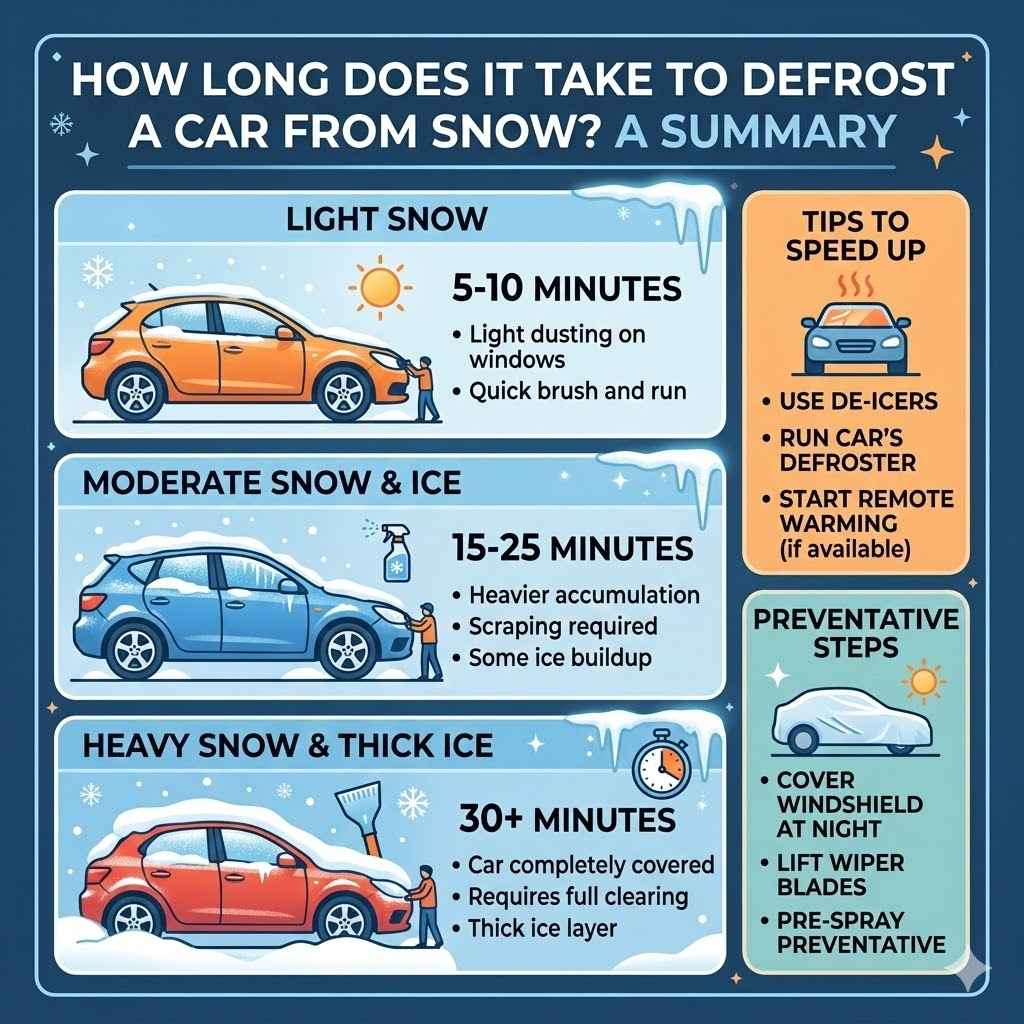
The time it takes to defrost a car from snow really varies. It depends on the weather and your tools.
For light snow, expect 5-10 minutes. Moderate snow and ice might take 15-25 minutes. Heavy snow and thick ice can require 30 minutes or more. Using de-icers and your car’s defroster can speed things up. Taking simple steps beforehand can also help.
Frequently Asked Questions
Question: Can I pour hot water on my windshield to melt ice?
Answer: It is generally not recommended to pour hot or boiling water on your windshield. The extreme temperature difference can cause the cold glass to crack or even shatter. Lukewarm water applied carefully is a safer option for light frost.
Question: How much snow is considered “light” versus “heavy”?
Answer: Light snow is typically considered up to about two inches. Moderate snow is generally two to six inches. Heavy snow is anything over six inches, and can become very difficult to clear without specialized tools or significant time.
Question: How long should I let my car idle to defrost?
Answer: Letting your car idle for 5-10 minutes should be enough for the defroster to start working effectively. However, always check local regulations regarding vehicle idling times, as some areas have restrictions.
Question: Are de-icer sprays safe for car paint?
Answer: Most commercially available de-icer sprays are formulated to be safe for car paint and glass. However, it’s always a good idea to check the product label to ensure it is safe for automotive surfaces.
Question: What is the fastest way to defrost a car?
Answer: The fastest way usually involves a combination of methods. Use a good snow brush and ice scraper, pre-treat with a de-icer spray, and use your car’s built-in front and rear defrosters. Parking in a garage also prevents much of the problem.
Conclusion
Clearing snow and ice from your car is a necessary winter task. Knowing How Long Does It Take to Defrost a Car From Snow? helps you plan your mornings. From a few minutes for light snow to longer sessions for heavy ice, the time varies. Simple tools like brushes and scrapers, along with your car’s defroster, are your best friends. A little preparation goes a long way. Stay safe and warm this winter.