How Long to Jump a Car Battery: Proven Method
Jump-starting a car battery typically takes about 5-10 minutes of charging time once the vehicles are connected correctly. This allows enough power to transfer for the dead car to start.
We’ve all been there. You’re ready to head out, you turn the key, and… nothing. Just a sad click or a slow, struggling crank. A dead car battery is one of the most common and frustrating car problems for any driver. It can leave you stranded and feeling helpless. But don’t worry! With a few simple tools and a little guidance, you can confidently jump-start your car yourself. It’s a straightforward process that can save you time, money, and a whole lot of hassle. In this guide, I’ll walk you through exactly how long to jump a car battery and the proven, safe method to get your car back on the road.
Understanding Why Your Car Battery Dies
Before we jump into the how-to, it’s helpful to understand why car batteries die. The car battery is the heart of your vehicle’s electrical system, providing the power to start the engine and run accessories like lights, the radio, and air conditioning when the engine isn’t running. Several factors can contribute to a dead battery:
- Leaving Lights or Accessories On: This is the most common culprit. Forgetting to turn off headlights, interior lights, or the radio can drain the battery overnight.
- Cold Weather: Extremely cold temperatures make it harder for the battery to produce its usual amount of power, and they also increase the demand on the battery to start the engine.
- Age of the Battery: Car batteries have a lifespan, typically around 3-5 years. As they age, their capacity to hold a charge diminishes.
- Faulty Alternator: The alternator is responsible for recharging the battery while the engine is running. If it’s not working correctly, the battery won’t get recharged and will eventually die.
- Corroded or Loose Battery Terminals: A poor connection between the battery and the car’s electrical system can prevent charging and starting.
Essential Tools You’ll Need
Getting ready to jump your car is simple; you just need a few key items. Having the right tools makes the process smoother and safer. Here’s what you should have on hand:
- Jumper Cables: These are heavy-duty cables with insulated clamps on each end. Invest in a good quality set with a decent length (12-20 feet is ideal) for easier maneuverability between vehicles. You can find quality jumper cables at most auto parts stores or online retailers.
- A Working Vehicle: You’ll need another car with a fully charged battery to provide the power.
- Safety Glasses: It’s always a good idea to protect your eyes in case of sparks or battery acid.
- Gloves: Protect your hands from dirt and potential battery acid.
- A Wire Brush or Battery Terminal Cleaner: (Optional, but recommended) To clean any corrosion off the battery terminals for a better connection.
The Proven Method: How Long to Jump a Car Battery
The key to a successful jump-start is connecting the cables correctly and allowing enough time for the dead battery to receive a charge. Here is a step-by-step guide:
Step 1: Position the Vehicles
Park the working vehicle close enough to the car with the dead battery so that the jumper cables can reach both batteries comfortably. Ideally, park them hood-to-hood or side-by-side. Ensure both vehicles are turned OFF and the parking brakes are engaged. This is a crucial safety step.
Step 2: Locate the Batteries
Open the hoods of both vehicles and locate the batteries. They are typically found under a plastic cover or near the front of the engine bay. If you can’t find them, consult your car’s owner’s manual.
Step 3: Clean Battery Terminals (If Needed)
Inspect the battery terminals (the posts where the cables connect). If you see any white or greenish powdery substance (corrosion), use a wire brush or battery terminal cleaner to scrub them clean. This ensures a solid electrical connection. A good connection is vital for power transfer.
Step 4: Connect the Jumper Cables
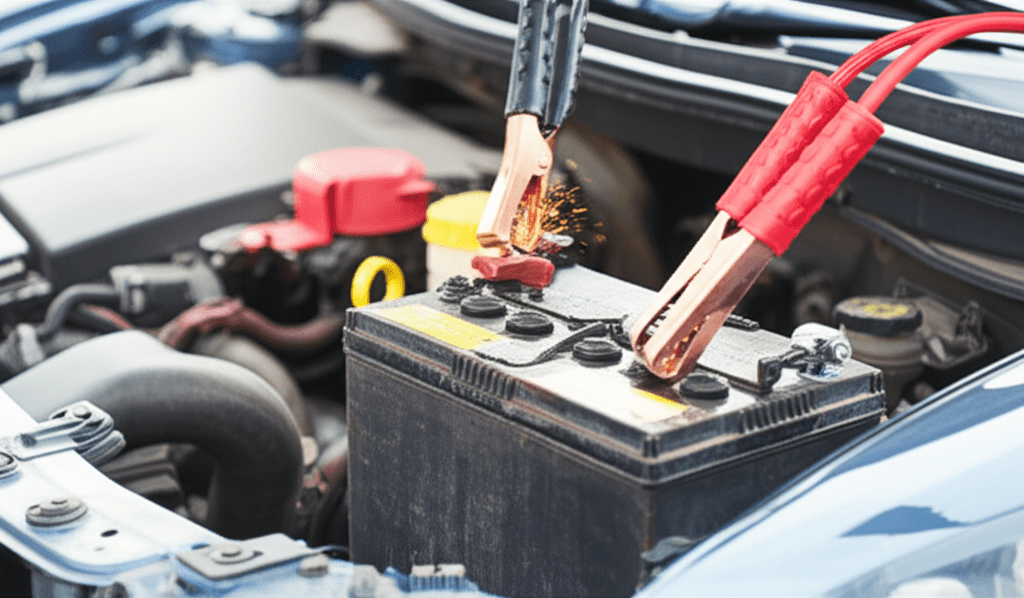
This is the most critical part where correct order matters for safety. Remember: Red to Dead, Red to Good, Black to Good, Black to Ground.
Follow these steps precisely:
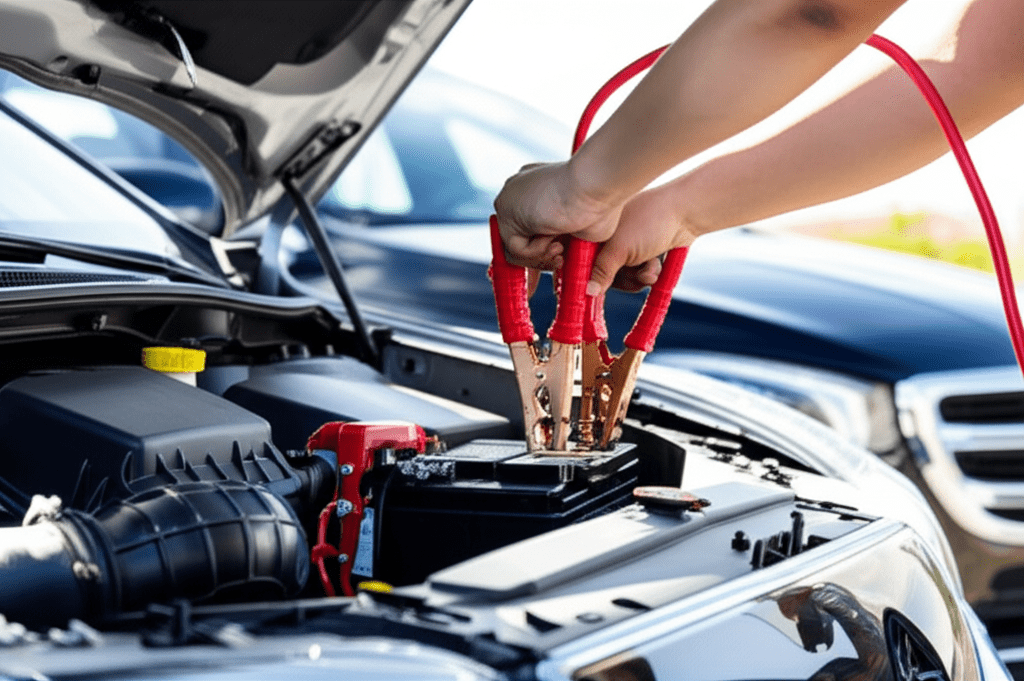
- Connect one RED clamp to the POSITIVE (+) terminal of the DEAD battery. The positive terminal usually has a “+” symbol or is marked red.
- Connect the other RED clamp to the POSITIVE (+) terminal of the GOOD battery (the working vehicle).
- Connect one BLACK clamp to the NEGATIVE (-) terminal of the GOOD battery. The negative terminal usually has a “-” symbol or is marked black.
- Connect the final BLACK clamp to an UNPAINTED, METAL surface on the engine block or chassis of the car with the DEAD battery. This is called grounding. Do NOT connect it to the negative terminal of the dead battery, as this can cause sparks and potentially ignite hydrogen gas released by the battery. A solid metal bracket or bolt on the engine is ideal.
Step 5: Start the Working Vehicle
Start the engine of the vehicle with the good battery. Let it run for a few minutes. This will begin charging the dead battery.
Step 6: Charge the Dead Battery
Now for the time factor: Let the working car run for at least 5-10 minutes with the jumper cables connected. You can even rev the donor car’s engine slightly (to about 1500-2000 RPM) during this time to help charge the dead battery more effectively. This provides a steady flow of power to give the dead battery enough juice to start.
Step 7: Start the Dead Vehicle
After the charging period, try to start the car with the dead battery. If it starts, congratulations! Let it run for a few minutes while the cables are still connected.
Step 8: Disconnect the Jumper Cables
Once the dead car is running, you need to disconnect the cables in the REVERSE order of how you connected them. This prevents sparks and short circuits.
- Remove the BLACK clamp from the GROUND connection on the formerly dead car.
- Remove the BLACK clamp from the NEGATIVE (-) terminal of the good battery.
- Remove the RED clamp from the POSITIVE (+) terminal of the good battery.
- Remove the RED clamp from the POSITIVE (+) terminal of the formerly dead battery.
Step 9: Keep the Jumped Car Running
After successfully jump-starting, it’s essential to keep the engine running for at least 15-30 minutes. Driving the car around or letting it idle will allow the alternator to fully recharge the battery. If you turn it off too soon, it might not have enough power to start again.
How Long to Jump a Car Battery: Key Timeframes
Let’s break down the time commitment for different stages when you jump a car:
| Action | Typical Time | Purpose |
|---|---|---|
| Connecting Cables | 1-3 minutes | Ensuring a safe and proper connection between vehicles. |
| Charging (Stationary) | 5-10 minutes | Allowing the donor car’s alternator to transfer power to the dead battery. |
| Starting Attempt | Seconds within the charging period | Testing if the dead battery has enough charge. |
| Disconnecting Cables | 1-3 minutes | Safely removing connections in reverse order. |
| Post-Jump Driving/Idling | 15-30 minutes (minimum) | Allowing the car’s alternator to recharge the battery sufficiently. |
So, to directly answer, the active jump-starting process (connecting, charging, disconnecting) can take anywhere from 7 to 16 minutes. However, the critical part is that initial 5-10 minute charging period.
When to Seek Professional Help
While jump-starting is a great temporary fix, it doesn’t solve the underlying problem if your battery keeps dying. You should consider contacting a mechanic or roadside assistance if:
- The car still won’t start after multiple jump attempts.
- You notice any damage to the battery (cracks, leaks).
- Your headlights or dashboard lights are dim or flickering even after driving.
- Your battery is old (over 3-5 years).
- You’re uncomfortable with any step of the process.
A mechanic can test your battery, alternator, and charging system to identify the root cause and recommend necessary repairs, such as replacing the battery or alternator. For reliable information on battery testing, you can refer to resources like the AAA car battery guide.
Important Safety Precautions
Safety is paramount when jump-starting a car. Always remember these vital points:
- Read Your Owner’s Manual: Familiarize yourself with your specific vehicle’s recommendations for jump-starting. Some hybrid and electric vehicles have different procedures.
- No Smoking: Batteries can release flammable hydrogen gas, so avoid open flames or sparks near the batteries.
- Keep Away from Moving Parts: Be aware of hot engine components and moving belts or fans.
- Ensure Cables Don’t Touch: Never let the metal clamps of the jumper cables touch each other once connected to a battery, and ensure they don’t touch any other metal parts of the car except where they are supposed to be connected.
- Wear Protection: Always wear safety glasses and consider gloves.
- Check for Battery Damage: Never attempt to jump-start a battery that is cracked, leaking, or appears frozen.
- Correct Voltages: Ensure both vehicles have the same voltage system (most cars are 12-volt).
What if the Car Doesn’t Start After Jumping?
If you’ve followed the steps and the car still won’t start, here are a few possibilities:
- The battery is completely dead: It might not be able to hold any charge, even after being jump-started.
- The alternator is bad: If the alternator isn’t working, it can’t recharge the battery, and the car might die again shortly after starting or won’t start at all.
- There’s another issue: The problem might not be the battery at all but could involve the starter, ignition system, or fuel system.
- Poor cable connection: Ensure the clamps have a solid connection to clean terminals/ground points.
In any of these cases, it’s time to call for professional roadside assistance or a tow truck.
Frequently Asked Questions (FAQs)
Q1: How long does it take for a car alternator to charge a dead battery?
A: While driving, an alternator typically needs at least 15-30 minutes of continuous operation to rebuild a healthy charge in a slightly depleted battery. For a deeply discharged battery, it might take longer, and sometimes a battery charger is more effective.
Q2: Can I jump-start my car with a different car?
A: Yes, as long as both vehicles have the same voltage system (most common is 12-volt). The cars do not need to be the same make or model, but the working vehicle needs to be of similar size or have a more powerful battery to effectively transfer charge.
Q3: What happens if I connect the jumper cables the wrong way?
A: Connecting them incorrectly can cause sparks, damage the electrical systems of both vehicles (including sensitive computer modules), and in extreme cases, cause the battery to explode. Always follow the red-to-dead, black-to-ground rule and the correct connection order.
Q4: Does revving the engine of the good car help jump the dead one faster?
A: Yes, slightly revving the engine of the donor car to around 1500-2000 RPM for a few minutes while connected can help boost the charging rate and provide more power to the dead battery, potentially speeding up the process.
Q5: How long should I drive my car after jump-starting it?
A: You should drive or let the car idle for at least 15-30 minutes to ensure the battery gets a sufficient charge from the alternator. Longer is usually better, especially if the battery was very low.
Q6: Can I use a portable jump starter instead of another car?
A: Absolutely! Portable jump starters (also known as battery booster packs) are a fantastic alternative and often much easier to use. You simply connect the clamps to the battery terminals as you would with jumper cables, and the device provides the starting power. They are highly recommended for convenience and safety.
Conclusion
Dealing with a dead car battery is a common inconvenience, but as you’ve seen, it’s a situation you can handle with confidence. Remember the proven method: position the cars, connect the cables correctly (red to positive on both, black to negative on the good car, then black to a metal ground on the dead car), let the good car run for 5-10 minutes to transfer power, start the dead car, and then disconnect the cables in reverse order. Keeping the jumped car running for at least 15-30 minutes is crucial for its alternator to recharge the battery sufficiently. By following these steps and prioritizing safety, you can get your car back on the road and gain valuable DIY car care experience. If your battery continues to be an issue, don’t hesitate to have your battery and charging system inspected by a professional.