How Many Catalytic Converters Do Cars Have? A Complete Guide
Hey there! So, you’re wondering how many catalytic converters cars have? I get why you’d want to know—it’s one of those car parts that’s super important but kind of mysterious. A few years ago, when my old pickup started making weird noises, I dove into learning about catalytic converters to figure out what was going on.
I talked to mechanics, poked around under my truck, and did a ton of research to understand these things. Let me tell you, it was an eye-opener! I’m excited to share everything I’ve learned about catalytic converters, how many a cars might have, and why it matters. Let’s sit down together, and I’ll break it all down in a way that’s easy to follow. By the end, you’ll feel like an expert on this part of your car. Ready? Let’s get started!
What Is a Catalytic Converter?
First, let’s talk about what a catalytic converter does. When I first heard the term, I pictured something complicated, but it’s pretty straightforward. A catalytic converter is a metal canister in your car’s exhaust system. It cleans harmful gases before they leave your tailpipe. Think of it like a filter that makes your car’s exhaust less toxic.
Inside, it’s packed with precious metals like platinum, palladium, and rhodium. These metals trigger chemical reactions that turn bad stuff, like carbon monoxide and nitrogen oxides, into less harmful gases like carbon dioxide and water vapor. I was amazed to learn that this little device helps keep the air cleaner. It’s been a standard part on U.S. cars since the 1970s, thanks to environmental laws.
Why Do Cars Need Catalytic Converters?
I used to wonder why catalytic converters are such a big deal. It’s all about the environment and the law. When I looked under my truck, I realized the converter was there to cut down on pollution. Cars produce nasty gases when they burn fuel, and without a converter, those gases go straight into the air. That’s bad for our lungs and the planet.
In the U.S., the Clean Air Act requires cars to have catalytic converters to meet emission standards. I learned that a bad converter can make your car fail an emissions test, which is a hassle in states like California or New York. Plus, a working converter keeps your car running smoothly and can even improve fuel efficiency a bit. It’s a small part with a big job.
How Many Catalytic Converters Does a Car Have?
Here’s the question you’re probably asking: how many catalytic converters does a car have? I thought every car had just one until I started digging. The answer depends on the car. Most cars have one catalytic converter, but some have two or more. My pickup had one, but my friend’s SUV had two because of its engine setup.
Here’s what I found out about why the number varies:
- Single Converter: Most standard cars, like sedans or compact SUVs, have one converter. It’s enough to handle the exhaust from a four-cylinder or small V6 engine. My truck’s single converter was tucked under the chassis.
- Dual Converters: Cars with V6 or V8 engines, like trucks, SUVs, or performance cars, often have two. Each converter handles exhaust from one side of the engine’s cylinders. I saw this in a Dodge Ram at a shop.
- Multiple Converters: High-end or luxury cars, like some Mercedes or BMW models, might have three or four. These cars have complex exhaust systems to meet strict emissions rules. A mechanic showed me a Lexus with four converters—it was wild!
- Hybrid Cars: Hybrids, like the Toyota Prius, usually have one or two. Their smaller engines produce less exhaust, so fewer converters are needed. I checked a friend’s Prius, and it had one.
The number depends on the car’s engine size, exhaust system, and emissions requirements. To find out for your car, check the owner’s manual or look under the vehicle. I counted one on my truck by following the exhaust pipe from the engine.
What Factors Determine the Number of Catalytic Converters?
When I realized not all cars have the same number of converters, I got curious about why. Here’s what I learned about the factors that decide how many cars a car has:
- Engine Type: Bigger engines, like V6 or V8, often need two converters because they produce more exhaust. My four-cylinder truck only needed one.
- Exhaust System Design: Some cars have dual exhaust systems, with separate pipes for each side of the engine. Each pipe gets its converter. I saw this on a Mustang at a car show.
- Emissions Standards: Stricter states, like California, require cars to meet tougher rules. Some cars have extra converters to comply. A mechanic told me California models often have more.
- Vehicle Age: Older cars (pre-1990s) might have one or none, as rules were looser. Newer cars, especially after 2000, might have multiple features to meet modern standards.
- Performance Tuning: High-performance cars, like Corvettes, often have extra converters to handle increased exhaust flow. A buddy’s modified car had three.
These factors helped me understand why my truck was simple, while fancier cars had more complex setups.
Where Are Catalytic Converters Located?
Finding the catalytic converter on my truck was easier than I thought. They’re usually in the exhaust system, between the engine and the muffler. I slid under my truck and followed the exhaust pipe from the engine. The converter was a metal canister, about the size of a loaf of bread, bolted in place.
In most cars, it’s under the chassis, near the front or middle. Some cars, like SUVs or trucks, might have it closer to the engine. Luxury or performance cars with multiple converters might have them in different spots, like one per exhaust bank. I learned to check when the car’s cool—those parts get hot! If you’re not sure, a mechanic can point it out.
How to Tell How Many Catalytic Converters Your Car Has
I wanted to be sure my truck had just one converter, so I figured out a few ways to check. Here’s how you can do it:
- Check the Owner’s Manual: It often lists the exhaust system parts. My manual confirmed one converter.
- Look Under the Car: Slide under (when it’s cool) and count the metal canisters in the exhaust pipe. I found one on my truck this way.
- Ask a Mechanic: During an oil change, I asked my mechanic to check. He confirmed one converter in five minutes.
- Check Online: Websites like AutoZone or car forums list specs for your car. I entered my truck’s make, model, and year and found it had one.
- VIN Lookup: Your car’s Vehicle Identification Number can reveal details. I used a free VIN checker online to confirm.
These steps are simple and saved me from guessing. If you’re unsure, a quick mechanic visit clears it up.
Why Do Some Cars Have More Than One Converter?
I was surprised to learn that some cars need multiple converters. It’s all about efficiency and regulations. Bigger engines produce more exhaust, so one converter might not clean it all. Dual converters split the work, one for each side of a V6 or V8 engine. I saw this in a Chevy Silverado—two converters, one per exhaust bank.
Luxury or high-performance cars use extra converters to meet strict emissions rules or handle high exhaust flow. A mechanic explained that California’s tough standards often mean extra converters for cars sold there. Hybrids or smaller engines stick to one because they produce less exhaust. It’s all about balancing power, pollution, and the law.
Signs of a Bad Catalytic Converter
When my truck started acting up, I suspected the catalytic converter. Here’s what I noticed and what to watch for:
- Check Engine Light: My dashboard light came on. A mechanic read the code (P0420) and said it was the converter.
- Poor Performance: The truck felt sluggish, like it was struggling to accelerate. A clogged converter restricts exhaust flow.
- Rattling Noise: I heard a rattle under the car. The converter’s insides can break apart, causing this.
- Bad Smell: A rotten egg smell meant the converter wasn’t cleaning gases properly. I noticed it at stoplights.
- Failed Emissions Test: If your car fails a smog check, the converter might be bad. A friend’s car failed because of this.
- Reduced Fuel Economy: My gas mileage dropped because the engine was working harder. I was filling up more often.
If you see these signs, get the converter checked. Ignoring it can hurt your engine and wallet.
Cost of Replacing a Catalytic Converter
When I found out my converter was failing, I braced for the cost. Here’s what I learned about replacement costs in the U.S.:
- Parts: A new converter costs $200-$2,000, depending on the car. My truck was $400 for a standard model.
- Labor: Installation takes 1-3 hours at $80-$150 per hour. I paid $200 for labor.
- Total Cost: Expect $400-$2,500 per converter. My total was $600, but luxury cars can hit $3,000.
- Multiple Converters: If your car has two or more, multiply the cost. A friend’s SUV with two converters cost $1,200 to replace.
- Aftermarket vs. OEM: Aftermarket converters are cheaper ($200-$800) but might not last as long. I went with an OEM for reliability.
I got quotes from three shops to find a fair price. Some states require specific converters, so check local laws.
Here’s a table summarizing costs:
| Component | Cost Range | Notes |
|---|---|---|
| Converter (Part) | $200-$2,000 | OEM pricier, aftermarket cheaper |
| Labor | $80-$450 | 1-3 hours at $80-$150/hour |
| Total (One Converter) | $400-$2,500 | Varies by car and region |
| Total (Two Converters) | $800-$5,000 | Common in V6/V8 vehicles |
Why Are Catalytic Converters Stolen?
One thing that shocked me was how often catalytic converters get stolen. I read about it in my town’s news, and here’s why it happens. Those precious metals inside—platinum, palladium, and rhodium—are worth a lot. Thieves can sell a stolen converter for $50-$300 to scrap yards.
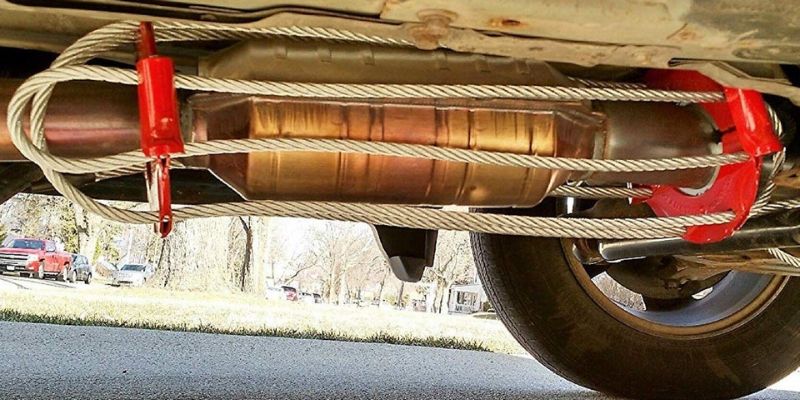
They’re easy to steal, too. Thieves slide under a car with a saw and cut the converter off in minutes. I started parking in my garage to protect my truck. High-clearance vehicles, like trucks or SUVs, are prime targets because they’re easier to access. I even saw anti-theft shields for sale, which bolt over the converter for $100-$300.
How to Protect Your Catalytic Converter
After hearing about thefts, I took steps to keep my converter safe. Here’s what I do:
- Park Smart: I park in a garage or well-lit area. Thieves avoid spots where they might get caught.
- Install a Shield: Anti-theft shields make it harder to cut the converter. I’m considering one for $150.
- Etch Your VIN: Some shops etch your car’s VIN on the converter. It deters thieves and helps police track it. I paid $20 for this.
- Use an Alarm: A car alarm with a vibration sensor can scare thieves off. I added one for $100.
- Check Insurance: My insurance covers converter theft, but I confirmed the deductible ($500). It’s worth checking yours.
These steps give me peace of mind, especially with thefts on the rise.
Can You Drive with a Bad Catalytic Converter?
When my converter started failing, I wondered if I could keep driving. You can, but it’s not a good idea. A clogged converter restricts exhaust, which hurts performance and fuel economy. I noticed my truck was sluggish and guzzled gas. Worse, it can damage the engine over time, leading to costly repairs.
A missing or stolen converter is even riskier. Your car will be loud, fail emissions tests, and pollute more. I drove to the shop with a bad converter, but I wouldn’t go further. Get it fixed as soon as you can to avoid bigger problems.
Environmental Impact of Catalytic Converters
I was amazed at how much catalytic converters help the planet. They cut down on harmful gases like carbon monoxide and nitrogen oxides, which cause smog and health issues. When my converter was bad, I felt guilty knowing my truck was polluting more. Fixing it made me feel like I was doing my part for cleaner air.
Even better, the metals in converters can be recycled. When I replaced mine, the shop recycled the old one, recovering those precious metals. It’s a small way to reduce waste and keep the environment healthy.
Maintaining Your Catalytic Converter
To keep my new converter working, I started taking better care of it. Here’s what I do:
- Use the Right Fuel: I stick to the fuel type in my manual (unleaded for my truck). Leaded fuel can ruin converters.
- Fix Engine Issues: Misfires or oil leaks can clog the converter. I get tune-ups every year to catch problems early.
- Avoid Road Hazards: Hitting potholes can damage the converter. I drive carefully on rough roads.
- Check Warning Lights: If the check engine light comes on, I get it scanned right away. It caught my bad converter early.
These habits extend the converter’s life, which is usually 10 years or 100,000 miles.
Why I’m Glad I Learned About Catalytic Converters
Figuring out my truck’s catalytic converter issue was a wake-up call. I went from clueless to confident about this critical part. Replacing it saved my engine, passed my emissions test, and made my truck run smoother. Plus, I’m protecting it from theft and helping the environment. It’s a small part, but it makes a big difference in how my car runs and how I feel about driving it.
Wrapping It Up
So, how many catalytic converters do cars have? Most have one, but some have two or more, depending on the engine and exhaust system. I went from scratching my head over my truck’s single converter to understanding why some cars need extras. Whether you’re checking your own car, watching for signs of trouble, or protecting against theft, you now know what to look for. Catalytic converters are small but mighty, keeping our air cleaner and our cars legal. So, take a peek under your car, keep up with maintenance, and drive with confidence knowing you’ve got this covered. Your car—and the planet—will thank you!
FAQs
How do I know how many catalytic converters my car has?
Check your owner’s manual or look under the car for metal canisters in the exhaust system. I found one on my truck by following the exhaust pipe. A mechanic can confirm.
Why do some cars have more than one catalytic converter?
Bigger engines, like V6 or V8, produce more exhaust, so they need two or more converters. My friend’s SUV had two because of its V6 engine.
How much does it cost to replace a catalytic converter?
It’s $400-$2,500 per converter, including parts and labor. I paid $600 for my truck’s single converter. Cars with multiple converters cost more.
Can I drive without a catalytic converter?
You can, but it’s not smart. Your car will be loud, fail emissions tests, and pollute more. I drove to the shop but got mine fixed fast.
How can I protect my catalytic converter from theft?
Park in a garage, install a shield, or etch your VIN on it. I park in my garage and added a VIN etching for $20 to deter thieves.