What Do Car Rotors Do? Function, Types, Signs of Wear & Replacement Cost
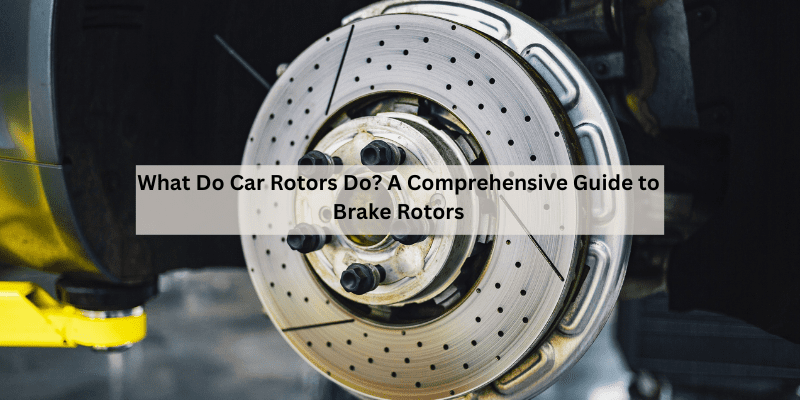
Car rotors — also called brake discs — are round metal discs attached to each wheel hub that spin whenever your wheels turn. When you press the brake pedal, hydraulic pressure forces brake pads against both sides of the rotor, creating friction that converts your car’s kinetic energy into heat and slows the vehicle. Understanding how rotors work, recognizing wear signs, and knowing when to replace them can prevent costly brake failure and keep stopping distances short.
Car rotors are metal discs that spin with your wheels. When you press the brake pedal, brake pads clamp against both sides of each rotor — the friction slows wheel rotation and stops your car. Most vehicles have four rotors (one per wheel). Rotors last 30,000–70,000 miles and should be replaced when thickness falls below the manufacturer’s minimum spec, usually stamped on the rotor edge.
Understanding the Basics of Car Rotors
Car rotors, also called brake rotors or brake discs, are round, flat metal components in your vehicle’s braking system. They’re typically made of cast iron or composite materials like carbon-ceramic for high-performance cars. When you press the brake pedal, the rotors work with the brake pads and calipers to slow down or stop your car.
Rotors are mounted to the wheel hub, so they spin along with your wheels. When you brake, the brake pads clamp down on the rotor, creating friction that slows the wheel’s rotation. Disc rotors are standard on most modern cars — especially front wheels — because they dissipate heat more efficiently and deliver more consistent stopping power than drum brakes.
How Brake Rotors Work in Your Car
When you press the brake pedal, hydraulic fluid in the brake lines activates the brake caliper. The caliper houses the brake pads and squeezes them against both sides of the spinning rotor, creating friction. This friction converts the kinetic energy of your moving car into heat, slowing the vehicle down.
Think of it like rubbing your hands together on a cold day — the more you rub, the warmer they get. Rotors do something similar, but instead of warming your hands, they’re slowing your car. The heat generated during braking is absorbed by the rotor and dissipated into the air. The rotor’s surface must be smooth and flat for the brake pads to grip effectively. If the rotor is warped or damaged, you’ll feel vibrations or hear grinding noises when braking.
Types of Brake Rotors and Their Unique Features
Not all rotors are the same. Here’s a breakdown of the main types and what each is best suited for:
| Type of Rotor | Description | Best For |
|---|---|---|
| Solid Rotors | Basic, non-ventilated single-piece metal disc | Smaller cars, light-duty driving |
| Vented Rotors | Internal vanes for better heat dissipation | Most passenger cars, daily driving |
| Slotted Rotors | Surface slots clear debris and improve grip | Performance vehicles, wet conditions |
| Drilled Rotors | Holes drilled through for heat relief and weight reduction | Sports cars, high-performance driving |
| Slotted + Drilled | Combines slots and holes for maximum performance | Racing or extreme driving conditions |
| Carbon-Ceramic | Lightweight, heat-resistant, expensive | Luxury or high-end sports cars |
Vented rotors — with internal air channels — are the most common because they handle heat better than solid units. Slotted and drilled rotors are popular for performance cars because they keep brake pads clean and reduce heat buildup. Carbon-ceramic rotors are the premium option, but their cost puts them outside most budgets.
How to Check Brake Rotor Thickness (And When to Replace or Resurface)
The most important measurement for any rotor is its current thickness versus the manufacturer minimum. Rotors that are too thin can’t absorb braking heat properly — leading to warping, fade, or cracking. Here’s how to check yours in about 10 minutes.
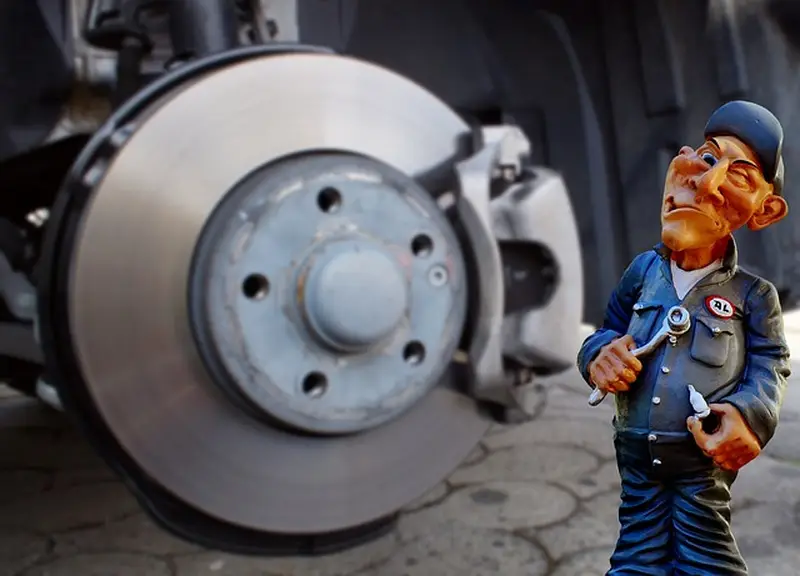
Step-by-Step: How to Measure Rotor Thickness
- Locate the minimum thickness spec — it’s stamped or laser-etched on the rotor’s edge or inner hat (looks like “MIN TH 20mm”). If not visible, check your owner’s manual or search your vehicle year/make/model + “minimum rotor thickness.”
- Remove the wheel — loosen the lug nuts, jack the car safely on level ground, and remove the wheel for full rotor access.
- Measure with a micrometer or vernier caliper — place the jaws on the braking surface, not on the cooling fins or outer edge. Take 4–8 measurements at evenly spaced points around the disc.
- Compare to the minimum spec — if your lowest reading is at or below the minimum, replace the rotor. If it’s more than 1.5mm above minimum and warping is minor, resurfacing is an option.
| Rotor Condition | Thickness vs. Minimum | Recommended Action |
|---|---|---|
| Slightly warped, no grooves | 2mm+ above minimum | Resurface |
| Light grooves, minor scoring | 1–2mm above minimum | Resurface (borderline — factor in total cost) |
| Deep grooves or heavy scoring | Near or below minimum | Replace |
| Cracked or heat-discolored (blue/purple spots) | Any thickness | Replace immediately |
| Vibration under braking that resurfacing didn’t fix | Any thickness | Replace |
Tip: Economy rotors cost $25–$75 each and machining runs $50–$100 per rotor. Resurfacing often saves little once you factor in labor — especially if the rotor has already been turned once before. Most mechanics recommend replacing at that point — see our buyer’s guide to the best brake rotors for picks across budget, towing, and OE-upgrade needs.
Why Brake Rotors Are Crucial for Safety
Rotors are the core of your disc brake system. A worn or damaged rotor leads to longer stopping distances — which could be the difference between avoiding a collision or not. Neglected rotors cause brake fade: when heat builds up faster than the rotor can dissipate it, braking force drops sharply. This is especially dangerous on long downhill grades or during repeated emergency stops.
Uneven or warped rotors cause vibrations and pulling to one side under braking, making the car harder to control. See our guide on wheel bearings for a related suspension component that also affects braking stability.
Signs Your Brake Rotors Need Attention
Here are the warning signs that your rotors need inspection or replacement:
- Vibrations when braking: A shaking steering wheel or brake pedal usually means warped rotors from overheating or uneven wear.
- Squealing or grinding noises: A high-pitched squeal often means worn pads, but a metal grinding noise means the pads are worn through and metal is scraping the rotor. See our full guide on stopping squeaky brakes.
- Longer stopping distances: If it takes more road to stop, your rotors may be too thin or glazed, reducing grip.
- Visible damage: Cracks, deep grooves, or heavy scoring on the rotor surface mean replacement is overdue.
- Pulling to one side: Uneven wear across the two rotors on an axle can cause the car to drift during braking.
When to Replace vs. Resurface Rotors
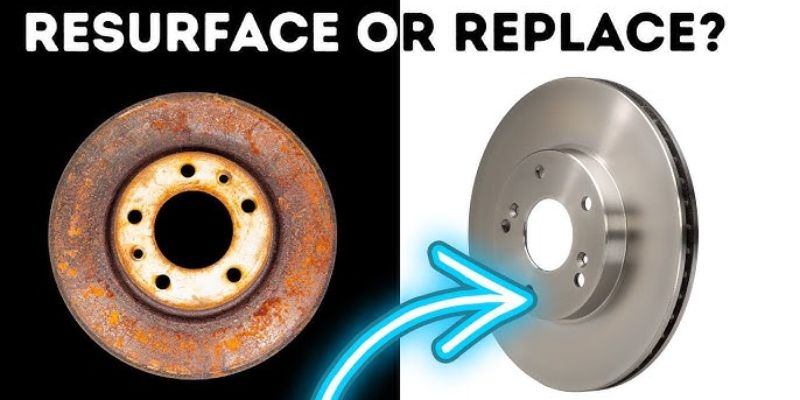
Resurfacing (also called “turning”) machines the rotor to a smooth surface again. It’s cheaper than replacement, but it’s not always the right call. If your rotors are slightly warped or have minor grooves and are still well above minimum thickness, resurfacing can extend their life. However, rotors already close to minimum thickness will hit that limit faster after machining — and then you’ll replace them anyway.
Most mechanics recommend replacing rotors every two to three brake pad changes, but your driving style and rotor quality are the bigger variables. Always replace both rotors on the same axle at the same time — uneven thickness causes brake pull toward one side.
How Driving Habits Affect Rotor Wear
Driving style is the single biggest variable in rotor lifespan. Hard braking at high speeds generates extreme heat that can warp or crack rotors over time. City driving with constant stop-and-go traffic accelerates wear because the rotor never fully cools between stops. Highway driving with gradual, anticipatory braking is the easiest on rotors.
The most effective habit: ease off the throttle early and let the car decelerate naturally before applying the brakes. This reduces braking load and meaningfully extends rotor life.
Choosing the Right Rotors for Your Vehicle
- Vehicle type: A compact sedan doesn’t need the same rotors as a heavy SUV or tow vehicle. Match the rotor to your vehicle’s weight and performance requirements.
- Driving style: Casual daily drivers do fine with quality vented rotors. Performance or track driving calls for slotted or cross-drilled options.
- Budget: Quality rotors cost more but last longer. Avoid the cheapest options where safety is at stake.
- Brand reputation: Bosch, Brembo, and ACDelco are consistently well-regarded for durability and consistent performance.
The Cost of Brake Rotor Maintenance
Here’s what to expect at an independent shop in 2026 (dealership pricing runs 30–50% higher):
| Job Type | Parts Cost | Labor | Total per Axle |
|---|---|---|---|
| Rotor resurface only | $0 | $50–$100 per rotor | $100–$200 |
| Economy rotors + pads | $45–$120 | $100–$200 | $200–$350 |
| Mid-grade rotors + pads | $100–$240 | $100–$200 | $300–$500 |
| Performance rotors + pads | $200–$500+ | $100–$300 | $400–$800+ |
| Carbon-ceramic (luxury) | $1,000–$3,000+ | $200–$400 | $1,500+ |
Replacing all four rotors at once roughly doubles these figures. Regular inspections every 12,000–15,000 miles can push replacement intervals further out and prevent more expensive damage from worn pads scoring the rotor surface.
Common Myths About Brake Rotors
- Myth: Drilled rotors always perform better. Fact: They’re effective for heat dissipation but can crack under extreme repeated stress if not properly engineered for the application.
- Myth: Rotors never need replacing. Fact: Rotors wear down and must be replaced when they drop below minimum thickness or sustain damage.
- Myth: Cheap rotors are just as good. Fact: Low-quality rotors wear faster and may not deliver consistent braking — a safety risk, not just a performance issue.
The Future of Brake Rotors
Brake rotor technology continues to evolve alongside the shift to electric and hybrid vehicles. Regenerative braking systems in EVs recapture kinetic energy as electricity, significantly reducing rotor workload — in some EVs, rotors can last the life of the vehicle. Some manufacturers are experimenting with lighter composite materials to reduce unsprung weight without sacrificing heat resistance. For now, quality traditional rotors with consistent maintenance remain the benchmark for most vehicles.
Conclusion
Car rotors are the core of your disc brake system — they spin with your wheels, absorb the friction force of braking, and dissipate heat to keep stopping power consistent. Knowing how to recognize wear signs, measure rotor thickness, and choose the right replacement type can save money and prevent brake failure. Check your rotors every 12,000–15,000 miles alongside pad inspections, and always replace in axle pairs to maintain balanced braking. For related maintenance, see our guides on stopping squeaky brakes and understanding wheel bearings.
Frequently Asked Questions
What do car rotors do in simple terms?
Car rotors are metal discs that spin with your wheels. When you brake, brake pads press against both sides of each rotor to create friction, which slows wheel rotation and stops the car.
How long do brake rotors typically last?
Brake rotors usually last 30,000 to 70,000 miles, depending on driving habits, vehicle type, and rotor quality. Aggressive braking and city driving shorten this; smooth highway driving extends it.
Can I drive with worn brake rotors?
No. Worn or damaged rotors cause longer stopping distances, vibrations, and in severe cases brake failure. Get them checked immediately if you notice grinding, vibration, or pulling.
What’s the difference between drilled and slotted rotors?
Drilled rotors have holes to reduce heat buildup and weight. Slotted rotors have grooves to clear gas and debris from the pad surface for better grip. Both improve performance over standard vented rotors but work best in specific conditions.
How do I know if my rotors need resurfacing or replacement?
Measure the thickness with a micrometer and compare it to the minimum spec stamped on the rotor edge. If it’s near or below minimum, replace it. If it’s still 1.5mm+ above minimum and damage is minor, resurfacing may work.
Are expensive rotors worth the cost?
Yes. Quality rotors last longer, perform more consistently, and generate less noise. Cheap rotors may save money upfront but wear out faster and compromise braking safety.
Products related to this article
Sponsored / affiliate links. As an Amazon Associate I earn from qualifying purchases. I may earn additional commission from eligible campaigns.