
How Many New Car Models Exist
This section helps you grasp why counting new car models is not as straightforward as it seems. Car makers constantly introduce new vehicles, update existing ones, and sometimes discontinue models. This dynamic process means the total number is always in motion.
It’s like trying to count fish in a constantly moving stream. Understanding these factors is the first step to answering how many new car models exist. We will look at how manufacturers plan and release their vehicles.
What Defines a “New” Car Model
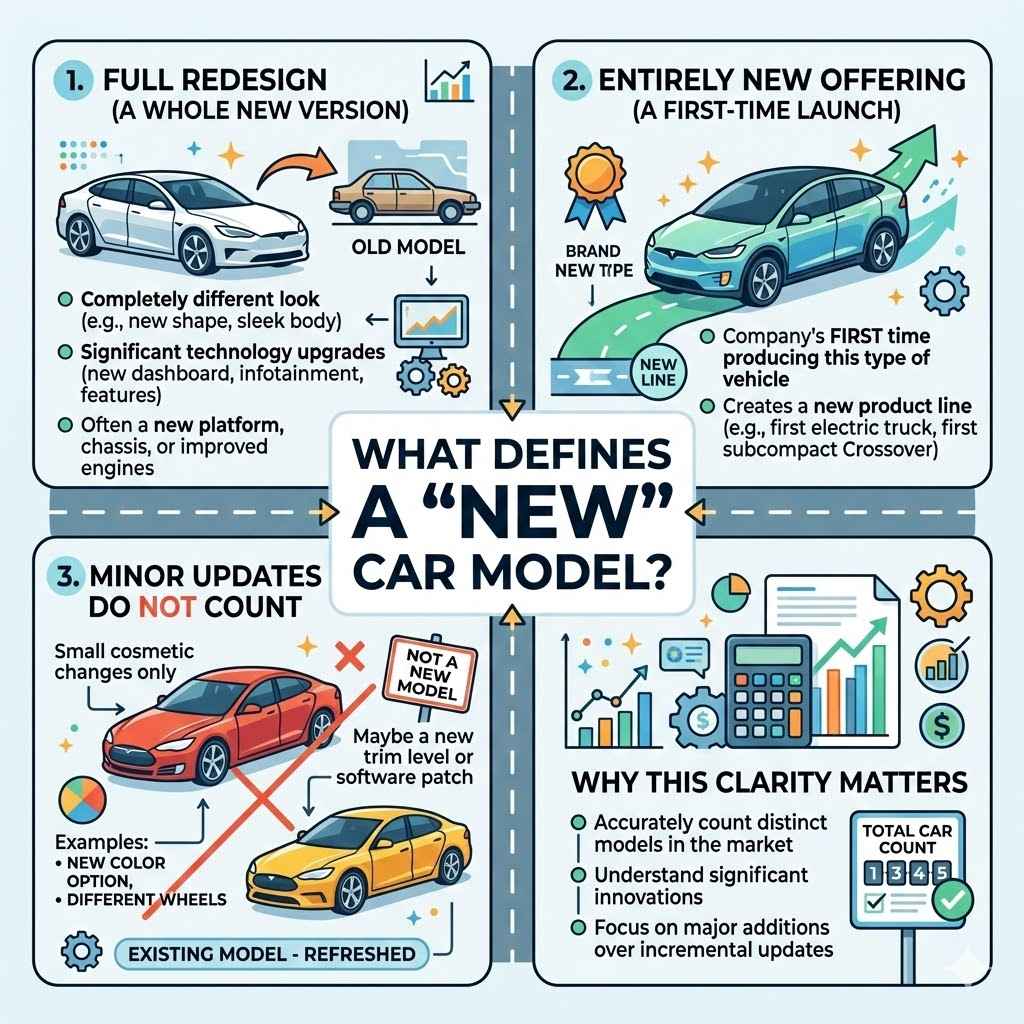
A “new” car model can mean different things. Usually, it refers to a vehicle that is either completely redesigned or is an entirely new offering from a car company. A full redesign means the car looks very different, has new technology, and perhaps a new engine.
An entirely new offering is something the company has never made before. Minor updates, like a new color option or a slightly different trim level, typically do not count as a whole new model. These updates keep existing models fresh but don’t add to the total count of distinct models.
For example, when a car company releases a totally new SUV that is unlike anything they have offered before, that’s a clear new model. If they take an existing sedan and give it a more powerful engine and sportier looks, that might be a new trim or performance variant, not a brand new model. The definition helps us focus on significant additions to the market.
This clarity is important when trying to count.
Factors Affecting New Model Releases
Many things influence how many new car models appear each year. Consumer demand is a big one. If people want more electric cars, companies will make more electric models.
Technology also plays a role. New battery tech might allow for new types of electric vehicles. Government rules about emissions or safety can also push companies to create new designs.
Economic conditions matter too. When the economy is good, car companies might invest more in developing new cars. If the economy is slow, they might hold back.
Think about a car company that sees a trend in families wanting smaller, fuel-efficient SUVs. They might decide to develop and launch a new subcompact SUV. This is a direct response to what buyers are looking for.
On the other hand, if there’s a global shortage of a key component, like computer chips, a company might delay the launch of a new model or even discontinue one. This affects the overall number of models available.
How Many New Car Models Exist in 2026
This is the core question many car shoppers and enthusiasts ponder. Pinpointing an exact, fixed number for How Many New Car Models Exist in 2026? is challenging because the automotive landscape is constantly shifting. New models are introduced, existing ones are updated or discontinued, and the definition of a “model” itself can sometimes be debated (e.g., does a performance variant count as a new model?).
This section will explore the general trends and factors that contribute to this number, helping you understand the scale of choice available.
Estimating the Total Number of Models
Trying to get a single, precise number for all new car models in a specific year is difficult for several reasons. Car manufacturers release new models at different times of the year. Some might be global models, while others are only for specific regions or countries.
The definition of “new” can also be flexible. Is a significant facelift of an existing car a new model, or is it just an updated version? For practical purposes, people often look at the total number of distinct vehicle lines offered by all manufacturers in a given market.
For example, if you look at the U.S. market, you might find around 50 to 70 different car brands selling vehicles. Each brand typically offers several models.
These models can range from small sedans and hatchbacks to large SUVs, trucks, and sports cars. When you add up all the unique models from all these brands, the number can easily reach into the hundreds. This number isn’t static; it fluctuates year by year.
Global vs. Regional Model Availability
It’s important to know that the number of car models available can differ greatly depending on where you live. What is considered a “new model” or even available in one country might not be sold in another. Many car companies design vehicles for specific markets based on local tastes, regulations, and road conditions.
For instance, a small, fuel-efficient car might be very popular in Europe, but a large truck or SUV could be more common and in demand in North America.
A prime example is the range of compact city cars found in European markets, designed for narrow streets and high fuel prices. These cars are often not sold in the United States because the market prefers larger vehicles. Similarly, some rugged off-road vehicles or heavy-duty pickup trucks are primarily developed and marketed for North American consumers and may not be available elsewhere.
This regional variation means there isn’t one single answer to how many new car models exist globally.
The Role of Emerging Markets
Emerging markets, like those in parts of Asia, Africa, and Latin America, are becoming increasingly important for the automotive industry. Car manufacturers are developing and introducing models specifically designed to meet the needs and price points of consumers in these regions. These vehicles might be simpler, more durable, and more affordable than models sold in developed markets.
Their introduction adds to the global total of new car models, even if they aren’t visible to consumers in other parts of the world.
For instance, some car makers have introduced very basic, low-cost cars in countries like India or Brazil. These cars might focus on essential transportation without many of the advanced features found in luxury vehicles. They are built to be reliable and easy to maintain in areas where repair infrastructure might be less developed.
The growth of these specialized models contributes to the overall diversity and number of vehicles being produced worldwide.
Factors Influencing Model Count and Variety
This section delves into the specific reasons why the number of car models changes and why we see such a wide variety. Understanding these drivers helps explain the automotive market’s dynamic nature. It covers everything from technological shifts to consumer preferences and global economics.
This will give you a clearer picture of why asking “How Many New Car Models Exist in 2026?” has a complex but explainable answer.
Technological Advancements
New technologies are a major force shaping the automotive industry and the number of models available. The rapid development of electric vehicle (EV) technology, for example, has led to a huge increase in the variety of electric cars. We now see electric sedans, SUVs, trucks, and even sports cars.
Battery improvements, faster charging capabilities, and government incentives all encourage car makers to invest in and launch more EV models.
Beyond electric power, advancements in artificial intelligence and sensors are leading to more sophisticated driver-assistance systems and the development of autonomous driving features. These new capabilities are often introduced in new models or as significant upgrades to existing ones. This pushes the boundaries of what a car can do and creates new market segments.
Consider the rise of plug-in hybrid vehicles (PHEVs). These combine electric power with a gasoline engine, offering flexibility. As battery technology improved, PHEVs became more practical, leading manufacturers to offer them across a wider range of vehicles.
This technological push directly results in more distinct model offerings that cater to different driving needs and environmental concerns.
Consumer Preferences and Trends
What people want to drive is a huge factor in determining the number of models offered. For many years, there has been a strong shift away from traditional sedans and towards sport utility vehicles (SUVs) and crossover vehicles. Car companies respond to this by introducing many new SUV models and reducing the number of sedans they offer.
This trend has significantly increased the variety of SUVs in different sizes and styles.
Another trend is the demand for personalization and unique features. Consumers want cars that reflect their lifestyle. This can lead to more specialized models, such as rugged off-road variants of SUVs, sporty performance versions of sedans, or luxurious, tech-filled models.
Car makers aim to capture different segments of the market by offering a diverse range of options.
For example, the popularity of outdoor activities has fueled demand for SUVs with features like higher ground clearance, all-wheel drive, and roof racks. Car companies have responded by creating many new SUV models, some focusing on luxury and comfort, others on capability and utility. This diverse range of SUVs is a direct result of listening to what consumers are looking for in their vehicles.
Market Competition and Strategy
The automotive market is highly competitive. To attract buyers, car manufacturers constantly introduce new models or significantly update existing ones. This is a strategy to stand out from rivals and capture a larger market share.
If one company sees success with a particular type of vehicle, others will likely follow suit, leading to a proliferation of similar models across different brands.
Companies also develop models to fill perceived gaps in their lineup or to enter new vehicle segments. For instance, a brand that traditionally makes trucks might decide to enter the electric vehicle market with a new electric pickup truck to compete with rivals. This strategic move adds a new model to the overall count.
Market analysis and strategic planning are key to understanding new model introductions.
A real-life example is the competition in the compact SUV segment. Many manufacturers recognized the high demand for these vehicles. As a result, almost every major car brand now offers at least one compact SUV.
This intense competition has led to a wide array of choices for consumers, each trying to offer something slightly different, whether it’s in terms of price, features, fuel economy, or design.
Regulatory and Environmental Factors
Government regulations play a crucial role in shaping the automotive market and the types of models developed. Stricter emissions standards, for example, push manufacturers to develop more fuel-efficient engines, hybrid powertrains, and fully electric vehicles. Safety regulations can also necessitate redesigns or the introduction of new safety features, often leading to new model variants.
Environmental concerns and a global push towards sustainability are driving the development of greener vehicles. This includes not just electric cars but also advancements in hydrogen fuel cell technology and more efficient internal combustion engines. These regulatory and environmental pressures directly influence the number and type of new car models that car companies are compelled to produce.
For example, many countries are setting targets to phase out the sale of new gasoline-powered cars. This has accelerated the development and release of electric vehicles. Manufacturers are investing heavily in EV platforms and creating a diverse range of electric models to comply with these future bans and meet growing consumer interest in eco-friendly transportation.
This proactive development adds many new models to the market.
Navigating the Options: Finding Your New Car
Knowing the vast number of choices can seem overwhelming, but it also means you have more options than ever before. This section offers practical advice on how to approach the process of selecting a new car model. It focuses on making informed decisions and finding the best fit for your needs without getting lost in the sheer volume of available vehicles.
The aim is to make your car search simpler and more effective.
Researching and Comparing Models
With so many new car models available, thorough research is key. Start by identifying your primary needs. What will you use the car for most often?
Commuting, family trips, hauling cargo, or spirited driving? Based on these needs, you can narrow down the types of vehicles that make sense, like sedans, SUVs, trucks, or minivans.
Once you have a general idea, use online resources to compare specific models. Websites dedicated to car reviews and comparisons can provide valuable information on performance, fuel efficiency, safety ratings, reliability, and owner satisfaction. Look for reputable sources that offer in-depth reviews and detailed specifications.
For instance, you might be looking for a family-friendly SUV. You could research models known for their safety features, cargo space, and fuel economy. Websites might offer comparison tables showing how different SUVs stack up in terms of these important factors.
This helps you identify a shortlist of potential candidates.
Understanding Key Features and Technologies
New cars come with a lot of technology, and understanding what’s available can help you choose wisely. Features like advanced safety systems (e.g., adaptive cruise control, lane-keeping assist, automatic emergency braking) can significantly improve your driving experience and safety. Infotainment systems, with features like large touchscreens, Apple CarPlay, and Android Auto, are also important for many drivers.
Consider the powertrain. Are you interested in a gasoline engine, a hybrid, a plug-in hybrid, or a fully electric vehicle? Each has its own pros and cons regarding fuel costs, driving range, and environmental impact.
Understanding these options will help you select a model that fits your lifestyle and budget.
Imagine you are considering an electric car. You would want to research the car’s electric range per charge, charging times, and the availability of charging stations in your area. You would also compare its features like regenerative braking systems and different driving modes.
This detailed look at technology ensures you get a car that meets your specific needs.
Test Driving and Finalizing Your Choice
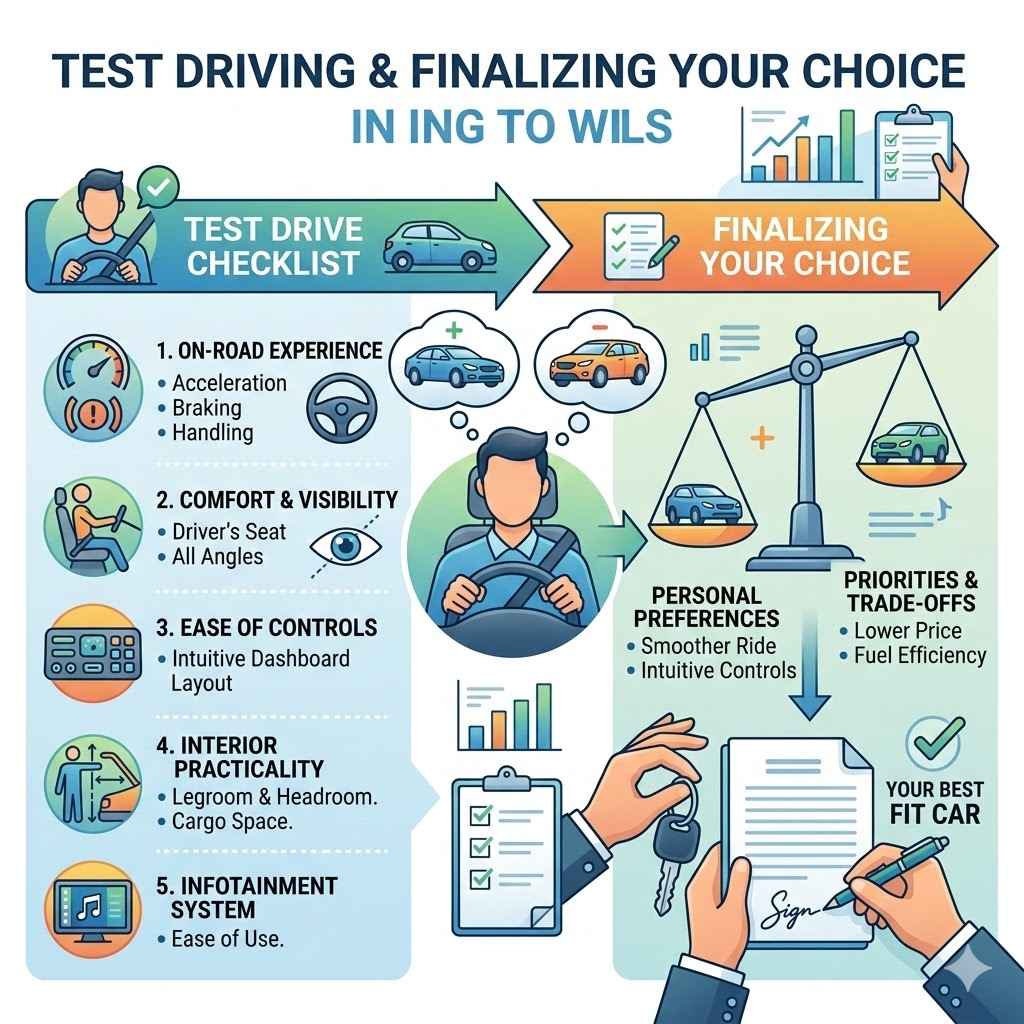
After narrowing down your options through research, the next crucial step is to test drive the vehicles you are most interested in. A test drive allows you to experience how the car feels to drive, its comfort level, visibility, and how easy the controls are to use. Pay attention to the acceleration, braking, and handling.
During the test drive, also consider the practicality of the interior. Is there enough legroom and headroom? Is the cargo space sufficient for your needs?
Does the infotainment system work well for you? Driving the car yourself is the best way to determine if it’s a good fit for your daily life.
For example, you might have narrowed your choice down to two SUVs. One might have a slightly lower price but feel less refined on the road. The other might be a bit more expensive but offer a smoother ride and a more intuitive dashboard layout.
Your test drive will help you weigh these trade-offs and make the final decision based on your personal preferences and priorities.
Frequently Asked Questions
Question: How many new car models are usually released each year?
Answer: The number of new car models released each year varies. It can range from dozens to over a hundred, depending on whether you count completely new designs, major redesigns, or significant updates. This number also differs between global markets and specific regions.
Question: Why is it hard to find an exact number of new car models?
Answer: It is hard to find an exact number because car makers launch models throughout the year, models are region-specific, and definitions of “new” can vary. Manufacturers also update or discontinue models, making the total count a moving target.
Question: Do electric cars add a lot to the number of new models?
Answer: Yes, electric cars significantly increase the number of new models. As technology advances and demand grows, car companies are introducing a wide variety of electric versions of sedans, SUVs, and trucks.
Question: Should I worry about having too many car model choices?
Answer: You shouldn’t worry too much. Having many choices means you can likely find a car that perfectly fits your needs and budget. The key is to research and test drive to make an informed decision.
Question: How do consumer trends affect the number of car models?
Answer: Consumer trends, like the popularity of SUVs, directly lead to more new models in those categories. Car makers create new models to meet what buyers are asking for and to stay competitive.
Summary
Figuring out How Many New Car Models Exist in 2026? involves understanding that the automotive landscape is always changing. With new technologies and consumer wants, new models are always appearing. While an exact count is difficult, there are many choices available globally.
Focus on your needs, research well, and test drive to find the perfect fit for you.