Can You Change Car Insurance at Any Time? A Financial Optimization Guide
You’re three months into a six-month policy, and your premium just feels wrong. Maybe you got a speeding ticket, moved to a new zip code, or simply spotted a competitor’s quote that’s $400 cheaper. The question that pops into your head is simple: can you change car insurance at any time?
The short answer is yes, you can cancel and switch your car insurance at any point during your policy term. There is no legal lock-in period that forces you to stay. But the financial reality is more nuanced. If you switch at the wrong time, you could lose discounts, pay fees, or accidentally create a coverage gap that makes your next quote more expensive.

TOURSUIT
TOURSUIT Car Registration & Insurance Card Holder,…
- 👁️Quick Accessible: Inside the car insurance and registration card holder, the clear inner material makes you easy to find documen…
- 💼Document Well Organized: The car document holder keeps your car documents organized and keep them tidy and secured, which make it…
- 🧲Hidden Magnetic Closure: The glove box document holder are built with hidden magnetic closure, which will keep your car paperwork…
This guide walks through the exact process of switching mid-policy, the hidden costs most people miss, and the timing traps that cost real money. You’ll leave knowing precisely how to optimize your coverage without the headaches.
Before you start the paperwork, it helps to have your documents organized. A dedicated car insurance holder like the TOURSUIT Car Registration & Insurance Card Holder keeps your registration and proof of insurance in one spot. It has a clear window so you can flash your ID card without digging through the glove box, and the magnetic closure keeps everything secure. It’s a small tool that makes the switching process smoother.
Can You Switch Car Insurance Anytime? The Short Answer
Yes. You have the right to cancel your auto insurance policy at any time. Insurance companies are regulated at the state level, and every state allows policyholders to cancel their coverage mid-term for any reason.
But here’s the catch that most articles skip: while there is no universal penalty for switching, there are often specific costs attached. Many insurers charge a cancellation fee if you cancel before the policy term ends. This fee is usually small, often between $25 and $75, but it varies by state and company. Some states prohibit cancellation fees entirely, so your mileage may vary.
You also need to think about what you lose. If you paid your premium in full for six months, you are owed a pro-rated refund for the unused portion. That sounds great, but some companies apply a short-rate penalty, meaning you get back slightly less than the pro-rated amount. It’s not a scam, but it is a cost of doing business early.
Finally, there is the renewal date consideration. If your policy renews in two weeks, it is almost always smarter to wait. Switching right after renewal means you just paid for a full term, and the cancellation fee will eat into any savings. The optimal time to switch is right before your renewal date, giving you a clean break without fees.
The 6-Step Switch Process (Without the Headache)
Switching insurers is not complicated, but it does require attention to detail. Missing one step can leave you uninsured for a day, which is a bigger problem than any cancellation fee. Here is the process that works.
Step 1: Compare Quotes (Don’t Just Check Price)
Price matters, but it is not the only variable. When you shop for a new policy, compare the same coverage limits and deductibles. A quote with lower liability limits is not a fair comparison.
Look at the full coverage vs. liability only split. If you have an older car, dropping collision might be smart, but that is a separate decision from switching companies. Get at least three quotes from different insurers. Use an independent agent if you want someone to do the legwork.
Check the financial strength of the company. A cheap insurer that denies claims is not a bargain. Look up their ratings with AM Best or J.D. Power before you commit.
Step 2: Check for Cancellation Fees and Penalties
Call your current insurer and ask directly: “What is my cancellation fee, and what is my pro-rated refund amount?” Get this in writing, even if it is just an email.
Ask about your paid-in-full discount. If you paid for six months upfront, your insurer likely gave you a discount for doing so. When you cancel early, you do not lose the discount on the portion you used, but you may not get it back on the refund. That is a hidden cost.
Also ask about add-ons. If you prepaid for roadside assistance or rental car reimbursement as part of your policy, you might not get a refund for those. They are often billed annually and are non-refundable.
Step 3: Set the Exact Same Effective Date
This is the most critical step. Your new policy’s policy effective date must start on the same day your old policy ends. But you need to look at the times, not just the date.
Most new policies start at 12:01 AM on the effective date. Most old policies end at 12:00 PM (noon) on the cancellation date. That is an 11-hour and 59-minute gap. If you get into an accident during that window, you have no coverage. This is called a coverage gap, and it will make your next quote more expensive.
The fix is simple: ask your new insurer to backdate the effective date to the day before, or ask your old insurer to extend the cancellation to the end of the day. Alternatively, set the new policy to start at 12:01 AM on the day after your old policy ends. That means one day of double coverage, which costs a few dollars, but it eliminates the lapse risk entirely.
Step 4: Buy the New Policy BEFORE Canceling the Old
Never cancel your old policy until the new one is active and you have received your ID cards. This is not about trust; it is about logistics. If the new insurer’s system glitches or your payment fails, you are not left naked.
Purchase the new policy first. Wait until you receive the confirmation email and the digital ID cards. Then cancel the old one. This creates a brief overlap, but it is the safest way to avoid a car insurance lapse.
Step 5: Cancel the Old Policy in Writing
Do not just call and cancel over the phone. Send a written cancellation request via email or certified mail. This creates a paper trail. Include your policy number, the requested cancellation date, and a request for written confirmation of the refund amount.
Some insurers will try to talk you into staying. That is normal. They might offer a discount. Listen, but do not be swayed unless the new quote is genuinely worse. You started this process for a reason.
Step 6: Update Your Lender and Download New ID Cards
If you have a car loan or lease, your lender notification is mandatory. Your lender requires proof of insurance with them listed as the lienholder. If you do not update them, they will purchase force-placed insurance, which is incredibly expensive.
Send the new policy’s declaration page to your lender immediately. Then download the new ID cards to your phone and keep a physical copy in your glove box. You need both. A cop can accept a digital card in most states, but a physical backup is smart.
The Best (and Worst) Times to Switch
Timing is everything. Here is a quick breakdown of when switching makes sense and when it costs you.
| Situation | Good Time to Switch? | Why |
|---|---|---|
| At renewal date | Yes | No cancellation fee, clean break, no pro-rated math. |
| After a moving to a new state | Yes | Your old policy may not cover you in the new state; rates change. |
| After a marriage | Yes | Multi-car and multi-driver discounts often apply. |
| After a ticket or accident | Maybe | Your current insurer will raise rates at renewal; shopping now locks in a lower rate before the increase hits. |
| Mid-term with a canceled full coverage policy | No | You will likely face a short-rate penalty and lose the paid-in-full discount. |
| During a grace period for non-payment | No | This is a red flag. Insurers see this as high risk; switching now will not hide it. |
The worst time to switch is right after you have paid for a full term. The second worst time is when you have an open claim. We will cover that next.
The Hidden Costs: What They Don’t Tell You About Switching
The myth of a universal penalty is just that, a myth. But there are real costs hiding in the fine print.
First, the pro-rated refund is not always fair. If you paid $600 for six months and cancel after three months, you expect $300 back. Some insurers give you exactly that. Others apply a short-rate table, which might give you only $250. The difference is the cost of breaking the contract. Ask your insurer which method they use.
Second, your CLUE report (Comprehensive Loss Underwriting Exchange) is watching. This is a history of your insurance claims and cancellations. A voluntary cancellation (you canceling) is not a red flag. But a non-renewal (the insurer canceling you) is. If you switch because you know your insurer is going to drop you for a bad record, the new insurer will see that history and price your policy accordingly.
Third, the effective date trap we mentioned earlier. A one-day lapse in coverage can raise your rates by 10-15% for years. That single day of no insurance costs more than any cancellation fee you are trying to avoid.
Finally, there is the usage-based insurance problem. If you are on a telematics program like Snapshot or DriveEasy, your driving data is tied to that insurer. When you switch, you lose all that accumulated good-driver data. You will have to start from scratch with a new telematics program, which means your initial rate will not reflect your safe driving history. It takes months to rebuild that discount.
How to Handle Switching with an Open Claim or Telematics Device
If you have an active claim on your current policy, do not switch until it is settled. Here is why.
The claim is attached to the policy period in which the accident happened. Your current insurer is responsible for paying it, regardless of whether you cancel tomorrow. But if you switch mid-claim, the new insurer will price your policy with a surcharge for that accident, even though you were not their customer when it happened. That is unfair, but it is how the system works. You will pay a higher premium for a claim you filed with a different company.
Wait until the claim is closed and the repair is paid. Then switch. If you must switch mid-claim, ask the new insurer if they will waive the surcharge. Some will, if you can prove the other driver was at fault and the claim is not your fault.
For telematics users, the math is different. If you are six months into a Snapshot program and you have a great score, you are earning a discount. That discount is lost the moment you cancel. The new insurer might offer a similar program, but you start at a neutral baseline. Your initial rate will be higher for the first few months until the new device learns your habits.
There is a workaround. Ask the new insurer if they will match your current telematics discount based on a screenshot of your driving score. Most will not, but a few independent agents can negotiate this.
Common Mistakes That Cost You Money
People make the same errors every day when switching. Here are the ones to avoid.
- Not reading the cancellation policy. Some insurers require 30 days written notice. If you cancel effective tomorrow, you might be charged for the full month.
- Forgetting about the lender notification. Your bank will force-place insurance if you do not update them. That can cost $200+ per month.
- Assuming a grace period exists. Not all states have a grace period for lapsed coverage. In some states, a lapse of even one day means your license plates can be suspended.
- Buying the cheapest policy without checking the deductible. A $500 deductible vs. a $1,000 deductible changes your premium significantly. Make sure you are comparing apples to apples.
- Switching for a new car without checking if your current insurer covers it. Most policies have a 14-day automatic coverage window for new vehicles. You might already be covered, and switching is unnecessary.
One more mistake: not using a car insurance backdate strategy correctly. You cannot backdate a new policy to cover a gap that already happened. That is fraud. The only way to avoid a gap is to align the dates perfectly, as covered in Step 3.
Frequently Asked Questions (FAQs)
Will I get a refund if I cancel my car insurance early?
Yes, you will get a pro-rated refund for the unused portion of your premium. If you paid $600 for six months and cancel after three months, you should get roughly $300 back. The exact amount depends on whether your insurer uses a pro-rated or short-rate method. Short-rate gives you slightly less. Always ask for the refund in writing before you cancel.
Does switching car insurance companies affect my credit score?
No. Insurance companies do a soft credit check, which does not affect your score. This is different from a hard inquiry for a loan. You can shop for quotes as many times as you want without worrying about your credit.
Can I switch insurers if I have an open claim?
You can, but you should not. The open claim stays with your current insurer, who is obligated to pay it. The new insurer will see the claim on your CLUE report and will likely surcharge your premium for it, even though you were not their customer when the accident happened. Wait until the claim is closed.
What happens to my full coverage if I switch mid-term?
The new policy will have its own coverage terms. If you want the same full coverage, you need to request it on the new policy. The old policy’s coverage ends on the cancellation date. There is no transfer of coverage; it is a new contract.
Is there a penalty for canceling car insurance before the renewal date?
There is no direct penalty, but there are indirect costs. You may lose your paid-in-full discount, pay a cancellation fee (in some states), and face a short-rate refund. The biggest cost is the coverage gap risk if you do not align the dates correctly.
The Bottom Line: Is It Worth It?
Switching car insurance mid-policy is usually worth it if you are saving more than the fees you will pay. A $300 annual savings is worth a $50 cancellation fee. A $30 annual savings is not.
Here is what you should do right now:
- Call your current insurer and ask for the exact cancellation fee and refund amount.
- Get three quotes with identical coverage limits and deductibles.
- Align the effective dates to the minute to avoid a coverage gap.
- Buy the new policy before canceling the old one.
- Send the new declaration page to your lender immediately.
- Keep a physical copy of your new ID cards in your glove box.
- If you have an open claim or a telematics device, wait until the claim closes or the program term ends.
If you are driving without insurance right now, that is a separate and urgent problem. Read our guide on driving without insurance to understand the risks before you do anything else.
The bottom line is simple: you can change car insurance at any time, but you should only do it when the math works in your favor. Do the research, check the fees, and time the switch correctly. Your wallet will thank you.
Products related to this article
Sponsored / affiliate links. As an Amazon Associate I earn from qualifying purchases. I may earn additional commission from eligible campaigns.
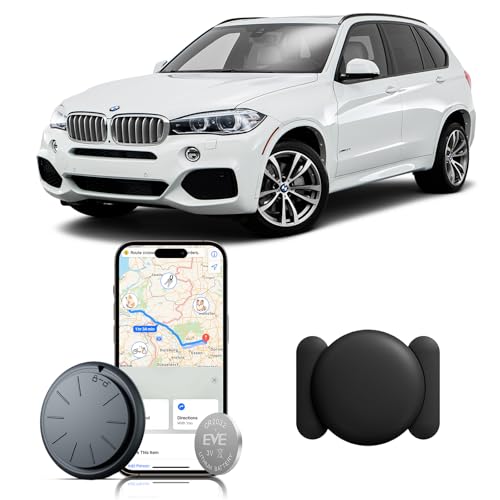 ZFSJTAG Car GPS Tracking Device for Vehicles, 1PCS Real Time GPS Tracker for Car, Work with Find My (iOS Only),Hidden Mini GPS Tracker,No Monthly Fee (Black Tracker, Black Magnetic Case)
 Headlight Stain Remover Polishing Paste,Car Lamp Care Brightening Clean Yellow Reconditioning Paste,Polishing Cleaner for Cars, Trucks, Motorcycles, RVs (3PC)