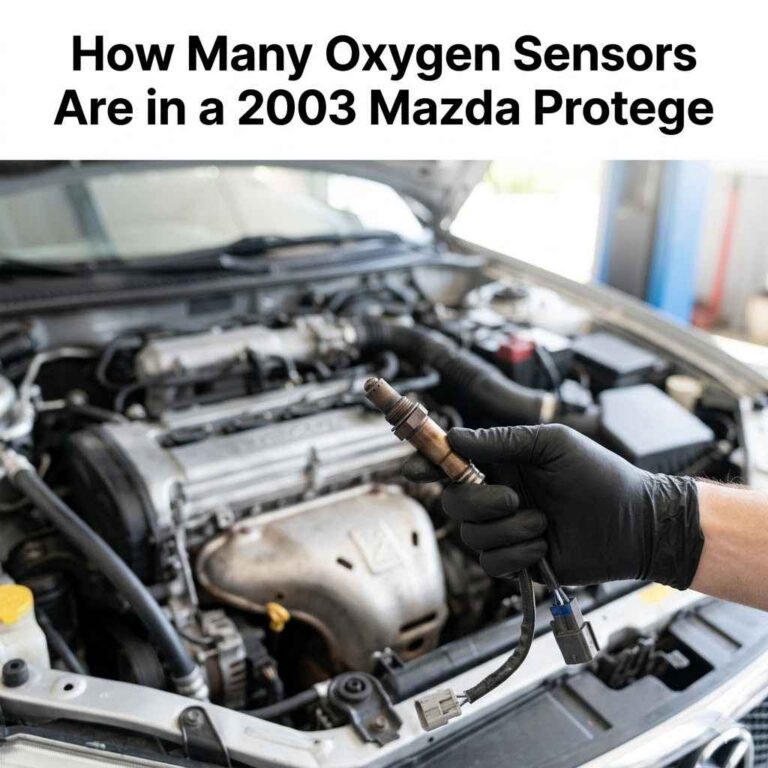
How Many Oxygen Sensors Are in a 2013 Camaro SS
If you’re curious about your 2013 Camaro SS and its engine, you might be wondering about its oxygen sensors. This is a common question for folks who are new to car maintenance or just want to understand their vehicle better. Knowing the number of sensors helps when you need to perform checks or replace parts.
It can seem tricky to find this specific information, but we’ve got you covered. We will break down exactly how many oxygen sensors your 2013 Camaro SS has in a way that’s easy to follow. Get ready for a clear, simple explanation!
Understanding Your 2013 Camaro SS Oxygen Sensors
This section will explain what oxygen sensors are, why they are important for your car’s performance, and specifically how many are located on a 2013 Camaro SS. We will cover the basic function of these sensors and their role in the exhaust system. Understanding their purpose makes it clearer why knowing their count is useful for any car owner.
We will also touch on why this information is often sought by drivers looking to maintain their vehicles.
Oxygen sensors, also known as O2 sensors, are vital components of your car’s exhaust system. They work by measuring the amount of unburned oxygen in the exhaust gases. This data is sent to the engine control module (ECM), which then adjusts the fuel-air mixture accordingly.
This precise mixture is key to optimizing engine performance, improving fuel efficiency, and reducing harmful emissions.
For a 2013 Camaro SS, understanding the number of oxygen sensors is particularly relevant because it features a V8 engine. V8 engines typically have a more complex exhaust setup than smaller engines, often leading to more sensors. Knowing the exact count helps when diagnosing issues or planning for maintenance tasks.
It ensures you have the right information for any work you need to do.
The primary goal here is to provide a straightforward answer to the question: How Many Oxygen Sensors Are in a 2013 Camaro SS? We aim to demystify this aspect of your car’s mechanics so you can feel more confident.
The Role of Oxygen Sensors
Oxygen sensors are like tiny detectives for your car’s engine. They constantly monitor the exhaust to see how much oxygen is left after combustion. This information is super important.
The engine’s computer uses this data to make quick adjustments. It figures out if the engine is getting too much or too little fuel compared to the air. If there’s too much oxygen, it means not enough fuel was burned, so the computer adds more fuel.
If there’s not enough oxygen, it means too much fuel was used, so the computer reduces the fuel.
This constant balancing act helps your engine run smoothly. It also means your car uses gas more efficiently. Plus, it helps make sure the exhaust fumes are as clean as possible, which is good for the environment.
Without working oxygen sensors, your engine might not perform its best, and it could even cause your car to fail an emissions test.
How Oxygen Sensors Work
Oxygen sensors operate by using a special ceramic material that produces a voltage signal based on the oxygen difference between exhaust gas and outside air. There are two main types: Zirconia and Titania. Zirconia sensors are more common and are shaped like a spark plug.
They have a protective outer sleeve that allows exhaust gases to flow around the sensing element.
Inside the sensor, a small heating element is often present to bring the sensor up to its optimal operating temperature quickly. This is important because the sensor needs to be hot to generate an accurate reading. Once heated, the sensor’s ceramic structure allows oxygen ions to pass through.
The difference in oxygen concentration creates an electrical voltage.
This voltage varies depending on the oxygen level. A rich fuel mixture (less oxygen in exhaust) results in a low voltage, while a lean mixture (more oxygen in exhaust) results in a high voltage. The engine control module (ECM) interprets these voltage changes and modifies the fuel injection pulse width to maintain the ideal air-fuel ratio, typically around 14.7:1.
Types of Oxygen Sensors
Oxygen sensors generally fall into two main categories based on their construction and how they operate: narrowband and wideband.
Narrowband sensors are simpler and are designed to switch between a high and low voltage output when the air-fuel ratio is near the stoichiometric point (14.7:1). They are effective at indicating whether the mixture is rich or lean but don’t provide precise measurements outside this narrow range. They are less expensive and were standard on most vehicles for many years.
Wideband sensors, also known as universal sensors or air-fuel ratio sensors, offer a much broader and more accurate measurement of the air-fuel ratio across a wide range of conditions. They can accurately detect very rich or very lean mixtures, making them crucial for modern high-performance engines, forced induction systems, and emissions control where precise fuel management is critical.
For a 2013 Camaro SS, both types might be present, with wideband sensors often used closer to the engine for immediate feedback and narrowband sensors further down the exhaust for overall monitoring.

Locating Oxygen Sensors in Your 2013 Camaro SS
Now that we understand what oxygen sensors do, let’s pinpoint how many are on your specific car. This section will guide you to their locations. We will explain that modern cars, especially performance models like the Camaro SS, often have multiple sensors for better engine control.
We will detail the number and general placement for your 2013 model.
For a 2013 Camaro SS, the number of oxygen sensors is generally consistent with its V8 engine and performance-oriented design. The exact count is important for diagnostic purposes.
Cars are designed with emissions and fuel efficiency in mind. The more precisely an engine can be controlled, the better it performs. Oxygen sensors are key to this control.
Having multiple sensors allows the engine control module (ECM) to gather data from different parts of the exhaust system. This helps the ECM fine-tune the air-fuel mixture for each bank of cylinders.
Think of it like having several people telling you how much salt you need for a big pot of soup. One person might guess, but several people can give more accurate feedback from different parts of the pot. Similarly, multiple oxygen sensors provide a more complete picture of what’s happening in your engine.
The General Setup for a 2013 Camaro SS
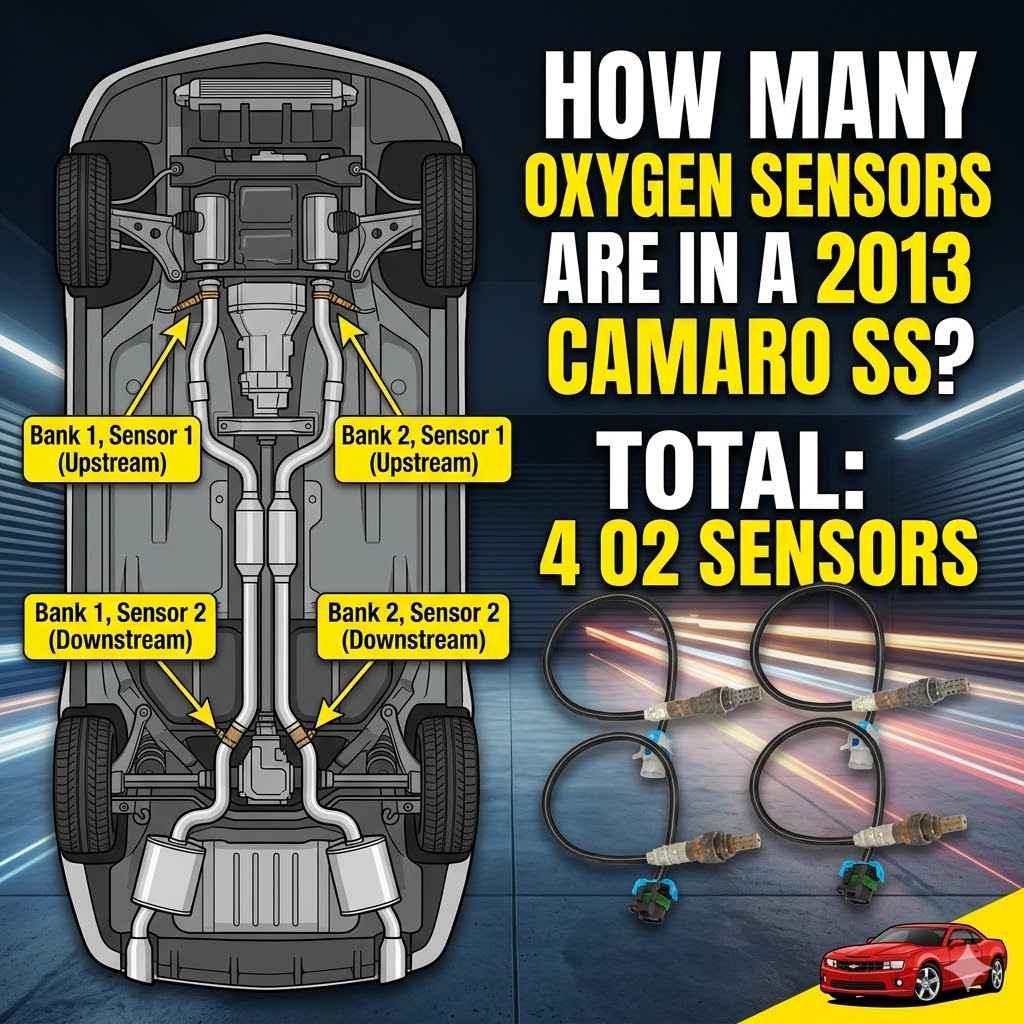
The 2013 Chevrolet Camaro SS, equipped with its powerful V8 engine, typically features a total of four oxygen sensors. This is a standard configuration for vehicles with a dual exhaust system and catalytic converters for each bank of cylinders.
These sensors are divided into two main categories based on their location and function: pre-catalytic converter sensors and post-catalytic converter sensors.
The pre-catalytic converter sensors are located upstream of the catalytic converter. These are often referred to as “oxygen sensors” or sometimes “air-fuel ratio sensors.” They play a critical role in providing real-time data to the engine control module (ECM) for fuel mixture adjustments. There are usually two of these, one for each exhaust manifold bank.
The post-catalytic converter sensors are located downstream of the catalytic converter. These are commonly called “catalyst monitor sensors.” Their main job is to monitor the efficiency of the catalytic converter itself, ensuring it is effectively cleaning the exhaust gases. Like the pre-cat sensors, there are typically two of these, one for each catalytic converter.
So, to directly answer the question: there are four oxygen sensors on a 2013 Camaro SS. Two are upstream (before the catalytic converters) and two are downstream (after the catalytic converters).
Location of Upstream Oxygen Sensors
The two upstream oxygen sensors are crucial for regulating the engine’s air-fuel mixture. They are positioned directly in the exhaust stream as it leaves each cylinder bank’s exhaust manifold.
For a 2013 Camaro SS, you’ll find one sensor on the driver’s side exhaust manifold and another on the passenger’s side exhaust manifold. They are typically threaded into the manifold or the exhaust pipe very close to it.
These sensors are often wider and may have a more robust wiring harness compared to the downstream sensors. They are the primary sensors the engine computer relies on for immediate feedback to control fuel injection. If these sensors are not functioning correctly, you will likely notice poor fuel economy, rough idling, and potential engine performance issues.
Their accessibility can vary. Sometimes they are relatively easy to reach from underneath the car, while other times they might be more difficult to access due to engine components or heat shields. This is important to know if you plan on doing any DIY maintenance.
Location of Downstream Oxygen Sensors
The two downstream oxygen sensors, also known as catalyst monitor sensors, are located after the catalytic converters. Their main purpose is not to directly adjust the fuel mixture but to check if the catalytic converters are working properly.
On a 2013 Camaro SS, you will find one downstream sensor for each catalytic converter. Since the SS has a V8 engine, it has two catalytic converters, one for each bank of cylinders. Therefore, you will have one sensor located after the driver’s side catalytic converter and another after the passenger’s side catalytic converter.
These sensors provide data to the engine control module (ECM) that compares their readings to those of the upstream sensors. If the readings are too similar, it indicates that the catalytic converter is not effectively cleaning the exhaust gases. This can trigger a check engine light.
These sensors are generally located further down the exhaust system than the upstream sensors. They are usually easier to access but can still be affected by rust and corrosion over time.
Diagnosing and Replacing Oxygen Sensors
Knowing how many sensors your 2013 Camaro SS has is the first step. The next is understanding what happens when they don’t work right and how to fix them. This section will cover common signs of bad oxygen sensors and explain the general process of checking and replacing them.
We will aim for clarity so that even if you are not a seasoned mechanic, you can understand the basics.
Oxygen sensors, like all automotive parts, can wear out over time. When they fail, they can cause a variety of problems that affect your car’s drivability and emissions. Recognizing these signs is key to addressing the issue promptly.
When an oxygen sensor fails, it can no longer accurately report the oxygen content in the exhaust. This throws off the ECM’s calculations for the ideal air-fuel ratio. The ECM might then default to a pre-programmed “limp mode” fuel mixture, which is often richer than optimal.
This leads to reduced fuel economy and increased emissions.
Common symptoms of failing oxygen sensors include a glowing or illuminated check engine light, a decrease in gas mileage, rough idling, poor engine performance, and sometimes a smell of sulfur or rotten eggs from the exhaust. In some cases, a failing sensor might even cause your car to fail an emissions test.
The diagnostic process often involves using an OBD-II scanner to retrieve trouble codes. These codes can point to specific sensors or circuits that are not functioning correctly.
Common Signs of Failing Oxygen Sensors
Several indicators can suggest that one or more of your oxygen sensors on the 2013 Camaro SS may be failing. Paying attention to these signs can help you catch problems early.
The most obvious sign is usually the illuminated check engine light. This light on your dashboard is your car’s way of telling you that something is wrong with one of its systems, and oxygen sensors are frequent culprits. The light can be triggered by a sensor that is too slow to respond, has an erratic reading, or is completely out of range.
Another common symptom is a noticeable decrease in fuel economy. Since oxygen sensors are vital for the engine’s computer to precisely control the air-fuel mixture, a faulty sensor can lead to an inefficient burn. This means your engine is using more fuel than it should, causing you to stop at the gas station more often.
You might also experience rough idling or engine hesitation. If the air-fuel mixture is incorrect, the engine may run unevenly, especially at low speeds or when stopped. In some cases, you might even detect a rotten egg smell from your exhaust, which can indicate that the catalytic converter is overheating due to an excessively rich fuel mixture caused by bad oxygen sensors.
How to Test Oxygen Sensors
Testing oxygen sensors involves checking their electrical signals and response times. This is often done using an OBD-II scanner that can display live data from the sensors.
First, you connect an OBD-II scanner to your car’s diagnostic port, usually located under the dashboard. You then start the engine and let it warm up to operating temperature. The scanner will show you various data streams, including the voltage readings from your oxygen sensors.
You will typically look at the upstream sensors first. As the engine runs and the air-fuel mixture fluctuates between rich and lean, the voltage of a good upstream oxygen sensor should rapidly swing back and forth, usually between approximately 0.1 volts and 0.9 volts. The downstream sensors should show a more stable, flatter voltage reading, indicating the catalytic converter is functioning correctly.
If an upstream sensor’s voltage is stuck at a high or low reading, or if it fluctuates very slowly, it indicates a problem. Similarly, if the downstream sensor’s voltage mirrors the upstream sensor’s voltage too closely, it suggests the catalytic converter may not be efficient, or the downstream sensor itself could be faulty.
The Replacement Process
Replacing oxygen sensors on a 2013 Camaro SS is a task that many DIY enthusiasts can handle, though it may require specific tools.
Before you begin, ensure you have the correct replacement sensors. It’s important to use sensors that are specifically designed for your 2013 Camaro SS to ensure proper fit and function. Always disconnect the negative battery terminal before starting any work on your vehicle to prevent electrical shorts.
You will likely need a special oxygen sensor socket wrench. This tool has a slot that allows the wire harness to pass through, enabling you to get a grip on the sensor itself. Accessing the sensors can be the most challenging part, especially the upstream sensors, which might be near hot exhaust components or shielded by heat barriers.
Once you have access, use the socket wrench to unscrew the old sensor. Be prepared for some resistance, as they can become seized due to heat and corrosion. After removing the old sensor, apply a small amount of anti-seize compound (specifically designed for oxygen sensors) to the threads of the new sensor before screwing it in.
Do not get any anti-seize on the sensor tip itself.
After the new sensor is installed and tightened, reconnect the wiring harness. Finally, reconnect the battery terminal. After installation, it’s recommended to clear any stored trouble codes using an OBD-II scanner and then drive the car to allow the ECM to relearn the new sensor’s readings.
Impact on Emissions and Fuel Economy
The condition of your oxygen sensors has a direct and significant impact on your vehicle’s emissions and fuel economy. This is why they are such critical components for modern cars.
When oxygen sensors are functioning correctly, they provide the engine control module (ECM) with accurate data. This allows the ECM to maintain the ideal air-fuel ratio, which is crucial for efficient combustion. An ideal ratio ensures that as much fuel as possible is burned completely, minimizing unburned hydrocarbons and maximizing power output while minimizing wasted fuel.
However, when an oxygen sensor fails, this precise control is lost. The ECM might default to a richer fuel mixture to prevent engine damage or drivability issues. A richer mixture means more fuel is injected than necessary.
This leads to increased fuel consumption and a higher risk of incomplete combustion.
In terms of emissions, incomplete combustion produces more harmful pollutants like carbon monoxide (CO) and unburned hydrocarbons (HC). Furthermore, if the post-catalytic converter sensors indicate that the catalytic converter is not functioning efficiently (often due to a bad upstream sensor causing an incorrect air-fuel mixture), the converter may not be able to perform its job of converting these harmful gases into less harmful ones like carbon dioxide (CO2) and water vapor. This can result in your car failing an emissions test and releasing more pollutants into the atmosphere.
Comparison of Sensor Types and Positions
Understanding the differences between the sensors and where they are located helps clarify their roles. This section will provide a clearer picture by comparing the upstream and downstream sensors. We will highlight their distinct functions and how they work together.
This will reinforce why your 2013 Camaro SS has a specific number of sensors.
The two sets of oxygen sensors on your 2013 Camaro SS—upstream and downstream—serve different but equally important purposes in managing your engine’s performance and emissions.
The upstream sensors, also often referred to as primary or O2 sensors, are directly involved in regulating the fuel injection. They are positioned before the catalytic converter, where they can measure the oxygen content in the exhaust gases immediately after combustion. Their fast-acting voltage changes tell the engine computer whether the mixture is too rich or too lean, allowing for real-time adjustments to optimize fuel burn and performance.
The downstream sensors, also known as secondary or catalyst monitor sensors, are located after the catalytic converter. Their primary role is to monitor the effectiveness of the catalytic converter. By comparing the readings from the downstream sensor to the upstream sensor, the engine computer can determine if the catalytic converter is properly cleaning the exhaust gases.
A healthy catalytic converter will chemically alter the exhaust, resulting in different oxygen content readings compared to the upstream sensors.
This dual system ensures not only efficient engine operation but also that the vehicle is meeting environmental standards by properly treating exhaust gases.
Upstream vs. Downstream Sensors
The key difference between upstream and downstream oxygen sensors lies in their function and location relative to the catalytic converter.
Upstream sensors are positioned before the catalytic converter. They are the primary sensors used by the Engine Control Module (ECM) to monitor and adjust the air-fuel ratio in real-time. Their rapid switching signals are essential for optimal engine performance and fuel efficiency.
A malfunctioning upstream sensor directly impacts how the engine runs.
Downstream sensors are positioned after the catalytic converter. Their main job is to act as a monitor for the catalytic converter’s efficiency. They provide feedback to the ECM on whether the converter is effectively reducing harmful emissions.
While they don’t directly control fuel injection, a failing downstream sensor can still trigger a check engine light and indicate a problem with the exhaust system, often the catalytic converter itself.
Think of it this way: the upstream sensors tell the engine computer how to mix the fuel and air before it goes through the cleaning process, and the downstream sensors check if the cleaning process worked.
Sensor Response Times and Accuracy
The performance of oxygen sensors is measured by their responsiveness and accuracy. These factors are critical for effective engine management.
Upstream oxygen sensors, especially wideband sensors, are designed for rapid response. They must be able to detect changes in the air-fuel mixture within milliseconds to allow the ECM to make constant adjustments. A sensor that is slow to respond can lead to an imprecise air-fuel ratio, resulting in poor performance and increased emissions.
Wideband sensors offer greater accuracy across a wider range of air-fuel ratios compared to older narrowband sensors.
Downstream oxygen sensors typically have a slower response time and are often narrowband. Their readings don’t need to be as precise as the upstream sensors because their primary function is to confirm that the catalytic converter is working. They simply need to indicate whether the exhaust composition has changed significantly after passing through the converter.
The accuracy of these sensors can degrade over time due to contamination from soot, oil, and fuel additives, or simply wear and tear from high temperatures. This degradation is why regular checks and potential replacement are important for maintaining optimal vehicle operation.
Impact of Catalytic Converter Efficiency
The catalytic converter plays a vital role in your car’s exhaust system by converting harmful pollutants into less harmful substances. The downstream oxygen sensors are there to ensure this process is happening effectively.
A functioning catalytic converter uses precious metals like platinum, palladium, and rhodium to promote chemical reactions. These reactions transform carbon monoxide into carbon dioxide, unburned hydrocarbons into water and carbon dioxide, and nitrogen oxides into nitrogen gas and oxygen.
When the catalytic converter is working efficiently, the oxygen levels in the exhaust gases after the converter will be different from the oxygen levels before the converter. The downstream oxygen sensor detects this difference. If the downstream sensor’s readings closely match the upstream sensor’s readings, it signals to the engine control module (ECM) that the catalytic converter is not performing its job.
This can lead to the check engine light illuminating, potentially indicating a need for catalytic converter replacement. A clogged or damaged catalytic converter can also restrict exhaust flow, leading to a loss of engine power and reduced performance.
Summary of Sensor Count for 2013 Camaro SS
To wrap things up clearly, let’s reiterate the main point about your 2013 Camaro SS. We’ve explored what oxygen sensors do, where they are, and why they matter. Now, we will consolidate that information into a precise answer about the number of sensors.
This final check ensures you have the core knowledge you need about this aspect of your vehicle.
The question of “How Many Oxygen Sensors Are in a 2013 Camaro SS?” has been answered through understanding the vehicle’s design and the function of these critical parts.
Your 2013 Camaro SS, with its V8 engine and dual exhaust system, is equipped with a total of four oxygen sensors. This configuration is standard for performance vehicles designed to meet emissions regulations while optimizing engine performance.
These four sensors are strategically placed in two pairs: two upstream sensors located before the catalytic converters and two downstream sensors located after them. Each bank of the V8 engine has one upstream and one downstream sensor. This setup provides the engine control module with comprehensive data for fine-tuning the air-fuel mixture and monitoring the health of the exhaust system.
The Final Count
To be absolutely clear, the total number of oxygen sensors on a 2013 Chevrolet Camaro SS is four.
This number is consistent with the vehicle’s V8 engine architecture, which typically involves a dual exhaust system. Each exhaust bank requires its own set of sensors to ensure proper engine management and emissions control.
Having four sensors allows for precise monitoring and adjustment of the engine’s performance, contributing to better fuel economy and reduced emissions.
If you are working on your Camaro SS and need to replace an oxygen sensor, knowing there are four will help you locate all of them and determine which one might be causing an issue, based on diagnostic codes or observed symptoms.
Upstream Sensor Role Recap
The two upstream oxygen sensors on your 2013 Camaro SS are vital for immediate engine control. They are positioned closest to the engine, in the exhaust manifold or pipe just before the catalytic converter.
Their primary job is to measure the amount of oxygen in the exhaust gases. This information is sent to the engine control module (ECM), which uses it to constantly adjust the amount of fuel injected into the engine. This ensures the air-fuel mixture is always close to optimal for combustion.
A well-functioning upstream sensor leads to efficient fuel burning, good engine power, and minimal emissions. If one of these fails, you’ll likely notice a drop in gas mileage and possibly rough running.
Downstream Sensor Role Recap
The two downstream oxygen sensors on your 2013 Camaro SS serve a different, but equally important, purpose. They are located after the catalytic converter in the exhaust system.
Their main function is to monitor the efficiency of the catalytic converter itself. They provide feedback to the ECM by comparing the exhaust gas composition before and after it passes through the converter.
If the readings from the downstream sensor are too similar to the upstream sensor, it suggests the catalytic converter isn’t working properly. This can trigger a check engine light and may indicate that the converter needs to be replaced.

Frequently Asked Questions
Question: How do I know if I have a bad oxygen sensor on my 2013 Camaro SS?
Answer: Common signs include a check engine light, decreased fuel economy, rough idling, engine hesitation, and sometimes a rotten egg smell from the exhaust. An OBD-II scanner can provide specific trouble codes.
Question: Can I drive my 2013 Camaro SS with a bad oxygen sensor?
Answer: Yes, you can typically drive with a bad oxygen sensor, but it’s not recommended for long periods. It will likely lead to reduced fuel efficiency, increased emissions, and potential damage to other engine components like the catalytic converter.
Question: Are all oxygen sensors the same on a 2013 Camaro SS?
Answer: No, the upstream and downstream oxygen sensors have different functions and may also differ in type (narrowband vs. wideband). It’s important to use the correct sensor for the specific location.
Question: Where are the oxygen sensors located on a 2013 Camaro SS?
Answer: There are four sensors in total. Two are located upstream of the catalytic converters (one on each exhaust manifold/pipe) and two are located downstream of the catalytic converters (one after each converter).
Question: Will replacing all four oxygen sensors at once be beneficial for my 2013 Camaro SS?
Answer: If multiple sensors are showing signs of failure or are nearing the end of their expected lifespan, replacing them all can be a good preventive measure. It ensures consistent performance and can save on labor costs if another sensor fails soon after.
Summary
Your 2013 Camaro SS has four oxygen sensors in total. Two are upstream, vital for fuel mixture control, and two are downstream, monitoring catalytic converter health. Knowing their count and location helps with maintenance.
This setup ensures your car runs efficiently and cleanly.