Heat Shield for Cars: Protect Vehicle From Heat Damage
Choose the shield by heat source: use reflective foil for radiant exhaust or turbo heat, and insulation for floor or firewall soak. Keep at least 1 inch of air gap when possible. Bad placement can cook wiring, soften trim, and keep the cabin hot. This guide shows how to diagnose the heat path, match material to the location, and avoid common DIY mistakes.
What heat shielding can and cannot do
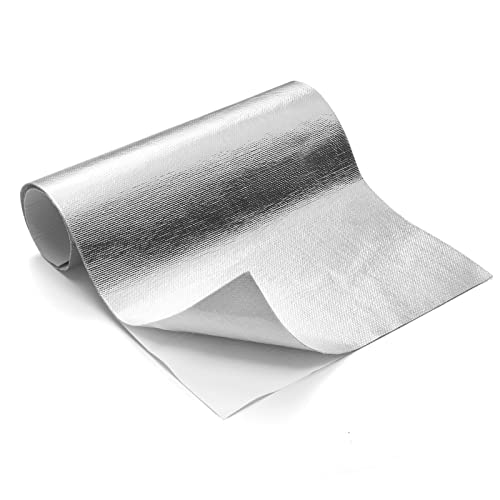


Heat shielding works best when you match it to the type of heat. Reflective foil handles radiant heat from exhaust parts and turbo housings. Insulation mats help when heat moves through a panel or soaks into it after shutdown. If the real problem is lean running, missing factory shields, or poor airflow, the shield only hides the symptom.
Radiant heat versus conductive heat
Radiant heat travels by line of sight. It is the hot glow from a downpipe, manifold, or catalytic converter, and it is the main target for a reflective heat shield material with an aluminized surface. Conductive heat moves through direct contact, like a hot tunnel panel or firewall that has already absorbed heat. Convective heat rides on hot air and depends on airflow patterns around the engine bay.
That difference matters. A shiny barrier can reflect radiant heat, but it does little against a panel that is already heat-soaked. For that, a thermal insulation mat with fire resistance and enough thickness is a better fit.
Where shields help most
Shielding is most useful near exhaust, turbo, and downpipe areas, around a firewall, and on the tunnel or hood liner where cabin heat and noise matter. Underhood wiring runs also deserve attention when they pass within a few inches of hot hardware. A common rule of thumb is to keep about 1 inch of air gap when the design allows it.
When heat shielding is the wrong fix
If the intake tube is heat-soaking because the engine bay is missing factory ducting, a shield may help only a little. If hoses are being baked because they are routed too close to the exhaust, rerouting or restoring OEM parts is the better fix. If a turbo car keeps overheating nearby parts, check for missing turbine shields or a cracked heat shield before adding more material.
How to tell which heat problem you have
Start by identifying where the damage appears. A melted loom, brittle hose, or scorched trim near a visible hot part points to radiant heat. A floorpan that feels hot long after shutdown suggests conductive heat and soak. If cabin warmth rises mostly at speed, airflow and missing insulation are part of the problem.
Signs of radiant heat damage
Look for discoloration, crispy loom wrap, softened plastic edges, or heat-warped hose sleeves on the side facing the exhaust or turbo. Underhood wiring runs that run parallel to a manifold are especially vulnerable. A reflective barrier or a small formed shield is usually the first fix, provided it does not trap heat against the part it is protecting.
Signs of heat-soak after shutdown
Heat-soak is the post-shutdown temperature rise that happens when airflow stops and trapped heat spreads into hoses, wiring, and intake parts. Turbocharged engines are prone to this because the turbo, downpipe, and nearby metal stay hot after the engine stops. If hot restart problems or soft intake hoses show up after parking, shielding alone may not be enough.
Signs airflow or insulation is the real issue
If the firewall or tunnel feels hot but nothing is visibly scorched, the problem may be convective heat moving through a weak insulation layer. Missing hood liner material, torn firewall pads, or open gaps around grommets let hot air and noise into the cabin. In that case, a hood liner or thermal insulation mat is usually more effective than a small foil patch.
Heat shield decision matrix
This matrix compares common use cases against the heat source, the best shield type, installation difficulty, likely benefit, and common failure risks. Use it to match the product to the problem instead of buying by appearance alone.
| Use case | Main heat source | Best shield type | Installation difficulty | Likely benefit | Common failure risks |
|---|---|---|---|---|---|
| Daily driver | Firewall and tunnel soak, exhaust near floorpan | Thermal insulation mat plus hood liner replacement where missing | Moderate | Lower cabin heat, less trim bake, better noise control | Adhesive breakdown, trapped moisture, poor edge sealing |
| Turbo build | Turbo, downpipe, intercooler piping, wiring near hot side | Reflective heat shield material and exhaust heat shield with clearance | Moderate to high | Reduced heat-soak, better hose and wiring protection | Loss of clearance, rattles, shield touching moving parts |
| Classic car | Headers, tunnel, missing factory barriers | Thermal barrier coating on headers plus firewall insulation | High | Restores missing thermal protection, improves comfort | Poor prep, coating failure, corrosion under old patches |
| Track car | Sustained exhaust heat and underhood airflow spikes | Clamp-mounted reflective shields and high-temp tape on seams | High | Limits local heat spikes and protects nearby lines | Fastener loosening, adhesive failure, trapped heat from overcoverage |
A downpipe about 2 inches from the underhood wiring run is a common example. A reflective shield on the hot side can cut radiant exposure, but only if the wiring is also rerouted or sleeved and the shield leaves an air gap. Covering everything with foil and no clearance can make the pocket hotter.
Which heat shield material fits your car?
Material choice should follow the heat path. Reflective foil is for direct radiant heat. Insulation mat is for panels and cabin-facing surfaces. Thermal barrier coating belongs on the hot part itself, especially headers and exhaust sections where reducing surface temperature is the goal. A good match beats a thicker product in the wrong place.
Reflective heat shield material
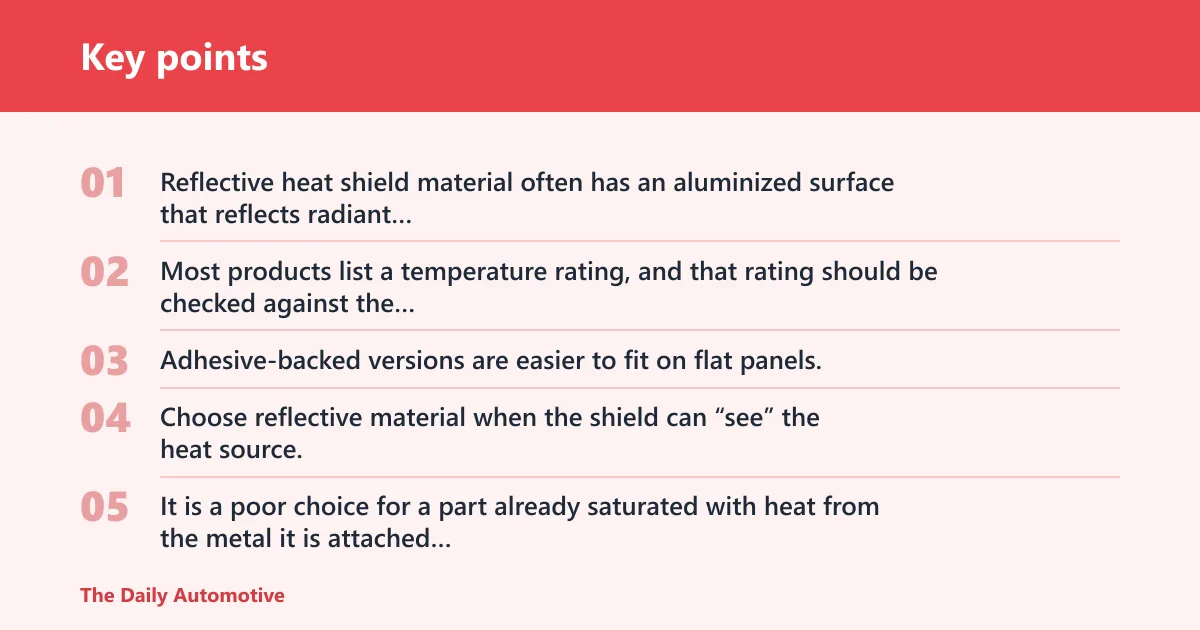
Reflective heat shield material often has an aluminized surface that reflects radiant heat away from the protected side. Most products list a temperature rating, and that rating should be checked against the nearest hot part, not the average underhood temperature. Adhesive-backed versions are easier to fit on flat panels, while clamp-mounted versions are better near exhaust or turbo hardware where glue would fail.
Choose reflective material when the shield can “see” the heat source. It is a poor choice for a part already saturated with heat from the metal it is attached to.
Thermal insulation mat
Thermal insulation mat is better for engine bay use on firewall, tunnel, or hood underside areas. Look for a mat with stated thickness, self-adhesive backing, and fire resistance. Thicker is not always better if it steals clearance from pedals, ducts, or moving components. On older cars, replacing a missing OEM-style hood liner can cut both noise and heat transfer.
Thermal barrier coating
Thermal barrier coating is generally used on exhaust and header surfaces, not on trim panels. Spray-on and ceramic-form products are both used, but both depend on careful surface preparation. Any oil, rust, or flaking scale weakens adhesion and shortens service life. On a heat source itself, this can reduce the amount of heat radiated into nearby parts without adding bulk.
Where should you install heat shielding?
Install shielding where the heat enters the problem area, not wherever there is empty space. Hood, firewall, tunnel, exhaust, turbo/downpipe, and wiring routing are the common points. If you place the barrier too far from the source, or directly against the wrong panel, it can trap heat or reduce clearance without solving the failure mode.
Hood liner and firewall
The hood liner is useful for cabin noise and heat management, especially when the original fire-retardant material is missing or damaged. Firewall insulation is the better choice when the cabin side of the bulkhead is warming up after driving. In both spots, follow the factory attachment pattern if possible, because random glue patches tend to peel and sag.
Tunnel and underbody zones
Underbody protection is often about the transmission tunnel and floorpan near exhaust routing. This is where an exhaust heat shield with proper clearance and mounting hardware matters most. If the part touches the body, the shield can transmit heat by conduction and make the problem worse. A small air gap usually works better than a hard contact point.
Exhaust, turbo, and wiring routing
Turbo and downpipe proximity demands the most careful shielding. Use hardware that can survive vibration and heat, not light clips meant for trim pieces. Underhood wiring runs should be kept away from the exhaust path whenever possible, then protected with loom sleeves or reflective wrap only where rerouting is impossible. The best shield is still distance.
Installation details that decide success
Most failures come from mounting, not from the material itself. Adhesive breakdown, rattles, trapped moisture, corrosion, and loss of clearance are the common DIY mistakes. Clean surfaces, correct fasteners, and enough space around the shield matter as much as the product label.
Clearance and mounting hardware
Clamp-mounted shields work well around exhaust parts because they tolerate heat better than adhesive in many cases. Fasteners should hold the shield without letting it vibrate against the body or pipe. If a shield sits too close, it can create a hot pocket or rub through nearby lines over time. Verify clearance after the engine heats up, not only when cold.
Cleaning, prep, and adhesion
For adhesive-backed products, clean metal must be dry, free of oil, and free of loose coating. Any remaining dust or rust shortens bond life. Press the mat or foil fully into place, then check that edges do not curl. On curved panels, a poor fit often fails sooner than a slightly smaller, well-secured piece.
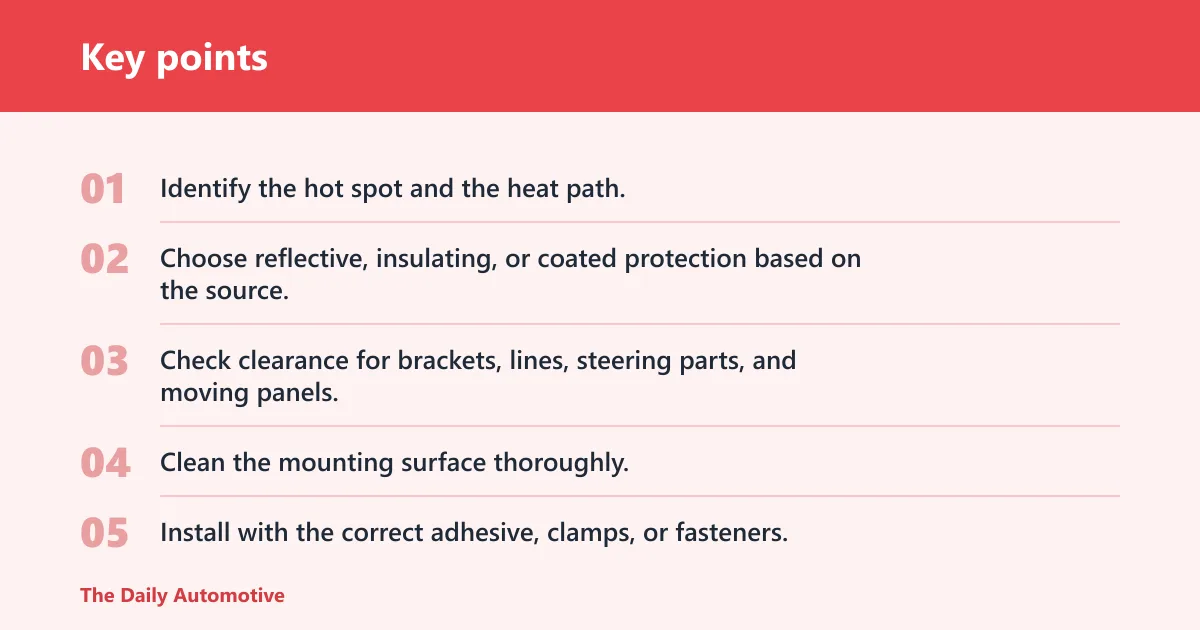
- Identify the hot spot and the heat path.
- Choose reflective, insulating, or coated protection based on the source.
- Check clearance for brackets, lines, steering parts, and moving panels.
- Clean the mounting surface thoroughly.
- Install with the correct adhesive, clamps, or fasteners.
- Seal exposed seams and inspect after the first heat cycle.
Seams, edges, and fire-resistant tape
Fire-resistant tape with aluminum foil construction can be useful for sealing seams and edges, especially on a mat or liner where heat can creep under a joint. It is often best as a short-term or support material, not as the only thing holding a shield in place. If a seam is carrying load, the mount is wrong.
A common first-timer mistake is to cover every exposed inch with tape and foil, then find that the panel cannot breathe and moisture stays trapped behind it. That can lead to corrosion on the hidden side of the panel.
Can heat shields reduce cabin heat?
Yes, if the heat is coming through the firewall, tunnel, or hood structure. They are less effective if the cabin problem comes from missing seals, failed HVAC ducts, or a floorpan leak that lets hot air enter. The best result usually comes from pairing insulation with the correct factory-style liner or barrier.
Cabin heat from the firewall and tunnel
Firewall and tunnel insulation helps when engine-bay heat is conducting into the cabin sheet metal. A thermal insulation mat on the cabin side or the engine side can reduce that transfer, depending on access and clearance. In cars with a long exhaust run under the floor, the tunnel often needs attention before the dash area does.
Noise and heat control with hood liners
Hood liners help with both noise and radiant heat management. OEM-style replacement options are worth considering when the original liner is missing, torn, or soaked with oil. Use fire-retardant material, and make sure it does not sag onto hot parts or block a hood vent path designed for airflow.
What to expect in older cars
Is a heat shield worth it for older cars? Often yes, but only when the original thermal protection is missing or degraded. Classics frequently lose factory pads, exhaust shields, and clip-on deflectors over time. If the car is also running hot, missing parts may be hiding a deeper issue rather than causing the entire problem.
Frequently asked questions
Do heat shields for cars actually work?
Yes, when they are matched to the heat source. Reflective shields work on radiant heat from exhaust and turbo parts. Insulation mats work on firewall, tunnel, and hood soak. They will not fix poor routing, missing OEM parts, or engine problems that create excess heat in the first place.
What is the best heat shield for under a car?
For underbody use, an exhaust heat shield with proper mounting hardware is usually the best fit, especially near a turbo or downpipe. It needs enough clearance to avoid contact and enough stiffness to avoid rattling. If the floorpan is already heat-soaked, add insulation above it too.
How do I stop engine bay heat from damaging parts?
Start by rerouting hoses and wiring away from hot parts, then add a shield that matches the heat path. Use reflective foil for radiant exposure, insulation for panels, and thermal barrier coating on headers or exhaust where appropriate. Do not cover a deeper problem like a missing factory shield.
What material is best for a car heat shield?
There is no single best material. Aluminized reflective material is best for line-of-sight heat. Thermal insulation mat is better for firewall and hood areas. Thermal barrier coating works on exhaust and headers. The right choice depends on whether the heat is radiant, conductive, or convective.
How much heat can a heat shield handle?
That depends on the product and the mounting method. Most manufacturers list a temperature rating for the material, but the real limit is often the adhesive, fastener, or nearby plastic part. Check the rating against the hottest expected surface and allow a margin for heat-soak after shutdown.
How do I know if my car needs heat shielding?
Look for melted wiring, brittle hoses, softened trim, a hot tunnel, or intake parts that heat-soak after shutdown. If the problem appears near exhaust, turbo, firewall, or hood areas, shielding is a good candidate. If cabin heat stays high after repair, inspect missing factory parts and airflow paths.
Products related to this article
Sponsored / affiliate links. As an Amazon Associate I earn from qualifying purchases. I may earn additional commission from eligible campaigns.