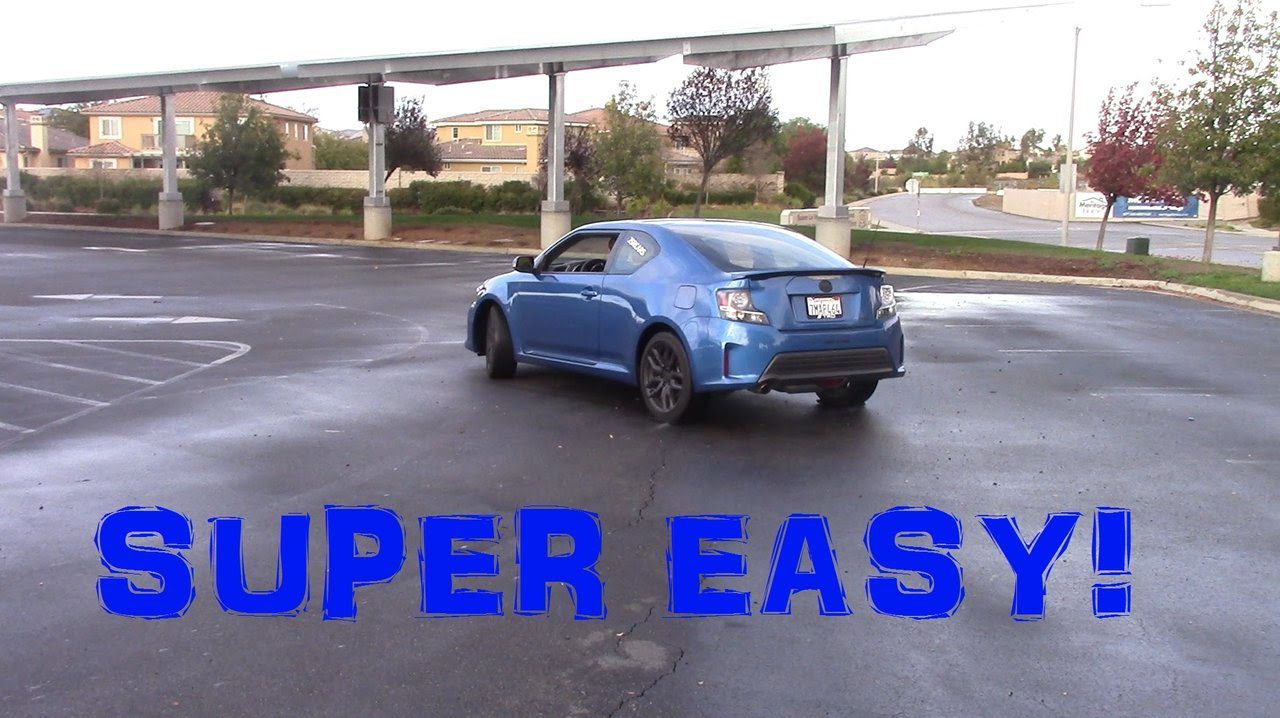
How to Drift a Front-Wheel-Drive Car (3 Real Techniques)
Front-wheel-drive cars can drift — but not through RWD-style power-over oversteer; FWD relies on lift-off oversteer, the handbrake turn, or a precisely timed clutch kick to break rear-wheel traction instead. Skip the front limited-slip differential and tire setup, and most FWD hatchbacks just understeer wide instead of sliding. This guide covers all three techniques step by step, the car mods that matter, and where it’s actually legal to practice.
Quick Answer
Start with lift-off oversteer or the handbrake turn, not the clutch kick — clutch kicking is the least forgiving technique in a front-wheel-drive car and easiest to stall or spin. Practice in an empty lot at low speed before trying to link corners together.
What Makes FWD Drifting Different From RWD?
Understeer is a front-wheel-drive car’s natural tendency to push wide through a corner instead of rotating, and it’s the reason FWD drifting has a reputation for being harder than RWD. A front-engine, front-wheel-drive car sends all of its power to the same wheels that steer it. Push the throttle hard mid-corner in a rear-wheel-drive car and the rear end steps out; do the same in an FWD car and the front tires just lose grip and wash forward.
That’s why every real FWD drift technique focuses on the same goal: reduce grip at the rear wheels on purpose, since the front wheels can’t oversteer the car by themselves. The rear wheels on an FWD car carry no engine power at all, so a technique has to unweight them (lift-off oversteer), lock them briefly (the handbrake turn), or shock the front wheels into breaking traction first (the clutch kick) to get the back end sliding.
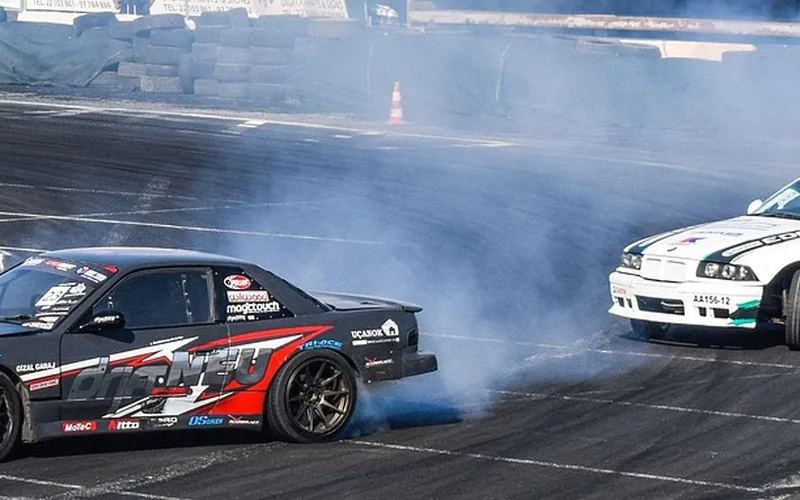
3 Real Techniques to Drift a Front-Wheel-Drive Car
These three techniques cover almost every way drivers actually get an FWD car sliding. Start with the first two — they’re more forgiving — before attempting the clutch kick.
1. Lift-Off Oversteer (Start Here)
Lift-off oversteer is an FWD drift technique that shifts weight off the rear tires by suddenly releasing the throttle mid-corner. The abrupt weight transfer to the front wheels lightens the rear axle just enough to reduce its grip and let the back end step out. It works best in fast, sweeping corners where the car is already carrying real momentum — not tight, slow turns where there isn’t enough weight to transfer.
To try it: enter a sweeping corner at speed with light, steady throttle, then lift off the gas completely as you turn in. As the rear starts to rotate, catch the slide with opposite steering (counter-steer) and reapply light throttle to hold it rather than let it snap back straight.
2. The Handbrake Turn (E-Brake Drift)
The handbrake turn is the most common way drivers start an FWD drift on purpose, because it works at low speed and doesn’t depend on carrying momentum through a sweeper. A short, sharp pull on the handbrake locks the unpowered rear wheels, which breaks their traction instantly and lets the back of the car rotate around the front axle.
- Find an open, legal space.: Use an empty parking lot with permission, a skid pad, or an organized drift/track event — never a public road.
- Build entry speed in second gear.: Approach the corner at roughly 15–25 mph with steady, light throttle so the car is settled, not accelerating hard.
- Turn in, then pull the handbrake.: Turn the wheel toward the corner and pull the handbrake sharply for about half a second to lock the rear wheels.
- Release the handbrake and add throttle.: Let go of the handbrake as the rear starts to slide, then apply light, steady throttle so the front wheels keep pulling the car through the turn.
- Counter-steer into the slide.: Turn the steering wheel toward the direction the rear of the car is sliding to hold the drift and keep it from spinning out.
- Ease off and straighten out.: Reduce throttle and straighten the wheel as the car completes the turn to bring it back under normal grip.
Best Drift Handbrake Pick
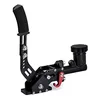
PQY Racing Hydraulic Drift Handbrake
A hydraulic e-brake gives a sharper, more consistent rear lockup than a stock cable handbrake, which makes the handbrake turn easier to repeat reliably.
- Best for: drivers upgrading a dedicated drift or track car’s handbrake
- Why we picked it: hydraulic lock-up is more consistent than a stock cable e-brake for repeated handbrake turns
- Main drawback: requires plumbing a separate brake line and reservoir — not a bolt-in swap
Compare more drift safety gear
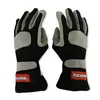 Option 1 RaceQuip SFI 3.3/1 Driving Gloves
|
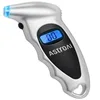 Option 2 AstroAI Digital Tire Pressure Gauge
|
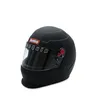 Option 3 RaceQuip PRO25 Snell SA2025 Helmet
|
As an Amazon Associate we earn from qualifying purchases.
3. The Clutch Kick (Advanced)
Clutch kicking works differently in an FWD car than it does in RWD. In a rear-wheel-drive car, a clutch kick sends a shock of power straight to the drive wheels to break the rear loose. In an FWD car, that same shock goes to the front wheels instead — so a clutch kick has to be paired with steering input and an already-loaded chassis (mid-corner, already turning) to unsettle the rear indirectly, rather than break traction where the power actually goes.
To try it: with the clutch already in and revs held around 3,000–4,000 RPM, turn into the corner and release the clutch in one quick motion while keeping the throttle steady. It’s the least forgiving of the three techniques — too aggressive and the car just spins or stalls — so save it for after lift-off oversteer and the handbrake turn feel natural.
Is FWD Drifting “Real” Drifting? The Debate, Explained
Most of the drift community will say no — not by the traditional definition. Competition-level drifting judges a sustained slide, held with throttle, through an entire corner or sequence of corners. An FWD car can’t do that the same way an RWD car can, because the moment real throttle goes down, the front wheels want to pull the car straight again instead of holding the slide.
What FWD cars can do is real, just different: short, controlled slides using lift-off oversteer, the handbrake, or a clutch kick to rotate the car through a single corner. It’s closer to rally-style pendulum turns than to the long, smoky RWD drifts most people picture — which is exactly why front-wheel-drive drivers built their own scene instead of trying to out-drift RWD cars at their own game.
How to Hold the Slide With Counter-Steering
Counter-steering is what turns a brief slide into a controlled drift instead of a spin. As soon as the rear of the car starts to rotate, turn the steering wheel in the same direction the rear is sliding — not the direction you’re trying to go. This keeps the front wheels pointed where the car is actually heading and stops the rotation from running away.
Timing matters more than speed of input. Counter-steer too early and the drift never fully starts; too late and the car spins out past the point of recovery. Most beginners undercorrect at first — it’s a bigger, faster steering input than it feels like it should be from inside the car.
Setting Up Your Car for FWD Drifting
A stock, open-differential FWD car will fight every technique above. Adding a front limited-slip differential matters more than any other single change: without one, an open diff just sends power to whichever front wheel has less grip once the car starts sliding, which kills momentum instead of sustaining it. A 2-way clutch-type LSD gives the most predictable lock-up for a dedicated drift car; a Torsen (helical) LSD is the lower-maintenance choice for a car that’s still driven daily.
| Differential Type | How It Locks | Best For |
|---|---|---|
| 2-way clutch-type LSD | Locks under both acceleration and deceleration for predictable lock-up | Dedicated drift or track cars |
| Torsen (helical) LSD | Locks smoothly based on torque difference; no clutch plates to wear out | Cars that also get driven daily |
| Open differential (stock) | Sends power to whichever wheel has less grip — no help while drifting | Not recommended for drifting |
Tires and pressure matter too, and the setup runs backward from what most people expect: drifters typically run stickier tires up front, for steering grip at extreme angles, and a harder compound (or lower pressure) in the rear, so it lets go more easily. Check and rotate your tires more often once you start drifting regularly — the front tires wear noticeably faster under repeated slides. Pair that with a stiffened suspension and slightly more negative camber up front than in the rear, so the front end keeps steering grip while the rear stays willing to slide.
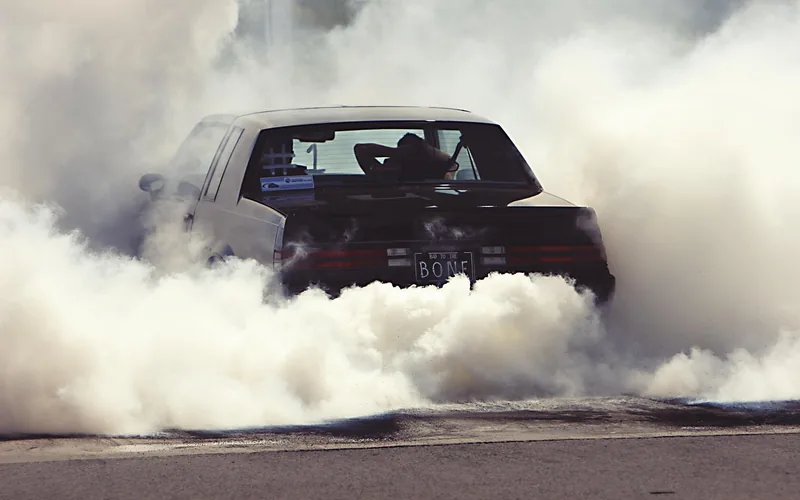
Where to Practice Safely and Legally
- Empty parking lots — only with permission from the property owner, and ideally after hours.
- Skid pads and autocross lots — rented time gives you open space without the legal risk.
- Organized drift days and track events — the safest and most legal option, and usually the only place that allows repeated attempts without police involvement.
- Never public roads — drifting on a public street counts as reckless driving in most U.S. states.
Wear a seatbelt and keep both hands on the wheel every attempt, check the weather and surface condition before you start, and always have an empty run-off area on the outside of the turn in case a slide goes further than planned.
Common Mistakes When Learning to Drift a FWD Car
- Counter-steering too early — stops the drift before the rear has even finished rotating.
- Counter-steering too late — the car overrotates and spins out instead of holding the slide.
- Too much throttle — breaks the front tires loose too, turning a slide into a spin.
- Not enough throttle — the drift dies early and the car just grips back up and stops sliding.
- Skipping the setup — a stock, open-diff FWD car will fight every technique above no matter how good your inputs are.
Notable FWD Drift Cars and Drivers
FWD drifting has its own following, even if it stays outside top-level competition. Front-wheel-drive drivers built dedicated events — often called FF battles — specifically because the major professional series don’t include an FWD class.
📊 No front-wheel-drive car has ever competed for a round win at Japan’s D1 Grand Prix, the sport’s top professional series — but FWD drifters like Genki Hirata’s turbocharged Honda Civic SiR (EK4) still run alongside turbocharged, rear-wheel-drive Toyotas and Nissans in Japan’s grassroots drift scene. Source: Speedhunters, 2015 (FF Dori: The Honda Civic Drifter)
In Formula Drift, driver Keisuke Hatakeyama has campaigned a Falken-sponsored Honda Civic EF hatchback — proof that FWD drift builds can hold their own even in a field dominated by V8-swapped RWD cars, just not by beating them at their own technique.
“FWD drift technique always trades distance for control — the moment you add real throttle to hold a longer slide, most front-wheel-drive chassis want to straighten back out and understeer. Chase short, clean transitions before trying to link corners together.”
Frequently Asked Questions
Can you drift a front-wheel-drive car?
Yes. FWD cars can’t power-slide like RWD, but techniques such as lift-off oversteer, the handbrake turn, and the clutch kick can break traction at the rear wheels and start a controlled slide. It takes more precise timing than RWD drifting does.
Do you need a limited-slip differential to drift a FWD car?
You don’t strictly need one, but it helps a lot. Without a front LSD, an FWD car with an open differential sends power to whichever front wheel has less grip once it starts sliding, which makes the drift harder to sustain and control.
How do you do donuts in a FWD car?
Turn the wheel sharply while pulling the handbrake to break traction at the rear. Keep light, steady throttle on the front wheels to keep the car spinning around that locked point, and feather the wheel to control the radius.
Is FWD drifting bad for your transmission or CV joints?
Repeated clutch kicks and hard weight transfers put extra stress on the clutch, CV joints, and front differential compared to normal driving. It won’t break a healthy drivetrain overnight, but doing it often on a daily-driven car will wear those parts faster than gentle driving would.
Is drifting illegal on public roads?
Yes, in most places. Drifting on public streets counts as reckless driving in most U.S. states and can bring fines, license points, or a reckless-driving charge. Track days, autocross lots, and organized drift events are the legal way to practice.
What’s the easiest FWD car to learn drifting in?
Lightweight hot hatches with a manual transmission are the easiest to learn in — think Honda Civic Si, Mini Cooper S, or Volkswagen GTI. Light weight makes weight transfer more responsive, and a manual gearbox is required for the clutch kick technique.
Wondering whether FWD drifting is actually safe for a daily-driven car, or how it compares to RWD and AWD in more detail? See our companion guide: Can FWD Cars Drift? What Drivers Should Know.
Conclusion
Drifting a front-wheel-drive car takes more precise timing than RWD drifting does, but it’s genuinely possible with lift-off oversteer, the handbrake turn, and the clutch kick. Start with the handbrake turn in an empty, legal space, add a front LSD and the right tire setup once the basics feel natural, and always counter-steer into the slide rather than fighting it. Patience and repetition matter more than horsepower here.
Products related to this article
Sponsored / affiliate links. As an Amazon Associate I earn from qualifying purchases. I may earn additional commission from eligible campaigns.