How Often Does a Car Require Servicing? Mileage Guide
Most cars should be serviced about every year or around 10,000 to 12,000 miles, whichever comes first, but higher-mileage, older, taxi, short-trip, hybrid, and EV owners often need a shorter or different schedule. Miss it and you risk missed faults, faster wear, poor fuel economy, warranty disputes, and bigger repair bills. This guide breaks service frequency down by mileage, age, driving pattern and powertrain type for UK and Ireland drivers.
Quick Answer


Start with the maker’s schedule in the owner’s manual or service book. That schedule usually gives a time interval and a mileage interval, and you follow whichever comes first. After that, adjust for age, use, and powertrain: hard use can mean earlier servicing, while some newer or low-mileage cars can safely follow a longer model-specific interval.
The cleanest rule is simple. Check the book first, then ask whether the car is doing short trips, city traffic, towing, or long motorway miles. Those patterns change how quickly oil, brakes, tyres, filters, and fluids wear. A fixed “every year” answer is handy, but it does not replace the maker’s guidance.
Say your hatchback covers 14,000 miles a year with daily motorway commuting. It may need servicing by mileage before the calendar runs out. Suppose another car only does 4,000 miles a year on school runs and cold starts; the calendar interval still matters because oil contamination and battery wear do not wait for the odometer.
📊 BMW i3 is listed as condition-based servicing. Source: CO.
Does a car need servicing every year?
Often, yes, but not always for the same reason. A 12-month service is a common general rule, yet it is only a rule of thumb unless the manufacturer says otherwise. If the owner’s manual calls for a shorter mileage-based interval, that comes first. If the car covers very few miles, age and fluid condition still justify annual attention.
Annual servicing becomes too long when the car does high mileage, repeated short trips, heavy towing, or constant stop-start driving. In those cases, oil and filters may need changing every 3,000-6,000 miles, well before a year is up. At the other end, some low-mileage cars can still need yearly checks because fluids age, seals dry out, and batteries dislike inactivity.
The mileage limit matters more than the calendar when the car is driven hard and often. A petrol or diesel that reaches the maker’s mileage interval in eight or nine months should be booked then, not stretched to the anniversary date. That keeps you inside the schedule and cuts wear.
What is the right service interval for your car type?
The right interval depends on whether the car is new, under warranty, hybrid, electric, older, or used for business or mobility support. New cars can still need servicing from day one of ownership. Hybrids and EVs may follow a different schedule from petrol or diesel cars, and some models use condition-based servicing rather than fixed dates.
New cars and cars under warranty
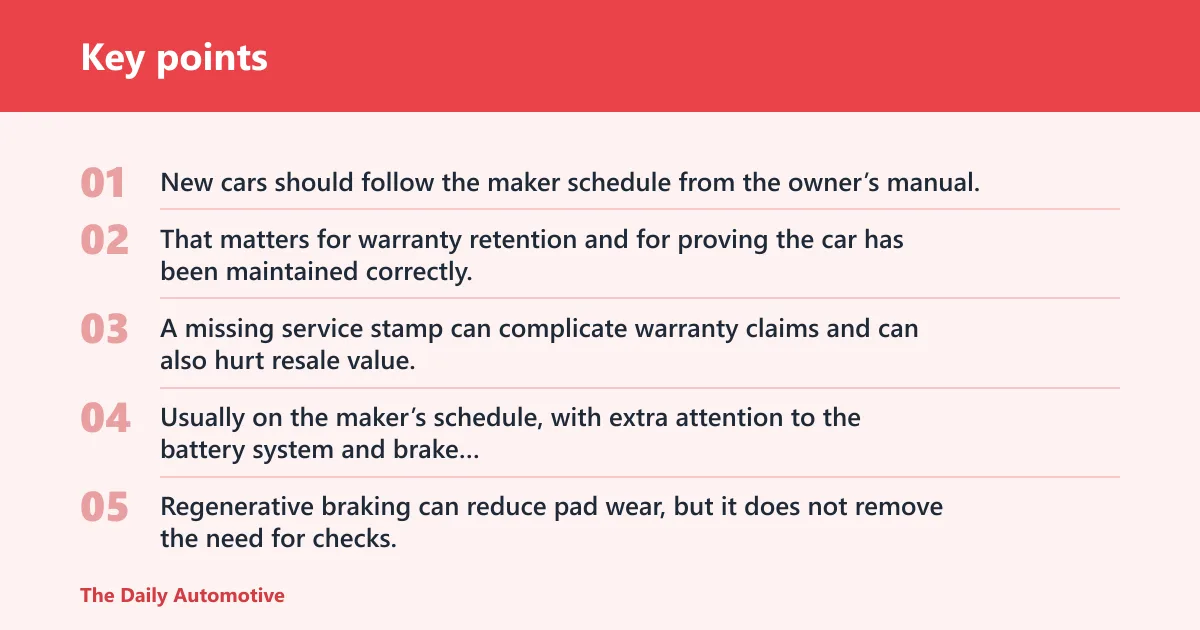
New cars should follow the maker schedule from the owner’s manual, even if they seem too new to need attention. That matters for warranty retention and for proving the car has been maintained correctly. A missing service stamp can complicate warranty claims and can also hurt resale value.
Hybrids and EVs
How often does a hybrid car need servicing? Usually on the maker’s schedule, with extra attention to the battery system and brake wear. Regenerative braking can reduce pad wear, but it does not remove the need for checks. Electric car servicing is often still yearly under general guidance, though some brands use condition-based servicing instead.
For EVs, battery inspection still matters, and brake fluid in EVs should be changed every two years or so. Some electric cars can be serviced to a tight schedule, while others need more time if faults are found. A Tesla Model 3 service interval cited is every 25,000 miles or every 2 years, while a Nissan Leaf service interval cited is every 18,000 miles or every year. BMW i3 is listed as condition-based servicing.
Older cars and high-mileage cars
Older cars and high-mileage cars often benefit from more frequent interim checks between full services. Wear builds as mileage rises, and the risk of tired oil, clogged filters, brake wear, and fluid loss rises with age. If the car is doing more than the factory’s typical annual distance, service by mileage rather than by habit.
Motability cars and lease cars
How often does a Motability car need servicing? Follow the maker’s schedule first, then the lease or Motability paperwork. These cars are usually expected to remain within warranty and to have a clear service record. That makes on-time servicing especially important, because missed maintenance can trigger costs at handback or create warranty disputes.
How driving pattern changes service frequency
Driving pattern can shorten the interval even when mileage looks modest. Short trips, stop-start city use, towing, and cold-weather driving place more stress on oil, brakes, and batteries than steady cruising. Long motorway runs are often easier on the car, but they still count toward the mileage limit and service schedule.
Short trips and cold starts
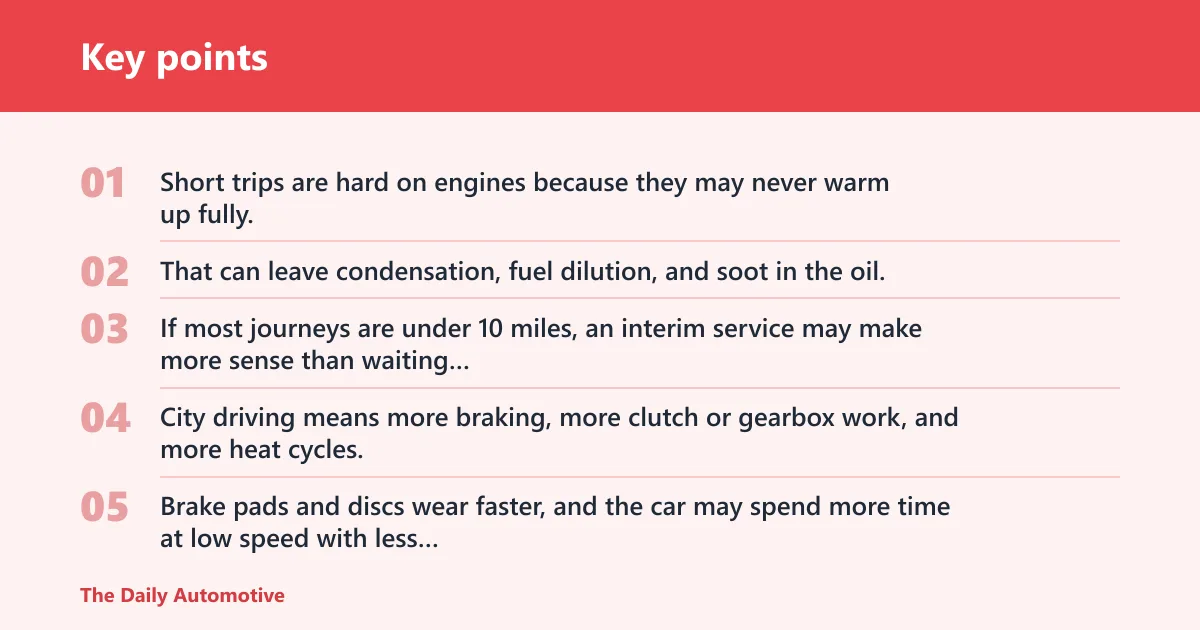
Short trips are hard on engines because they may never warm up fully. That can leave condensation, fuel dilution, and soot in the oil. If most journeys are under 10 miles, an interim service may make more sense than waiting for a full annual visit.
City driving and stop-start use
City driving means more braking, more clutch or gearbox work, and more heat cycles. Brake pads and discs wear faster, and the car may spend more time at low speed with less clean airflow through cooling systems. This is one of the clearest cases for earlier servicing.
Motorway mileage and long-distance use
Motorway mileage is usually gentler on brakes and can be easier on the drivetrain, but it still uses oil life, tyres, and filters. A car doing 20,000 miles a year on the motorway should not wait for a calendar reminder if it reaches the mileage limit first.
Towing, heavy loads, and harsh weather
Towing and heavy loads increase strain on brakes, fluids, suspension, and cooling systems. Harsh weather adds more corrosion risk and can make tyre and battery checks more important. If the car regularly tows a caravan or trailer, or runs in deep winter salt, shorter intervals are sensible.
What is an interim, full, or major service?
An interim service is more frequent than a full service and usually suits higher-mileage or older cars. A full service is the standard annual or mileage-based check in many schedules. A major service is less frequent and goes deeper, replacing high-wear parts and more fluids as the car reaches specific ages or mileages.
Interim service
An interim service usually focuses on oil and filter changes, basic safety checks, and a quick look over wear items. It is often used for cars that cover more miles than average or are showing signs of heavier use. If the car is driven hard, interim servicing can help protect the engine between larger visits.
Full service
A full service commonly sits around 12,000 miles or 12 months in many schedules, and it can take about 3-4 hours. It may include up to 60-80 checks. Expect inspection of brakes, tyres, suspension, steering, belts, fluids, lights, and other service items that reveal wear before a failure develops.
Major service
A major service is less frequent than a full service and usually includes deeper component replacement. That can mean timing belts, major brake components, and key fluids. Timing belts and major brake components may be replaced every 60,000 miles, depending on the model and the maker’s schedule.
Use this servicing decision matrix

Use this one-page rule to choose a cadence without guessing. Start with the handbook, then move to a shorter interval if the car is older, covers more miles, or lives a hard-working life. When in doubt, follow the tighter interval and book earlier if warning signs appear.
| Car type / use | Annual mileage | Driving pattern | Suggested cadence | When to move sooner |
|---|---|---|---|---|
| New car under warranty | Up to 10,000 | Mixed use | Follow the owner’s manual or service book exactly | Short trips, warning lights, or a mileage limit before 12 months |
| Petrol or diesel, low mileage | Under 6,000 | Mostly local trips | Annual full service; consider interim if trips are short and cold | Oil contamination, rough running, weak battery, brake noise |
| Petrol or diesel, high mileage | 12,000 to 25,000 | Motorway or mixed business use | Service by mileage first; add interim checks between full services | Hit the mileage limit early, tow regularly, or carry heavy loads |
| Hybrid | Any | Stop-start, urban, mixed | Follow the model schedule; include battery and brake checks | Frequent city driving, braking changes, hybrid warnings |
| EV | Any | Any | Follow the maker’s schedule; many still use yearly general guidance | Brake fluid due, battery warning, charging fault, unusual noises |
| Older car | Any | Mixed or harsh use | Shorten the interval; interim plus full service may suit | Leaks, worn suspension, stale fluids, poor starting |
When to book earlier than planned
Book earlier if you see warning lights, noisy brakes, fluid loss, rough running, or any obvious change in behaviour. Those signs mean the car needs attention, not a delay. A common first-timer mistake is waiting for the next planned service when the brakes are already squealing or the oil level has fallen.
- Check the owner’s manual or service book.
- Find the time interval and mileage interval.
- Use whichever comes first.
- Shorten the interval if the car does short trips, towing, city driving, or heavy loads.
- Move to interim servicing if the car is older or high mileage.
- Book immediately if warning lights, leaks, or brake noise appear.
How does servicing relate to MOT, warranty, and resale?
Servicing and MOT or NCT roadworthiness testing are different jobs. An MOT is an annual inspection for vehicles at least 3 years old, and it is safety-focused. MOT test centers do not offer repairs, so a pass only means the car met the test standard on that day. Servicing is the maintenance that helps keep it there.
Why does service history matter? A complete service history book shows what has been done, when it was done, and what should come next. That supports used-car due diligence, helps plan future intervals, and can make a car easier to sell. Missing or late servicing tends to weaken confidence, even if the car still drives well.
Overdue servicing can raise repair bills because small issues grow. Old oil can leave deposits, tired fluid can reduce braking performance, and skipped checks can let wear spread to more expensive parts. Staying on schedule usually costs less than ignoring a warning and paying for the fallout later.
Frequently asked questions
how often does a car need servicing
Most cars should be serviced every 12 months or 10,000 to 12,000 miles, whichever comes first, but the owner’s manual is the real starting point. Mileage, age, and usage can shorten that interval, especially for short-trip cars, high-mileage cars, towing, or stop-start city driving.
how often does a new car need servicing
A new car still needs servicing on the maker schedule, even during the warranty period. Many cars follow a 12-month or mileage-based interval, whichever comes first, but some brands set longer or model-specific periods. Keep the service history book complete so warranty and resale are easier to protect.
how often does a hybrid car need servicing
Most hybrids should be serviced on the maker’s schedule, with extra attention to the battery system and brake wear. The interval may differ from a petrol or diesel car, and city-heavy use can shorten it. Hybrid braking systems and electrical checks make regular professional inspection especially worthwhile.
how long does a car service take
A full service can take about 3-4 hours, though a simple interim visit may be quicker and some repairs can push a visit to overnight or longer if faults are found. EV servicing can sometimes be completed within an hour, but that depends on the brand, inspection list, and any issues discovered.
how many times does a car need service
There is no universal number. A car may need several interim services between full services if it is high mileage or hard used, while major services happen less often and include deeper replacement work. The service history book and the owner’s manual tell you how many visits the model needs over time.
Products related to this article
Sponsored / affiliate links. As an Amazon Associate I earn from qualifying purchases. I may earn additional commission from eligible campaigns.