How Old Do You Have to Be for Car Insurance? Age Rules for Every Driver
In most states, you need to be 18 years old to buy a car insurance policy in your own name — but you can be insured years before that. A 16-year-old with a learner’s permit or license can be added to a parent’s or guardian’s policy, and in some states an adult can co-sign a separate policy for a minor. The “18 to insure” rule and the “16 to drive” reality are two different things, and mixing them up is where most of the confusion about age and car insurance comes from.
Age requirements also shift depending on what kind of driver you are — a first-time teen driver, a young adult buying their first standalone policy, a college student chasing a good-grades discount, or a senior driver whose rates are starting to climb again. Here’s how the age rules actually break down, state by state and driver type by driver type.

The Real Minimum Age: 18 to Buy Your Own Policy, 16 to Be Insured
Car insurance is a legally binding contract, and in nearly every state you have to have reached the legal age of majority to sign one. That’s 18 in 47 states and Washington, D.C. Three states set the bar higher: Alabama and Nebraska require you to be 19 to buy a policy on your own, and Mississippi requires 21. In those states, even an 18-year-old still needs a parent or guardian listed on the policy.
None of that stops a 16-year-old from being insured, though. Being insured and owning the policy are different things. A minor can drive perfectly legally covered by their parent’s or guardian’s policy, and most insurers actually require this — they won’t let a licensed driver in the household stay unlisted and uninsured. If you want the full breakdown of exactly which states allow which age, and how insurers treat 17-year-olds who want a policy with an adult co-signer, see our complete state-by-state guide to minimum age laws for car insurance.
Age Requirements by Type of Driver
Teen Drivers (16-17)
Once a teen has a permit or license, most states require them to be listed on a policy — usually a parent’s or guardian’s — before they get behind the wheel unsupervised. Insurers treat teen drivers as the highest-risk group on the road, purely because of inexperience, so premiums jump the moment a teen is added. It’s still almost always cheaper to add a teen to an existing family policy than to have them get a separate one, since a standalone policy for a driver with zero history costs significantly more.
Young Adult Drivers (18-25)
Turning 18 opens the door to buying an independent policy, but insurers still price drivers under 25 as high-risk — statistically, this age group has the highest accident rates on the road. The good news is there are real ways to bring the cost down: a good-student discount, a completed driver’s-education course, a clean driving record over time, and bundling auto insurance with renter’s or home insurance can all meaningfully cut the premium.
Senior Drivers (65 And Older)
There’s no upper age limit on buying car insurance — the standard 18-and-up minimum applies for life. What changes is the pricing. Some insurers start adjusting rates upward again around 65-70, since reaction time and vision can decline with age, while others reward a long claims-free history with a lower rate. Many carriers offer a discount for completing a state-approved defensive-driving or mature-driver refresher course, which is often the single easiest way for a senior driver to lower their premium.

Student Drivers And Good-Grades Discounts
High school and full-time college students under a certain age (usually 25) can often qualify for a “good student discount” just for keeping their grades up — most insurers set the bar around a 3.0 GPA or B average. It typically requires proof, like a report card or transcript, sent to the insurance agent once a year. Combined with a driver’s-education certificate, this is one of the few discounts a young driver can earn just by doing well in school.
Provisional And Learner’s Permit Coverage
Drivers on a learner’s permit or a provisional/restricted license are still, technically, insured drivers — most state DMVs and insurers require them to be listed on a policy even while they can only drive supervised. Because they have zero solo driving history, this stage carries the highest per-mile risk in the eyes of an insurer, so rates for provisional drivers tend to be the steepest of any age bracket. Moving to a full, unrestricted license and building a clean record is what starts to bring the cost back down.
Adding A Young Driver To An Existing Policy
For most families, adding a teen or young adult to an existing policy is the simplest and cheapest path — insurers commonly price it around a quarter cheaper than putting that same driver on a brand-new standalone policy, since the household’s existing driving history and multi-car discount both carry over. It also means one bill, one renewal date, and one point of contact instead of managing two separate policies.
The tradeoff is that adding a young, inexperienced driver will raise the household’s overall premium, sometimes substantially. Most families find that the combined cost still beats a standalone teen policy by a wide margin, and the young driver benefits from the parent’s longer claims history in the meantime. If you’re setting up coverage for the first time rather than adding to an existing plan, our guide to getting car insurance online walks through that process step by step.
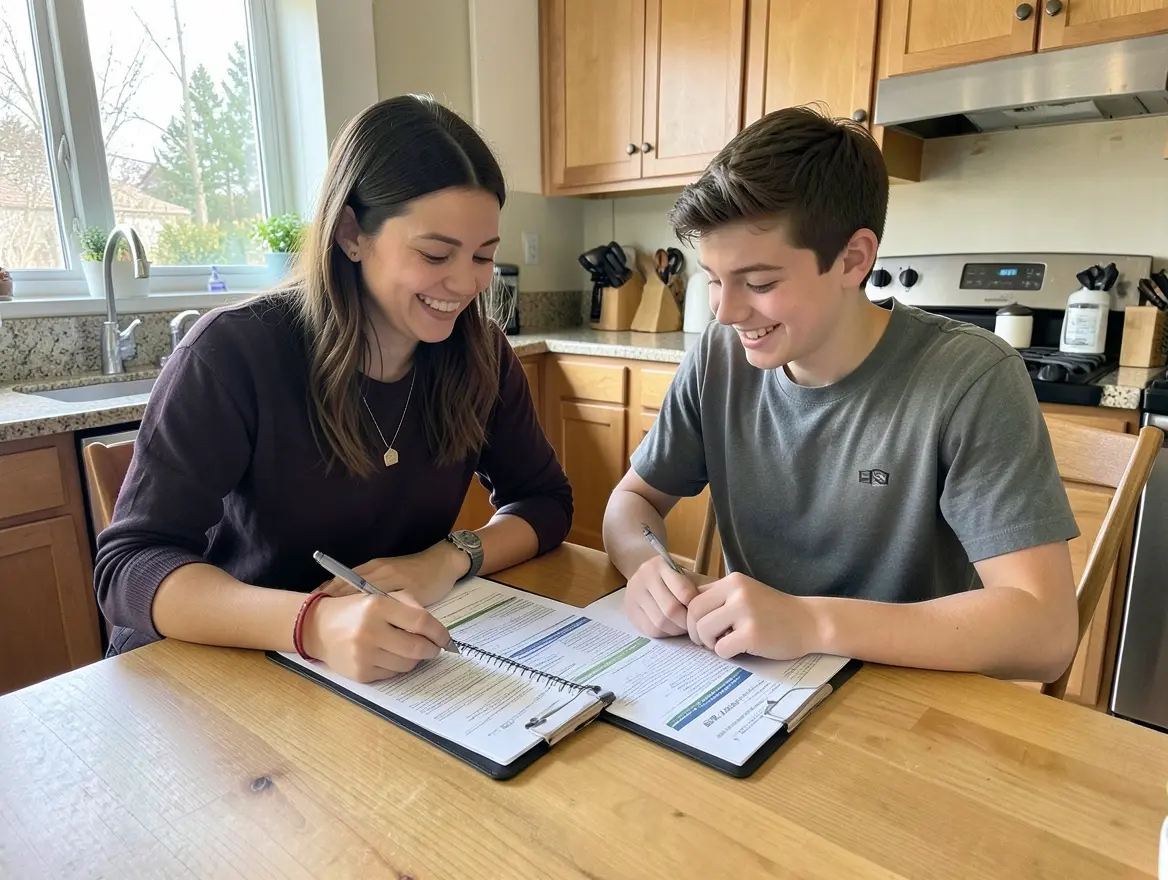
How To Lower Insurance Costs For Young Drivers
- Stay on a parent’s or guardian’s policy for as long as it makes financial sense — it’s almost always cheaper than a standalone policy for a first-time driver.
- Ask about the good-student discount if the driver is a high school or college student with roughly a B average or better.
- Complete a driver’s-education or defensive-driving course — many insurers give a direct discount for a completion certificate.
- Choose the car carefully. A modest, safety-rated sedan or small SUV insures far more cheaply than a sports car or a high-horsepower model — see our breakdown of what makes a car like the Mustang expensive to insure as a first car for an example of how much a vehicle choice alone can move the price.
- Bundle policies. Combining auto insurance with a home or renter’s policy through the same company frequently unlocks a multi-policy discount.
- Shop around every renewal. Rates for young and senior drivers alike can vary a lot between insurers for the exact same coverage, so comparing quotes annually is worth the time.
Frequently Asked Questions
Can A 17-Year-Old Get Their Own Car Insurance?
Not fully on their own in most states — a minor generally cannot sign a binding insurance contract. Some insurers will write a policy for a 17-year-old only if a parent or legal guardian co-signs it. In the large majority of states, the more common path is simply adding the 17-year-old to a parent’s existing policy rather than opening a separate one.
What Is The Cheapest Car To Insure For A Teen Driver?
Rather than one specific model, it’s a category: modest, safety-rated sedans and small SUVs with moderate horsepower consistently insure the cheapest for teens — think a Subaru Forester or Outback, a Honda Civic or CR-V, a Mazda3 or CX-5, or a Toyota Corolla. Sports cars, high-horsepower models, and luxury vehicles cost noticeably more to insure at any age, but especially for an inexperienced driver.
How Much Is Insurance For A New Driver Under 18?
It varies widely by state, insurer, and the vehicle involved, but a new teen driver typically adds a significant amount to a family’s existing premium — often somewhere in the range of a couple thousand dollars a year in additional cost when added to a parent’s policy, and considerably more for a standalone teen policy. Adding a teen to an existing family plan is generally around 24% cheaper than insuring them separately.
Can I Get Insurance On My Own At 16?
Not as a fully independent policyholder — 16-year-olds cannot legally sign their own insurance contract in any U.S. state. They can absolutely be insured at 16, though, by being added as a listed driver on a parent’s or guardian’s existing policy, which is how the vast majority of 16-year-old drivers are covered.
Do All States Use The Same Minimum Age For Buying A Policy?
No. Eighteen is the standard age of majority used in 47 states and Washington, D.C. Alabama and Nebraska set it at 19, and Mississippi sets it at 21 — in those three states, even an 18-year-old still needs a parent or guardian involved on the policy.
Is It Cheaper To Add A Teen To A Parent’s Policy Or Get Them Their Own?
Adding a teen to an existing family policy is almost always cheaper than a standalone policy, since the household’s driving history, multi-car discount, and bundling discounts carry over. A separate policy for a brand-new driver with no history typically costs the most of any option available.
The Bottom Line
There isn’t one single age that answers “how old do you have to be for car insurance” — it depends on whether you’re asking about being insured or owning the policy. Sixteen-year-olds can be covered the day they get their license, as long as they’re listed on a parent’s or guardian’s policy. Buying a policy in your own name takes 18 in almost every state, 19 in Alabama and Nebraska, and 21 in Mississippi. Whatever stage you’re at, the fastest way to lower the cost is the same: stay on a family policy as long as it makes sense, ask about every discount you qualify for, and compare quotes before locking one in.
Products related to this article
Sponsored / affiliate links. As an Amazon Associate I earn from qualifying purchases. I may earn additional commission from eligible campaigns.