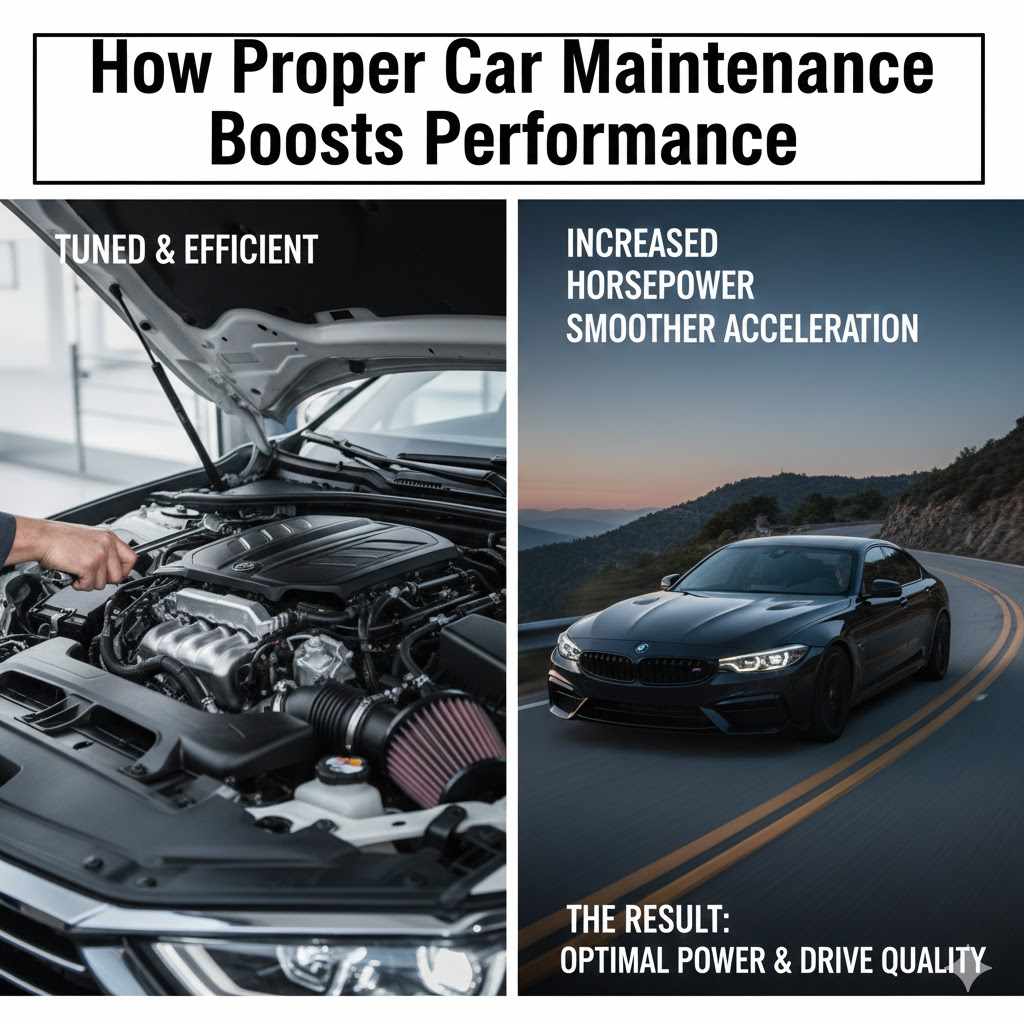
How Proper Car Maintenance Boosts Performance
It’s easy to wonder How Proper Car Maintenance Boosts Performance when you’re just starting. You hear about oil changes and tire rotations, and it can sound like a lot. But keeping your car happy is simpler than you think!
We’ll break it down step-by-step so you can easily see how taking care of your car makes it run its best. Get ready to learn how easy it is to keep your vehicle in top shape and enjoy a smoother, more powerful ride.
Understanding How Proper Car Maintenance Boosts Performance
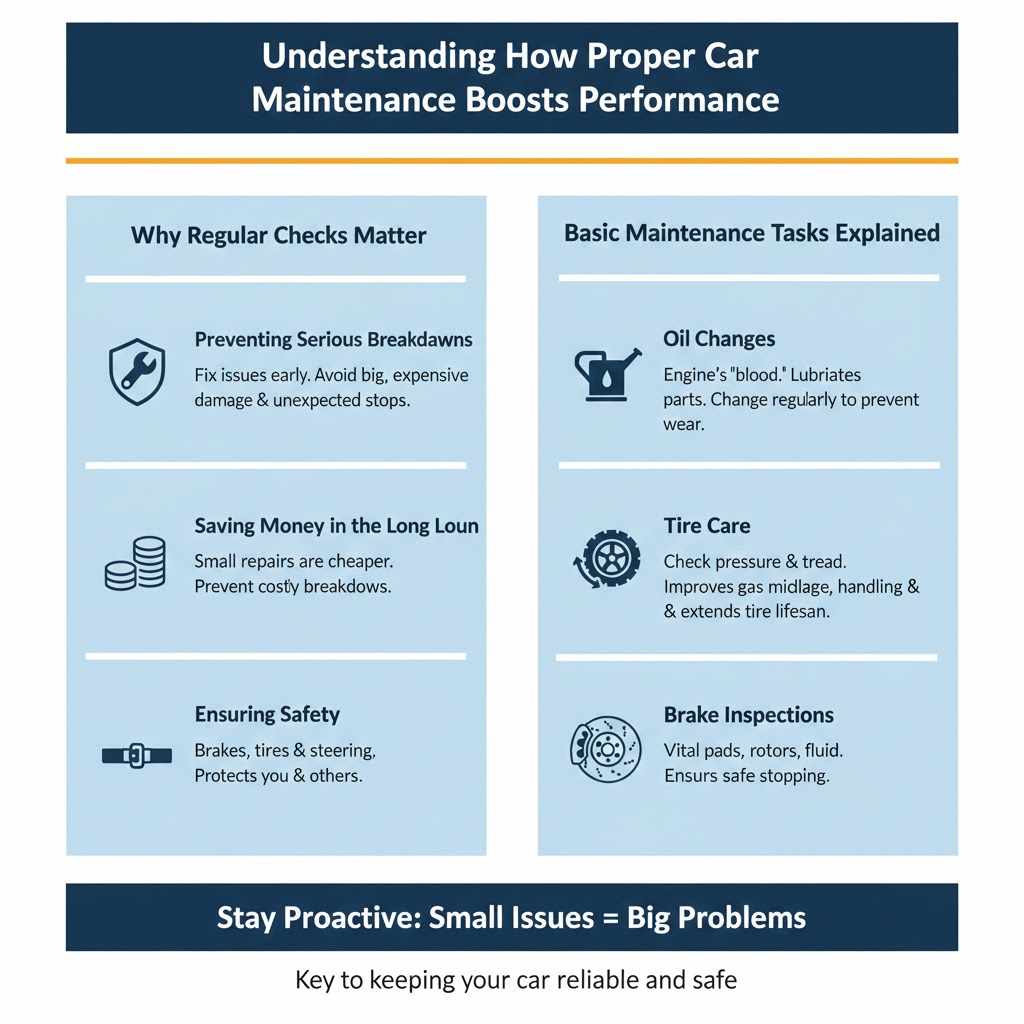
This section looks at the basics of car maintenance and why it’s important for your car’s overall function. We will cover what regular checks mean and how they help your car operate smoothly. It is about making sure small issues do not turn into big problems.
This can help save you money and keep your car on the road for longer.
Why Regular Checks Matter
Regular car checks are like giving your car a health checkup. They help catch potential problems before they become serious. Think of it as preventive care for your vehicle.
- Preventing Serious Breakdowns
When you get regular checks, a mechanic can spot issues like worn brake pads or a leaky hose. Fixing these early stops them from causing bigger, more expensive damage. This can prevent your car from breaking down unexpectedly on the side of the road, which is always a hassle.
- Saving Money in the Long Run
It might seem like maintenance costs money. But it actually saves you money over time. Small repairs are usually much cheaper than fixing major breakdowns.
For example, replacing a worn belt is less costly than repairing engine damage caused by a snapped belt.
- Ensuring Safety
A well-maintained car is a safe car. Things like brakes, tires, and steering are vital for your safety. Regular checks make sure these parts are working correctly.
This protects you, your passengers, and others on the road.
Basic Maintenance Tasks Explained
There are a few key maintenance tasks that every car owner should know about. These are relatively simple yet have a big impact on how your car performs.
Oil Changes
Engine oil is like the blood of your car’s engine. It keeps all the moving parts lubricated so they don’t grind against each other. Over time, oil gets dirty and less effective.
Changing it regularly removes this old, dirty oil and
Tire Care
Your tires are the only part of your car that touches the road. Keeping them in good shape is crucial for safety and performance. This includes checking tire pressure regularly and making sure the tire tread is deep enough.
Properly inflated tires improve gas mileage and make your car handle better. When tires are worn down, they don’t grip the road well, which can be dangerous, especially in bad weather. Rotating your tires also helps them wear evenly, making them last longer.
Brake Inspections
Your brakes are your car’s most important safety feature. They need to work perfectly every time you press the pedal. Mechanics check your brake pads, rotors, and brake fluid.
Worn brake pads can make squealing noises and reduce stopping power. If you notice any changes in how your brakes feel, like a spongy pedal or grinding sounds, get them checked immediately. Regular brake checks ensure you can stop safely when you need to.
How Proper Car Maintenance Boosts Engine Performance
The engine is the heart of your car, and keeping it in top condition is key to its performance. This section explores how simple maintenance tasks directly impact your engine’s power, efficiency, and lifespan. We will look at components that, when cared for, allow your engine to breathe, run smoothly, and deliver its best.
Air Filter Importance
The air filter’s job is to stop dirt, dust, and other small particles from getting into your engine. Engines need a lot of air to burn fuel. A clean air filter lets the engine get all the air it needs.
A dirty or clogged filter restricts airflow. This makes the engine work harder, reduces power, and lowers fuel economy.
- Airflow and Combustion
The engine mixes air and fuel to create the power that moves your car. This process is called combustion. For efficient combustion, the engine needs the right ratio of air to fuel.
If the air filter is dirty, less air can enter the engine. This means the air-fuel mixture is off, leading to less power and incomplete burning of fuel. This can also lead to excess carbon buildup in the engine.
- Impact on Horsepower
When an engine can’t get enough air, it feels choked. This directly leads to a loss of horsepower. You might notice your car feels sluggish, especially when accelerating or going uphill.
Replacing a dirty air filter with a new one can often restore lost power, making your car feel more responsive.
- Fuel Efficiency Gains
A struggling engine due to a dirty air filter burns more fuel to try and compensate. By ensuring good airflow, the engine can operate more efficiently, using less fuel to produce the same amount of power. This translates to better miles per gallon (MPG) and saves you money at the gas station.
Spark Plug Functionality
Spark plugs ignite the air-fuel mixture in the engine’s cylinders, creating the explosion that powers your car. They are small but vital. Worn-out spark plugs can misfire, leading to rough idling, poor acceleration, and reduced fuel efficiency.
Replacing them at recommended intervals ensures a strong spark every time.
- Ignition Timing and Power
Spark plugs create the spark that starts the combustion process. The timing of this spark is critical for optimal engine performance. When spark plugs are in good condition, they produce a strong, consistent spark.
This leads to complete combustion of the fuel, resulting in maximum power and smooth engine operation. Worn plugs can lead to weak sparks or no spark at all, causing engine misfires.
- Reducing Emissions
Complete combustion from healthy spark plugs means less unburned fuel is released into the exhaust. This not only improves performance but also helps reduce harmful emissions. Cars that fail emissions tests often have issues with their spark plugs or ignition system.
- Smooth Idling and Acceleration
When spark plugs are working well, your car will idle smoothly without sputtering. Acceleration will also feel more consistent and powerful. If you notice your car hesitates when you press the gas pedal or shakes while stopped, worn spark plugs could be the cause.
Cooling System Maintenance
The cooling system prevents your engine from overheating. It circulates coolant through the engine block and radiator. Regular checks ensure there are no leaks and that the coolant level is correct.
An overheating engine can suffer severe damage.
- Preventing Engine Damage
An engine’s normal operating temperature is very precise. The cooling system maintains this by removing excess heat. If the system fails, the engine temperature can rise rapidly.
Extreme heat can warp engine parts like the cylinder head and even cause the engine to seize, which is a very costly repair.
- Maintaining Optimal Operating Temperature
Engines are designed to perform best within a specific temperature range. The cooling system keeps the engine within this ideal range, regardless of outside temperature or how hard the engine is working. This ensures consistent performance and efficiency.
- Coolant Flush and Replacement
Over time, coolant can degrade and become less effective at transferring heat. It can also collect rust and debris. A coolant flush involves draining the old coolant and refilling the system with fresh coolant.
This ensures the cooling system can do its job effectively.
How Proper Car Maintenance Boosts Fuel Efficiency
Saving money on gas is a major benefit of good car care. This section will show you exactly how different maintenance tasks contribute to better MPG. We will look at how keeping things clean, properly inflated, and running smoothly helps your car use less fuel for every mile you drive.
Tire Inflation and Rolling Resistance
The air pressure in your tires has a direct impact on how much effort your car needs to move forward. Underinflated tires are squishier. This means they flatten out more on the road, causing more friction.
This increased friction is called rolling resistance.
- Understanding Rolling Resistance
When tires are not properly inflated, they deform more as they roll. This deformation requires the engine to work harder to push the car along. Think of it like trying to push a shopping cart with a flat tire versus one with fully inflated tires; the flat one is much harder to move.
This extra work burns more fuel.
- Benefits of Correct Tire Pressure
Maintaining the correct tire pressure, as recommended by your car manufacturer, significantly reduces rolling resistance. This allows the engine to use less energy to keep the car moving. Studies show that keeping tires properly inflated can improve fuel economy by up to 3%.
This might sound small, but it adds up over many miles.
- Checking Tire Pressure
It’s a good habit to check your tire pressure at least once a month, and before long trips. You can find the recommended tire pressure on a sticker located on the driver’s side doorjamb or in your car’s owner’s manual. Use a reliable tire pressure gauge; they are inexpensive and easy to use.
Clean Fuel Injectors
Fuel injectors spray a fine mist of fuel into the engine’s combustion chambers. Over time, deposits can build up on the injector nozzles. This can disrupt the spray pattern, leading to incomplete fuel atomization and inefficient combustion.
- Fuel Atomization Explained
For fuel to burn efficiently, it needs to be broken down into a very fine mist, like a spray from an aerosol can. This fine mist mixes well with air, allowing for complete and even combustion. If fuel injectors are dirty, they can’t spray fuel properly.
Instead of a fine mist, they might dribble fuel or spray in uneven patterns.
- Impact on Fuel Economy
When fuel is not atomized properly, the engine cannot burn it completely. This means some fuel is wasted, either by being expelled unburned or by burning inefficiently. This directly reduces your car’s miles per gallon.
Keeping fuel injectors clean ensures that the right amount of fuel is sprayed in the right way for optimal burning and better gas mileage.
- Fuel System Cleaners
You can help keep fuel injectors clean by using a quality fuel system cleaner additive in your gas tank periodically. These additives are designed to break down deposits in the fuel system. Some mechanics also offer professional fuel injector cleaning services, which can be more thorough.
Oxygen Sensor Functionality
Oxygen sensors, also known as O2 sensors, measure the amount of unburned oxygen in your exhaust system. This information is sent to the car’s computer, which then adjusts the air-fuel mixture for optimal combustion. A faulty O2 sensor can cause the computer to make the wrong adjustments.
- The Role of the Oxygen Sensor
The engine control unit (ECU) relies on the O2 sensor to know if the combustion process is running rich (too much fuel) or lean (too much air). Based on this feedback, the ECU fine-tunes the amount of fuel injected. This constant adjustment is crucial for both performance and efficiency, as well as for minimizing emissions.
- Consequences of a Bad O2 Sensor
If an O2 sensor fails, it might send incorrect signals or stop sending signals altogether. The ECU, without accurate data, might default to a pre-set “limp mode” setting, often providing a richer fuel mixture than necessary. This wastes fuel and can lead to a significant drop in MPG, sometimes by 10% or more.
It can also cause the check engine light to come on.
- Checking and Replacing
A common symptom of a failing O2 sensor is a noticeable decrease in fuel economy or a rough-running engine. Mechanics can test O2 sensors to see if they are functioning correctly. Replacing a faulty sensor is usually a straightforward repair that can quickly restore your car’s fuel efficiency and smooth operation.
How Proper Car Maintenance Boosts Driving Experience
Beyond just making your car run, maintenance affects how it feels to drive. This section looks at how keeping your vehicle in good shape makes your rides smoother, quieter, and more enjoyable. We’ll explore how well-cared-for components contribute to a better overall driving experience for you and your passengers.
Suspension System Health
The suspension system includes shocks, struts, and springs. It absorbs bumps from the road, keeping your ride smooth and your tires in contact with the ground. A healthy suspension makes your car more comfortable and easier to control.
- Ride Comfort and Smoothness
When your shocks and struts are worn, they can’t effectively absorb road imperfections. This leads to a bumpy and jarring ride. You’ll feel every little crack and bump in the road.
A well-maintained suspension system smooths out these bumps, providing a comfortable ride for everyone in the car. This makes long drives much more pleasant.
- Handling and Control
The suspension system is also critical for your car’s handling. It helps keep the tires planted on the road, especially when cornering or braking. Worn suspension parts can cause your car to lean excessively in turns, feel unstable, or have difficulty maintaining a straight line.
Proper maintenance ensures your car responds predictably to your steering inputs.
- Tire Wear and Alignment
Problems with the suspension can also lead to uneven tire wear. If one part of the suspension is worn or misaligned, it can cause tires to wear down faster on one side. This not only shortens the life of your tires but can also affect the car’s alignment, further impacting handling and fuel efficiency.
Brake System Responsiveness
Your brake system is not just about stopping; it’s about stopping safely and predictably. Well-maintained brakes feel firm and responsive. This gives you confidence every time you need to slow down or stop.
- Brake Pedal Feel
When your brake pads and rotors are in good condition, the brake pedal will feel firm and consistent when you press it. If the pedal feels spongy, goes too far down, or pulsates, it indicates a problem. These issues could be due to low brake fluid, worn pads, or air in the brake lines.
A firm pedal means your brakes are ready to work efficiently.
- Stopping Distance
The primary function of brakes is to stop your car quickly and safely. Worn brake pads or damaged rotors can significantly increase stopping distances. This can be extremely dangerous in emergency situations.
Regular inspections ensure your brakes are always at their best performance level for short, reliable stops.
- Noise Reduction
New brake pads and rotors operate quietly. As they wear down, they can start to make squealing or grinding noises. These sounds are not only annoying but also serve as a warning sign that your brakes need attention.
Keeping your brake system in good repair means a quieter, more pleasant driving experience.
Fluid Levels and Quality
Beyond engine oil, several other fluids are vital for smooth operation. These include transmission fluid, power steering fluid, and brake fluid. Keeping these fluids at the correct levels and ensuring they are clean is essential for component longevity and performance.
- Transmission Fluid
Transmission fluid lubricates the moving parts within the transmission and helps it shift gears smoothly. Over time, this fluid can become dirty and lose its lubricating properties. Dirty transmission fluid can lead to rough shifting, overheating, and premature wear of transmission components, making the car difficult to drive.
Regular fluid checks and changes are key.
- Power Steering Fluid
Power steering fluid helps you turn the steering wheel with ease. If this fluid is low or dirty, you might notice the steering wheel becomes harder to turn, or you might hear whining sounds when you turn. Keeping this fluid topped up and clean ensures effortless steering.
- Brake Fluid
Brake fluid is a hydraulic fluid that transmits the force from your foot on the brake pedal to the brake calipers, making your car stop. If the fluid level is low, or if it becomes contaminated with water, it can reduce braking performance and lead to brake failure. It’s important to keep brake fluid clean and at the correct level.
Real-Life Examples of How Proper Car Maintenance Boosts Performance
Seeing how maintenance works in practice can make its benefits much clearer. Here are a few examples that show the real results of keeping a car well-maintained. These cases highlight how taking care of your vehicle leads to tangible improvements you can feel and benefit from.
Case Study: The Commuter Car
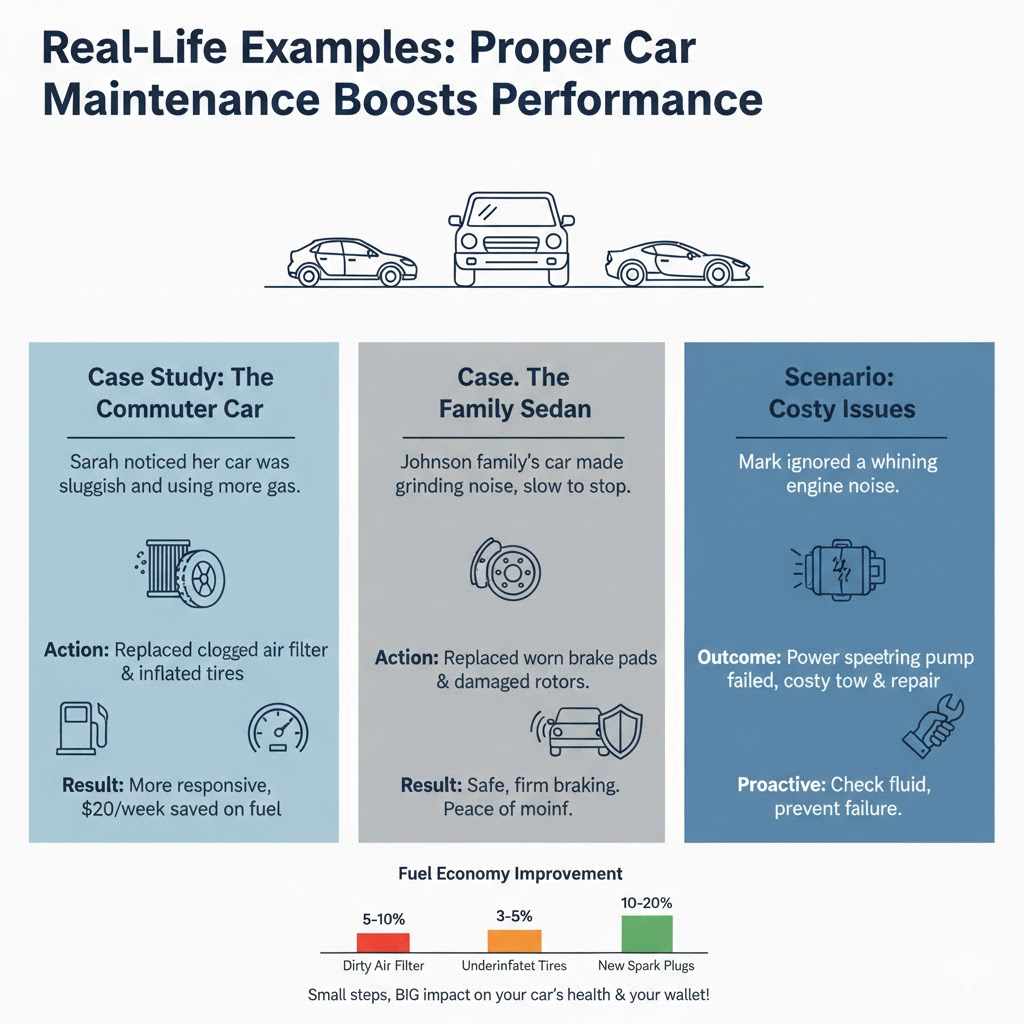
Sarah, a daily commuter, noticed her car felt sluggish and was using more gas than usual. She took it in for a check-up. The mechanic found her air filter was extremely clogged and her tires were underinflated.
After replacing the air filter and inflating the tires to the correct pressure, Sarah reported that her car felt much more responsive, and she saw a noticeable improvement in her gas mileage, saving her about $20 per week on fuel.
Case Study: The Family Sedan
The Johnson family’s car had started making a strange grinding noise when they braked. They also felt the car wasn’t stopping as quickly as it used to. A mechanic discovered their brake pads were worn down to the metal, and the rotors were damaged.
After replacing the brake pads and rotors, the grinding noise stopped, the braking felt firm and immediate, and they felt much safer driving their children around town.
Sample Scenario: Preventing a Roadside Issue
Imagine Mark drives his car regularly but never really thinks about maintenance. One day, his car starts making a loud whining noise from the engine bay. He ignores it for a few days.
The noise gets worse, and then his steering becomes very difficult to turn. He eventually has to get his car towed because the power steering pump failed due to a lack of fluid and accumulated debris. If Mark had checked his power steering fluid level monthly, he would have noticed it was low and could have topped it up, preventing the pump failure and a costly repair bill.
Sample Scenario: Improving Fuel Economy
Lisa bought a used car that got poor gas mileage. She decided to invest in some proactive maintenance. She had the spark plugs
Frequently Asked Questions
Question: How often should I change my car’s oil
Answer: Most car manufacturers recommend changing your oil every 5,000 to 7,500 miles. However, it is best to check your car’s owner’s manual for the specific recommendation for your vehicle. Driving in harsh conditions may require more frequent oil changes.
Question: What is the most important part of car maintenance
Answer: While many parts are important, engine oil changes and ensuring your tires are properly inflated are fundamental. Engine oil keeps the engine running smoothly, and proper tire pressure affects safety, fuel economy, and tire life. Regular checks of brakes and other vital fluids are also critical.
Question: Can poor car maintenance really affect my car’s speed
Answer: Yes, absolutely. A clogged air filter restricts airflow, worn spark plugs can cause misfires, and dirty fuel injectors can lead to poor fuel delivery, all of which can reduce your engine’s power and make your car feel slower and less responsive.
Question: How can I tell if my car needs maintenance
Answer: Listen for unusual noises, pay attention to warning lights on your dashboard (like the check engine light), notice changes in how your car drives (like rough idling or reduced acceleration), and check your fluid levels regularly. Odd smells are also a sign to investigate.
Question: Is it worth paying for regular car maintenance
Answer: Yes, it is very much worth it. Regular maintenance helps prevent major, costly repairs down the line. It also improves your car’s fuel efficiency, safety, and overall driving experience, and can extend the lifespan of your vehicle.
Conclusion
Taking care of your car through proper maintenance directly leads to better performance. Clean filters, good fluids, and well-kept tires ensure your engine runs strong and efficiently. Your car will feel more powerful, use less fuel, and provide a much safer, smoother ride.
Start with simple checks to keep your vehicle in top condition for years to come.