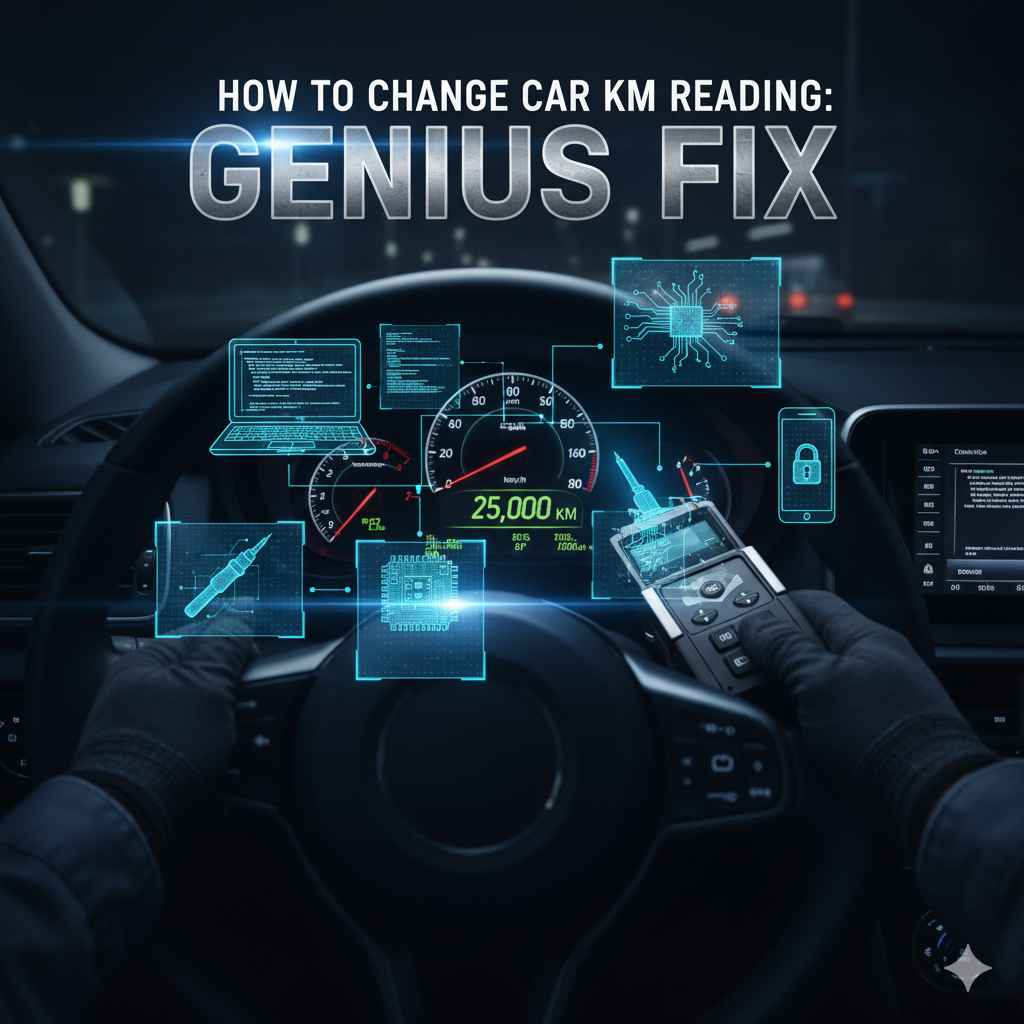
How to Change Car KM Reading: Genius Fix
Changing your car’s KM reading is complex and often illegal. While digital odometers can be altered using specialized tools, this practice is strictly prohibited in most places for ethical and legal reasons. It’s best to focus on maintaining your vehicle and keeping accurate records.
Ever glance at your car’s odometer and wish those numbers were a little… different? Maybe you’re getting ready to sell, or perhaps you just want to feel like you’ve driven less. You’ve likely heard whispers about “changing the KM reading” and wondered if it’s a secret trick. As your automotive guide, Md Meraj, I’m here to shed light on this topic. While the idea might seem like a “genius fix,” the reality is far more complicated and, frankly, not something I can recommend for everyday drivers.
Let’s explore what changing a car’s KM reading actually involves and why it’s not a simple DIY job or a path to reliable car ownership. We’ll break down the technical aspects and, more importantly, the significant legal and ethical implications. Stick with me, and you’ll understand why focusing on genuine vehicle care is always the best way forward.
Understanding Your Car’s KM Reading: What It Is and Why It Matters
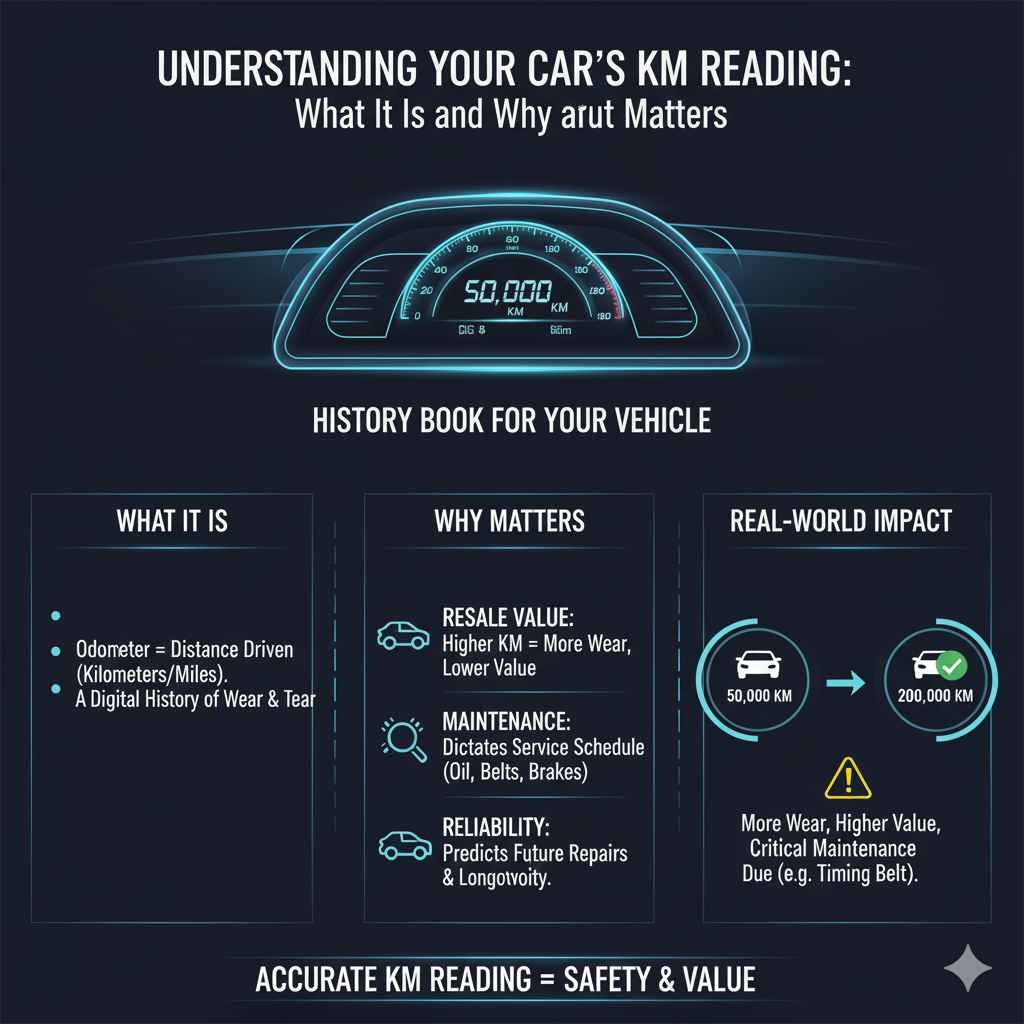
Your car’s odometer, which displays the kilometers (or miles) driven, is a crucial part of its identity. It’s more than just a number; it’s a history book for your vehicle. This reading tells potential buyers how much wear and tear the car has experienced. It also helps mechanics understand the general condition and service needs of your car. Regular maintenance schedules are often based on KM readings, so an accurate odometer is vital for keeping your car running smoothly and safely.
Think of it this way: a car with 50,000 KM has likely seen less action than one with 200,000 KM. This difference directly impacts its value, its reliability, and the likelihood of needing certain repairs soon. For instance, timing belts are often replaced around specific KM intervals. If the odometer is inaccurate, you might miss critical maintenance, leading to serious engine problems.
Why Do People Want to Change Their KM Reading?
There are a few common reasons why someone might consider altering their car’s KM reading. Understanding these motivations can help us see why the topic comes up so often:
- Selling the Vehicle: The most frequent reason is to increase a car’s resale value. A lower KM reading generally translates to a higher price, as it suggests less usage and wear.
- Lease Agreements: Some drivers might exceed their allowed KM mileage on a lease and try to reduce the reading to avoid hefty penalty fees.
- Personal Preference: Less commonly, some owners might simply prefer to see a lower number, though this doesn’t usually have a practical benefit.
While these reasons might seem compelling to some, it’s essential to know that tampering with an odometer is illegal in almost every country and widely considered unethical. It’s a form of deception that can lead to serious legal trouble.
The Technical Side: How Car KM Readings Are Stored
Modern cars don’t use simple mechanical rollers like the old days. Today, your KM reading is stored digitally in your car’s computer systems. This makes it much harder to change, but not impossible for those with specialized knowledge and tools.
Older Cars: Mechanical Odometers
In older vehicles, typically before the 1990s, odometers were mechanical. They consisted of a series of rollers with numbers printed on them. Each roller was connected to the car’s transmission or a sensor that counted rotations. As the car moved, these rollers would click over, displaying the accumulating kilometers.
Changing these was relatively straightforward, often involving removing the dashboard and manually turning the rollers backward or forward to the desired number. While still illegal, it was a simpler process.
Modern Cars: Digital Odometers and ECUs
Today’s cars use electronic odometers. The KM reading is stored in the vehicle’s Electronic Control Unit (ECU), often referred to as the car’s “brain,” or on a dedicated chip on the instrument cluster itself. Sensors in the transmission or wheels send rotation data to the ECU, which then calculates and records the total distance driven.
Because the data is digital and often protected by the car’s computer systems, altering it requires more than just a screwdriver. It involves specialized electronic tools, software, and a deep understanding of automotive electronics.
The “Genius Fix” Myth: Why Altering KM Readings Isn’t Simple or Smart
The idea of a “genius fix” to change your KM reading often conjures images of a simple hack. However, the reality is that altering modern digital odometers is:
- Technically Complex: It requires specialized equipment and programming knowledge. You can’t just plug in a USB drive and press a button.
- Risky: Improperly altering the reading can damage your car’s electronics, leading to costly repairs or even rendering the car inoperable.
- Illegal: This is the most critical point. Tampering with an odometer is a crime in most jurisdictions.
Tools and Techniques Used (For Educational Purposes Only)
To help you understand why this isn’t a DIY job and to highlight the complexity, here’s a general overview of the methods sometimes used, strictly for informational purposes and to deter tampering:
- Dashboard Disassembly: Like with older cars, the instrument cluster needs to be accessed. This involves carefully removing dashboard panels, which can easily be damaged if you don’t know what you’re doing.
- Odometer Programming Tools: These are sophisticated electronic devices that can connect to your car’s OBD-II port (the diagnostic port found in most cars) or directly to the instrument cluster’s circuit board. These tools allow technicians to read the existing KM data and write new data to the memory chip. Some common tools include mileage rollback devices or digital odometer correction tools. Reputable sources for automotive diagnostic equipment often carry these, but their use for mileage alteration is illegal.
- Software and Programming: Specialized software is used with these tools to interpret the car’s data format and rewrite it. Different car brands and models use different systems, so the process can vary significantly. For example, altering a Ford might require different software and steps than altering a Toyota.
- Chip Modification: In some cases, the technicians may need to desolder the EEPROM chip (where the mileage is stored) from the instrument cluster, read its contents using a chip reader, modify the data on a computer, and then resolder the chip back onto the board. This requires advanced soldering skills and electronic knowledge.
Important Note: This process is not like changing a battery or replacing a light bulb. It involves delicate electronics and carries a high risk of permanent damage to your car’s computer systems if performed incorrectly. Furthermore, performing these actions with the intent to deceive is illegal.
The Dangers and Legal Ramifications of Odometer Tampering
Let’s be very clear: changing your car’s KM reading is not just frowned upon; it’s a serious offense with significant consequences.
Legal Consequences
In most countries, including the United States, Canada, the UK, and Australia, altering an odometer is illegal. Laws vary, but penalties can include:
- Heavy Fines: You could face substantial financial penalties.
- Imprisonment: In some cases, odometer tampering can lead to jail time.
- Civil Lawsuits: Buyers who discover their vehicle’s KM has been tampered with can sue for damages.
- Invalidation of Vehicle Title: The vehicle’s title may be branded as “tampered,” severely reducing its legal value and making it difficult to sell in the future.
For example, in the United States, the National Highway Traffic Safety Administration (NHTSA) enforces laws against odometer fraud. Similar bodies in other countries have equivalent stringent regulations.
Ethical Implications
Beyond the law, and something I deeply believe in as a guide, is honesty. Tampering with your car’s KM reading is fundamentally dishonest. It misrepresents the vehicle’s condition to potential buyers, tricking them into believing they are purchasing something more valuable or less used than it actually is. This erodes trust in the automotive market and can lead to buyers making poor financial decisions, purchasing cars that are closer to needing major repairs than they were led to believe.
Technical Risks to Your Vehicle
As mentioned, attempting this process without professional expertise and the right tools can easily damage your car’s sensitive electronic systems. This could lead to:
- Malfunctioning dashboard lights and indicators.
- Errors in engine management systems.
- Problems with anti-lock braking systems (ABS) or airbags, which rely on accurate sensor data.
- Complete failure of the instrument cluster.
Repairing these issues can be incredibly expensive, often costing far more than any perceived benefit of altering the KM reading.
What If Your KM Reading Is Incorrect for Legitimate Reasons?
There are rare situations where a KM reading might become incorrect without malicious intent. For instance, a faulty odometer might have recorded incorrect mileage, or a mechanic might have had to replace the instrument cluster. In such cases, there are legal and proper ways to address it:
Vehicle Title Branding
In many regions, if an odometer is found to be inaccurate, the vehicle’s title will be branded with a specific notation. Common brands include “Not Actual Mileage” (NAM) or “Altered Mileage.” This is a legal declaration that the mileage displayed on the odometer may not be the true total distance the vehicle has traveled. While this might seem negative, it’s an honest way to represent the vehicle’s history according to the law.
Maintaining Records
The best way to handle situations where your car’s mileage history is unclear is to maintain meticulous records. This includes:
- All service and repair invoices, which usually include the KM reading at the time of service.
- Inspection reports.
- Any documentation from previous owners.
These records can help establish a more accurate history of your vehicle’s mileage, even if the odometer itself has an issue.
Professional Cluster Replacement and Recalibration
If your instrument cluster fails and needs to be replaced, a reputable mechanic or dealership can usually transfer the correct mileage from the old cluster’s memory to the new one, or reset the new cluster to match the vehicle’s actual mileage recorded in other ECUs. Some jurisdictions have specific procedures for this, which might involve official documentation or a specialized shop performing the calibration. This ensures accuracy and legal compliance.
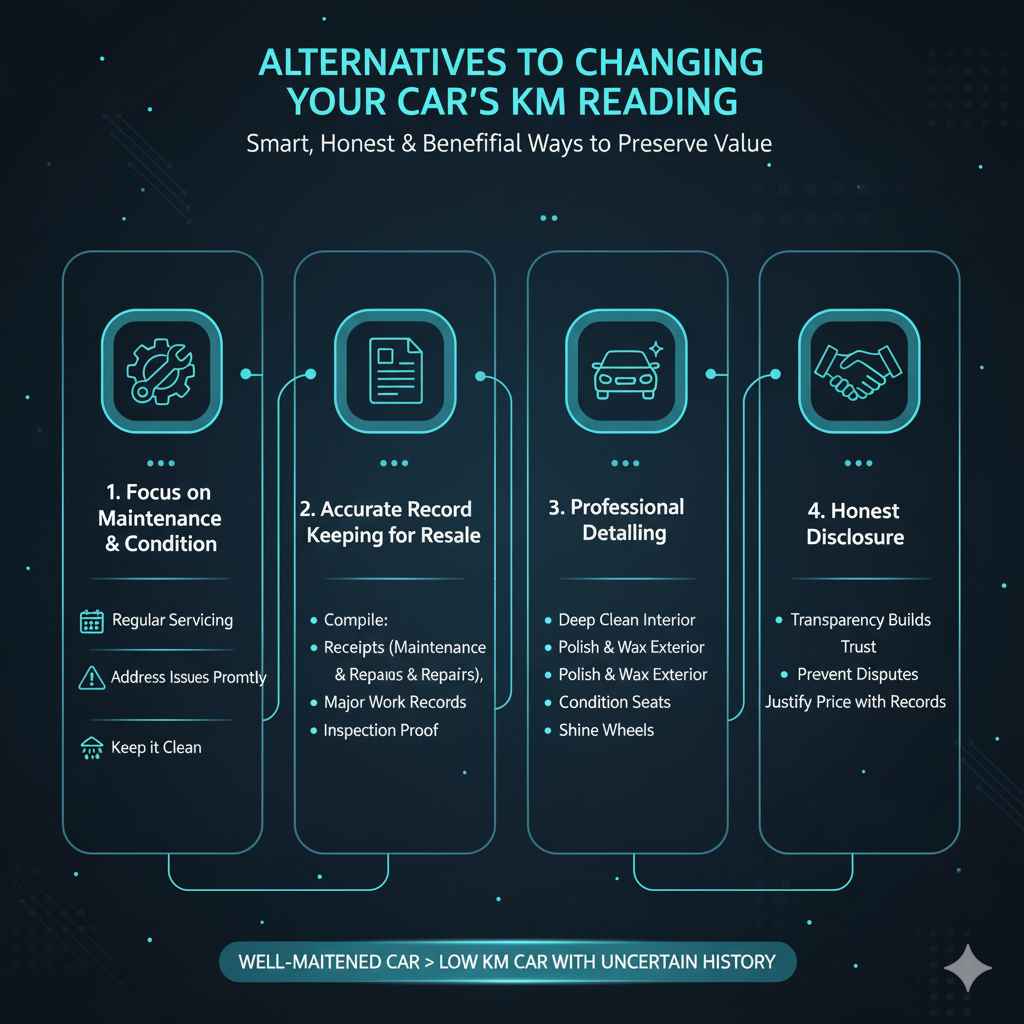
Alternatives to Changing Your KM Reading
Instead of considering the illegal and risky practice of altering KM readings, let’s focus on the smart, honest, and beneficial ways to care for your car and manage its perceived value.
1. Focus on Maintenance and Condition
The best way to increase your car’s value and longevity is by keeping it in excellent mechanical and cosmetic condition. A well-maintained car with a higher KM reading will often be more desirable and reliable than a poorly maintained car with a lower reading.
Regular Servicing: Stick to your manufacturer’s recommended maintenance schedule. This includes oil changes, filter replacements, brake checks, tire rotations, and timing belt replacements. Documenting these services is key.
Address Issues Promptly: Don’t let small problems become big, expensive ones. Fix minor leaks, strange noises, or warning lights as soon as possible.
Keep it Clean: Regular washing, waxing, and interior cleaning not only make your car look better but also protect its paint and interior materials from damage. A clean car gives the impression of being well cared for.
2. Accurate Record Keeping for Resale
When it comes time to sell, having a complete service history is invaluable. Buyers are willing to pay more for a car they know has been meticulously cared for. Compile:
- All receipts for maintenance and repairs.
- Records of any major work done (e.g., engine overhaul, transmission replacement).
- Proof of regular inspections.
This evidence builds trust and justifies your asking price, regardless of the KM reading.
3. Professional Detailing
A professional detailing service can make your car look almost new. This can significantly enhance its appeal to potential buyers. Detailing includes:
- Deep cleaning the interior.
- Polishing and waxing the exterior.
- Cleaning and conditioning leather or fabric seats.
- Shining up the wheels and tires.
This relatively minor investment can make a big difference in perceived value.
4. Honest Disclosure
When selling a car, honesty is the best policy. Disclose any known issues or the true history of the vehicle. Transparency builds buyer confidence and can prevent future disputes. If there was a period where the mileage was uncertain, explain it clearly and back it up with any available records.
A car with 150,000 KM that runs perfectly and has a full service history is often a better buy than a car with 80,000 KM that has been neglected or whose mileage is questionable.
Frequently Asked Questions (FAQ)
Q1: Is it possible to change my car’s KM reading myself?
A1: For modern cars with digital odometers, it is extremely difficult and requires specialized electronic tools and knowledge. It is not a DIY task for the average car owner and is illegal to do with intent to deceive.
Q2: What happens if I get caught tampering with my car’s KM reading?
A2: Getting caught can lead to severe legal consequences, including hefty fines, potential jail time, and the vehicle’s title being marked, significantly reducing its value. You could also face civil lawsuits from buyers.
Q3: Does changing the KM reading affect my car’s performance?
A3: The act of changing the KM reading itself doesn’t directly change how the car drives. However, if the tampering process damages the car’s electronic systems, it can certainly cause performance issues or lead to other components not functioning correctly.
Q4: What should I do if I suspect a car I’m buying has had its KM reading changed?
A4: Request a vehicle history report (like CarFax or AutoCheck), carefully inspect service records for discrepancies, look for signs of dashboard tampering, and consider getting a pre-purchase inspection by an independent mechanic. If you have strong suspicions about fraud, report it to the authorities.
Q5: Are there any legitimate reasons to alter a KM reading?
A5: The only legitimate reasons involve correcting an error by a mechanic after a new instrument cluster replacement or due to a faulty odometer. These scenarios usually require official documentation and must be performed by authorized professionals to ensure compliance with vehicle titling laws.
Q6: How do mechanics typically handle a faulty odometer or display?
A6: If an odometer is faulty, mechanics will usually replace the instrument cluster. They then have a legal responsibility to set the replacement cluster to the vehicle’s actual mileage or, if that’s undeterminable, to brand the title accordingly. This process is documented and adheres to legal regulations specific to your region.
Q7: Is it possible to “roll back” the mileage on all cars?
A7: While the technology exists to alter digital odometers in most cars, it’s not a simple process and is illegal. Older cars with mechanical odometers were easier to tamper with, but modern vehicles have complex electronic systems that protect this data.
Conclusion: The Real “Genius Fix” is Honesty and Care
We’ve delved into the technicalities, the risks, and the legal maze surrounding the idea of changing your car’s KM reading. While the allure of lowering that number might seem like a convenient shortcut, especially when thinking about selling your vehicle, it’s crucial to understand that it’s a path fraught with legal peril and ethical compromise. The “genius fix” isn’t about manipulating numbers; it’s about genuine vehicle care and honest dealings.
As your guide, Md Meraj, I always advocate for the straightforward, reliable approach. Maintaining your car well, keeping meticulous records of its service history, and presenting it honestly to potential buyers are the truly smart ways to manage its value and ensure peace of mind for everyone involved. A car that runs reliably, looks good, and has a documented history will always command respect and a fair price, far outweighing any artificial boost from a tampered KM reading.
Focus your energy on keeping your vehicle in top shape. That’s where the real value lies, and it’s a commitment that will serve you, and any future owner, far better in the long run. Happy motoring, and remember, honesty and good maintenance are the best tools in your automotive toolbox!