How To Check Car Ac Temperature: A Genius, Simple Guide
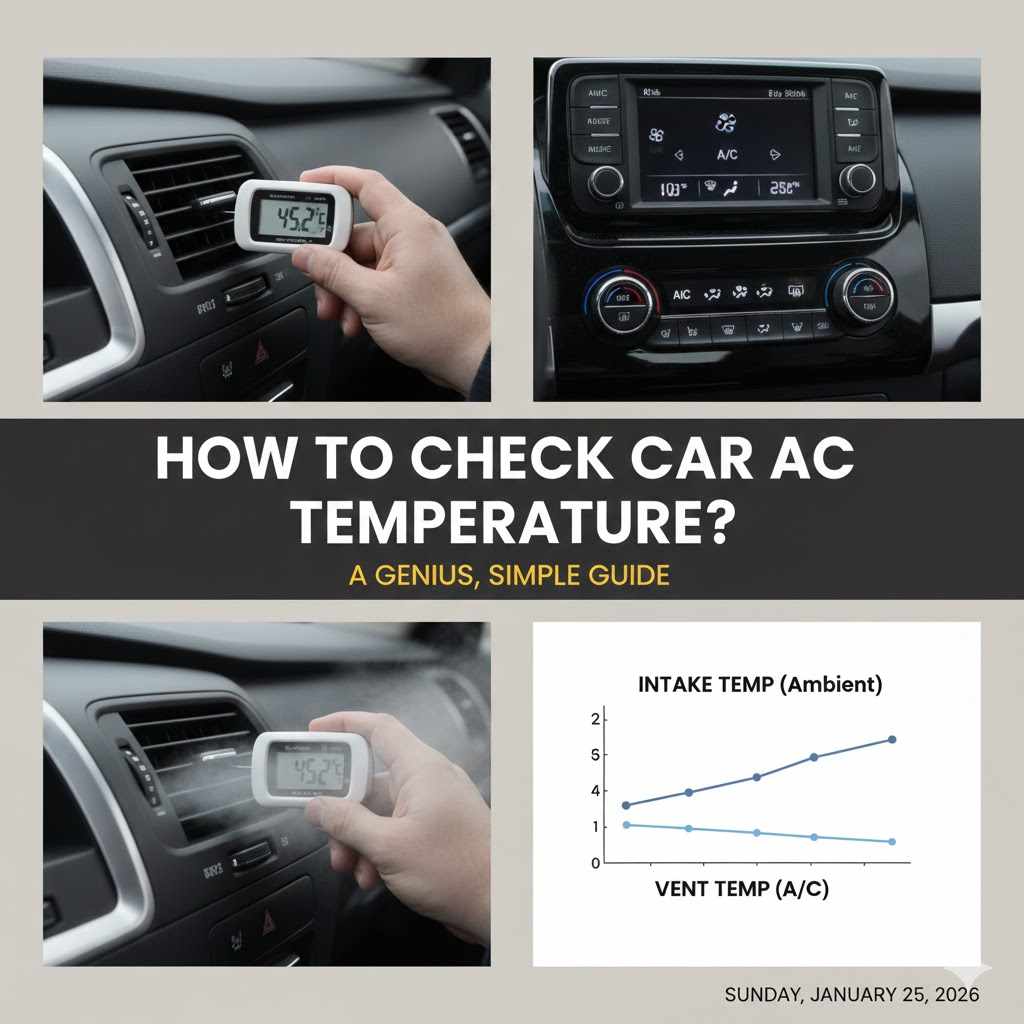
To check your car’s AC temperature, place a digital thermometer in the center dashboard vent. Turn the AC to its coldest setting and highest fan speed with recirculation on. Close all doors and windows. After 5-10 minutes, a healthy AC should blow air that is at least 35-40°F (about 20°C) colder than the outside air.
Is your car’s air conditioning not feeling as icy as it used to? On a sweltering hot day, a weak AC is more than just an inconvenience—it’s a real drag. You might immediately worry about confusing and expensive repair bills, but please don’t panic just yet!
Checking your car AC temperature is a super simple test you can do yourself in just a few minutes. It’s a genius trick that tells you if there’s a real problem or if your system is actually working just fine. This guide will walk you through every easy step, giving you the confidence to understand what’s happening under your hood. Let’s get you back to feeling cool and comfortable!
Why Checking Your Car’s AC Temperature is a Smart Move
You might be thinking, “If it feels warm, I know it’s broken. Why do I need a number?” That’s a great question! Measuring the exact temperature is like a health check-up for your car’s AC system. It turns a vague feeling (“it’s not very cold”) into a solid fact (“it’s only 15 degrees cooler than the outside air”).
Here’s why this simple test is so powerful:
- It Saves You Money: Knowing the temperature helps you avoid paying a mechanic for a diagnostic fee just to tell you what you already know. You can walk in and say, “My AC is only blowing at 65°F,” which helps them get straight to the problem.
- It Catches Problems Early: A gradual increase in vent temperature over time can signal a slow refrigerant leak. Catching it early can prevent damage to more expensive parts, like the compressor.
- It Gives You Confidence: Understanding how your car works is empowering. This quick test replaces worry with knowledge, so you can make smarter decisions about repairs.
- It Helps with DIY Fixes: If you’re thinking of using a DIY AC recharge kit, you need a starting temperature to know if the recharge worked. This test is the perfect way to measure your success.
The Only Tool You’ll Need for the Job
The best part about this test is that you don’t need a garage full of fancy tools. You only need one simple item:
A Digital Thermometer.
That’s it! A simple digital kitchen thermometer or an automotive-specific vent thermometer will work perfectly. Digital thermometers are great because they give you a fast, accurate reading. While any thermometer will do in a pinch, try to avoid old-school mercury thermometers, as they are slow to react and can be fragile.
You can find a suitable digital thermometer at most grocery stores, hardware stores, or online for just a few dollars. It’s a small investment that can save you a lot of hassle down the road.
Your Step-by-Step Guide: How to Check Car AC Temperature in 7 Easy Steps
Ready to become an AC expert? Follow these simple steps. It should take you no more than 10 minutes from start to finish. For best results, try to do this test when the outside temperature is at least 70°F (21°C).
Prepare Your Car
If you can, park your car in a shady spot. This prevents the sun from heating up the dashboard and giving you a false reading. If you’ve just been driving, let the car sit for about 15 minutes to cool down a bit.Start Your Engine
Turn the car on and let it idle. Your AC system is powered by the engine, so it needs to be running for this test.
Set Your AC Controls for Maximum Cold
Now, head to your dashboard controls and set them up correctly. This is the most important part!
- Temperature: Turn the dial to the coldest possible setting (often marked “MAX A/C” or shown with a blue icon).
- Fan Speed: Turn the fan to the highest setting.
- Recirculation Mode: Press the recirculation button. This button usually has an icon of a car with a U-shaped arrow inside it. This stops the system from pulling in hot outside air and instead re-cools the air already inside your car, allowing it to reach its maximum coldness.
- Vents: Make sure the air is directed to the dashboard vents, not the floor or the windshield defrost.
-
Close Everything Up
-
To get an accurate reading, you need to create a closed environment. Roll up all your windows and shut all the doors. This keeps the hot air out and the cold air in.
Insert the Thermometer
Take your digital thermometer and gently insert the probe as far as it will go into one of the center dashboard vents. The center vents usually provide the most accurate and coldest temperature reading.
Wait and Watch
Let the engine and AC run for about 5 to 10 minutes. This gives the AC system enough time to stabilize and reach its lowest possible temperature. You’ll see the temperature on your thermometer gradually drop. Be patient!Read the Final TemperatureAfter 5-10 minutes, check the reading on your thermometer. This final number is your AC vent temperature. Write it down, along with the approximate outside air temperature. Now you have the data you need to figure out what’s going on!
Understanding the Numbers: What Is a Good Car AC Temperature?
So you have a number on your thermometer. What does it actually mean? A healthy car AC doesn’t produce a single, fixed temperature. Instead, its performance is all about the temperature drop—the difference between the outside air temperature (also called ambient temperature) and the air blowing out of your vents.
A properly working AC system should be able to cool the air by at least 35-40 degrees Fahrenheit (about 20-22 degrees Celsius) compared to the outside temperature. This is often called the “Delta T.”
Here is a handy chart to help you see what your vent temperature should be on a given day.
| Outside Air Temperature | Expected Center Vent Temperature | Is This Healthy? |
|---|---|---|
| 70°F (21°C) | 35°F – 40°F (2°C – 4°C) | Yes, this is excellent performance. |
| 80°F (27°C) | 40°F – 45°F (4°C – 7°C) | Yes, this is a strong, healthy reading. |
| 90°F (32°C) | 45°F – 50°F (7°C – 10°C) | Yes, this indicates a well-functioning system. |
| 100°F (38°C) | 50°F – 55°F (10°C – 13°C) | Yes, the AC is working hard but effectively. |
A Quick Note on Humidity
High humidity can affect your AC’s performance. When it’s very humid, your AC has to do two jobs: cool the air and remove moisture from it. This extra work means the air coming out of the vents might be a few degrees warmer than on a dry day. This is normal, so don’t be alarmed if your numbers are slightly higher on a sticky, humid day.
My AC Isn’t Cold Enough! What Should I Do Next?
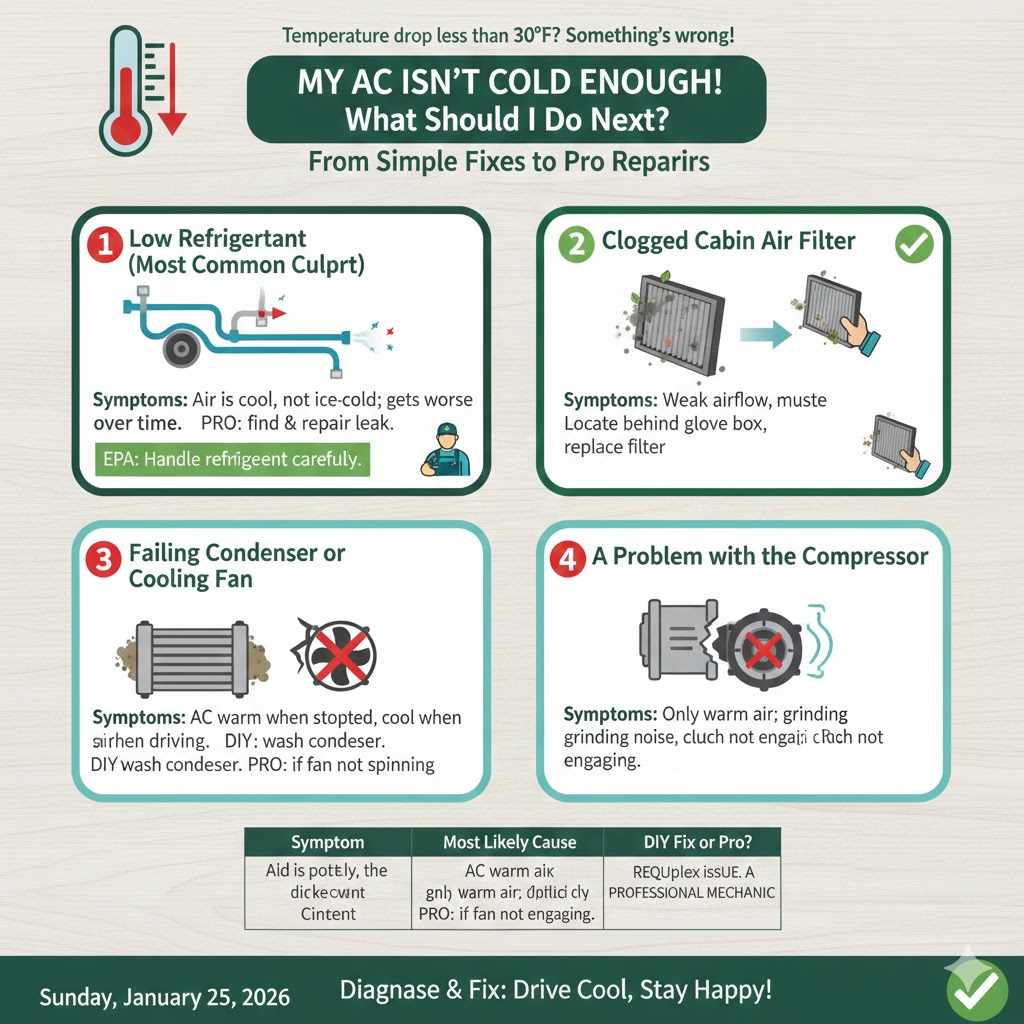
If your temperature drop is less than 30°F (17°C), it’s a clear sign that something is wrong with your AC system. But don’t worry! It doesn’t automatically mean a huge repair bill. Let’s look at some of the most common causes, from simple fixes to more complex issues.
1. Low Refrigerant (The Most Common Culprit)
Your car’s AC uses a special gas called refrigerant (often known by the old brand name Freon) to create cold air. Over time, tiny leaks can develop in the system, allowing this gas to escape. When the refrigerant level is low, the AC can’t cool as effectively.
- Symptoms: The air is cool but not ice-cold. The cooling performance gets worse over time.
- What to Do: While you can buy DIY AC recharge kits, they are often a temporary fix. The real problem is the leak. The best solution is to have a certified mechanic find and repair the leak before refilling the system. According to the U.S. Environmental Protection Agency (EPA), refrigerant should be handled carefully by trained professionals to prevent harm to the environment.
2. Clogged or Dirty Cabin Air Filter
This is one of the easiest and cheapest problems to fix! The cabin air filter cleans the air that blows into your car. Over time, it gets clogged with dust, pollen, and leaves. A clogged filter restricts airflow, which means less cold air can get through your vents.
- Symptoms: Weak airflow from the vents, even when the fan is on high. You might also notice a dusty or musty smell.
- What to Do: You can likely replace this yourself! The filter is usually located behind the glove box. Check your owner’s manual for its location and how to replace it. A new filter costs very little and can make a huge difference.
3. A Failing Condenser or Cooling Fan
The condenser, located at the front of your car near the radiator, is responsible for releasing heat from the refrigerant. It needs good airflow to work. If the condenser is blocked by dirt or debris, or if its cooling fan isn’t working, it can’t get rid of the heat.
- Symptoms: The AC works fine when you’re driving at speed (because of the natural airflow) but gets warm when you’re stopped in traffic or idling.
- What to Do: You can start by gently washing the front of the condenser with a garden hose to remove any dirt or bugs. If the fan isn’t spinning when the AC is on, that’s a job for a mechanic.
4. A Problem with the Compressor
The compressor is the heart of your AC system. It’s a pump that circulates the refrigerant. If the compressor or its clutch is failing, the whole system stops working.
- Symptoms: The AC blows warm air only. You might hear a loud grinding or squealing noise when you turn the AC on. You may also notice the compressor clutch isn’t engaging (the center part of the pulley isn’t spinning).
- What to Do: Compressor issues are complex and require a professional mechanic. This is not a typical DIY repair.
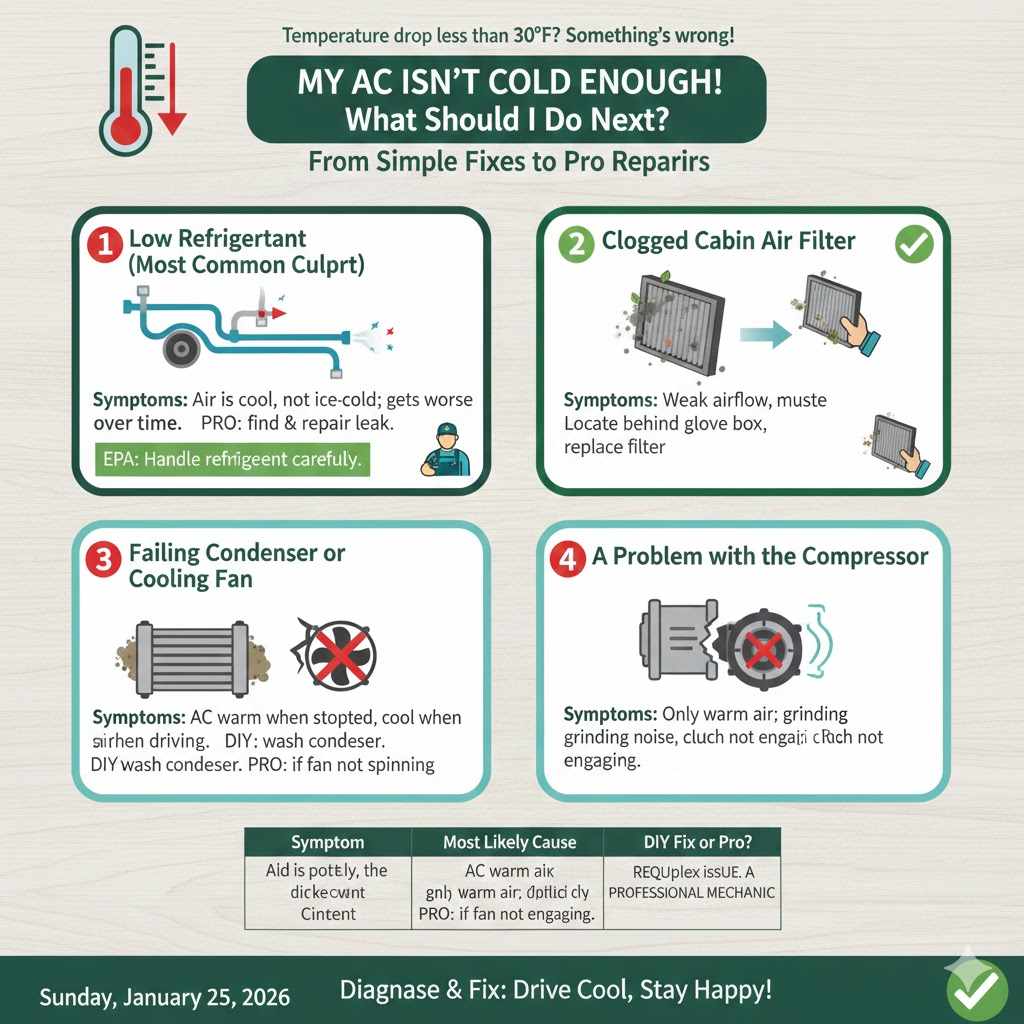
Here’s a simple table to help you diagnose the issue:
| Symptom | Most Likely Cause | DIY Fix or Pro? |
|---|---|---|
| Air is cool, not cold; getting worse over time. | Low Refrigerant | Pro (to find and fix the leak) |
| Weak airflow from vents; musty smell. | Clogged Cabin Air Filter | Easy DIY Fix! |
| AC gets warm when stopped in traffic. | Condenser Fan Malfunction / Blocked Condenser | Pro (for fan); DIY (for cleaning) |
| AC blows only warm air; strange noises. | Failing Compressor | Pro |
| AC doesn’t turn on at all. | Blown Fuse or Electrical Issue | DIY (check fuse); Pro (for other issues) |
Frequently Asked Questions (FAQ)
1. How cold should my car AC get?
A healthy car AC should blow air that is 35 to 40 degrees Fahrenheit cooler than the outside air. So on a 90°F day, you should expect the air from your vents to be around 45-50°F.
2. Can I check my car AC temperature without a thermometer?
You can certainly tell if the air feels cool or warm, but you won’t get an accurate measurement. Using a digital thermometer removes the guesswork and gives you a real number, which is crucial for diagnosing a problem correctly.
3. Why is my car AC cold on one side and warm on the other?
This is often caused by either very low refrigerant levels or a problem with a “blend door actuator.” A blend door is a small flap inside your dashboard that directs air. If it gets stuck, it might send cold air to one side and warm air to the other. This usually requires a mechanic to diagnose.
4. How often should I have my car’s AC system checked?
It’s a good idea to have a mechanic check your AC system every 1 to 2 years, even if it’s working well. This preventative check can catch small leaks or other issues before they turn into major, expensive repairs.
5. Is it expensive to fix a car AC?
It depends entirely on the problem. Replacing a clogged cabin air filter might only cost you $20. An AC refrigerant recharge can be relatively affordable. However, replacing a major component like the compressor can be one of the more expensive car repairs. That’s why catching problems early with a simple temperature test is so important!
6. What’s that musty smell coming from my AC vents?
That unpleasant “dirty sock” smell is usually caused by mold and mildew growing in the dark, damp environment of your AC system. Replacing the cabin air filter is the first step. You can also use a special AC system cleaning spray to kill the bacteria and freshen things up.
7. Does running the AC waste a lot of gas?
Running your AC does use a small amount of extra fuel because the engine has to work a little harder to power the compressor. However, modern AC systems are very efficient. Interestingly, at highway speeds, running the AC is often more fuel-efficient than opening the windows due to the aerodynamic drag they create.
Conclusion: You’re in Control of Your Comfort
Congratulations! You now know how to check your car AC temperature like a pro. This simple, 10-minute test is one of the most powerful diagnostic tools you have as a car owner. It replaces uncertainty with clear facts and empowers you to have a more informed conversation with your mechanic.
By taking a moment to measure the temperature, you can catch problems early, save money, and ensure you stay cool and comfortable on even the hottest days. You’ve unlocked a genius car care secret that puts you in the driver’s seat of your vehicle’s maintenance.
So grab a thermometer, give it a try, and enjoy the peace of mind that comes with knowing exactly how your car is doing. Stay cool out there, and happy driving!