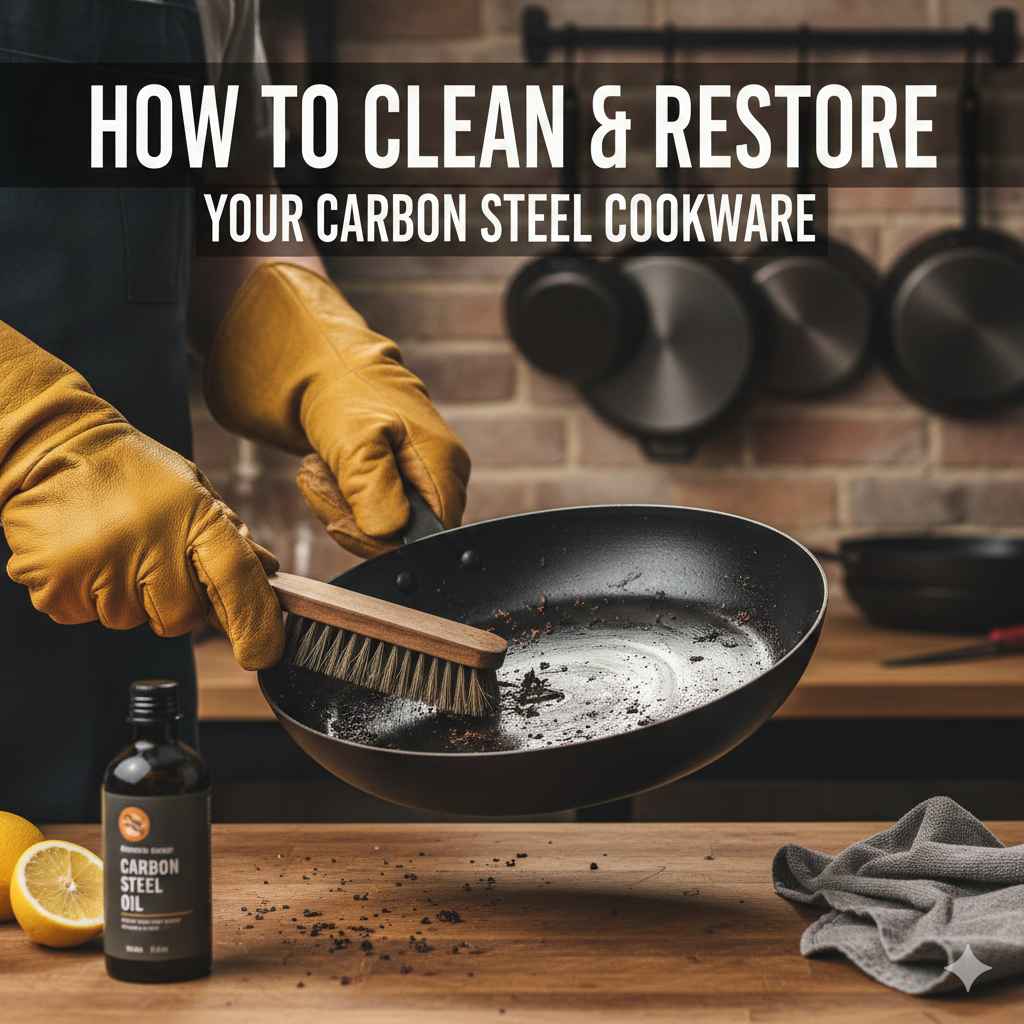
How to Clean and Restore Your Carbon Steel Cookware
If you’re new to carbon steel cookware, you might wonder, How to Strip a Carbon Steel Pan the Right Way. It’s a common concern! These pans get a natural, non-stick surface, and things can go wrong. Don’t worry, though. The process might seem tough, but it’s very easy. This guide will show you how, step-by-step. Get ready to have your favorite pan looking better than new.
Reasons to Restore Your Carbon Steel Cookware
Carbon steel pans, unlike some cookware, build character over time. They develop a seasoned layer that becomes increasingly non-stick with use. This seasoning is key to their performance. However, accidents happen. Food can burn on, rust can form, or you might accidentally use the wrong cleaning methods. That is when you need to restore the pan. Restoring removes old seasoning and any damage, giving you a fresh start.
This process extends the life of your pan and improves its cooking performance. Think of it as a reset button for your cooking adventures. Restoring removes old, damaged seasoning and prepares the pan for a fresh start.
When You Should Think About a Carbon Steel Pan Restoration
Deciding when to restore your carbon steel pan depends on its condition. Regular cleaning and seasoning can keep it in great shape. But sometimes, more is needed. You’ll notice changes in how your food cooks, and that is a good indicator that something needs to be done. Here are some situations that can trigger a pan restoration. You will want to take action if you find yourself facing these issues.
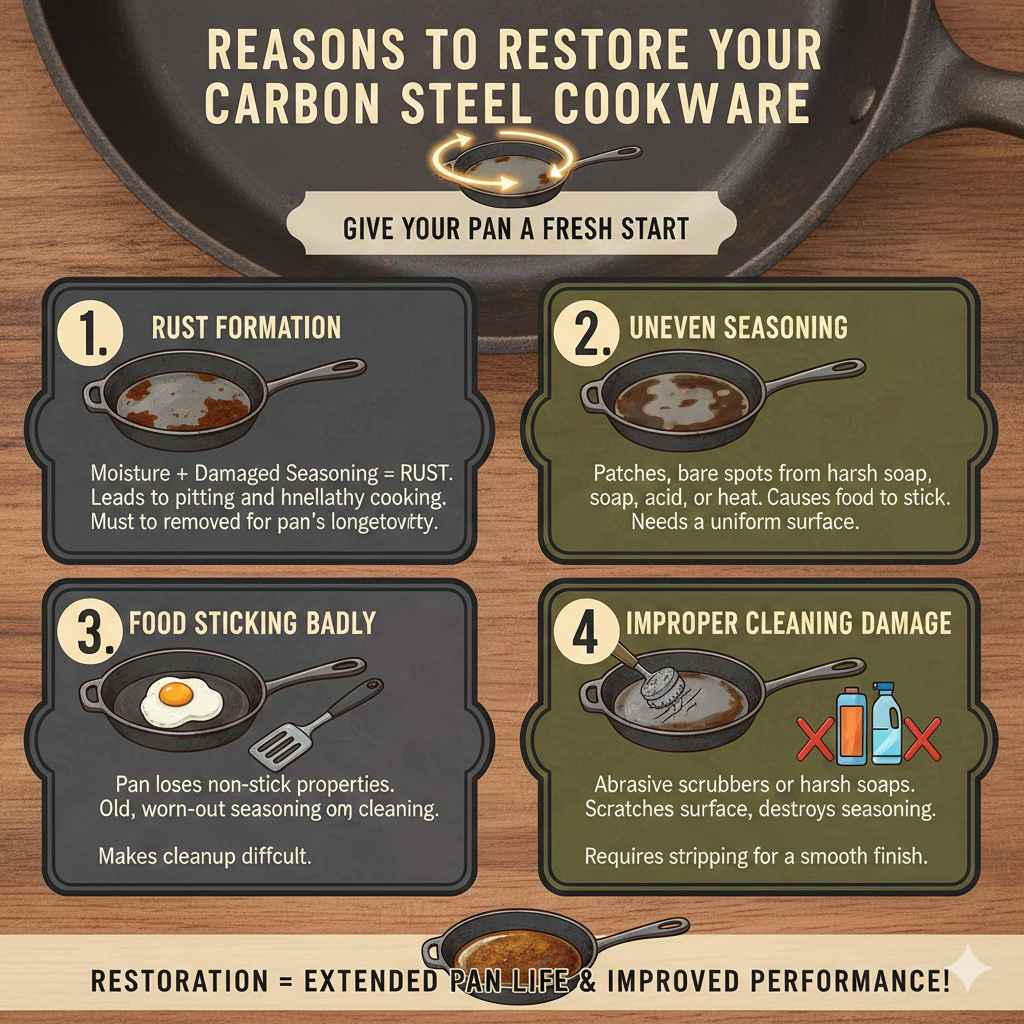
Rust Formation: Rust is a pan’s worst enemy. It is a clear sign that the protective layer of seasoning is damaged. It needs immediate attention because rust is not only bad for your pan but also for your food. Any level of rust must be removed for a healthy pan.
Rust forms when carbon steel is exposed to moisture. It will start with small spots and, left unattended, can spread and cause pitting. If you see even a speck of rust, it’s time to act. It’s essential to remove the rust and then re-season the pan. This will help prevent it from returning.
Uneven Seasoning: Seasoning should be consistent. Patches or bare spots mean that the non-stick surface is not working correctly. The pan might have been washed with harsh soap or scrubbed with an abrasive pad. Uneven surfaces lead to food sticking and make it harder to cook.
Uneven seasoning often occurs from cooking high-acid foods that can break down the seasoning. Additionally, improper cleaning practices can strip away the seasoned layer in certain areas. It can also happen when the pan is exposed to excessive heat in one spot. This might lead to areas where food sticks and burns easily, creating an unsatisfactory cooking experience. Proper restoration is needed to get back to a smooth, uniform surface.
Food Sticking Badly: If your pan used to be non-stick but now everything clings, something is wrong. Food sticking can be a sign of lost seasoning. You may have used the wrong cleaning products. It could also mean the seasoning is simply old and worn out.
Seasoning breaks down over time. It can also happen due to cleaning methods or using high heat improperly. It means you are likely to experience burnt food and difficulty in cleanup. It is a clear indicator that the pan’s protective layer has become compromised. This is a clear signal that the pan’s protective barrier has degraded, which leads to cooking issues.
Damage from Improper Cleaning: Using abrasive scrubbers or harsh soaps can destroy the seasoned layer. Abrasive cleaning products will scratch the surface. This can lead to the need to strip the pan to restore its function.
Certain cleaning methods and products will cause damage. Steel wool and abrasive cleaners can scratch the surface. This will damage the seasoned layer, leading to food sticking. The best solution is to strip and re-season the pan. This will give you a smooth, non-stick surface for cooking.
Effective Ways to Clean Your Carbon Steel Pan
After you cook in your carbon steel pan, you will want to clean it correctly. Proper cleaning is important to maintain the seasoning and prevent problems. A great cleaning method will keep your pan in good shape for years. This keeps the pan’s surface in great condition and ensures it performs well every time. It’s essential to understand the correct cleaning techniques to get the best from your pan.
Gentle Cleaning Methods for Everyday Use
For routine cleaning after cooking, stick to these methods. These will help preserve the seasoning and keep your pan in good shape. Gentle cleaning helps maintain the non-stick properties and prevents damage. It’s best to maintain the seasoning rather than remove it.
Rinse Immediately After Use: After removing food from the pan, rinse it with hot water while it’s still warm. This will help to remove food particles and prevent them from sticking. If any food is stuck, try using a wooden spatula to scrape it gently. This initial rinse will start the cleaning.
Rinsing while warm will make it easier to remove food debris. It also helps prevent any cooked-on bits from hardening and sticking to the pan. A warm pan is more receptive to cleaning, leading to better results with less effort. Always use hot water for optimal results.
Use Warm Water and a Soft Sponge: Avoid harsh soaps that can strip away the seasoning. Use hot water and a soft sponge to remove any remaining food particles. Be sure to use a non-abrasive sponge.
Harsh detergents and scrubbing pads will remove the seasoning and make it more difficult to maintain the pan. A gentle sponge will help clean the pan. Make sure that you only clean the pan when it is warm. Cold water on a hot pan can cause it to warp. Soapy residue can also affect the flavor of food. Rinse the pan well after washing to remove any soap residue.
Dry Thoroughly After Washing: After washing, it’s essential to dry the pan. This step is to prevent rust. You can use a clean towel or place it over low heat on the stovetop. This ensures that the pan is completely dry before storage.
Failure to dry the pan completely can lead to rust. Water is a leading cause of rust formation. You can also place the pan over low heat for a few minutes. This process will ensure that the pan is completely dry and ready for the next use. A dry pan is a happy pan. This practice will add to the lifespan of the pan.
Lightly Oil After Drying: After drying the pan, add a very thin layer of oil. Do this while the pan is still warm. Use a paper towel to spread the oil evenly over the surface. This will protect the seasoning and prepare it for the next use.
Oiling the pan prevents rust and maintains the non-stick surface. It also helps preserve the seasoning by adding to its effectiveness. A small amount of oil is all that is needed to cover the cooking surface. Remember, this helps to develop the pan’s protective layer over time.
When a More Thorough Cleaning Is Required
Sometimes, your carbon steel pan needs more than a gentle wash. If food burns on, or you notice build-up, it is time for a deeper clean. These methods will remove stubborn residue without damaging the seasoning. These techniques ensure your pan remains in top condition and ready for any cooking task. A proper cleaning will add to the pan’s effectiveness.
Boil Water and Scrape: For burnt food, fill the pan with water and bring it to a boil. Allow it to simmer for a few minutes. Use a wooden spatula to scrape away the stuck-on bits. This will loosen any burnt food and make it easier to remove.
Boiling water helps soften and loosen stubborn food residue. The heat combined with the water softens the burnt particles, allowing them to be scraped off easily. Be careful not to overheat the pan during this process. Do not use metal utensils to prevent scratches.
Use a Non-Abrasive Scrubber: If boiling water is not enough, use a non-abrasive scrubber. Gently scrub the pan to remove stubborn food. Avoid steel wool or abrasive pads that can scratch the surface.
A non-abrasive scrubber provides the necessary abrasion to remove stuck-on food without damaging the seasoning. It’s important to use a soft, non-scratching scrubber. These scrubbers are designed to remove stubborn residue. They are gentle enough to not affect the seasoned surface.
- Baking Soda Paste: Make a paste of baking soda and water. Apply it to the pan. Let it sit for a few minutes. Then scrub gently. This combination is effective at removing stuck food and odors without damaging the seasoning.
Baking soda is a mild abrasive that is effective in cleaning. The paste helps remove burnt food and neutralize odors. Let the baking soda paste sit for a while to break down any food particles. This technique avoids the use of harsh chemicals. It’s a natural cleaner that is safe for your cookware.
- Salt Scrub: Pour coarse salt into the pan and heat it on the stovetop. Use a paper towel or a wooden spatula to scrub the pan. This will remove any stuck-on residue.
Salt serves as a gentle abrasive when heated. The heat helps to loosen the stuck-on food particles. It’s an effective method for removing stubborn food without harming the seasoning. This method is safe and effective and provides an excellent cleaning outcome.
How to Strip a Carbon Steel Pan the Right Way
When you need to fully restore your pan, stripping is essential. This process removes all seasoning and any damage. You need to strip it before you can re-season it. The methods below explain How to Strip a Carbon Steel Pan the Right Way. Stripping should only be done when the seasoning is damaged or uneven. After stripping, you will re-season the pan. The stripping process prepares the pan for a fresh start. This ensures that the pan is clean and ready for a new layer of seasoning.
Methods for Removing Old Seasoning
There are a few methods you can use to remove the old seasoning. Some methods are more intense than others. They all will prepare the pan for re-seasoning. It is important to know which methods are most appropriate for your pan’s condition.
Oven Self-Clean Cycle: Place the pan in your oven and run the self-clean cycle. This will burn off all the old seasoning. The high heat effectively turns the seasoning into ash.
The self-cleaning function uses high heat. This method is effective at burning off all the seasoning and any residue. Make sure to remove any plastic or wooden handles before starting the cycle. After the cycle is complete, let the pan cool down completely. Then, remove any remaining residue with a brush.
Burning on a Stovetop: Place the pan directly on a high-heat burner. Heat it until the seasoning starts to smoke and burn off. Use a metal spatula or scraper to remove the burnt residue.
This method requires caution. It involves direct heat, which quickly burns off the seasoning. This technique is fast and effective. It can cause significant smoke and odors. Make sure you have good ventilation in your kitchen. This approach requires careful monitoring to prevent overheating. Use protective equipment to avoid burns. This approach ensures an effective removal of old seasoning.
Electrolysis: This method involves using an electrolysis setup to remove rust and seasoning. You submerge the pan in a solution. Apply an electrical current to remove all the unwanted material.
Electrolysis is a slower method. This process is effective for removing rust and seasoning. The setup requires a power supply, a sacrificial metal, and an electrolyte solution. The electrical current pulls the rust and seasoning away from the pan’s surface. This technique produces no smoke. It is effective but can require more setup time.
Chemical Strippers: Use a chemical stripper made for cookware. Carefully follow the product instructions. Rinse the pan thoroughly after use to remove all residue.
Chemical strippers are very effective at removing seasoning. They will also remove any buildup. Always use safety precautions when working with chemical strippers. Make sure to have a well-ventilated area. After stripping, you need to rinse the pan thoroughly. This step is important to remove all traces of chemicals. This approach is powerful but needs careful handling.
Detailed Steps: Oven Self-Clean Cycle Method
Using the oven’s self-clean cycle is a popular and effective way to strip a carbon steel pan. This method is simple. It uses high heat to burn off the old seasoning. Here’s a step-by-step guide to get the most from this approach. This method will remove all traces of the old seasoning.
-
- Prepare the Pan: Remove any detachable handles. Make sure the pan is empty. Place the pan in the oven. Do this before you start the self-clean cycle.
Remove any plastic or wooden handles that cannot withstand high heat. This avoids any damage. Make sure there is nothing in the pan, as it will also burn off. Keep the pan dry for the best results.
-
- Run the Self-Clean Cycle: Set your oven to the self-clean cycle. Let it run completely. This is critical for getting the maximum result.
Follow your oven’s instructions for the self-clean cycle. The cycle will typically last several hours and reach very high temperatures. This ensures all seasoning and debris burn away.
-
- Allow the Pan to Cool: After the cycle completes, allow the pan to cool completely inside the oven. This can take several hours.
It’s important to allow the pan to cool naturally inside the oven. This protects you from burns. It also prevents the pan from warping. It ensures that the pan is safe to handle.
-
- Remove Ash and Residue: Use a brush or scraper to remove the ash and any remaining residue. Clean the pan completely.
Once the pan is cool, use a brush or scraper to remove all the ash and residue. A metal scraper is effective. Be gentle to prevent any scratches on the surface of the pan. The pan should now be bare metal.
-
- Clean and Dry the Pan: Wash the pan with hot, soapy water. Rinse thoroughly. Dry the pan completely before re-seasoning.
Remove any ash. It is very important to thoroughly clean the pan with warm, soapy water. Remove all the remaining residue. Dry the pan thoroughly to avoid rust. The pan needs to be totally free of any residue.
Detailed Steps: Stovetop Burning Method
Burning off the seasoning on the stovetop is a fast method for stripping. This method directly exposes the pan to high heat. Be cautious as you do this. Here’s how to do it safely. This method offers a simple, direct approach for restoring your pan.
-
- Ventilate Your Kitchen: Open windows or use a vent hood. This will deal with the smoke that will be produced.
Burning seasoning will produce smoke. Good ventilation is essential for comfort and safety. This helps to prevent smoke from building up in your kitchen. Open windows and turn on your vent hood.
-
- Place the Pan on a High-Heat Burner: Put the pan on a burner set to high heat. Leave it there until the seasoning starts to smoke and burn. This will take a few minutes.
Place the pan directly on the burner. The high heat will start to burn the seasoning. Keep a close watch as the seasoning begins to smoke and burn off. Watch closely to avoid burning the pan itself.
-
- Use a Metal Scraper: As the seasoning burns, use a metal scraper or spatula to scrape off the burnt residue. Work carefully.
As the seasoning burns, it will become easier to scrape off. Use a metal scraper or spatula to remove the burnt residue. Be careful not to damage the pan. Be patient as you work. This step may take a little time.
-
- Repeat as Needed: Continue heating and scraping until all the old seasoning is removed. The pan should be bare metal.
Repeat the heating and scraping. This will remove all of the old seasoning. Keep going until the pan is bare metal. If some spots are more difficult to remove, concentrate on those areas.
-
- Wash, Dry, and Re-Season: Wash the pan with hot, soapy water. Dry it thoroughly and re-season it.
After all the seasoning is removed, clean the pan thoroughly. Ensure all the burnt residue is removed. Dry the pan completely to avoid rust. Proceed with the re-seasoning process to restore the non-stick surface.
Proper Re-Seasoning of Carbon Steel Cookware
After stripping, your carbon steel pan is like new. The next step is re-seasoning. Re-seasoning builds a new protective layer on the pan. This layer is important for the cooking surface. Re-seasoning is essential for restoring non-stick properties. When done correctly, it will improve cooking performance. Proper seasoning will ensure that your pan is protected. It will also help the pan’s performance over time.
Essential Oils for Re-Seasoning
Choosing the correct oil is important for seasoning your pan. The oil you choose will have a great impact on the process. Certain oils work better than others because of their smoke points. The proper selection of the oil guarantees the best results. The right oil will ensure the seasoning is effective. It will also produce a durable, non-stick surface.
High Smoke Point Oils: These oils are better for seasoning because they can handle high heat. They will polymerize quickly. They create a strong, durable layer. Oils such as grapeseed, canola, and avocado oil are good choices.
High smoke point oils are ideal. The heat is needed to create a stable, non-stick layer. The high smoke point of these oils prevents them from burning off quickly. The proper oil will ensure that the pan is well-seasoned. It will also provide the best results.
Thin Coats Are Key: Always use thin coats of oil. Too much oil will result in a sticky surface. Less is more when re-seasoning a carbon steel pan.
Apply thin coats of oil. Excess oil will cause the seasoning to become sticky. It also produces uneven results. Apply a thin coat and wipe away any excess. This practice will prevent problems during the process.
Avoid Certain Oils: Some oils should not be used. These include olive oil, butter, and other low-smoke-point options. These types of oil burn at lower temperatures. This will create a sticky, uneven surface.
Some oils are not recommended for seasoning. Olive oil and butter have low smoke points. These oils are not appropriate for seasoning. They tend to burn and create a sticky finish. Stick with oils designed for high heat.
Detailed Re-Seasoning Process
Re-seasoning your carbon steel pan might take some time, but it’s worth it. Re-seasoning creates a durable, non-stick surface. Properly re-seasoning a carbon steel pan is vital. The steps below will ensure your pan is well-seasoned and ready for cooking. Following these steps will help you create a protective, non-stick layer.
-
- Clean and Dry the Pan: After stripping, wash the pan with warm, soapy water. Dry the pan thoroughly.
Make sure the pan is completely clean and dry before starting the seasoning process. Remove any traces of residue. This will ensure that the new seasoning bonds correctly. A dry pan is essential. This will prevent rust formation.
-
- Apply a Thin Coat of Oil: Pour a small amount of oil into the pan. Use a paper towel to spread the oil evenly. This should cover the entire surface of the pan.
Use a small amount of high-smoke-point oil. Apply the oil in an even, thin layer over the pan’s entire surface. This even coating is key for an effective seasoning. Remove any excess with a clean paper towel.
-
- Heat in the Oven or on the Stovetop: Place the pan in a preheated oven at 450-500°F (232-260°C). Alternatively, heat the pan on the stovetop over medium heat.
Choose your preferred heating method. Heating the pan in the oven provides even heat distribution. If using the stovetop, heat the pan slowly over medium heat. This allows the oil to polymerize.
-
- For Oven Method: Heat for about an hour. Turn off the oven and let the pan cool inside. This creates a durable, non-stick layer.
If using the oven method, heat the pan for about an hour. Turn off the oven and let the pan cool slowly inside. This will create a strong, durable seasoning. This process will create a solid foundation for the seasoning.
-
- For Stovetop Method: Heat until the oil starts to smoke. Let it smoke for a few minutes. Then, remove the pan and let it cool.
If using the stovetop, heat the pan until the oil starts to smoke. This indicates that the oil is polymerizing. Let it smoke for a few minutes. Then, remove the pan from heat and allow it to cool. Allow the pan to cool completely before the next step.
-
- Repeat the Process: Repeat the oiling and heating process 2-3 times. This will add multiple layers of seasoning. It will strengthen the non-stick properties of the pan.
Repeat the oiling and heating process for multiple cycles. This will build up a robust, non-stick surface. Each layer adds to the pan’s protection and cooking performance. Repeat the process to build up the necessary protective barrier.
-
- Cool and Store: After the final heating, let the pan cool completely. Store it in a dry place. The pan is now ready for use.
Once the pan has cooled, it is ready for use. Proper storage is also important for maintaining the seasoning. Store your pan in a dry location to prevent rust. Your pan is now ready for your cooking tasks.
Troubleshooting Re-Seasoning Issues
Sometimes, the re-seasoning process doesn’t go perfectly. You may encounter issues that affect the pan’s performance. With a little troubleshooting, you can correct these issues. Problems can be addressed with these tips. Quick fixes can bring the seasoning back on track. Understanding these challenges can assist you in finding a solution.
Sticky Surface: If the pan feels sticky after re-seasoning, you probably used too much oil. Place the pan in the oven or on the stovetop. Heat it to a high temperature. Wipe away any excess oil with a clean paper towel.
Sticky surfaces occur when too much oil is used during the seasoning. This results in an uneven finish. Reheating and wiping away excess oil will fix this. The heat will allow the oil to polymerize properly.
Uneven Seasoning: If the seasoning looks patchy or uneven, it might be due to uneven heat distribution. Cook a fatty food to even out the seasoning. You can also re-season the pan.
Uneven seasoning often results from uneven heat distribution. It also comes from using insufficient oil. Cooking fatty foods will help even out the seasoning layer. If the issues persist, repeat the re-seasoning process.
Rust Formation: If rust appears after re-seasoning, you didn’t dry the pan properly. Strip the pan and re-season it. Make sure to dry the pan completely.
Rust formation usually results from moisture exposure. This problem requires removing the rust and re-seasoning the pan. Completely drying the pan will prevent further occurrences.
Sticking Food: If food still sticks after re-seasoning, the seasoning may not be thick enough. Repeat the re-seasoning process several times. This will build up a robust non-stick layer.
If food sticks even after re-seasoning, the layer might be too thin. Repeating the process creates a better non-stick surface. It will also improve the pan’s cooking performance.
Frequently Asked Questions
Question: How often should I strip my carbon steel pan?
Answer: You should only strip your carbon steel pan when the seasoning is damaged, uneven, or rust has formed. If the pan still cooks well, there’s no need to strip it.
Question: Can I use steel wool to clean my carbon steel pan?
Answer: No, avoid using steel wool or abrasive scrubbers. They can scratch the surface and damage the seasoning. Use a soft sponge and warm water instead.
Question: What’s the best oil for seasoning my carbon steel pan?
Answer: High smoke point oils like grapeseed, canola, and avocado oil are ideal for seasoning. These will create a strong, durable seasoning layer.
Question: How do I store my carbon steel pan?
Answer: Store your carbon steel pan in a dry place to prevent rust. You can hang it or place it in a cabinet. Make sure it’s completely dry before storing it.
Question: My pan has rust. What should I do?
Answer: Remove the rust by scrubbing the pan with steel wool. Re-season the pan with the recommended oil after removing the rust. Prevent rust by drying the pan completely after each use.
Final Thoughts
Proper care is essential to get the most from your carbon steel cookware. You now have a detailed guide on How to Strip a Carbon Steel Pan the Right Way. Remember to strip your pan only when needed. It is a good idea to focus on routine cleaning and proper seasoning. Using a pan is a long-term process. Regular maintenance will preserve its non-stick qualities. Always choose the right cleaning methods and oils. Following the processes outlined can restore your pan.
It will also get it ready for any cooking. Embrace the journey with your carbon steel pan. This will result in better cooking for years to come. Practice and consistency are key to getting the most from your carbon steel pan.