How To Connect Trailer Lights To A Car (Step-By-Step Fix)
Connecting trailer lights to a car involves matching the vehicle’s wiring to the trailer’s wiring harness. This usually requires a converter box if the car has a separate bulb for brake and turn signals. The process ensures all lights on the trailer function correctly, mirroring the car’s signals for safety and legal compliance.
Understanding Trailer Light Connections
Trailer lights are important. They tell others what you’re doing. This includes turning, stopping, and just driving.
Your car has these lights already. You need to send those signals to the trailer. It’s like giving your trailer its own voice on the road.
Most trailers use a standard plug. This plug has pins. Each pin connects to a different light function.
Common plugs are 4-pin, 5-pin, 6-pin, and 7-pin. The number of pins tells you how many functions you can control.
A 4-pin connector is basic. It handles tail lights, left turn, right turn, and ground. A 5-pin adds a brake light or a reverse light.
Higher pin counts add more features like 12V power or battery charging.
Your car also has a wiring harness. This is where the trailer plug connects. Sometimes, the car’s wiring is simple.
Other times, it’s more complex. This is especially true for newer cars with computer systems.
Common Trailer Light Wiring Issues
Many things can go wrong. You might have a bulb out on the trailer. Or maybe the car’s wiring is confusing.
Sometimes, the trailer plug itself is damaged. Corrosion is a big problem too. It stops the electrical signal.
One common issue is a mismatch. The car might have separate brake and turn signal bulbs. The trailer might expect them to be combined.
This is where a converter box comes in. It changes the car’s signals so the trailer understands them.
Another problem is a bad ground connection. All electrical circuits need a good ground. If the ground wire isn’t clean, lights can flicker or not work at all.
Rust and dirt are enemies of good grounds.
Loose connections are also frequent. Wires can shake loose over time. This makes the lights act up.
Checking each connection is key to finding the fault.
My Own Trailer Light Mishap
I remember the first time I hooked up a trailer. It was for a weekend camping trip. I had my gear all packed.
My old pickup truck seemed ready. I plugged in the trailer’s 4-pin connector. I flipped my truck’s headlights on.
The trailer tail lights worked. Great! But then I hit the brakes.
Nothing on the trailer changed. Then I signaled to turn. The trailer’s left blinker stayed dark.
Panic started to set in. I had the trailer, my gear, and my family waiting. I checked the trailer bulbs.
They looked fine. I wiggled the plug. Still no luck.
I felt a bit foolish. I thought it would be so simple. I ended up driving very slowly and carefully, signaling with my arm out the window.
It wasn’t safe. I learned a big lesson that day about proper wiring.
Later, I found the issue. The ground wire on the trailer plug was loose. It was barely making contact.
A quick fix with a new connector solved it. But that feeling of helplessness stuck with me. It taught me to respect the wiring.
What You’ll Need
Gathering your tools is the first step. You don’t need a lot. Most items are common.
Here’s a short list of what helps:
- Trailer light tester: This makes testing super easy. It plugs into the trailer socket. You can check each function quickly.
- Wire strippers/crimpers: For cutting and joining wires.
- Screwdrivers: Phillips and flathead are common.
- Pliers: For holding or pulling.
- Electrical tape or heat shrink tubing: To secure connections.
- Multimeter: For advanced troubleshooting (optional).
- New connectors or trailer plug: If yours is damaged.
- Nuts, bolts, washers: For grounding.
- A clean rag: To wipe away dirt and grime.
Trailer Plug Basics
Trailer Plug Type
The most common types are 4-pin and 7-pin. A 4-pin is for basic lights. A 7-pin handles more functions.
It includes power for the trailer’s battery.
Pin Functions (Common 4-Pin)
- White wire: Ground
- Brown wire: Tail/Running lights
- Yellow wire: Left Turn/Brake light
- Green wire: Right Turn/Brake light
Step-by-Step: Connecting Trailer Lights
Let’s get started. Take your time. Each step matters for a good connection.
Step 1: Check Your Vehicle’s Wiring
Look at the back of your car. Find the trailer connector. It might be a 4-pin, 5-pin, 6-pin, or 7-pin socket.
Make sure it’s clean. If it’s dirty, use a rag to wipe it out. Dirt can stop the signal.
Some cars need an adapter. This is common for cars with a combined brake and turn signal. They might have a 3-wire system.
Trailers usually have separate wires. A trailer light converter fixes this. It changes the car’s signals.
Step 2: Examine the Trailer Plug and Wiring
Now, look at the trailer’s plug. Is it damaged? Are any pins bent or broken?
Are the wires coming out of the plug looking frayed or loose?
If the plug looks bad, you might need a new one. Replacing a trailer plug is a common fix. It’s usually pretty straightforward.
You’ll connect the car’s wires to the new plug’s terminals.
Quick Fix: Damaged Trailer Plug
Problem: Cracked or corroded trailer plug.
Solution: Cut off the old plug. Buy a new one. Match the wires from the trailer to the new plug.
Follow the color codes carefully. Secure each connection with crimp connectors and tape.
Step 3: Test Each Function (Before Connecting)
This is where a trailer light tester is handy. Plug it into your car’s socket. Then, turn on your car’s lights.
Check if the tester shows the tail lights are working. Next, push the brake pedal. The tester should show brake lights.
Finally, activate your turn signals one by one. Each should light up on the tester.
If something doesn’t work, don’t connect the trailer yet. The problem is in your car’s wiring or the socket. You need to fix that first.
Step 4: Connecting the Trailer Plug
Once your car’s socket is working correctly, connect the trailer plug. Push it in firmly. It should click or feel secure.
Make sure it’s seated all the way.
Don’t let the cable hang too low. It can drag on the ground. This can damage the wires or the plug.
Use a zip tie or clip to keep it tidy.
Step 5: Test All Trailer Lights
Now, do the full test with the trailer attached.
- Turn on your car’s headlights. Your trailer tail lights should come on.
- Press the brake pedal.
All trailer brake lights should light up.
- Turn on your left turn signal. The trailer’s left turn signal should blink.
- Turn on your right turn signal. The trailer’s right turn signal should blink.
If everything works, you’re good to go! If not, it’s time to troubleshoot.
Troubleshooting Flow
Issue: Trailer lights not working at all.
Check: Car socket, trailer plug, ground wire.
Issue: One light not working (e.g., right turn signal).
Check: Bulb in trailer, wire from plug to bulb, connection at bulb.
Issue: Lights flicker or are dim.
Check: Ground connection, any loose wires.
When Your Car Needs a Converter
Many modern cars have complex electrical systems. They use pulse width modulation (PWM) or separate circuits for lights. Your trailer might expect a simpler signal.
This is where a trailer light converter is a lifesaver.
A converter acts as a translator. It takes the car’s signals and changes them. It makes them compatible with most trailer wiring.
Most converters also provide a good ground connection for the trailer.
How Converters Work
You tap into your car’s existing light wires. These are usually at the back of the car. The converter box then wires into the trailer socket.
It detects when your car’s brake light comes on. It then sends a signal to the trailer’s brake light.
The same happens for turn signals and tail lights. It’s a smart device. It ensures your trailer lights behave like they should.
It prevents damage to your car’s computer systems too. Some converters are powered directly from the car battery. This gives them a strong signal to send.
Converter Styles
Box Converters: These are common. You wire them into your car’s harness. Then they connect to the trailer socket.
Plug-In Converters: Some simply plug into your car’s socket. They have a separate harness that taps into the car’s lights. These are easier for DIYers.
Integrated Systems: Newer vehicles may have this built-in. Check your car’s manual.
Grounding is Everything
I can’t stress this enough. A good ground connection is vital. Without it, lights won’t work right.
Or they might act weirdly. Think of the ground wire as the return path for electricity.
On your trailer, the ground is usually a white wire. This wire needs to connect to the metal frame of the trailer. The trailer frame is what then grounds to the car through the trailer plug’s ground pin.
Tips for a Solid Ground
- Clean Metal: The connection point must be clean. Scrape away any rust, paint, or dirt.
- Secure Fastening: Use a bolt, nut, and washer. This ensures a tight, solid connection.
- Direct Frame Contact: The wire’s eyelet terminal should touch bare metal of the trailer frame.
-
Check the Plug: The trailer plug itself has a ground pin.
Make sure this pin is clean and making good contact with the car’s socket.
If you’re using a converter, it often has its own ground wire. Make sure that one is also connected to a clean metal part of your car’s chassis.
Grounding Best Practices
Trailer Frame Ground: Connect the white ground wire from the trailer harness directly to a clean spot on the trailer’s metal frame.
Car Chassis Ground: If your converter needs a chassis ground, find a bolt or screw on the car’s metal frame. Clean the area and attach the ground wire securely.
Plug Ground Pin: Ensure the ground pin on both the car socket and trailer plug are clean and free of corrosion.
Wiring Different Trailer Plug Types
Each plug type has its own layout. Knowing the pinout is important. Here’s a look at common ones.
The 4-Pin Flat Connector
This is the most basic. It’s common for small utility trailers, boat trailers, and pop-up campers. It handles tail lights, brake lights, and turn signals.
- Pin 1 (White): Ground
- Pin 2 (Brown): Tail/Running Lights
- Pin 3 (Yellow): Left Turn/Brake
- Pin 4 (Green): Right Turn/Brake
Cars with separate brake and turn signals will need a converter. Cars with combined signals (like older trucks) might be wired directly.
The 7-Pin Blade Connector
This is for larger trailers. Think RVs, horse trailers, or enclosed cargo trailers. It offers more functions.
- Pin 1 (Yellow): Left Turn/Brake
- Pin 2 (Blue): Electric Trailer Brakes
- Pin 3 (Green): Tail/Running Lights
- Pin 4 (Black): 12V Power (for trailer battery charging or accessories)
- Pin 5 (White): Ground
- Pin 6 (Red): Stop Light (center brake light)
- Pin 7 (Brown): Right Turn/Brake
The 7-pin is more complex. Many vehicles come pre-wired for this. It often includes the necessary circuits for brakes and power.
7-Pin Pinout Summary
Function | Pin Color | Wire Color (Typical)
Left Turn/Brake | 1 | Yellow
Trailer Brakes | 2 | Blue
Tail/Running Lights | 3 | Green
12V+ Power | 4 | Black
Ground | 5 | White
Center Stoplight | 6 | Red
Right Turn/Brake | 7 | Brown
Troubleshooting Common Problems
When things don’t work, don’t despair. Most issues have simple fixes. Here are common problems and what to check.
Problem: No Lights at All
This is the most frustrating.
- Check the Plug: Make sure it’s fully inserted.
-
Check Fuses: Your car has fuses for trailer lights. Check your car’s manual for their location.
Replace any blown fuses.
- Check Ground: A bad ground on the car or trailer will stop everything.
- Test the Car Socket: Use a tester or a multimeter. Does it have power?
Problem: Only Tail Lights Work
This often points to a turn signal or brake light issue.
- Check Trailer Bulbs: Are the brake/turn bulbs burnt out?
- Check Car Signals: Do your car’s brake lights and turn signals work on their own?
- Converter Issues: If you use a converter, it might not be detecting the signals.
- Wiring at the Plug: The wires for turn/brake signals might be loose or broken in the trailer plug.
Problem: Turn Signals Flash Too Fast (Hyperflashing)
This usually happens when a bulb is out. The car’s system thinks the signal is weak.
- Check Trailer Bulbs: Ensure all trailer turn signal bulbs are good.
- Check Connections: A poor ground can sometimes cause this.
-
Trailer Load: Some newer cars can be sensitive to trailer load.
This is less common for just lights.
Problem: Brake Lights and Turn Signals Act Weirdly
This is a classic sign of a wiring mismatch.
-
Converter Needed: Your car likely has separate brake and turn signals. Your trailer needs them combined.
A converter is the solution.
- Wire Swap: Double-check that the correct wires are connected to the correct pins on the trailer plug.
My Top Troubleshooting Tips
Always start simple. Check the obvious first: bulbs, plugs, and fuses.
Use a tester. It saves so much guesswork.
Good connections are key. Cleanliness and tightness prevent 90% of problems.
Ground is king. Never forget the ground wire.
When to Call a Professional
While most trailer light issues are DIY-friendly, some situations call for expert help. If you have a brand-new vehicle with complex integrated systems, you might not want to risk damaging the electronics.
If you’ve tried everything and still can’t get the lights to work, a mechanic or an RV/trailer specialist can help. They have specialized tools and knowledge. They can trace complex wiring issues in your car’s system.
Also, if you’re dealing with electric trailer brakes and they aren’t working, that’s a safety-critical system. It’s best left to professionals if you’re not experienced.
Real-World Scenarios
Let’s look at some common situations.
Scenario 1: Small Utility Trailer with a 4-Pin Plug
You’re towing a trailer to haul mulch. Your truck has a 4-pin socket. You plug it in.
The tail lights work, but the brake and turn signals don’t. This is very common. Most trucks and cars have separate brake and turn signals.
The 4-pin trailer plug combines them. You likely need a 4-pin trailer light converter. Install it between your car’s socket and the trailer plug.
Make sure to ground the converter properly to your car’s frame.
Scenario 2: Large RV with a 7-Pin Connector
You’ve just bought a used RV. The previous owner said the lights worked. You plug it into your SUV.
Only the tail lights come on. The brake lights and turn signals are dead. Your SUV’s 7-pin socket might be wired for a different function.
Or, the RV’s wiring has an issue. Check the RV’s fuse panel first. Then, test the pins on the RV plug.
You might need to identify which wires on the RV harness correspond to which functions.
Scenario 3: Newer Car with LED Tail Lights
Your car has LED tail lights. You try to tow a small trailer. The trailer lights flash erratically or not at all.
LED lights on cars use very little power. The car’s computer might not detect the trailer lights as being connected. You’ll likely need a converter designed for LED systems.
These have resistors to trick the car into thinking a normal bulb is attached.
Common Trailer Use Cases
Small Utility/Cargo Trailers: Usually 4-pin. Basic light functions needed.
Boat Trailers: Often 4-pin. Need submersible lights and good grounds.
Travel Trailers/RVs: Typically 7-pin. Requires brakes, battery charging, and all lighting functions.
Horse/Livestock Trailers: Often 7-pin. Need brake control and auxiliary power.
What This Means For You
Knowing how to connect your trailer lights gives you control. It means less stress on trips. It also means you’re safer on the road.
When It’s Normal
It’s normal for trailer lights to mirror your car’s lights. Left turn on the car means left turn on the trailer. Brake pedal means brake lights on both.
It’s also normal to need a converter. Many cars are not wired directly for all trailer functions. Especially with combined brake and turn signals.
When to Worry
You should worry if any lights are out. This is a safety and legal issue. Driving without proper tail lights or brake lights is dangerous.
It can also lead to tickets.
If you see smoke or smell burning wires, stop immediately. This indicates a serious electrical short. Do not try to fix this yourself.
Simple Checks You Can Do
- Regular Visual Inspection: Look at the trailer plug and socket before each use.
- Light Test: Always test lights before a trip.
- Wire Condition: Check for frayed or damaged wires on the trailer harness.
Quick Tips for Trailer Light Success
Here are some easy tips to keep your trailer lights working perfectly.
- Keep it Clean: A clean trailer socket and plug are essential.
- Use Dielectric Grease: Put a small amount of dielectric grease inside the trailer socket and on the trailer plug pins. This repels water and prevents corrosion.
- Secure the Cable: Make sure the trailer cable is not dragging.
- Check Bulbs Periodically: Trailer bulbs don’t last forever. Keep spares.
- Invest in a Tester: A simple trailer light tester is worth its weight in gold. It makes testing quick and easy.
Quick Fix Checklist
1. Lights not working?
– Check fuses in car and trailer.
– Ensure trailer plug is fully seated.
– Verify ground connections (car and trailer).
2. One function out?
– Check the specific bulb on the trailer.
– Trace wire from plug to bulb.
– Test car’s output for that function.
3. Dim or flickering lights?
– Focus on the ground connection.
– Look for loose wires anywhere.
Frequently Asked Questions About Trailer Lights
Do I always need a trailer light converter?
Not always. If your car has a trailer wiring harness that matches your trailer plug and your car has separate brake and turn signal circuits (most modern cars do), you’ll likely need a converter. If your car has a combined brake/turn signal output and your trailer expects separate signals, a converter is needed.
Always check your car’s manual and trailer plug type.
How do I know if my trailer plug is working correctly?
The easiest way is to use a trailer light tester. Plug it into your car’s socket and test each function (tail lights, brake, left turn, right turn). If the tester lights up for each function, your car’s socket is likely working correctly.
What is the white wire on a trailer plug for?
The white wire is almost always the ground wire. It provides the return path for the electrical current. A good ground connection is crucial for all trailer lights to work properly.
It needs to connect to the metal frame of the trailer.
My trailer brake lights and turn signals are the same color wire on the trailer. What do I do?
This means your trailer is wired for a combined brake/turn signal function. Many cars have separate circuits for brake lights and turn signals. In this case, you will need to use a trailer light converter.
This device takes the separate signals from your car and combines them into one signal for your trailer.
Can I use a multimeter to test trailer lights?
Yes, a multimeter can be very helpful. You can set it to measure DC voltage. With the car’s lights on, you can touch the probes to the pins in the car’s socket to see if voltage is present for each function.
You can also use it to check for continuity in the trailer’s wiring.
How do I fix a corroded trailer plug?
For light corrosion, you can try cleaning the pins with a wire brush or fine-grit sandpaper. If the corrosion is severe, or if the plug is cracked, it’s best to replace the entire trailer plug. Cut off the old plug and wire in a new one, carefully matching the wire colors to the new plug’s terminals.
Conclusion
Connecting trailer lights doesn’t have to be a mystery. By understanding the basics, checking your connections, and using the right tools, you can get the job done. Safety is the main goal.
Making sure your trailer lights work is a big part of that. Happy towing!
Products related to this article
Sponsored / affiliate links. As an Amazon Associate I earn from qualifying purchases. I may earn additional commission from eligible campaigns.
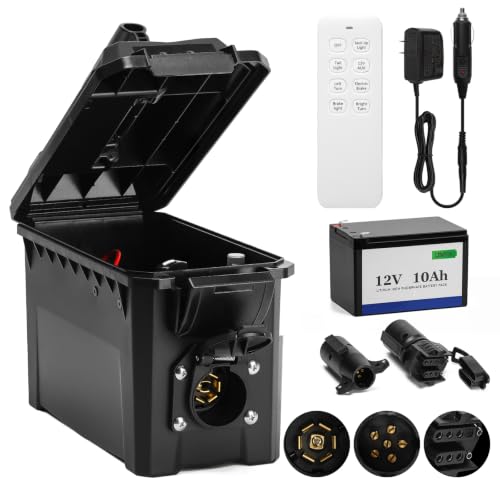 Trailer Light & Electric Brake Tester with 12V 10Ah Battery, Tests 7-Spade, 6-Round and 4/5-Flat Pin Type Trailer Harnesses, Upgrade Wireless Remote Control, IP68 Waterproof Case
 8Pcs Wireless Led Lights for Car, 8 Colors 10 Kind of Lighting Effects USB Rechargeable Anti-Collision Wireless Led Strobe Lights, High Brightness Wireless Led Lights for Bike, Drone, Motorcycle