How to Deep Clean Car Seats: Extractor, Steam & Stain Guide
Wiping a seat with a damp cloth removes surface dirt. It does not touch what has soaked into the foam: old coffee, sweat, a pet accident, or the sour smell of a seat that was cleaned once and never dried properly. That is the job of a deep clean, and how to clean car seats at this level depends on one thing above all: how much water the seat can take and how fast you can get it out again.
This guide covers the extractor, steam and shampoo methods for stained or smelly seats, what changes between fabric, leather and vinyl, realistic drying and mold limits, and the cautions that matter near airbags and seat sensors. For the basic wipe-down and everyday spot work, see our guide to cleaning car seats first.
Deep Clean or Regular Clean: Which Do Your Seats Need?
Best Portable Seat Extractor Pick
|
BISSELL Little Green Mini Portable Carpet Cleaner, 4075 A compact spray-and-suction spot extractor small enough to work on one seat at a time, which is the machine method this guide is built around.
As an Amazon Associate we earn from qualifying purchases. Price and availability change; check the listing. |
Choose a deep clean when a wipe-down leaves rings, the stain returns as the seat dries (wicking), the seat smells after it dries, or a spill soaked in before you could blot it. If the seat is only dusty or lightly marked, a deep clean with a lot of water does more risk than good.
Check the Seat Before You Add Water
Three checks take a few minutes and prevent most deep-clean damage.
- Look for a cleaning code tag. Furniture-style upholstery codes are W (water-based cleaners), S (solvent only), W/S (either) and X (vacuum only, no liquids). Car seats often do not carry one, so your owner’s manual is the authority, but if a tag exists, follow it.
- Read the owner’s manual section on seats. Some makers warn against soaking seats that have side airbags, occupant sensors or heating elements. Polestar’s manual, for example, says never to spray cleaner directly onto the sides of seats with side airbags and to use a lightly dampened cloth instead. Treat that as the pattern: moisture goes on a cloth or tool, not poured on the seat.
- Test a hidden spot. Try the cleaner under the seat or on a back panel, let it dry, and look for color transfer or stiffening.
Fabric Seats: The Extractor Method Step by Step
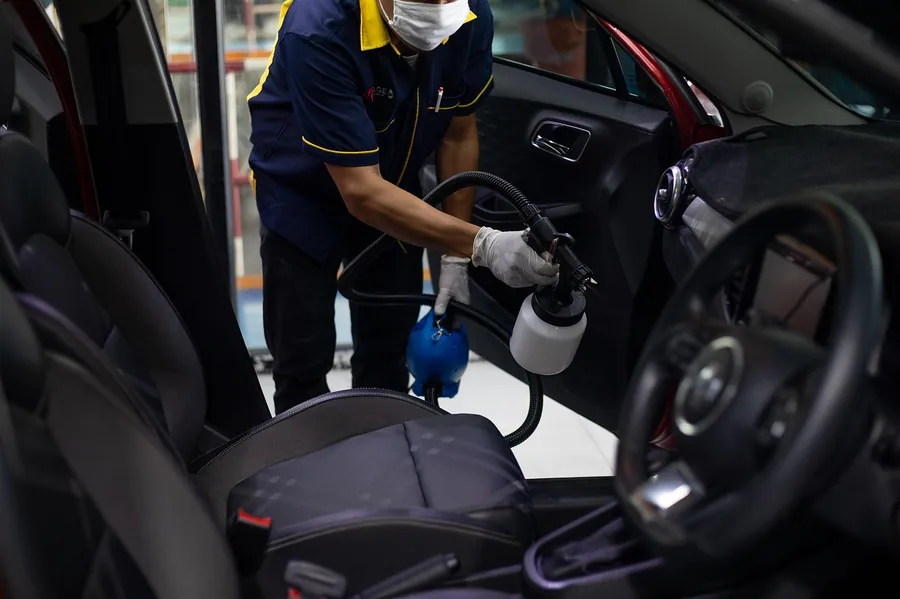
An extractor sprays cleaning solution and pulls it back out with suction in the same pass, which is why it removes more dirt than a damp cloth and leaves the seat less wet than scrubbing with a bucket.
- Vacuum thoroughly. Use a crevice tool along the seams and the seat-to-seatback gap so loose grit does not turn to mud.
- Pre-treat the stains. Apply a fabric-safe spot cleaner to heavy stains and give it the dwell time on the label. Agitate lightly with a soft brush.
- Work in small sections. Do one panel at a time: spray while pulling the tool toward you, then make slow dry passes over the same area.
- Keep going until the water coming up runs lighter. Dirty water in the recovery tank is the sign there is still soil in the padding.
- Rinse and re-extract. One pass with clean water, then dry passes, removes leftover cleaner that would otherwise attract dirt.
- Start drying at once. Open the doors, run a fan, and keep the car in a ventilated space. Do not close the car on a damp interior.
Always read the label and the machine’s guide: use the cleaning solution the maker recommends, do not mix different cleaning products together, and ventilate the cabin while you work.
Steam, Shampoo or Extractor: Which Method for Which Problem
All three methods can work on cloth seats. They differ in how much water stays behind, which is what decides drying time and mold risk.
- Extractor: best for set-in stains and odors, because suction removes the dirty water instead of leaving it in the foam.
- Steam: uses less liquid water, so it can suit light soil and refreshing a seat, but heat is not for every material. Check your manual, and do not use it on leather.
- Foam shampoo and brush: the lowest-tech option and fine for a lightly soiled seat, but without suction the residue and moisture stay in the seat, so extract or blot it out with clean towels.
Deep Cleaning by Upholstery Type
The table below summarizes what changes by material. Where your car’s manual disagrees, the manual wins.
| Seat material | Deep-clean method | Do not | Drying note |
|---|---|---|---|
| Cloth or fabric | Vacuum, pre-treat stains, then extractor or shampoo with a soft brush | Soak the foam, or ignore a W/S/X code tag if one is present | Slowest to dry; the foam underneath holds water |
| Leather (finished) | Damp microfiber with a leather-safe cleaner, then conditioner if the maker advises it | Use steam or a wet extractor on it | Wipe dry, let it air dry fully before use |
| Vinyl | Mild cleaner on a cloth, soft brush in seams | Use solvent cleaners the maker does not approve | Dries fast because the surface is sealed |
| Alcantara or suede-like | Follow the car maker’s instructions only; usually a barely damp cloth | Scrub hard or flood it | Keep the car ventilated until fully dry |
Leather: no extractor
Finished leather needs a damp microfiber cloth and a cleaner made for leather, applied in gentle circular motions, followed by letting it dry fully. A wet extractor and steam are the wrong tools. See our guide to fixing car leather seats if the surface is cracked or worn, because cleaning will not repair that.
Vinyl: quick to clean, quick to dry
Vinyl is sealed, so dirt stays on the surface. A mild cleaner on a cloth and a soft brush in the seams is enough. If it still looks grimy, repeat rather than escalating to a stronger chemical.
Stained or Smelly Seats: What Actually Works
Odor comes from whatever is still in the padding, so masking it with a spray fails. Extract until the water runs clean, then dry the seat completely. If a smell returns, the likely causes are residue left in the foam, a seat that dried slowly, or moisture somewhere else in the car. Check the carpet under the seat as well, because a wet footwell can cause the smell even when the seat is clean.
For stains, deal with the type: a fabric-safe cleaner for coffee or food, and a dedicated pet-stain product for urine, used as the label directs. Avoid bleach on car upholstery; it can damage fibers and discolor dyed fabric. Compare options in our best car upholstery cleaners roundup.
Drying Time and Mold Prevention
This is the part most guides skip, and it is where deep cleaning goes wrong. Foam padding holds water long after the surface feels dry. The EPA states that wet materials should be dried within 24 to 48 hours to prevent mold growth, per its guide to mold, moisture and your home. Plan the job so the seat can dry in that window.
- Clean on a dry, warm day and start in the morning, so the car can air out all day.
- Finish with several dry suction passes, or press clean dry towels into the seat until they come away barely damp.
- Leave the doors or windows open in a safe, ventilated space, or run a fan pointed at the seat.
- Do not drive with the windows shut and the seat still damp; humidity will condense on the glass.
- If a seat is still wet after a day, add airflow before it passes the 48 hour mark.
- A musty smell that does not go away may mean a leak. Check door seals and sunroof drains.
When to Stop and Call a Professional
- Your manual forbids liquids on the seat (or the code tag says X).
- The seat has a side airbag, occupant sensor or electrics that your manual says to keep dry, and you are not sure where they are.
- There is a serious spill such as sewage, or the seat has been flooded.
- Mold is visible, or a musty smell returns after proper drying.
- The seat is heated or ventilated and the manual says to keep moisture away.
Frequently Asked Questions
How long do car seats take to dry after deep cleaning?
It depends on how much water went in, the seat padding and the airflow, so there is no single number. A well-extracted cloth seat in a warm, ventilated space dries far faster than a soaked one. The EPA says wet materials should be dried within 24 to 48 hours to prevent mold growth, so use that as your outer limit and add airflow if the seat is still damp after a day.
Can I use a steam cleaner on car seats?
Steam is commonly used on cloth seats, but check your owner’s manual first. At least one maker, Polestar, says in its manual not to use a steam cleaner on leather upholstery. Never steam a seat with a side airbag or occupant sensor without checking what your manual says about moisture.
How do I get rid of a smell that comes back after cleaning?
A returning odor usually means the cause is still in the padding, such as a deep spill, or the seat dried too slowly. Re-extract with clean water to rinse out residue, dry it faster with airflow, and check the carpet and seat rails under the seat for dampness. If the smell is musty and persists, have the interior inspected for a water leak.
Is a rented carpet cleaner safe for car seats?
It can be used on cloth seats if you control the water. Use the hand tool, work in small passes, and run dry passes with suction until little water comes up. Do not use it on leather, and skip it if your manual warns about moisture near seat airbags or sensors.
Conclusion
A deep clean works when you remove the dirty water, not just the dirt: extract or blot it out, keep moisture away from airbags and sensors, and get the seat dry inside the EPA’s 24 to 48 hour window. Use an extractor on cloth, a damp cloth and leather cleaner on leather, and a mild cleaner on vinyl. When the manual says no liquids, or the smell keeps coming back, call a professional.
Products related to this article
Sponsored / affiliate links. As an Amazon Associate I earn from qualifying purchases. I may earn additional commission from eligible campaigns.