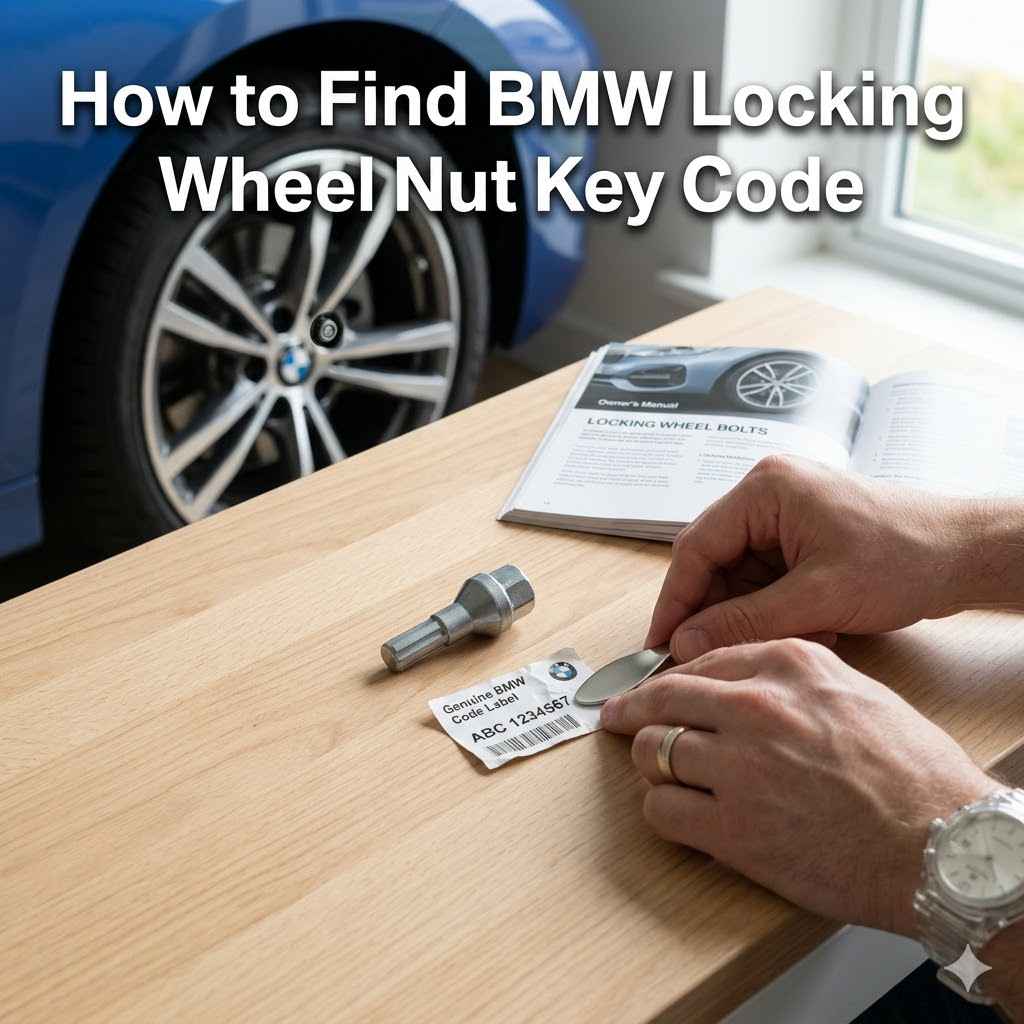
How to Find BMW Locking Wheel Nut Key Code
Losing your BMW locking wheel nut key can be a real headache. Many car owners find themselves stuck when they need to change a tire and can’t find that one specific key. It’s a common problem, especially for those new to car maintenance.
This guide will make the process simple. We’ll walk you through easy steps to find your BMW locking wheel nut key code.
Finding Your BMW Locking Wheel Nut Key
Discovering the right key for your BMW’s locking wheel nuts might seem tricky at first. These special nuts protect your wheels from theft. Without the unique key, removing your wheels becomes impossible.
This section will guide you through the most common and effective ways to locate your specific key or get a replacement. We’ll cover where you might have left it and what to do if it’s truly lost.
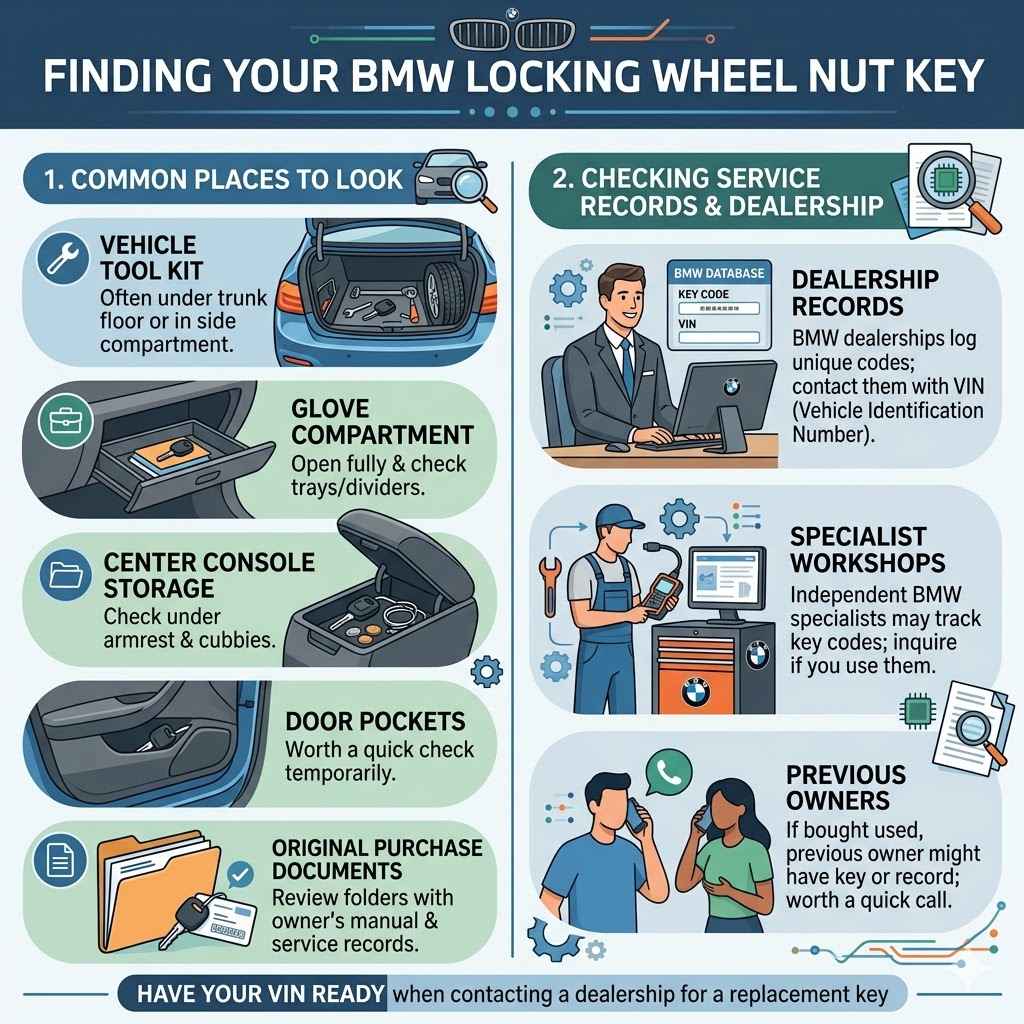
Common Places to Look
When your BMW locking wheel nut key is missing, the first step is to retrace your steps. Think about the last time you had your wheels serviced or changed a tire. Often, the key is simply misplaced rather than lost forever.
Many owners store their locking wheel nut key in a very specific spot within their vehicle. This spot is usually within reach when they might need it.
Vehicle Tool Kit: Many BMWs come with a dedicated space for the locking wheel nut key within the car’s standard tool kit. This might be under a floor mat in the trunk, inside a side compartment, or with the spare tire. Check all areas of your trunk carefully, looking for hidden compartments or tool rolls.
Glove Compartment: Some drivers prefer to keep smaller, important items like the locking wheel nut key in their glove compartment. Open it fully and look for any trays or dividers that might hold it. It could be tucked away behind other documents or small items.
Center Console Storage: Similar to the glove compartment, the center console offers accessible storage. Check under the armrest and in any drawers or cubbies within the console. Small items can easily get lost in these spaces.
Door Pockets: While less common for a locking wheel nut key, it’s worth a quick check. Some people might have placed it in a door pocket temporarily.
Original Purchase Documents: When you bought your car, the locking wheel nut key might have been presented to you along with other paperwork. Review any bags or folders that contained your owner’s manual, service records, or sales documents. It could be attached to a card or stored in a small envelope.
Consider when your car was last worked on by a mechanic. If you didn’t do the work yourself, it’s possible the mechanic might have stored it somewhere in the car, or perhaps returned it to you in a location you’ve forgotten. It is always a good idea to ask the dealership or workshop if they recall where they put it.
Checking Service Records and Dealership
If a thorough search of your vehicle yields no results, your next step involves your BMW service history. The dealership where you purchased your car or a trusted BMW specialist workshop is a valuable resource. They often keep records of the unique key codes for vehicles they service.
Dealership Records: BMW dealerships maintain extensive databases. When a car is sold or serviced, the unique code for its locking wheel nut key is often logged. Contact your local BMW dealership with your car’s VIN (Vehicle Identification Number). They can usually look up this information for you.
Specialist Workshops: Independent BMW specialists may also have systems in place to track key codes. If you frequently use a particular workshop, they might be able to help. It’s less common than a dealership, but still worth inquiring.
Previous Owners: If you bought the car used, the previous owner might have a record of the key code or even the key itself. If you are in contact with them, a quick call could save you a lot of trouble.
Having your VIN ready is crucial when contacting a dealership. This unique identifier helps them pinpoint your exact car model and specifications, which is essential for identifying the correct locking wheel nut key code. They can then work on producing a replacement key based on this information.
How to Find BMW Locking Wheel Nut Key Code Details
Understanding the BMW locking wheel nut key code is important. This code is not just a random number; it’s a unique identifier for your specific set of wheel nuts. Each set of locking wheel nuts has a pattern that only one specific key can match.
Knowing this code makes getting a replacement key much faster and easier.
What is a Locking Wheel Nut Key Code
A locking wheel nut key code is a unique alphanumeric identifier assigned to each set of anti-theft wheel nuts. When these nuts are manufactured, they are produced with a specific pattern or spline. This pattern is then matched to a corresponding key that has the inverse shape.
The code essentially acts as a serial number for this specific pairing.
This code is crucial for locksmiths or dealerships to cut a new key if the original is lost. Without the code, they would have to try and identify the pattern by examining the nuts, which is time-consuming and can be difficult. The code ensures precision and efficiency in replacement.
The Importance of the Code
The code ensures that only the correct key can remove the locking wheel nuts. This is a security feature to prevent wheel theft. If someone wants to steal your wheels, they need the specific key for your car.
The code is what allows authorized personnel, like a mechanic or dealership, to generate a new key. It’s like a master key for your specific wheel lock pattern.
This code is often found on a small card that comes with your car’s documentation. It might be printed on a plastic tag or a piece of paper. Look for labels like “Wheel Lock Key Code,” “Locking Wheel Nut Code,” or a series of letters and numbers.
It’s usually a mix of letters and numbers, such as “A4B3C” or “XYZ123.”
Where to Find the Code on Your Car
Finding the actual code can be as challenging as finding the key itself if you don’t know where to look. BMW has specific places where this information is typically kept. If you can locate the code, replacing the key becomes a much simpler task, often just requiring an order from the dealership.
Original Key Card: The most common place to find the code is on a small card that originally came with your car. This card usually has the key code printed on it, along with the key itself, or it serves as a reference if the key is stored separately. Check any wallets or cases that held your original keys or car documents.
Owner’s Manual Wallet: When you buy a new BMW, it comes with a wallet or folder containing all your important documents, including the owner’s manual, service book, and warranty information. The key code card is often tucked inside this wallet.
Dealership Documentation: If you purchased the car from a dealership, they might have a record of the code in your vehicle’s file. It’s always worth checking with them, especially if you cannot find the physical card.
On the Locking Wheel Nut Itself: In some rare cases, the code might be faintly etched onto the locking wheel nut. You would need a magnifying glass and good lighting to spot it, and it’s not a reliable method. This is usually a last resort.
If you have had your wheels changed or serviced by a third-party garage, they may also have recorded the code for you. It is good practice to keep this code in a safe place alongside your car’s important documents. This prevents future stress if you ever lose the physical key.
Getting a Replacement BMW Locking Wheel Nut Key
When all attempts to locate your original BMW locking wheel nut key fail, it’s time to consider getting a replacement. This process is designed to be straightforward, but it requires accurate information about your vehicle and the specific type of locking wheel nuts you have. The good news is that BMW dealerships are well-equipped to handle this.
Ordering from a BMW Dealership
The most reliable way to obtain a replacement BMW locking wheel nut key is through an authorized BMW dealership. They have the most direct access to the manufacturer’s systems and can ensure you receive the correct key for your specific vehicle. This process is designed for security and accuracy.
Provide Vehicle Identification Number (VIN): Your VIN is a unique 17-character code that identifies your specific BMW. The dealership will use this to access your car’s manufacturing details. This is the most critical piece of information they will need.
Identify Locking Nut Type: Even with the VIN, sometimes there are different patterns of locking wheel nuts used on the same model year. If you have the key code, that’s ideal. If not, the dealership might ask you to provide a photo of the locking nut or bring one of the nuts to the dealership for identification.
Payment and Delivery: Once the correct key is identified, you will need to pay for it. The cost can vary depending on the dealership and the specific key. They will then either provide it to you on the spot or order it for delivery.
Be prepared for the possibility that the dealership might need to verify your ownership of the vehicle. This is a security measure to prevent unauthorized individuals from obtaining replacement keys. Having your car registration and a form of identification will be helpful.
Using Online Services and Specialists
Beyond official dealerships, there are other avenues to explore for replacement keys. Several online services and independent automotive specialists also offer replacement locking wheel nut keys. These options can sometimes be faster or more cost-effective, but it’s important to choose reputable providers.
Specialized Online Retailers: Numerous websites are dedicated to selling replacement car keys, including locking wheel nut keys. You typically need to provide your key code or detailed information about your car’s make, model, and year. Do thorough research and read reviews before ordering.
Locksmiths: Some automotive locksmiths have the expertise and tools to create replacement keys for locking wheel nuts. This might be a good option if you need a key urgently. They might be able to identify the pattern on-site.
Third-Party Auto Parts Stores: Certain larger auto parts chains might offer services for replacing locking wheel nut keys. They often work with specialized suppliers to provide these keys.
When using online services or third-party specialists, always be cautious. Ensure they have a clear return policy and a good reputation. Some services may require you to send in a photo of the locking nut or provide specific measurements.
The key is to find a trustworthy source that guarantees the correct fit.
When to Call a Professional
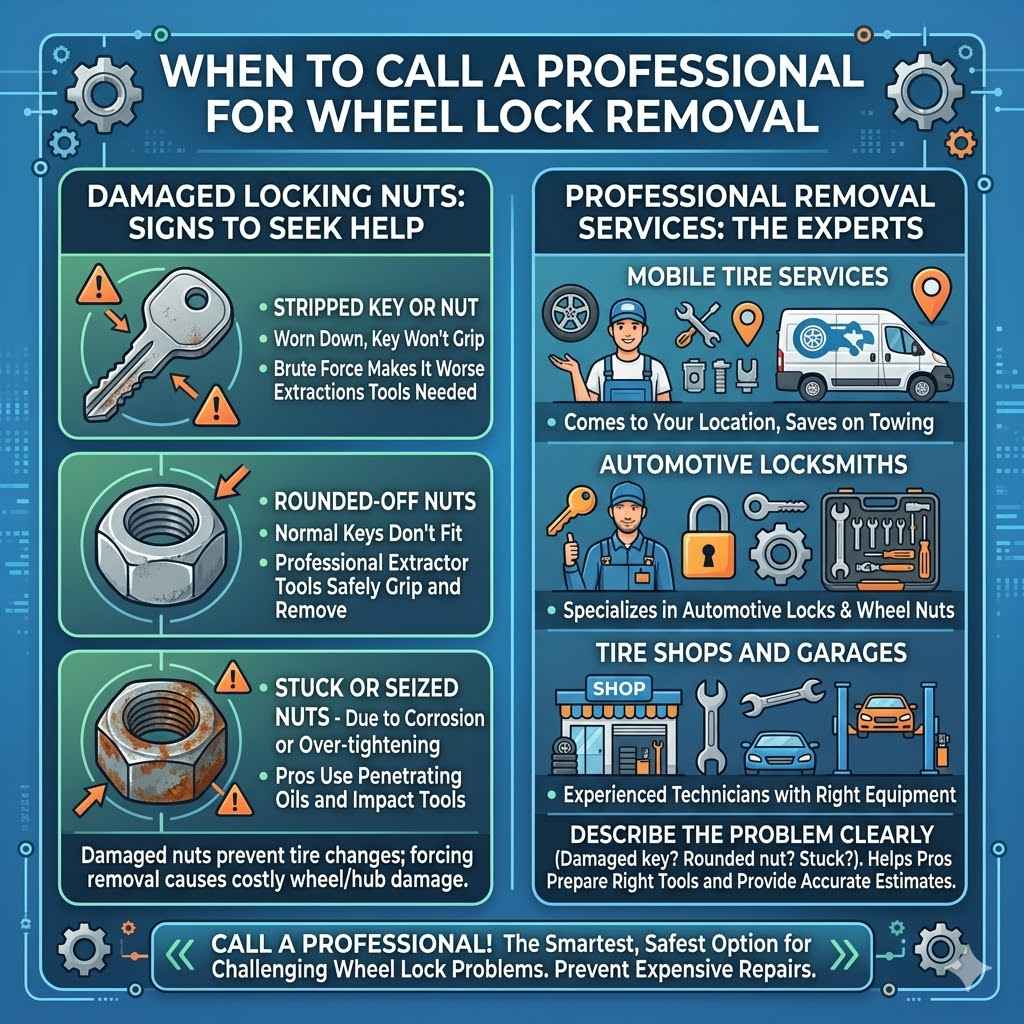
There are situations where trying to find the key or code yourself might become too difficult, or you might have already damaged a locking nut. In these cases, calling a professional is the smartest and safest option. They have the tools and expertise to solve even the most challenging wheel lock problems.
Damaged Locking Nuts
If you’ve tried to remove the locking wheel nuts and the key is damaged, or the nut itself is stripped, you’ve likely reached a point where professional help is needed. Forcing the issue can cause further damage to the wheel or the hub, leading to more expensive repairs.
Stripped Key or Nut: When a locking wheel nut or the key becomes worn down or damaged, it can prevent the key from gripping the nut effectively. This is a common problem that requires specialized tools to extract. Trying to use brute force will often make the situation worse.
Rounded-Off Nuts: If the edges of the locking nut have become rounded due to wear or improper tool use, standard keys will no longer fit. A professional can use extractor tools to grip and remove these stubborn nuts without damaging the wheel.
Stuck Nuts: Sometimes, locking nuts can become seized due to corrosion or over-tightening. Professionals have access to penetrating oils and specialized impact tools that can break them loose safely.
A damaged locking nut not only prevents you from changing a tire but also makes it impossible to remove the wheel for servicing. This can create a significant inconvenience. It’s always better to seek professional help before attempting to force removal, which could lead to costly damage.
Professional Removal Services
Specialized services exist purely to remove stubborn or damaged locking wheel nuts. These professionals are equipped with a variety of tools designed to tackle almost any wheel lock issue. They are the experts when you’ve exhausted all other options.
Mobile Tire Services: Many mobile tire repair services offer locking wheel nut removal as part of their offerings. They can come to your location, saving you the hassle of towing your car.
Automotive Locksmiths: As mentioned earlier, some locksmiths specialize in automotive locks and wheel nuts. They can often identify the nut and remove it using specialized equipment.
Tire Shops and Garages: Reputable tire shops and garages often have experienced technicians and the right tools for removing damaged locking wheel nuts. If you are taking your car in for service, they can often address this issue.
When you contact a professional, be ready to describe the problem as clearly as possible. Explain if the key is damaged, if the nut is rounded off, or if the nut is simply stuck. This will help them prepare the right tools for the job and provide you with a more accurate estimate.
Frequently Asked Questions
Question: What should I do if I can’t find my BMW locking wheel nut key?
Answer: If you can’t find your key, first check common places in your car like the tool kit, glove box, and center console. If it’s still missing, contact a BMW dealership with your car’s VIN to get a
Question: How much does a replacement BMW locking wheel nut key cost?
Answer: The cost can vary, but typically a replacement key from a BMW dealership might range from $50 to $150, depending on the specific key and dealership. Online specialists or independent garages may offer slightly lower prices.
Question: Can I remove locking wheel nuts without the key?
Answer: Yes, but it’s not recommended for the average person. Professionals have special tools to remove damaged or lost locking wheel nuts without harming your wheels. Trying to force them yourself can cause significant damage.
Question: Is the locking wheel nut key code the same as my car’s VIN?
Answer: No, they are different. Your VIN (Vehicle Identification Number) identifies your entire car. The locking wheel nut key code is a specific code for your set of wheel nuts, allowing a new key to be made for them.
Question: How long does it take to get a replacement key?
Answer: If you order from a BMW dealership, it can take anywhere from a few days to a couple of weeks, depending on whether they have it in stock or need to order it from the factory. Online services might offer quicker delivery options.
Conclusion
Finding your BMW locking wheel nut key code or a replacement key is achievable. Start by searching your car’s storage areas. If that fails, your BMW dealer can help using your VIN.
Having the key code makes getting a new one simple. If nuts are damaged, professionals are available.