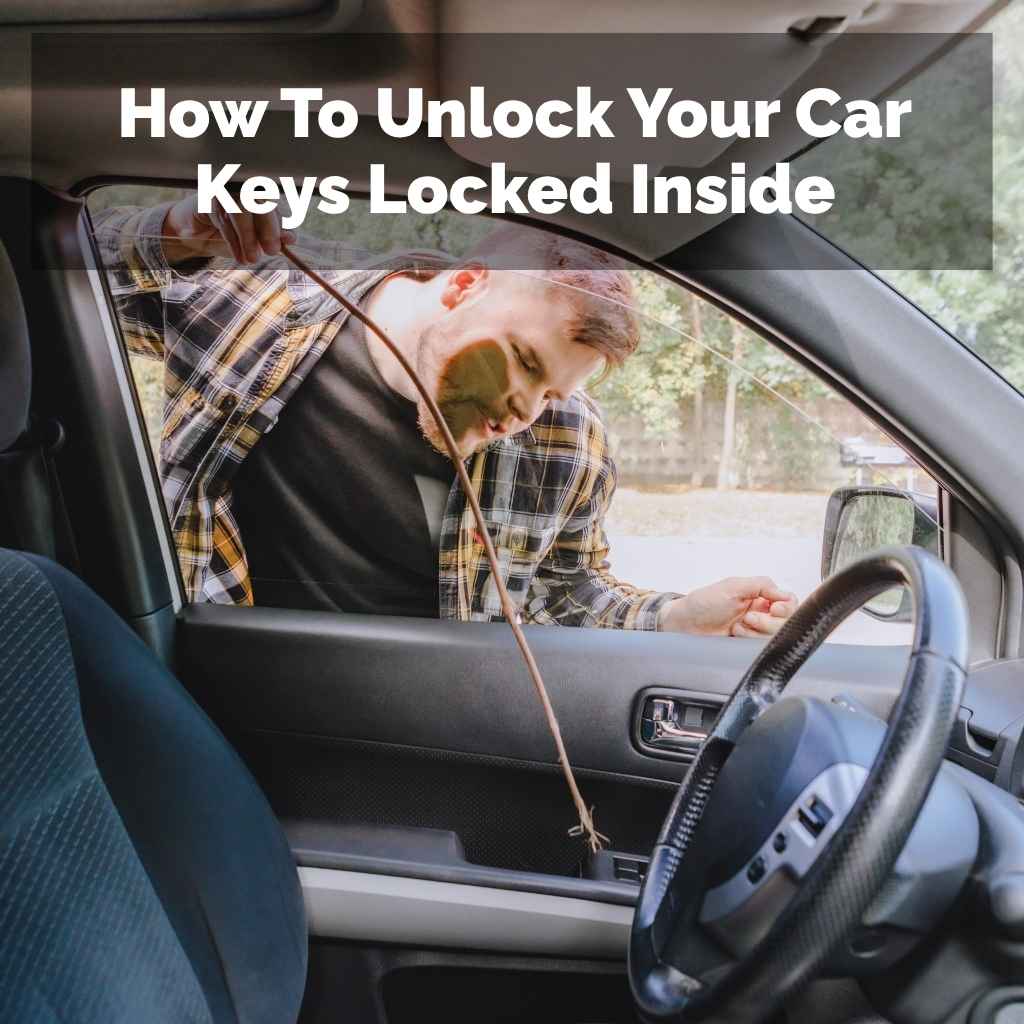
How To Unlock Your Car Keys Locked Inside
If your keys are locked inside, use the spare key or a locksmith first; on modern cars, call roadside assistance before prying. Wrong tools can damage door components, bend weatherstripping, or turn a simple lockout into a costly repair. This guide sorts the safest open option by car type, lock failure, urgency, and likely cost.
What to do first
Start with the simplest checks: every door, the trunk, and any window that may already be open. If the battery is dead, the fix changes because power locks, trunk release switches, and app features may not respond. If a child or pet is trapped, stop the DIY plan and treat it as an emergency.
Check every door and the trunk
A surprising number of lockouts turn out to be one unlocked door, a hatch, or a trunk that still opens. Try each door handle, then the trunk release, then any rear access point the vehicle has. If the cabin is sealed but the trunk is open, use that access only if it does not require forcing a rear seat or damaging trim.
Confirm whether the battery is dead
A dead battery can make a car seem fully locked when the real problem is loss of power to the lock system. That matters because a power lock, keypad, or app command may fail even when the keys are inside. If interior lights are dead and the remote does nothing, treat it as a power issue before choosing a tool.
Decide whether this is an emergency
If a child or pet is inside and heat, cold, or panic is building, do not wait on a normal lockout routine. Call emergency help immediately and prepare to break glass only if there is no faster way in. For every other lockout, use the least risky option first and reserve glass breakage for true life-threatening cases.
Should you call roadside assistance?
Yes, if you already have it and the situation is not urgent. AAA members get lockout service as part of their plan, and similar help may already be included through insurance, a credit card, or a warranty benefit. Expect a wait of roughly 30 minutes to 2 hours, depending on location and demand.
When coverage already exists
Check any roadside benefit before paying out of pocket. Many drivers already have a lockout benefit through a tow plan, an automaker program, a premium credit card, or a factory warranty package. If the vehicle is in a safe place and no one is inside, this is often the easiest first call.
How long help may take
Roadside help is useful, but it is not instant. A realistic wait is 30 minutes to 2 hours. That delay is acceptable for a normal lockout, yet it is too slow for a child or pet emergency. If time matters more than cost, a local locksmith may get there sooner.
When this is the best first call
Choose roadside assistance first when the car is parked safely, the battery is unknown or dead, and you do not need a fast entry. It is also a good fit when you want to avoid damage and you already have coverage. If the car has app access, try that while help is on the way.
When a locksmith is the better move
An automotive locksmith is the better choice when you need a low-damage entry and roadside assistance is not available soon enough. Typical cost is about $50 to $150, though after-hours, rural, luxury, or smart-key jobs can run much higher, and Kwikey lists $50 to $250 in some cases. A locksmith can often open the vehicle without damage and may cut replacement keys on site.
Typical cost and what that buys you
For a standard lockout, the usual price range is $50 to $150. That payment often covers a direct entry, not just a tow or phone advice, though after-hours, rural, luxury, and smart-key jobs can cost more. If the key is lost rather than stuck inside, ask whether the technician can make a replacement key or program a transponder on site.
Why damage risk stays low
Locksmiths use vehicle-specific entry methods and tools built to reach the lock or handle without prying hard on the frame. That matters on modern cars, where the wrong tool can damage sensors, trim, or weatherstripping. A professional entry is usually the safest option when the car has electronic locks or tight door seals.
When replacement keys may be made on site
If the original key is missing, not merely trapped inside, some locksmiths can cut and program a replacement where the car sits. That can save a second trip to the dealer. Ask about key type first, because smart keys, chips, and proximity fobs change both price and turnaround time.
Car lockout decision table
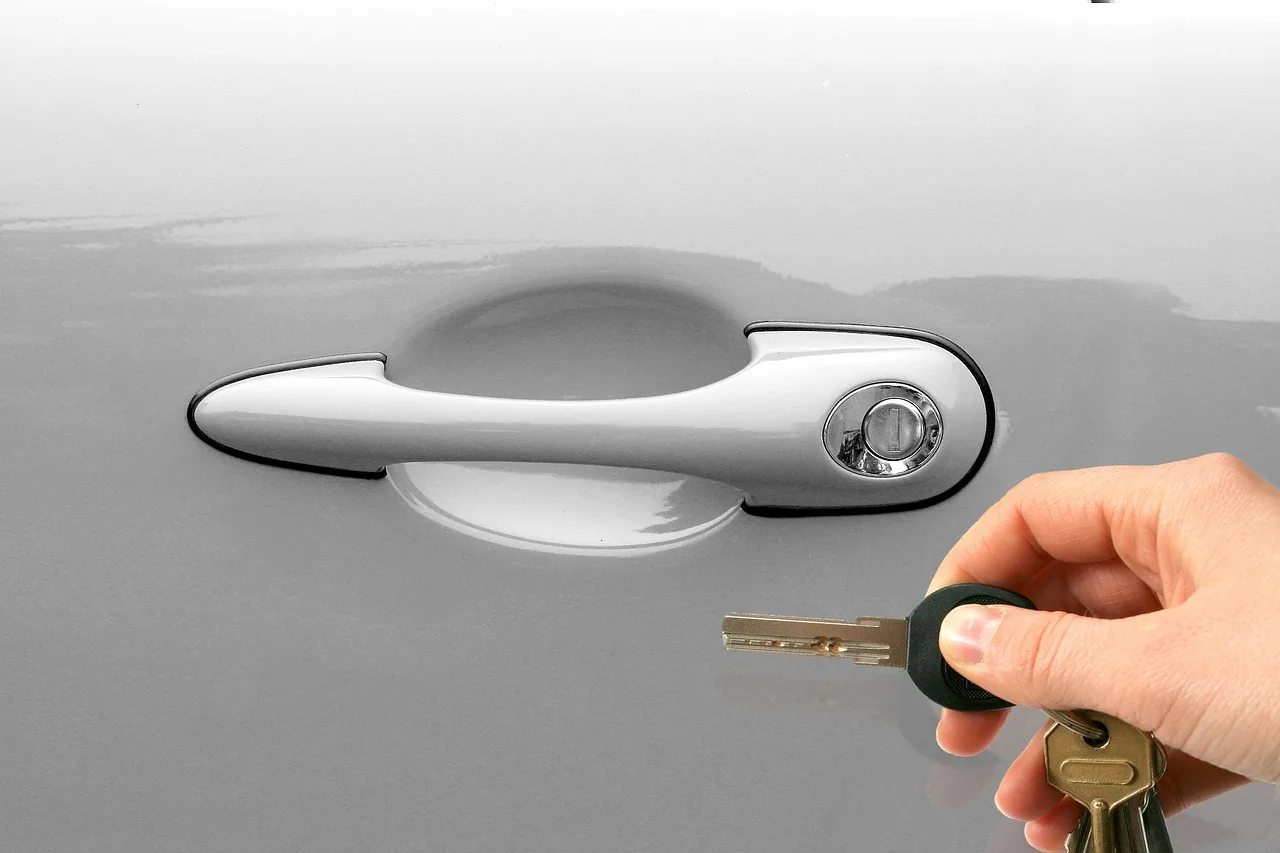
Use this table to match the problem to the least risky next step. The right answer changes with lock type, battery status, and urgency. A method that works on an older post lock can damage a modern power-lock door.
| Scenario | Best next step | Likely cost/time |
|---|---|---|
| Older post-lock car | Try the shoelace or string trick only if the lock is a vertical post lock and the door design allows it; otherwise call a locksmith. | DIY can be quick if it works; professional help often costs $50 to $150. |
| Modern power-lock car | Use roadside assistance, a locksmith, or the vehicle’s app if available. Avoid pry tools and forced entry. | Roadside help may take 30 minutes to 2 hours; locksmiths often charge $50 to $150. |
| Dead-battery lockout | Check for hidden mechanical key access, then call roadside assistance or a locksmith if the locks will not respond. | Usually same-day; cost depends on whether a jump, entry, or replacement key is needed. |
| Trunk-only lockout | Use the trunk release or connected app first. If the cabin is inaccessible, avoid forcing rear seats or trim. | Often no added cost if app access works; locksmith prices usually start around $50. |
| App-enabled vehicle | Use the maker’s app or connected service if the account is active and the vehicle supports remote entry. | Often immediate if login and subscription access are active. |
| Child or pet emergency | Call 911 immediately. Break a window only if that is the fastest life-saving option. | Immediate response matters more than cost; glass cleanup follows. |
Which DIY method fits your car?
DIY only makes sense when the car is old enough for the method and the risk is low. The safest common approach is an inflatable air wedge with a long-reach tool. The shoelace or string trick is limited to older cars with vertical post locks, and even many older vehicles still will not allow it depending on lock shape and anti-theft design. Modern vehicles usually need professional help or app access.
Inflatable air wedge and long-reach tool
The air wedge creates a small gap at the door frame so a long-reach tool can reach the open button or interior handle. Stop as soon as the tool can reach without forcing the door wider, and do not over-inflate the wedge. In a basic DIY kit approach, the process is often described as taking two to five minutes.
A common first-timer mistake is pumping the wedge too hard on a frameless window door. That can stress the seal and make the gap worse, not better. If the gap does not appear with light pressure, stop and switch to a locksmith or roadside help.
Shoelace or string on vertical post locks
The shoelace trick is described for older cars with post locks, mainly from the 1990s and early 2000s. It is a last resort, not a general solution. Popular Mechanics says the string method is a last resort, and it simply is not suited to most modern cars with button locks or flush hardware.
Say your 1998 sedan has a visible vertical post lock and no power lock response at all. A looped string may pull the post up if the door shape and lock position cooperate. If the lock is inside a bezel, recessed, or electronic, the trick usually fails.
Why modern cars resist simple tools
Modern vehicle lock systems often include power locks, electronic switches, and hidden mechanisms that do not behave like older manual locks. That is why slim jims and coat hangers can bend parts or damage wiring instead of opening the door. Kwikey notes slim jims were designed for pre-2000 cars.
Picture a 2022 SUV with button locks and sealed weatherstripping. A wire hanger may slip between trim pieces and snag nothing useful, then scratch the finish on the way out. On this kind of car, a locksmith or app entry is the safer route.
What should you avoid?
Avoid tools and methods that pry blindly through the door skin or window channel. Slim jims, coat hangers, screwdrivers, and other forced-entry methods can damage modern locks, break clips, and bend trim. If the first gentle attempt fails, stop before the problem becomes a repair bill.
Slim jims and coat hangers
Slim jims were designed for older cars, and even there they were never a universal solution. On modern power-lock vehicles, they can damage rods, wiring, and airbag-related components inside the door. A bent hanger can also scratch glass and weatherstripping while failing to move the latch.
Screwdrivers and forced prying
Do not wedge a screwdriver between the door and the frame. That can deform the door shell, tear the seal, and create wind noise or water leaks after the lockout is over. The short-term gain is rarely worth the long-term repair.
Breaking glass before the last resort
The same source says not to break a window unless life is at risk. That is the right rule. If the car is otherwise recoverable, a broken window adds cleanup, replacement glass cost, and the risk of injury. Keep glass breakage for emergencies only.
Emergency window break steps
Break a window only when a child or pet is trapped and time matters more than the cost of repair. Dial 911 immediately in emergencies. Choose a window away from occupants, break only one side window if possible, and expect glass cleanup afterward. Side-window glass type varies by vehicle, so some windows are easier to break than others.
Pick a window away from occupants
Use the window farthest from the child or pet, not the one nearest them. That limits flying glass near the person or animal you are trying to reach. The same source notes firefighters use a long metal rod and wedges, which reflects the same idea: create access with control, not panic.
Clear broken glass safely
After the glass breaks, remove loose fragments before reaching through the opening. Keep hands clear of the frame edge and door sill. If the vehicle has laminated or tempered side glass debris inside the cabin, get the person or pet out first and clean up later.
Get help for the child or pet first
The priority is the occupant, not the vehicle. Move the child or pet to a safe, temperature-controlled space, then deal with the broken window and transport. If emergency responders are already en route, follow their instructions and avoid making the opening larger than needed.
Car key entry options
Some newer vehicles can be entered through a keypad or a connected app, but only if the model supports it and the account is active. Availability varies by brand, subscription, and login access. The same source says connected vehicles may gain access remotely via app, and Caramaze lists manufacturer apps like OnStar, Blue Link, and Uconnect.
Keypad entry on some models
A factory keypad can solve a lockout without tools if the code is known and the system still has power. That is common on certain trucks and SUVs. If the battery is dead, keypad response may be limited unless the vehicle has a backup access design.
App-based remote entry
App entry can work if the owner account is active, the vehicle is linked, and the service is still subscribed. It may be the cleanest option for a modern lockout. If the app cannot verify the account or the car is offline, do not waste time waiting on it alone.
When subscription or login access matters
Remote entry depends on the service plan and account status. If you cannot log in, the car is not enrolled, or the subscription has expired, the feature will not help. In that case, roadside assistance or a locksmith is the next practical step.
Frequently asked questions
How do you open a car with keys locked inside?
Use the spare key, roadside assistance, a locksmith, or the vehicle’s app if it has one. Start by checking every door and the trunk, then match the next step to the lock type. Older post-lock cars may allow a string trick, while modern vehicles usually need professional help.
What should I try first when my car keys are locked inside?
Check each door, the trunk, and any open window before trying tools. If the battery is dead, treat it as a power issue, not just a lockout. If you already have roadside coverage, that is often the safest first call for a normal lockout.
How much does a locksmith cost for a car lockout?
The price usually depends on time of day, location, lock type, and whether a replacement key is also needed; after-hours, rural, luxury, and smart-key jobs may cost more. Many locksmiths can open without damage.
Can roadside assistance help if I locked my keys in the car?
Yes. AAA members get lockout service as part of their plan, and similar benefits may already exist through insurance, a credit card, or a warranty. The wait can be 30 minutes to 2 hours, so it works best when the situation is safe and non-emergency.
What should I not do when keys are locked inside my car?
Do not use a screwdriver, coat hanger, or slim jim on a modern car. Do not pry hard on the door frame, and do not break a window unless life is at risk. Those shortcuts often damage locks, trim, glass, or wiring and make the repair more expensive.
Can I break a window if a child or pet is locked in the car?
Yes, if there is a genuine life-threatening emergency and faster help is not available. Dial 911 immediately, choose a window away from the occupant, and expect glass cleanup afterward. Break only what is needed to reach the child or pet, then get them out first.
Products related to this article
Sponsored / affiliate links. As an Amazon Associate I earn from qualifying purchases. I may earn additional commission from eligible campaigns.