How To Find Fuel Leak In Car: Proven Essential
Finding a fuel leak in your car involves visual checks under the hood and car, smelling for gasoline, and using a mechanic’s stethoscope or soapy water to pinpoint the source. Prioritize safety by working in a well-ventilated area, away from sparks, and disconnecting the battery. Early detection prevents fire hazards and costly damage.
Ever caught a whiff of gasoline around your car and felt a knot of worry? You’re not alone! That strange smell or even visible puddles under your vehicle can be a sign of a fuel leak. It sounds serious, and it can be if ignored, but the good news is that this is often a fixable problem that many car owners can tackle with a little guidance. Don’t let it stress you out! This guide is here to break down exactly how to find a fuel leak in your car, step-by-step. We’ll show you what to look for, what tools might help, and how to stay safe while you do it. Let’s get your car smelling fresh and running safely again!
Why Fuel Leaks Need Your Attention
A fuel leak is more than just an annoyance; it’s a safety hazard. Gasoline is highly flammable, and even a small leak can pose a serious fire risk, especially when combined with hot engine components or electrical sparks. Beyond the immediate danger, fuel leaks can lead to:
- Reduced Fuel Efficiency: You’re literally losing fuel, which means you’ll be visiting the gas station more often and spending more money unnecessarily.
- Environmental Damage: Leaking fuel can contaminate soil and groundwater, harming the environment.
- Engine Performance Issues: A compromised fuel system can affect how your engine runs, leading to stalling, rough idling, or difficulty starting.
- Costly Repairs Down the Line: Ignoring a small leak can turn into a much larger, more expensive problem if untreated.
The sooner you can identify and address a fuel leak, the safer and more cost-effective it will be for you and your vehicle. Think of this as a proactive step towards keeping your car reliable and safe for everyone.

Getting Started: Safety First!
Working with gasoline requires caution. Before you even start looking, make sure you prioritize safety. Here’s what you need to do:
Essential Safety Precautions
- Ventilation is Key: Always work on your car in a well-ventilated area. An open garage is okay, but outdoors is even better. Never work on a fuel leak inside a closed garage.
- No Open Flames or Sparks: Absolutely no smoking, lighters, or anything that could create a spark nearby. Gasoline fumes are highly flammable.
- Disconnect the Battery: To prevent any accidental sparks from the electrical system, it’s a wise idea to disconnect the negative terminal of your car’s battery.
- Wear Protective Gear: Safety glasses are a must to protect your eyes from fuel splash. Nitrile gloves are also recommended to protect your skin.
- Fire Extinguisher Ready: Keep a fire extinguisher rated for gasoline fires (Class B) nearby.
- Know When to Stop: If you’re ever uncomfortable or unsure, it’s always best to call a professional mechanic.
Common Signs of a Fuel Leak
Sometimes, your car gives you clues that something isn’t right. Learning to recognize these signs can help you catch a fuel leak early on:
The Smell Test
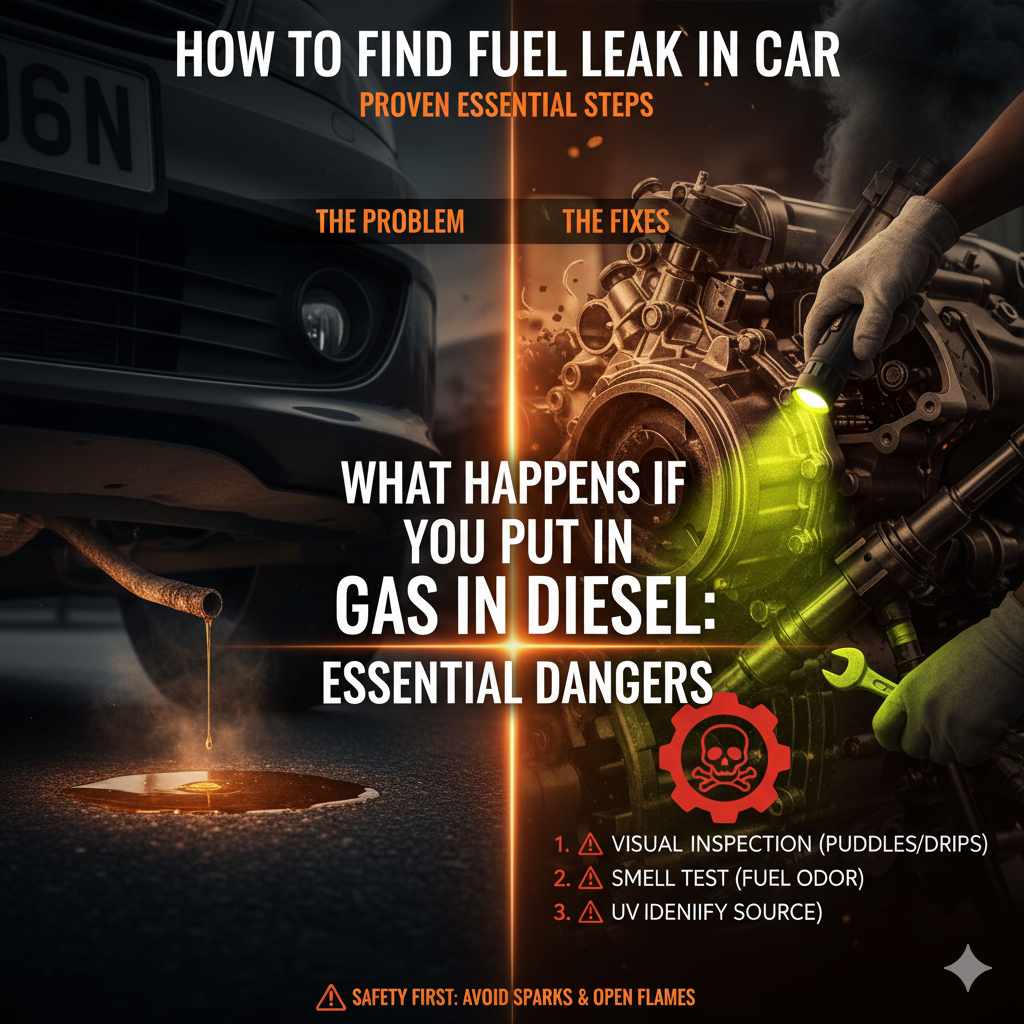
This is the most common indicator. If you consistently smell gasoline when you’re near your car, especially after refueling or when the engine is warm, it’s a strong sign of a leak. Pay attention to where the smell is strongest – is it coming from the front, back, or underneath?
Visual Clues
Look for any wet spots, puddles, or shiny, damp areas under your car when it’s parked. These could be signs of dripping fuel. Also, inspect the fuel lines and connections themselves for any visible cracks, damage, or wetness from fuel residue.
Performance Issues
A fuel leak can affect how your engine receives fuel. You might notice:
- Difficulty starting the engine.
- The engine sputtering or stalling.
- A rough or uneven idle.
- A reduction in engine power.
How to Find Fuel Leak In Car: Step-by-Step Guide
Now, let’s get down to actually finding the leak. We’ll start with simple checks and move to more detailed inspections.
Step 1: The Initial Walk-Around
Park your car on a level surface in a well-ventilated area. Turn off the engine and let it cool for a bit. This is a good time to do your initial safety checks, like disconnecting the battery.
Walk around your car. Do you smell gas strongly in one particular area? This gives you a starting point.
Step 2: Under the Hood Inspection
Open the hood. Your fuel system components under the hood include the fuel injectors, fuel rail, fuel pressure regulator, and various hoses and lines connecting these parts.
- Fuel Lines: Look for any rubber hoses that might be cracked, brittle, or bulging. Check the metal lines for corrosion or damage.
- Fuel Injectors: These are typically located on top of the engine, connected to the fuel rail. Inspect their seals for any signs of fuel seepage.
- Fuel Rail: This is the pipe that supplies fuel to the injectors. Check its connections to the fuel lines and injectors for any dampness.
- Fuel Filter: Depending on your car, the fuel filter can be in different locations, but it’s a common spot for leaks. Check the connections where fuel lines attach to it.
Look for any wet spots, dark residue (which is dried fuel), or fresh fuel dripping. Even a small amount of dampness around a connection is worth noting.
Step 3: Inspecting Underneath the Car
This is often where the most significant leaks occur. You’ll need to safely get under your car. If you have car ramps, driving onto them provides easier access. If not, use sturdy jack stands to lift the car. Never rely on a jack alone.
Once safely positioned, look for the following:
- Fuel Tank: Inspect the fuel tank itself for any signs of rust, damage, or punctures. Check the connections between the fuel lines and the tank.
- Fuel Pump Assembly: On many modern cars, the fuel pump is located inside the fuel tank. Look for any seals or connections around the top of the tank that could be leaking.
- Fuel Lines: Follow the fuel lines from the fuel tank to the engine bay. These metal or rubber lines can be damaged by road debris, rust, or age. Pay close attention to any flexible rubber sections.
- Evaporative Emissions (EVAP) System: This system helps control fuel vapors. Components like the charcoal canister, vapor lines, and purge valve can sometimes develop leaks. Look for any fuel smell emanating from these areas, often located near the fuel tank or engine bay.
Step 4: The Soapy Water Trick (For Low-Pressure Leaks)
For very small leaks, especially on metal lines or fittings, a simple soapy water solution can help.
- Mix a generous amount of dish soap with water in a spray bottle.
- With the engine running and a helper carefully observing, spray the soapy water onto suspected leak points, such as hose clamps or fittings.
- If there’s a leak, the escaping fuel will push air through the soapy water, creating small bubbles.
Note: This method is best for systems that aren’t under high pressure. Be extremely cautious when the engine is running and fuel is present.
Step 5: Using a Mechanic’s Stethoscope
A mechanic’s stethoscope is a surprisingly simple tool that can help. It amplifies sounds, allowing you to listen to various parts of your car.
- With the engine running and the car safely secured, carefully place the probe of the stethoscope on different parts of the fuel system (fuel lines, injectors, fuel rail).
- Listen for any unusual hissing or spraying sounds that would indicate escaping fuel.
This tool can be very effective in isolating a leak to a specific component or area. You can find affordable mechanic’s stethoscopes at most auto parts stores.
Common Failure Points for Fuel Leaks
Certain parts of your car’s fuel system are more prone to developing leaks over time. Knowing these will help you focus your inspection.
| Component | Likely Cause of Leak | Location |
|---|---|---|
| Fuel Lines (Rubber Hoses) | Cracking, drying out, bulging, or damage from road debris. | Under car, connecting tank to engine. |
| Fuel Lines (Metal) | Corrosion, rust-through, physical damage. | Under car, along the chassis. |
| Fuel Filter | Loose fittings, cracked housing, seal failure. | Varies by vehicle, often near engine or fuel tank. |
| Fuel Injectors | Worn or damaged O-rings/seals. | On top of the engine, connected to fuel rail. |
| Fuel Rail | Cracked rail (less common), leaky connections. | On top of the engine, feeding fuel injectors. |
| Fuel Tank Seals/Fittings | Corrosion, gasket failure, loose connections. | Around the fuel pump assembly on top of the fuel tank. |
| Fuel Tank Itself | Rust-through, punctures from road debris. | Under the vehicle. |
| EVAP System Hoses/Canister | Cracked hoses, porous canister, faulty valve seals. | Near fuel tank or engine bay. |
Tools You Might Need
While you can often spot a leak visually, a few basic tools can make the job easier and safer:
- Safety Glasses: Protect your eyes.
- Nitrile Gloves: Protect your skin from fuel.
- Flashlight: Essential for good visibility, especially under the car.
- Jack and Jack Stands: To safely lift the vehicle if needed.
- Wheel Chocks: To prevent the car from rolling.
- Spray Bottle: For the soapy water trick.
- Mechanic’s Stethoscope: To listen for leaks.
- Shop Rags: For cleaning up fuel spills.
- Basic Wrench Set: For potential minor tightening of fittings, if applicable and safe.
Remember to consult your car’s owner’s manual for specific locations of fuel system components relevant to your make and model.
When to Call a Professional
Even with this guide, some fuel leak issues are best left to the experts. You should definitely call a professional mechanic if:
- You can’t locate the source of the leak after a thorough inspection.
- The leak appears to be coming from the fuel tank itself, especially if it involves rust or damage.
- You suspect a leak in a high-pressure fuel injection line or component and are not comfortable working with these systems.
- You’ve identified the leak but don’t have the necessary tools or expertise to make the repair.
- You feel unsafe at any point during your inspection.
For instance, the fuel system in modern vehicles can operate at very high pressures. According to the U.S. Department of Transportation, Federal Motor Vehicle Safety Standards require fuel systems to withstand significant pressure to prevent leaks. If a high-pressure line fails, it can spray fuel with considerable force, increasing fire risk and making repair a job for trained professionals. Trusting a mechanic ensures the job is done safely and correctly.

Common Fuel Leak Questions (FAQ)
Q1: How can I tell if my car has a fuel leak?
A1: The most common signs are a strong smell of gasoline around your car, visible puddles of liquid under the vehicle, and possible changes in engine performance like rough idling or difficulty starting.
Q2: Is it safe to drive with a fuel leak?
A2: It is generally NOT safe to drive with a fuel leak. Gasoline is highly flammable, and a leak significantly increases the risk of a fire. It’s best to address it immediately.
Q3: Where is the fuel tank located in most cars?
A3: The fuel tank is typically located underneath the rear of the vehicle, usually behind the rear axle or integrated into the frame.
Q4: How much does it usually cost to fix a fuel leak?
A4: The cost can vary greatly. Simple fixes like replacing a cracked hose or a faulty fuel filter might cost under $100, while more complex issues like a leaking fuel pump or tank replacement can cost several hundred to over a thousand dollars.
Q5: Can a fuel leak cause my car to have poor gas mileage?
A5: Yes, absolutely. If fuel is leaking out, it means you are losing fuel that should be going into your engine. This directly leads to worse fuel economy.
Q6: What should I do if I see a puddle under my car?
A6: First, determine if it’s fuel. Smell it – gasoline has a distinct odor. If it’s not fuel (it could be coolant or oil), you’ll want to identify that leak. If it IS fuel, park the car and do not drive it. Inspect for the leak following the steps in this guide, or call a mechanic.
Q7: Is it okay to touch leaking fuel?
A7: It’s best to avoid direct contact. Gasoline can irritate your skin and is absorbed through it. Always wear gloves when inspecting or working on a suspected fuel leak.
Conclusion
Finding a fuel leak in your car might seem daunting at first, but by following these straightforward steps and prioritizing safety, you can often identify the problem yourself. Whether it’s a simple visual check for damaged hoses under the hood or a more detailed inspection beneath the car, being observant is your best tool. Remember the key signs: that unmistakable gasoline smell, visible wet spots, or unusual engine behavior.
Don’t hesitate to use basic tools like a flashlight and a spray bottle of soapy water, or even a mechanic’s stethoscope, to pinpoint the culprit. And always keep in mind that your safety, and the safety of others, comes first. If a leak is significant, hard to find, or simply beyond your comfort level to repair, calling a trusted mechanic is the smartest move. By being proactive, you can prevent potential hazards, save money on fuel, and keep your vehicle running smoothly and dependably.