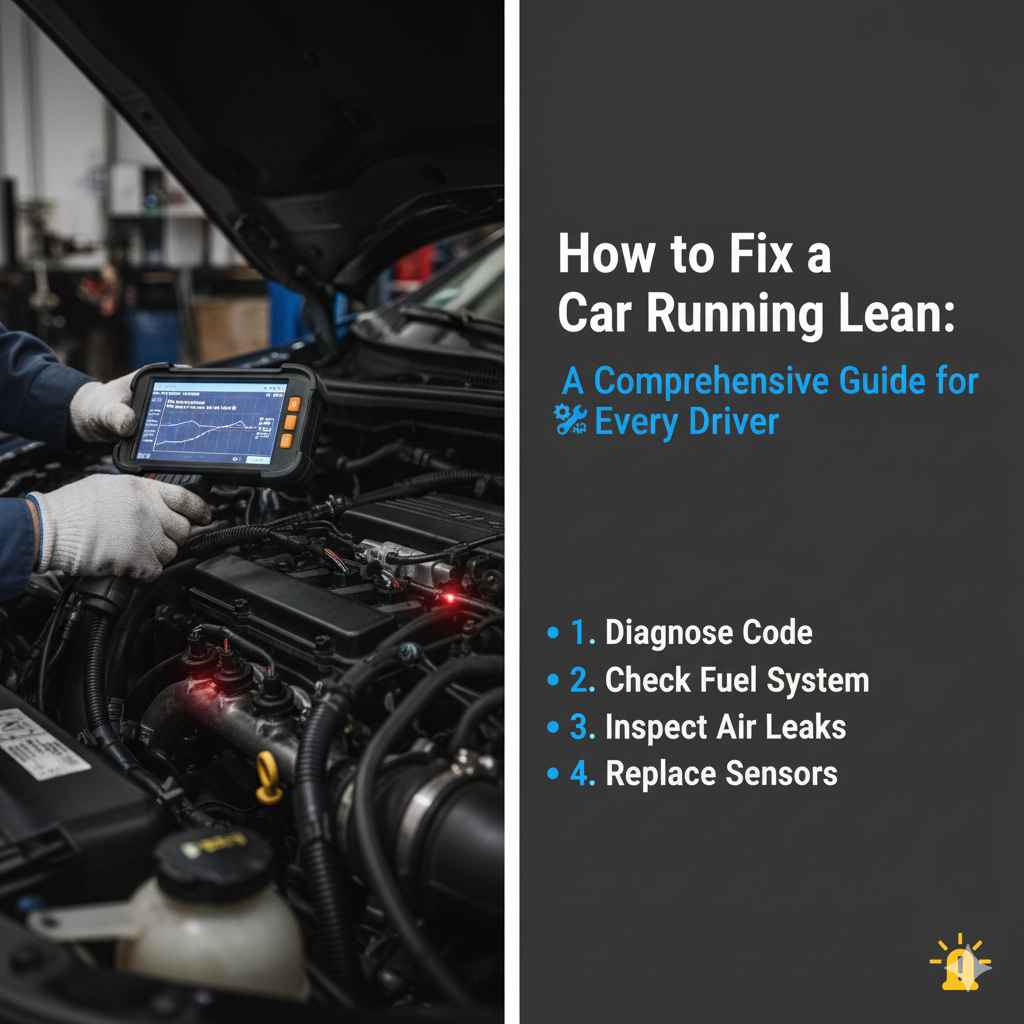
How to Fix a Car Running Lean: A Comprehensive Guide for Every Driver
Hey there, fellow car enthusiast! If you’re reading this, chances are your car’s acting up, and you’ve heard the term “running lean.” Maybe your mechanic mentioned it, or you pulled a code from your car’s computer with an OBD-II scanner. Either way, you’re in the right place. I’ve been tinkering with cars for years, and I’ve dealt with my fair share of lean-running engines. It’s frustrating when your car doesn’t perform like it should—sputtering, losing power, or refusing to start smoothly. But don’t worry, I’m here to walk you through what it means when your car is running lean, why it happens, and, most importantly, how to fix it. Let’s dive in and get your ride back to its full potential.
What Does It Mean When a Car Is Running Lean?
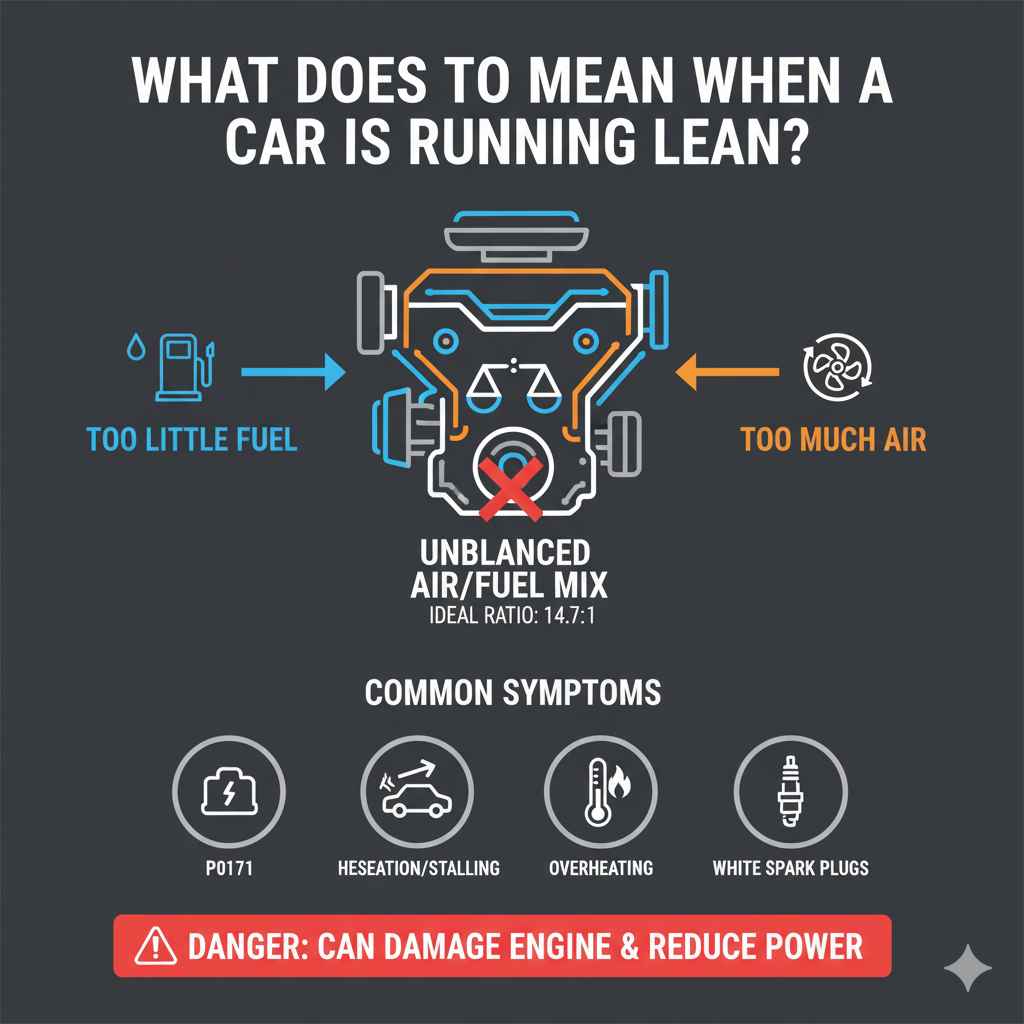
When someone says a car is “running lean,” it sounds technical, but it’s actually pretty straightforward. Your car’s engine needs a perfect balance of air and fuel to run smoothly. The ideal air-to-fuel ratio is about 14.7 parts air to 1 part fuel. This is called the stoichiometric ratio, and it’s what makes your engine hum efficiently. When your engine is running lean, it’s getting too much air or not enough fuel. Think of it like trying to cook a meal with too little seasoning—it just doesn’t work right.
A lean condition can cause all sorts of problems. Your car might misfire, hesitate when you hit the gas, or even stall out. If you let it go too long, it can damage your engine, so it’s not something to ignore. I learned this the hard way when my old pickup started acting sluggish on the highway. After some digging, I found out it was running lean due to a clogged fuel filter. Let’s break down why this happens and how to spot it.
Symptoms of a Lean-Running Engine
Before we fix the problem, you need to know what to look for. A lean-running engine isn’t shy about showing symptoms, but they can be easy to miss if you’re not paying attention. Here’s what I’ve noticed over the years when dealing with lean conditions:
- Check Engine Light: This is usually the first clue. If your dashboard lights up, grab an OBD-II scanner. Codes like P0171 or P0174 often point to a lean condition.
- Poor Acceleration: Your car feels sluggish, especially when you’re trying to speed up or climb a hill. It’s like the engine’s gasping for breath.
- Rough Idle: Does your car shake or sputter when you’re stopped at a light? That’s a classic sign of a lean mixture.
- Hard Starting: If your car takes a few tries to start or cranks longer than usual, the engine might not be getting enough fuel.
- Misfires: You might feel the engine jerking or hear popping sounds. This happens because the fuel isn’t burning properly.
- White Spark Plugs: If you pull out your spark plugs and they look clean or white instead of a nice tan or gray, that’s a red flag.
- Poor Fuel Economy: It sounds weird, but a lean engine can actually burn more gas because it’s not combusting efficiently.
I remember checking the spark plugs on my buddy’s sedan when he complained about a rough idle. They were practically snow-white, which screamed lean condition. If you’re seeing any of these signs, it’s time to roll up your sleeves and figure out what’s going on.
Common Causes of a Lean-Running Engine
Now that you know the symptoms, let’s talk about why your car is running lean. There are a handful of usual suspects, and I’ve run into most of them at some point. Here’s a rundown of the most common causes:
1. Clogged Fuel Filter
Your fuel filter keeps dirt and gunk out of your engine. Over time, it can get clogged, restricting fuel flow. This means your engine isn’t getting enough gas, leading to a lean condition. I’ve seen this happen on older cars that haven’t had their filters changed in a while.
2. Faulty Fuel Pump
The fuel pump is like the heart of your fuel system. If it’s weak or failing, it can’t deliver enough fuel to the engine. I once had a car that would run fine for a few miles, then start sputtering because the pump was on its last legs.
3. Vacuum Leaks
A vacuum leak is when extra air sneaks into the engine through a cracked hose or loose connection. This throws off the air-to-fuel ratio, making the engine run lean. I’ve spent hours tracking down tiny hissing sounds to find these leaks.
4. Dirty or Faulty Mass Airflow Sensor (MAF)
The MAF sensor measures how much air is entering the engine. If it’s dirty or broken, it sends the wrong data to the car’s computer, which can mess up the fuel mix. A quick cleaning with MAF sensor cleaner has saved me a few times.
5. Bad Oxygen Sensor
Oxygen sensors monitor the exhaust to help the engine adjust the air-to-fuel ratio. If one goes bad, it might tell the computer there’s more air than there actually is, causing a lean condition. I’ve replaced a few of these over the years, and it’s usually a straightforward fix.
6. Clogged Fuel Injectors
Fuel injectors spray fuel into the engine. If they’re clogged with deposits, they can’t deliver enough fuel, leading to a lean mixture. I’ve used fuel injector cleaner in the gas tank to clear minor clogs, but sometimes they need professional cleaning.
7. Low Fuel Pressure
This could be caused by a failing fuel pressure regulator or a pinched fuel line. Low pressure means less fuel reaches the engine, causing a lean condition. I once found a kinked fuel line under my car after a repair shop didn’t secure it properly.
Here’s a quick table to summarize these causes and their fixes:
| Cause | Symptoms | Fix |
|---|---|---|
| Clogged Fuel Filter | Poor acceleration, rough idle | Replace fuel filter |
| Faulty Fuel Pump | Sputtering, stalling | Test and replace fuel pump |
| Vacuum Leak | Hiss sound, rough idle | Inspect and replace hoses or gaskets |
| Dirty/Faulty MAF Sensor | Poor performance, check engine light | Clean or replace MAF sensor |
| Bad Oxygen Sensor | Check engine light, poor fuel economy | Replace oxygen sensor |
| Clogged Fuel Injectors | Misfires, hesitation | Use injector cleaner or professional service |
| Low Fuel Pressure | Loss of power, stalling | Check regulator or fuel lines |
How to Diagnose a Lean-Running Engine
Diagnosing a lean condition is like being a detective. You need to gather clues and narrow down the culprit. Here’s how I approach it, step by step:
Step 1: Check the Check Engine Light
If your check engine light is on, plug in an OBD-II scanner. Codes like P0171 (System Too Lean, Bank 1) or P0174 (System Too Lean, Bank 2) are dead giveaways. Write down the codes and clear them to see if they come back.
Step 2: Inspect Spark Plugs
Pull out a spark plug or two. If they’re white or look brand new, your engine’s likely running lean. Compare them to a spark plug color chart to confirm. I always keep a socket wrench handy for this job.
Step 3: Check Fuel Trims
Using your OBD-II scanner, look at the short-term and long-term fuel trim values. These tell you how much the engine’s computer is adjusting the fuel mixture. Positive values (above 10%) mean the computer’s adding fuel to compensate for a lean condition. I once saw a car with a fuel trim of 20%, which pointed me straight to a vacuum leak.
Step 4: Listen for Vacuum Leaks
Start the engine and listen for a hissing sound. You can also spray carb cleaner around hoses and intake gaskets. If the engine’s idle changes, you’ve found a leak. I’ve used this trick on my old hatchback and found a cracked vacuum hose in minutes.
Step 5: Test the Fuel System
Check your fuel pressure with a gauge. Most cars should have 30-50 psi, depending on the model. If it’s low, test the fuel pump and regulator. I borrowed a friend’s pressure tester once and found a weak pump that was starving the engine.
Step 6: Clean or Test Sensors
Spray MAF sensor cleaner on the mass airflow sensor to rule out dirt. If that doesn’t help, test the oxygen sensors with your scanner. Look for low voltage readings (around 0.1V) that don’t cycle properly. Replacing a bad sensor fixed my neighbor’s lean issue last summer.
How to Fix a Lean-Running Engine
Once you’ve pinpointed the cause, it’s time to fix it. Here’s how I tackle each common issue, based on my own experience:
Fixing a Clogged Fuel Filter
Replacing a fuel filter is one of the easiest fixes. Most filters are under the car or near the fuel tank. Disconnect the fuel lines, pop out the old filter, and install a new one. Make sure to relieve fuel pressure first by removing the fuel pump fuse and running the engine until it stalls. I change my filter every 30,000 miles to avoid problems.
Replacing a Faulty Fuel Pump
A bad fuel pump usually means dropping the fuel tank, which can be a pain. If you’re not comfortable, take it to a shop. I’ve done this at home with a jack and some patience. Test the pump first with a pressure gauge to confirm it’s the issue. A new pump can cost $100-$300, but it’s worth it for reliable performance.
Repairing Vacuum Leaks
Find the leak by listening or using the carb cleaner trick. Replace any cracked hoses or gaskets. I once fixed a lean condition by swapping out a $5 vacuum hose in 10 minutes. Check the intake manifold gasket too—it’s a common culprit.
Cleaning or Replacing the MAF Sensor
Use MAF sensor cleaner (never regular cleaner—it can damage the sensor). Spray the sensor’s wires and let it dry. If cleaning doesn’t help, replace it. A new MAF sensor costs $50-$150, but it’s a quick swap. I fixed my cousin’s car this way, and it ran like new.
Replacing Oxygen Sensors
Oxygen sensors are usually in the exhaust manifold or pipe. Unplug the connector, unscrew the old sensor, and install a new one. Use an oxygen sensor socket to avoid stripping it. I always buy OEM sensors for reliability—they’re about $50-$100 each.
Cleaning Fuel Injectors
Add a bottle of fuel injector cleaner to your gas tank every few months to prevent clogs. For stubborn cases, have a shop do a professional cleaning or replace the injectors. I’ve had good luck with cleaner additives, but severe clogs need more attention.
Addressing Low Fuel Pressure
Test the fuel pressure regulator with a gauge. If it’s faulty, replace it—it’s usually near the fuel rail. Check for kinked or damaged fuel lines too. I once found a pinched line under my car after a botched repair, and straightening it solved the problem.
Preventing Lean Conditions in the Future
Fixing a lean-running engine is great, but preventing it is even better. Here’s what I do to keep my cars running smoothly:
- Regular Maintenance: Change your fuel filter and air filter on schedule (every 15,000-30,000 miles). It’s cheap insurance.
- Use Quality Fuel: Cheap gas can leave deposits in your injectors. Stick to top-tier brands with good additives.
- Check Hoses and Connections: Inspect vacuum hoses and intake components every oil change. A quick look can catch small issues early.
- Monitor Sensors: Keep an eye on your OBD-II scanner data. Catching sensor issues early saves headaches.
- Clean Injectors: Add fuel injector cleaner to your tank every 3,000 miles or so. It’s an easy way to keep things flowing.
I learned to stay on top of maintenance after neglecting my old sedan’s fuel filter. A $20 part could’ve saved me a $200 tow bill. Don’t make the same mistake!
Why You Shouldn’t Ignore a Lean-Running Engine
Driving with a lean condition is like ignoring a toothache—it only gets worse. A lean engine runs hotter, which can damage pistons, valves, or even the catalytic converter. I’ve seen engines seize up because owners ignored the problem too long. Plus, a lean condition can hurt your fuel economy and increase emissions, which isn’t great for your wallet or the environment. Fixing it early saves time, money, and stress.
My Personal Experience with a Lean-Running Engine
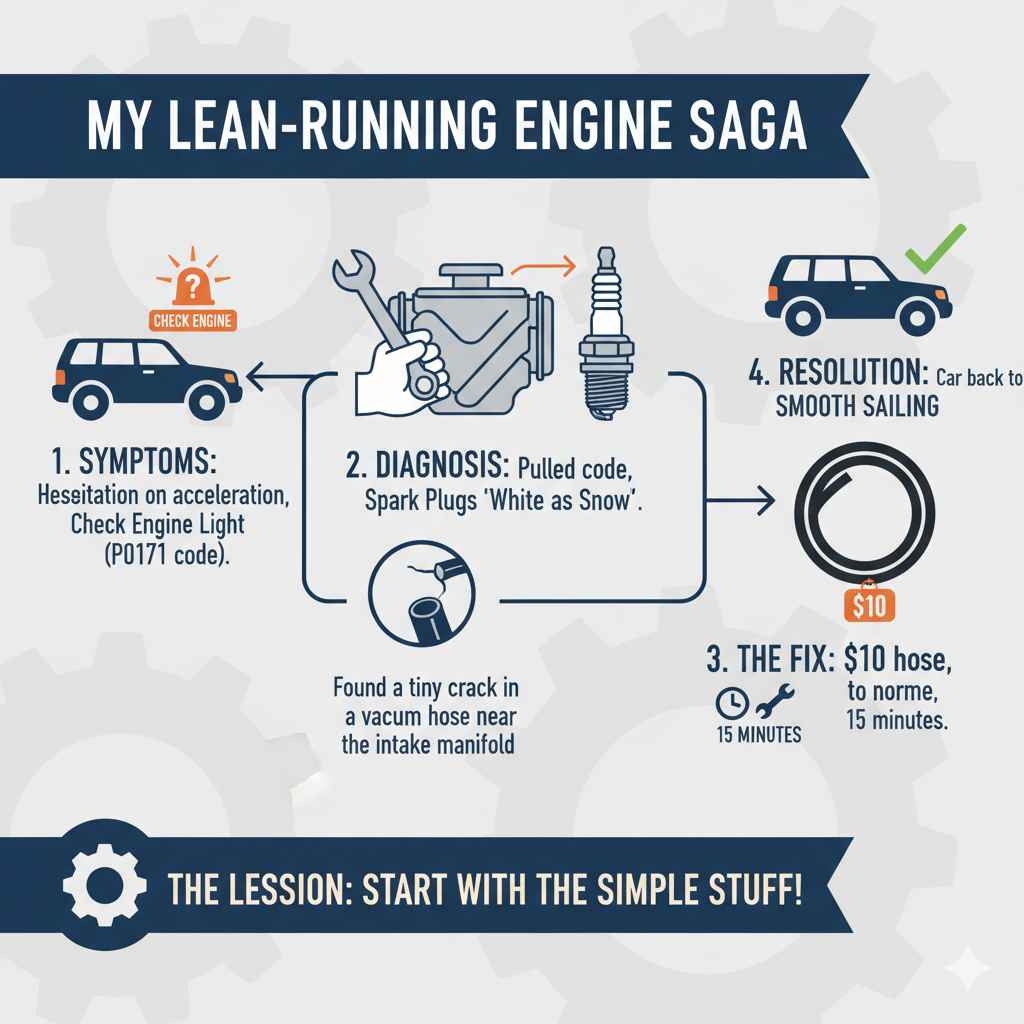
Let me share a quick story. A few years back, my trusty SUV started acting up. It would hesitate when I hit the gas, and the check engine light kept coming on. I pulled a P0171 code and noticed the spark plugs were white as snow. After some trial and error, I found a tiny crack in a vacuum hose near the intake manifold. A $10 hose and 15 minutes later, the car was back to normal. That experience taught me to start with the simple stuff before diving into expensive repairs. It’s a lesson I carry with every car I work on.
Conclusion: Get Your Car Running Right Again
Dealing with a lean-running engine can feel overwhelming, but it’s manageable if you take it step by step. Whether it’s a clogged fuel filter, a sneaky vacuum leak, or a faulty sensor, you’ve got the tools and knowledge to tackle it. I’ve been through this process more times than I can count, and there’s nothing more satisfying than hearing your engine purr again after a fix. Regular maintenance and a little detective work can keep your car running smoothly for years. So grab your tools, pop the hood, and get to work—you’ve got this!
Frequently Asked Questions
What does it mean when my car is running lean?
When your car is running lean, the engine is getting too much air or not enough fuel. The ideal air-to-fuel ratio is about 14.7:1. A lean condition throws this off, causing issues like poor performance or misfires.
Answer: A lean-running engine means there’s an imbalance in the air-to-fuel mixture. Too much air or too little fuel disrupts the combustion process, leading to symptoms like rough idling, hesitation, or a check engine light. It’s important to fix it to avoid engine damage.
Can I drive my car if it’s running lean?
You might be able to drive, but it’s not a good idea. A lean condition can cause misfires, poor performance, and even engine damage if left unchecked.
Answer: Driving with a lean-running engine is risky. It can lead to higher engine temperatures, which might damage parts like pistons or the catalytic converter. Get it diagnosed and fixed as soon as possible.
How do I know if my fuel filter is causing a lean condition?
A clogged fuel filter restricts fuel flow, which can cause a lean condition. Symptoms include sluggish acceleration, rough idling, or trouble starting.
Answer: If your car feels underpowered or stalls, a clogged fuel filter could be the culprit. Check it by inspecting the filter or testing fuel pressure. Replacing it is a simple and affordable fix.
Can a lean-running engine damage my car?
Yes, a lean condition can cause serious damage. It makes the engine run hotter, which can harm components like pistons, valves, or the catalytic converter.
Answer: A lean-running engine increases combustion temperatures, which can melt or damage engine parts over time. It can also clog your catalytic converter. Fix it early to avoid costly repairs.
How often should I clean my MAF sensor to prevent lean issues?
Cleaning your MAF sensor every 10,000-15,000 miles or during routine maintenance can help prevent lean conditions caused by a dirty sensor.
Answer: I clean my MAF sensor about once a year or every 10,000 miles with MAF sensor cleaner. It’s a quick job that keeps the sensor accurate and helps avoid lean-running problems.