How to Fix Cat Scratches on a Car (Repair, Deter & Prevent)
Most cat scratches on a car reach only the clear coat — a layer just 35–50 microns thick — so a scratch remover or polishing compound fixes them in under an hour, no repaint needed. Left alone, repeated clawing wears through to bare paint and invites rust. This guide covers how to spot true claw damage, DIY repair by depth, and the scent, water, and sound deterrents that actually keep cats off your car.
Quick Answer
Fix light cat scratches with a scratch remover or polishing compound and a microfiber cloth — most claw marks stay within the clear coat. If you can catch a fingernail in the scratch, it has reached the base paint or primer and needs touch-up paint, sanding, and a fresh coat of clear. Deterring cats with motion-activated sprinklers, citrus or commercial repellent sprays, or a car cover stops the damage from coming back.
Identifying Damage Types From Claw Scratches
The first step in fixing cat scratches on your car is figuring out how deep the damage goes, since that decides which repair method you need. Scratches from claws vary from a light haze in the clear coat to lines that reach bare metal.
Surface Scratches and What They Mean
Surface scratches are the least serious type of damage. They only affect the clear coat, the top layer of paint on your car, and you can usually feel them as a faint catch with a fingernail. They often look like light, hazy marks from a cat’s claws brushing against the panel as it walks or jumps off. This removes the damaged clear coat layer and restores the shine — a good car scratch remover or polishing compound is usually all you need.
- Clear Coat Damage: The most common kind of cat scratch. The clear coat protects the paint underneath, and a cat’s claws can score this layer without going any deeper.
- Light Scratches: Slight imperfections in the clear coat that often appear as fine swirls or parallel lines. Usually removable with a polish or scratch remover.
- Fingernail Test: Gently run a fingernail across the scratch. If it catches, the damage is likely deeper than the clear coat. If your nail glides over it, it’s a surface scratch.
- Appearance: Surface scratches often look like a haze or a swirl and may only become noticeable depending on how the light hits the panel.
Deeper Scratches: Reaching the Paint
Deeper scratches go past the clear coat and into the base paint or primer, usually because the cat’s claw dug in while pushing off or scrambling for grip. You’ll see the actual color of the car’s paint, or a dull gray primer line, instead of a hazy clear-coat mark. These need more than polishing — touch-up paint, sanding, and a clear coat top-off — and left alone they invite rust, so treat them sooner rather than later.
- Paint Layer Damage: The scratch goes through the clear coat into the color coat. You’ll see your car’s actual paint color exposed in the line.
- Primer Exposure: A gray or dark-colored line means you’re down to the primer, which helps paint bond to the metal. These need attention quickly to prevent rust.
- Metal Exposure: In the most serious cases, the claw dug all the way to bare metal. This is the most urgent type, since it can start rusting within days.
- Professional Repair: Scratches down to primer or metal may need body shop work — sanding, painting, and clear coating — which is the most time-consuming and expensive option.
Checking for Rust
Rust forms when bare metal is exposed to air and moisture, and a deep cat scratch is exactly the kind of opening that lets it start. Rust looks like reddish-brown flakes or discoloration, spreads outward from the original scratch, and weakens the panel the longer it’s left. Check any scratch that reached primer or metal for early signs before deciding whether a DIY fix or a body shop visit is the right call.
- Visual Inspection: Look closely at the scratch and the surrounding area for reddish-brown spots or flakes — rust spreads past the original mark.
- Metal Exposure: Scratches through the paint and primer expose bare metal directly, which is what makes rust likely in the first place.
- Prevention: If metal is exposed, apply a rust inhibitor or primer right away to keep corrosion from starting.
- Professional Help: Established rust usually needs a body shop to remove the corrosion, repair the panel, and repaint — costly, but necessary once rust has set in.
How to Tell If It Was a Cat: The Claw-Scratch Pattern
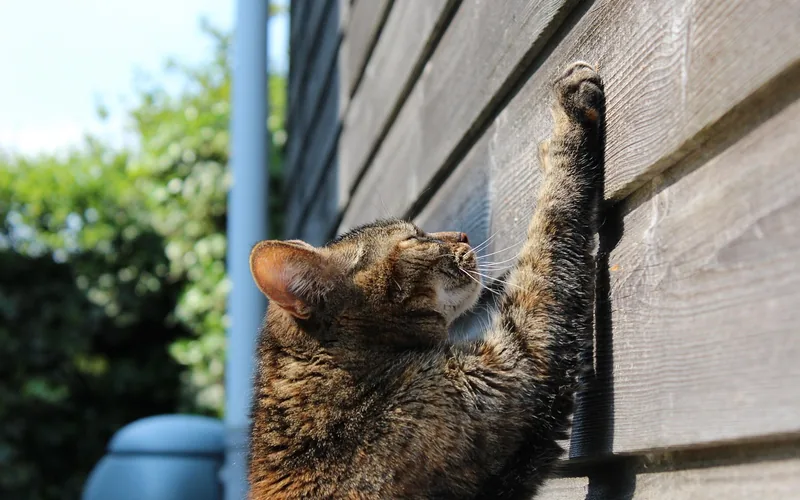
A cat scratch is not the same as a scratch from a branch, a shopping cart, or a key — the pattern gives it away. Cat claw marks show up as several thin, roughly parallel lines running close together in a slight fan shape, matching the spread of the claws on a single paw. They’re usually clustered on the hood, roof, trunk lid, side mirrors, or A-pillar — the panels a cat uses to climb on and off the car — rather than a single long gouge running the length of a door.
Because a cat’s weight is spread across soft paw pads, most claw marks stay shallow and confined to the clear coat, unlike a keyed scratch (one deep, continuous line) or a branch scratch (irregular, single-direction, often with bark residue). If you see a cluster of short parallel lines low on a hood or trunk with no other visible cause, claw damage is the likely source — and per the depth check above, most of it buffs out without repainting.
📊 Automotive clear coat typically measures just 35–50 microns (1.5–2.0 mils) thick — thinner than a human hair — which is why a cat’s claw usually only scores this top layer instead of reaching the paint underneath. Source: DeFelsko, Automotive Paint Thickness Gauges Guide
Ways to Fix Cat Scratches on Your Car
Once you’ve identified how deep the scratches go, it’s time to fix them. Light, clear-coat-only claw marks are a cheap DIY job; scratches down to paint or primer usually need touch-up paint and, for large or deep damage, a body shop. Below are the tools, the step-by-step process, and when it’s worth calling a professional instead.
DIY Scratch Repair Products and Tools
You can fix most cat scratches yourself and skip the professional repair bill. Start with a good scratch remover or polishing compound for light marks, microfiber cloths to apply and buff products, touch-up paint matched to your car’s color code for anything deeper than the clear coat, and fine-grit sandpaper to level touch-up paint once it’s dry.
- Scratch Remover: For removing surface scratches. Apply with a microfiber cloth and rub gently on the scratched area.
- Polishing Compound: More aggressive than scratch remover, for more visible surface scratches — it removes a bit more of the damaged clear coat.
- Microfiber Cloths: Soft cloths for applying and removing products without adding new scratches. Keep several on hand instead of reusing one.
- Touch-Up Paint: For scratches deeper than the clear coat, matched to your car’s exact paint color code.
- Sandpaper: Fine-grit paper for leveling touch-up paint so it blends smoothly with the surrounding surface.
Step-by-Step Scratch Removal Process
Here’s how to fix cat scratches on your car step by step, from washing the panel to the final polish.
- Wash and Dry the Car: Clean the area around the scratches with soap and water so you can see the full extent of the damage, then make sure it’s completely dry.
- Apply Scratch Remover or Polishing Compound: For light, clear-coat-only scratches, apply scratch remover to a microfiber cloth and rub gently in a circular motion. For deeper scratches, skip to touch-up paint.
- Apply Touch-Up Paint (for deeper scratches): Use a fine brush to apply touch-up paint in thin layers, letting each layer dry fully before adding another.
- Sand and Level the Paint: Once dry, gently sand the area with fine-grit sandpaper to smooth out excess paint, being careful not to cut into the surrounding clear coat.
- Polish the Area: Use a polishing compound and a clean microfiber cloth in a circular motion to restore the shine and blend the repair into the rest of the panel.
When to Seek Professional Help
Not every cat scratch is a DIY job. If a scratch goes down to bare metal, needs immediate rust prevention, or covers a large area with multiple claw marks, a body shop can get a flawless, color-matched finish faster and more reliably than repeated DIY attempts.
- Deep Scratches: If the scratch reaches primer or metal, rust can form quickly — a body shop has the equipment to properly repair this level of damage.
- Extensive Damage: Multiple scratches or large clawed areas take more time and skill than most DIY setups can match efficiently.
- Color Matching Issues: Getting an exact paint match can be tricky at home — professionals blend touch-up paint seamlessly into the existing finish.
- Preventing Further Damage: A professional can also assess for underlying issues, like early rust, and rust-proof the area to head off future problems.
If the claw marks turn out to be deeper than clear coat across a wider area — not just a light cat scratch — see our full guide on how to fix deep scratches on a car for wet sanding and body filler steps. For scratches from a source other than an animal, our general how to get scratches off my car guide covers keys, branches, and shopping carts.
Preventing Cat Scratches
The best way to deal with cat scratches is to stop them before they happen. This section covers deterrents that keep cats away from your car, plus physical protection and redirecting the behavior somewhere else entirely.
Effective Deterrents for Cats
Several methods can deter cats from scratching your car. Scent-based sprays with citrus or pepper notes work because cats have a strong sense of smell and tend to avoid the area. Motion-activated sprinklers startle cats with a burst of water as they approach, which is one of the few deterrent methods that has actually been measured in controlled research rather than just anecdotally. Keeping the car clean also helps, since cats are drawn back to areas that already carry their scent.
📊 In a controlled trial across 18 suburban properties, ultrasonic cat deterrents reduced the frequency of cat incursions by 46% and cut the duration of each visit by 78%. Source: Crawford & Fontaine, Global Ecology and Conservation (2018)
Best Cat Deterrent Pick
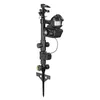
Orbit Yard Enforcer Motion-Activated Sprinkler
Sprays a startling burst of water the instant it detects motion near your car, then resets automatically for the next visit.
- Best for: Cats that repeatedly jump on the hood, roof, or trunk overnight
- Why we picked it: Motion-triggered water is the deterrent method the research above actually measured — no scent to reapply after rain
- Main drawback: Needs a garden hose connection nearby, so it’s less practical for street parking
Compare more cat deterrent options
 Option 1 Nature’s Mace Cat Repellent Spray
|
 Option 2 EzyShade Waterproof Car Cover
|
 Option 3 Broox Solar Ultrasonic Repellent
|
As an Amazon Associate we earn from qualifying purchases.
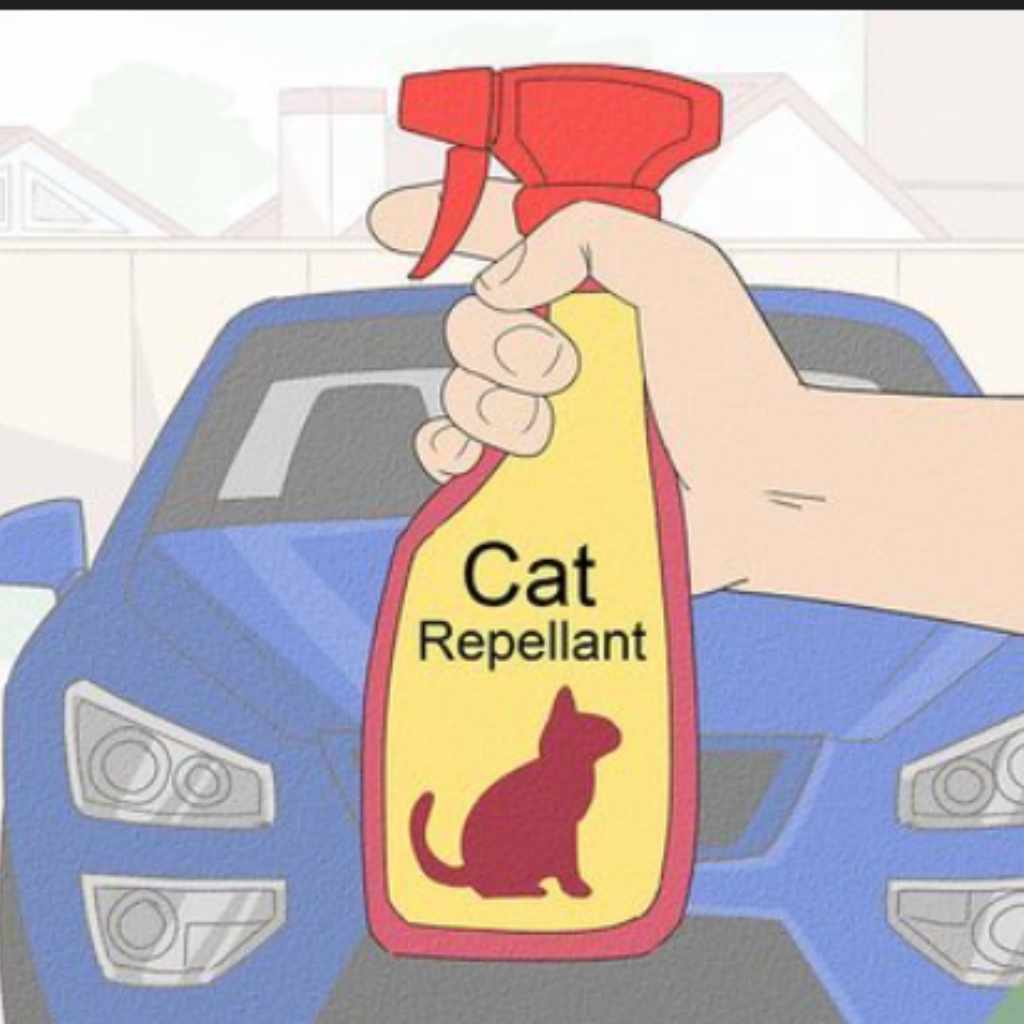
- Citrus Sprays: Cats dislike the smell of citrus fruits like lemons and oranges. Spray a mixture of citrus oil and water around the car to help deter them.
- Motion-Activated Sprinklers: These detect movement and spray a burst of water, scaring cats away. Place them around your parking spot.
- Clean Regularly: Cats are drawn to surfaces that already carry their scent. Washing your car often removes those cues.
- Car Covers: A physical barrier that blocks claws from reaching the paint entirely, protecting the vehicle while deterring cats from climbing on.
Protective Measures for Your Car
Besides deterring cats directly, you can protect your car’s paint so any scratches that do happen are less likely to cut deep. A car cover is a physical barrier that keeps claws off the paint entirely, while a coat of sealant or wax adds a sacrificial layer that takes the brunt of light claw contact. Regular washing keeps the paint in good condition and removes debris that can make scratching worse.
- Car Covers: A protective shield that prevents cats from reaching the paint at all — choose one sized specifically for your car.
- Paint Sealants and Waxes: Create a sacrificial protective layer over the clear coat that helps resist light claw scratches.
- Regular Washing and Waxing: Washing your car removes dirt and scent cues; waxing adds a protective layer that helps repel scratches.
- Parking Location: Parking in a garage or sheltered area shields your car and cuts off cat access entirely.
Creating a Cat-Friendly Environment (Away from the Car)
You can redirect a cat’s scratching instinct somewhere other than your car. Cats scratch to maintain their claws, stretch, and mark territory — needs a scratching post or pad can satisfy just as well. Place scratching surfaces where the cat already spends time, add catnip to make the post more appealing, and gently redirect the cat there if you catch it scratching the car, rewarding it when it uses the post instead.
- Provide Scratching Posts: Place posts or pads near where your cat spends its time to give it an alternative to your car.
- Use Catnip: Sprinkle catnip on the scratching post to increase its appeal over the car.
- Offer Alternative Spaces: Create comfortable spots where the cat can relax, away from your car.
- Training: If you catch your cat scratching your car, gently redirect it to a scratching post and reward it for using that instead.
| Preventive Method | Description | Effectiveness |
|---|---|---|
| Citrus Sprays | Sprays with citrus scents cats dislike | High; cats avoid areas with this scent |
| Motion-Activated Sprinklers | Sprinklers that activate with movement | High; research shows a 46% drop in visit frequency |
| Car Covers | Protective covers over the car | Very High; creates a physical barrier |
| Scratching Posts/Pads | Offer alternative scratching surfaces | Medium; redirects cat scratching behavior |
Frequently Asked Questions
What’s the best way to fix a light cat scratch?
Use a scratch remover or polishing compound with a microfiber cloth, applied in a circular motion following the product label. Light claw marks stay in the clear coat, so this alone is usually enough to make them disappear.
Should I use touch-up paint for all cat scratches?
No. Touch-up paint is only needed for scratches that go past the clear coat and into the paint layer or primer. Surface scratches confined to the clear coat usually just need polishing.
How can you tell if scratches are from a cat and not something else?
Look for several thin, roughly parallel lines in a slight fan pattern, clustered on the hood, roof, trunk, or mirrors — the panels cats climb on. A single deep, continuous gouge is more likely a key; irregular scratches with debris are more likely a branch or bush.
Do cat repellent sprays and ultrasonic deterrents actually work?
They reduce but don’t fully eliminate cat visits. A controlled study of ultrasonic deterrents across 18 suburban properties found a 46% drop in how often cats came back and a 78% drop in how long they stayed — real, but not a guarantee. Combining a scent or sound deterrent with a physical barrier like a car cover gives the most reliable protection.
When should I get professional help for scratches?
Seek professional help if the scratch reaches bare metal, covers a large or multi-panel area, or needs an exact color match. Deep scratches also need prompt attention to head off rust.
How often should I wash and wax my car?
Wash your car every week or two, and wax it roughly every three months to protect the paint. Adjust the frequency based on how exposed your car is to the elements — and to neighborhood cats.
Final Thoughts
Fixing cat scratches on your car comes down to two things: identifying how deep the damage actually goes, and picking the repair that matches it — polish for the clear coat, touch-up paint and sanding for anything deeper, a body shop for scratches that reach metal or cover a wide area. Prevention is the part that saves the most effort long term. A motion-activated sprinkler or repellent spray, paired with a car cover or a redirect to a scratching post, keeps most cats from ever making contact with the paint again.
Products related to this article
Sponsored / affiliate links. As an Amazon Associate I earn from qualifying purchases. I may earn additional commission from eligible campaigns.