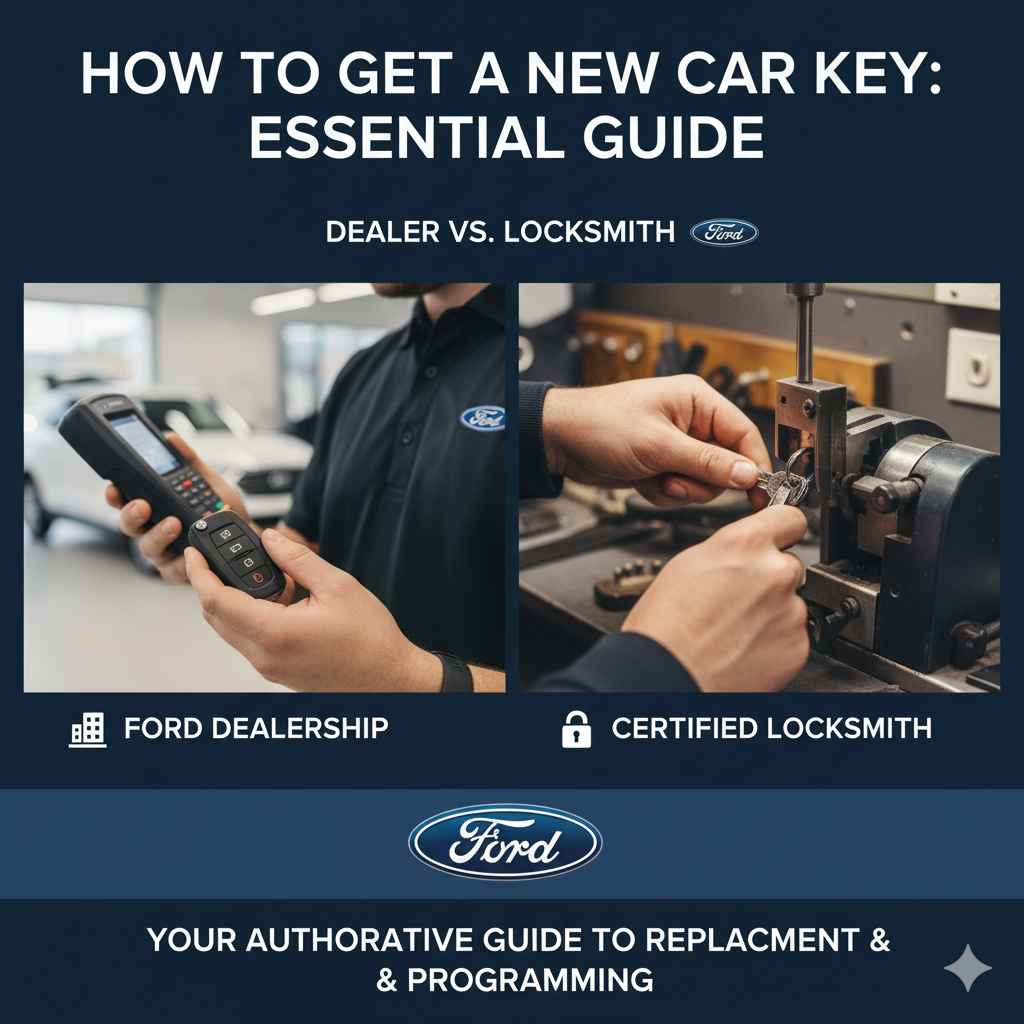
How To Get A New Ford Car Key: Essential Guide
Don’t panic if you’ve lost your Ford car key! You can get a new one by contacting a Ford dealer, a qualified automotive locksmith, or by ordering online with proof of ownership. The process usually involves providing your VIN, proof of identity, and sometimes a code from your original key or vehicle. This guide breaks down your options, costs, and what you’ll need to get back on the road quickly and affordably.
Losing a car key can feel like a major roadblock, especially for your Ford. It’s a frustrating experience that can leave you stranded and worried about the cost. But don’t get discouraged! Getting a replacement key for your Ford is a common situation, and there are several straightforward ways to handle it. This guide is here to walk you through each option, making the process clear and manageable, so you can get a new Ford car key without the stress. We’ll cover everything you need to know, from what information to gather to the typical costs involved.
Understanding Your Ford Key Options
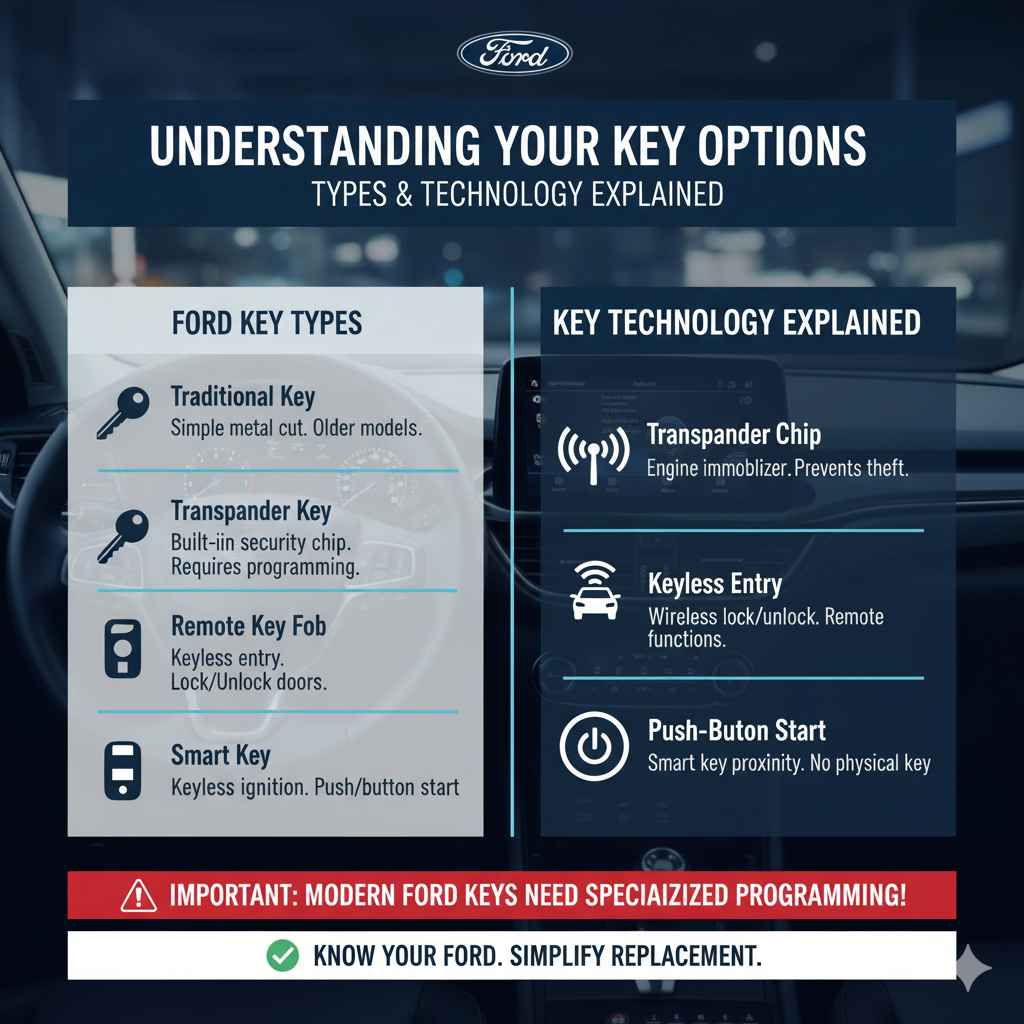
Today’s Ford keys are more than just simple metal cuts. They often contain transponder chips, keyless entry fobs, or even smart key technology. This means getting a replacement isn’t always as simple as popping down to the hardware store. Depending on your Ford model and the year it was made, you’ll likely have one of the following key types:
Traditional Key: A simple metal key that fits into the ignition and door locks. Less common on newer models, but still found on older Fords.
Transponder Key: These keys have a built-in chip that communicates with your car’s immobilizer system. Without a signal from the correct chip, the engine won’t start. These require programming to work with your specific vehicle.
Remote Key Fob (Keyless Entry): Allows you to lock and unlock your doors wirelessly. Often integrated with a transponder key or as a standalone fob.
Smart Key (Keyless Ignition): These fobs allow keyless entry and starting the engine with a push-button start. They also contain a transponder chip.
Knowing what type of key your Ford uses is the first step in understanding how to replace it. Most modern Fords come with transponder or smart keys, which are more complex and require specialized duplication and programming.
Where Can You Get a New Ford Car Key?
When you need a new Ford car key, you typically have three main avenues to explore. Each has its own set of advantages, potential costs, and processes. It’s essential to weigh these options based on your urgency, budget, and convenience.
1. The Official Ford Dealership
Your local Ford dealership is the most direct and arguably the most secure route for obtaining a replacement key. They have direct access to Ford’s proprietary information, including key codes specific to your vehicle and specialized equipment for programming.
Process:
Contact the dealership: You’ll usually need to call the service department.
Provide vehicle information: Be ready to give them your Vehicle Identification Number (VIN), the year, make, and model of your Ford.
Proof of ownership: They will require documentation proving you own the car. This typically includes your driver’s license and the vehicle’s registration or title.
Key code retrieval: The dealership can often retrieve the original key code linked to your VIN from Ford’s database.
Key cutting and programming: They will cut a new key based on the code and then program it to your car’s immobilizer and other systems.
Pros:
Guaranteed compatibility and correct programming.
Access to genuine Ford parts.
Often the only option for very new or complex key systems.
Cons:
Usually the most expensive option.
Can sometimes take longer, especially if parts need to be
ordered or if they are very busy.
Requires towing the vehicle if you don’t have a working spare.
Estimated Cost: Prices can vary significantly by location and the type of key, but you might expect anywhere from $200 to $500 or more.
2. Automotive Locksmiths
Many reputable automotive locksmiths offer key replacement services for Ford vehicles. These professionals are often equipped to cut and program a wide range of car keys, including transponder and smart keys. Some locksmiths can even come to your location (mobile service), which can be a huge convenience.
Process:
Find a qualified locksmith: Look for locksmiths that specialize in automotive keys and are experienced with Ford vehicles. Check online reviews and ask for their experience with your specific Ford model.
Provide VIN and proof of ownership: Similar to the dealership, you’ll need to provide your VIN and proof that you own the vehicle.
Key code retrieval: Experienced locksmiths can often retrieve key codes, though sometimes they might need access to the vehicle’s computer.
Key cutting and programming: They will cut the physical key and use specialized programming equipment to sync the transponder chip with your car.
Pros:
Often more affordable than dealerships.
Mobile services can save you towing costs by coming to your location.
Can sometimes be faster than dealerships.
Cons:
Quality can vary by provider; choose wisely.
May not have the capabilities for the very latest or most complex key systems on high-end Ford models.
Ensure they have the correct programming equipment for your Ford.
Estimated Cost: Typically ranges from $150 to $400, depending on the key type, location, and whether it’s a mobile service call.
3. Online Retailers and DIY Programming (Limited Cases)
For some Ford models, especially those with simpler key systems or if you already have a way to program it, you can purchase key blanks online and potentially have them cut by a local hardware store or auto parts store. In very limited cases, some keys can be programmed by the owner.
Process:
Identify your key type and part number: This is crucial. You need to know the exact specifications of the key you need.
Purchase a key blank: You can buy these from online automotive parts retailers. Ensure it’s compatible with your Ford model and year.
Cutting the key: Once you have the blank, you’ll need to get it cut. Some auto parts stores offer this service, or you might need a locksmith.
Programming (the tricky part):
DIY Programming: Some older Ford models might have a DIY programming procedure (often involving turning the ignition on and off a specific number of times while having existing keys present). You’ll need to research if your specific model supports this. For more modern Fords with transponder chips, DIY programming is generally not possible without specialized tools. You can find information on specific procedures for your model by searching online forums or automotive repair databases.
Professional Programming: If DIY programming isn’t an option, you’ll need to find a locksmith or auto parts store that can program the key you purchased.
Pros:
Can potentially be the cheapest option for the key blank itself.
Cons:
High risk of buying the wrong key if not properly identified.
DIY programming is very limited and often requires specific tools or sequences not readily available.
Cutting services might not be compatible with all key types (e.g., laser-cut keys).
Programming services will add to the cost, potentially negating savings.
Not recommended for modern Ford vehicles with advanced security systems.
External Link for Reference: For information on vehicle identification, you can consult the National Highway Traffic Safety Administration (NHTSA) website. While they don’t directly help with keys, understanding your VIN is important for vehicle identification.
Estimated Cost: Key blanks can range from $20 to $150. Cutting might be $15-$50. Programming, if needed from a professional, could add another $50-$200.
What Information Will You Need?
No matter which option you choose, you’ll need to have certain information ready to make the process as smooth as possible. This documentation helps verify your ownership and allows the service provider to match the key to your specific vehicle.
Essential Documentation and Information:
Vehicle Identification Number (VIN): This unique 17-character code identifies your specific Ford. You can find it on your dashboard (visible through the windshield), on your driver’s side doorjamb, on your insurance card, or in your vehicle registration documents.
Proof of Ownership: You’ll need to prove that you are the legal owner of the vehicle. This typically includes:
Your valid driver’s license: To confirm your identity.
Vehicle Registration or Title: To confirm the vehicle is registered in your name.
Key Code (Optional but helpful): If you happen to have the original key code (sometimes called a “code card” or “cut code”) that came with your car, it can expedite the process, especially if the dealership’s system is down or if it’s an older vehicle. This is less common for most owners to have.
Make, Model, and Year: Even with the VIN, being able to state this basic information quickly is helpful.
Having all of this ready before you call or visit will save time and prevent unnecessary delays.
The Process of Cutting and Programming a New Ford Key
Once you’ve chosen your service provider and supplied the necessary information, the next steps involve creating and activating your new key. This process ensures that the new key not only fits your car’s locks but also communicates correctly with its security system.
Step 1: Key Cutting
Traditional Keys: For less complex metal keys, a machine will cut the key based on the provided code or by duplicating an existing, working key (if you have one).
Transponder and Smart Keys: These often feature a specific shape and, importantly, a laser-cut (sidewinder) profile. The cutting machine used must be precise to ensure the key physically turns in the ignition and door locks.
Step 2: Transponder Chip Programming
This is the critical step for modern Ford keys. The unique chip inside the key needs to be “taught” to your car’s computer (ECU) so it recognizes the key as legitimate.
Dealership/Locksmith Equipment: Service providers use specialized diagnostic tools that connect to your Ford’s OBD-II port (usually located under the dashboard).
The Programming Sequence: The tool communicates with the car’s immobilizer system. You’ll typically need to have at least one existing, working key present for the programming process. The system is put into programming mode, and then the new key’s transponder ID is added to the car’s memory.
Keyless Entry/Smart Key Functions: For fobs, the programming process also syncs the buttons (lock, unlock, trunk) with your car’s BCM (Body Control Module).
Step 3: Testing
After programming, the technician will test the new key:
Physical Fit: Does it turn smoothly in the ignition and door locks?
Engine Start: Does the engine start and run without issues?
Remote Functions: Do the lock/unlock buttons work correctly? (If applicable)
This multi-step process ensures your new Ford key is a fully functional replacement.
Cost Breakdown: What to Expect for a New Ford Key
The cost of a new Ford car key can vary considerably. The following table provides a general overview, but remember these are estimates. Always get a precise quote from your chosen service provider.
| Service/Key Type | Typical Range (USD) | Notes |
|---|---|---|
| Traditional Key (Cut Only) | $50 – $100 | For older Ford models; may not include programming if a transponder is present. |
| Transponder Key (Cut & Program) | $150 – $400 | Most common for Ford models from the late 1990s to present. Includes chip programming. |
| Remote Key Fob (Cut & Program) | $200 – $500 | Includes key cutting (if applicable) and programming the remote functions and transponder. |
| Smart Key (Cut & Program) | $300 – $600+ | Most advanced; requires specialized programming tools. Cost varies significantly by Ford model. |
| Key Blank Purchase (Online) | $20 – $150 | Does not include cutting or programming; variable quality. |
| Key Cutting Service (Local Store) | $15 – $50 | May not be compatible with all key types (e.g., laser-cut). |
| Mobile Locksmith Service Call | $75 – $150 (added fee) | Often charged in addition to the key and programming cost if they come to you. |
Factors Influencing Cost:
key Complexity: Smart keys with advanced features are more expensive than basic transponder keys.
Make and Model: Luxury trims or newer models of Ford vehicles often have more sophisticated key systems.
Service Provider: Dealerships are typically more expensive than independent locksmiths.
Location: Costs can vary by geographic region.
Need for a Spare Key: Buying two keys at once can sometimes offer a small discount compared to buying them separately.
Towing Costs: If you need to tow your Ford to a dealership, this is an additional expense.
Tips for Preventing Key Loss and Damage
While getting a replacement is manageable, prevention is always better than cure! Here are some practical tips to help you keep track of your Ford keys and avoid damage.
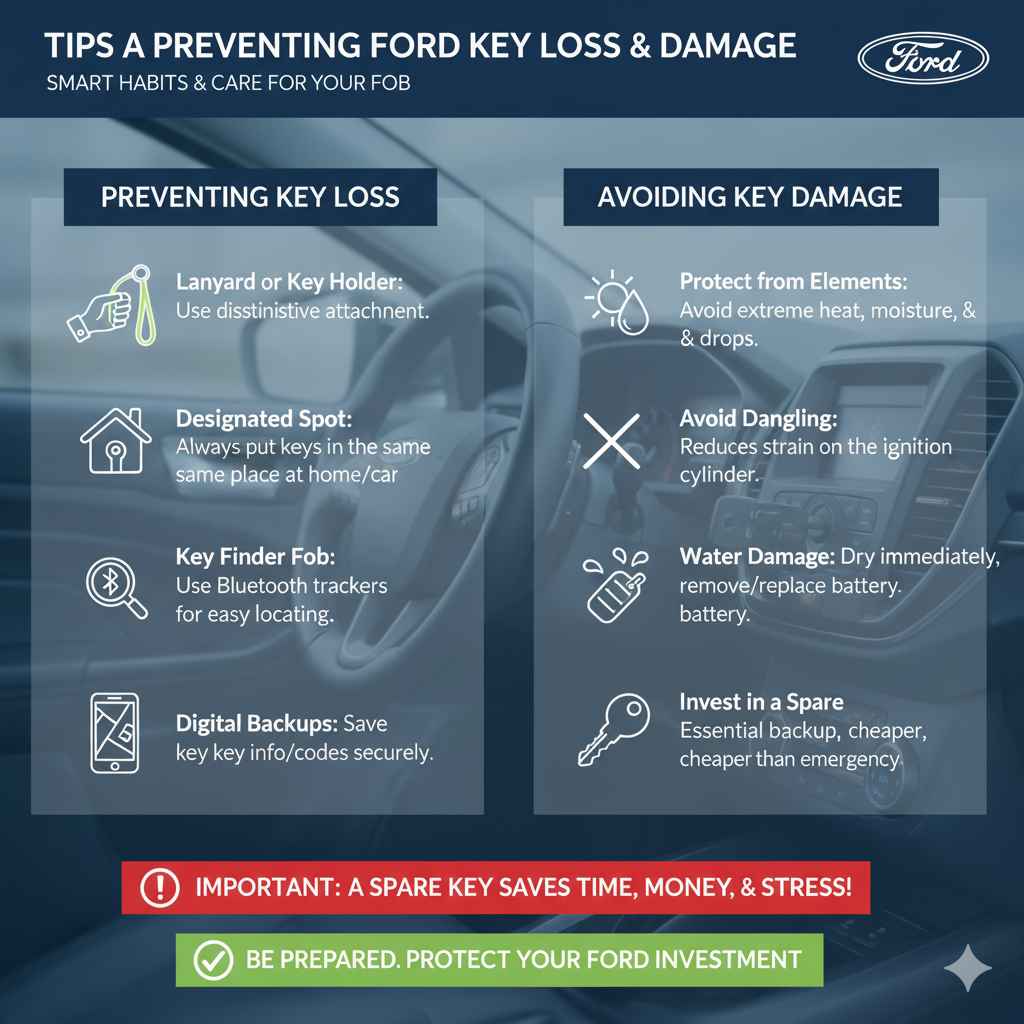
Use a Lanyard or Key Holder: Attach your Ford key to a brightly colored lanyard or a distinctive key holder that makes it harder to misplace.
Designated Spot: Have a specific place in your home and car where you always keep your keys. This reduces the chances of them getting lost in clutter.
Key Finder Fobs: Consider using a Bluetooth key finder. These small devices attach to your keychain and can be located using a smartphone app, often by making the fob beep or showing its last known location.
Avoid Key Damage:
Don’t expose keys to extreme heat or moisture.
Avoid dangling your keys from your ignition, as this can strain the ignition cylinder and the key.
If your key fob gets wet, remove the battery immediately and let it dry completely before reinserting it, or replace the battery.
* Consider a Spare Key: As soon as you get a new primary key, invest in a spare. The cost of a spare key is significantly less than the cost and hassle of losing your only one.
What to Do If Your Ford Key is Damaged
If your key is physically broken, bent, or the buttons on the fob are unresponsive, the process might be slightly different:
1. Assess the Damage: Is it just the plastic casing, or is the internal chip or the blade damaged?
2. For Minor Casing Damage: Sometimes, a replacement key fob shell can be purchased online, and you can transfer the internal electronics and the key blade from the old key to the new shell. This requires careful disassembly and reassembly.
3. For Damaged Key Blade or Transponder: If the metal blade is bent or broken, or the transponder chip is damaged, you will likely need a new key cut and programmed, similar to the lost key process.
4. Water Damage: For fobs with water damage, try replacing the battery first. If that doesn’t work, the internal components may have corroded, and a new fob might be necessary.
Frequently Asked Questions (FAQs)
Q1: Can I get a new Ford key made from just the VIN?
Yes, in most cases, a Ford dealership or a qualified automotive locksmith can create a new key using your VIN, along with proof of ownership. The VIN allows them to access the vehicle’s specific key code and programming information.
Q2: How long does it take to get a new Ford key?
It can vary. If the dealership or locksmith has the key blank in stock and their programming equipment is available, it might take 1-3 hours. However, if a specific key blank needs to be ordered or if the service center is very busy, it could take a few days to a week.
Q3: Is it cheaper to get a Ford key from a dealership or a locksmith?
Generally, an independent automotive locksmith is often less expensive than a Ford dealership. However, for the most complex or brand-new key systems, a dealership might be the only option. Always get quotes from both if possible.
Q4: Can any car key shop cut a Ford transponder key?
No. Cutting a transponder key often requires specialized equipment, especially for laser-cut keys. More importantly, programming the transponder chip to your car requires specific diagnostic tools that not all general key shops have. It’s best to use a service that explicitly states they handle transponder key programming for Ford vehicles.