Pros and Cons of Being an Automotive Service Technician
Being an automotive service technician fits you best if you want diagnostic variety and can handle physical, sometimes dirty work; if you need predictable hours and low strain, it is usually a poor fit. Picking the wrong path can mean training debt, burnout, and leaving the trade early. This guide breaks down the pros and cons, training routes, work conditions, and the signs that the job matches your temperament.
Daily Tasks and Diagnostic Tools
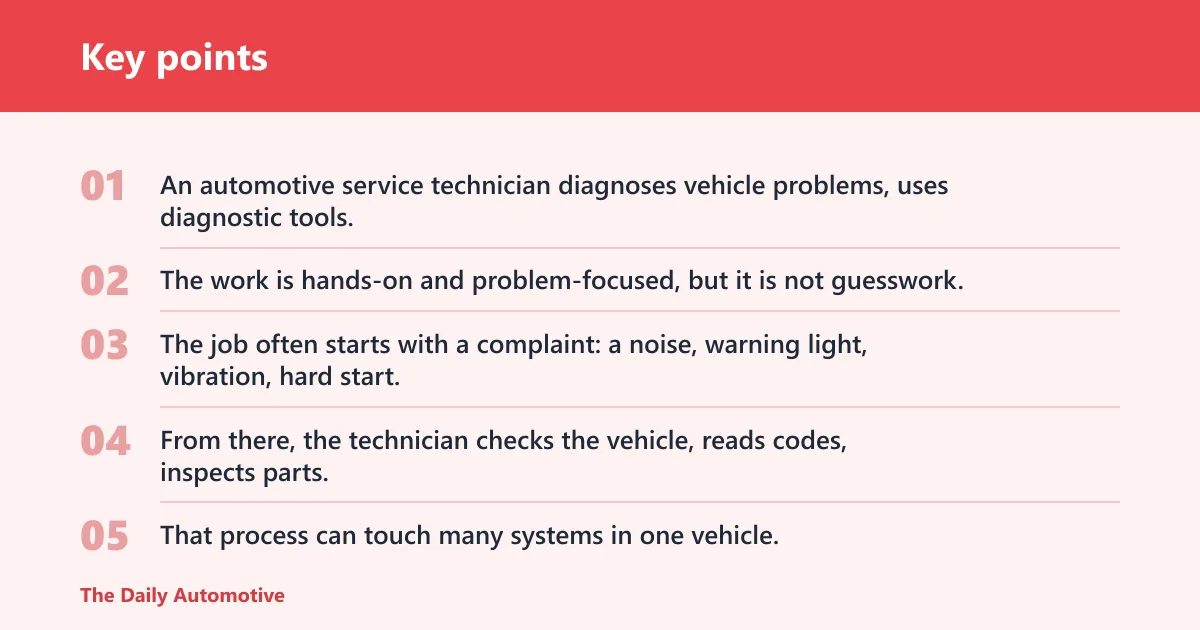


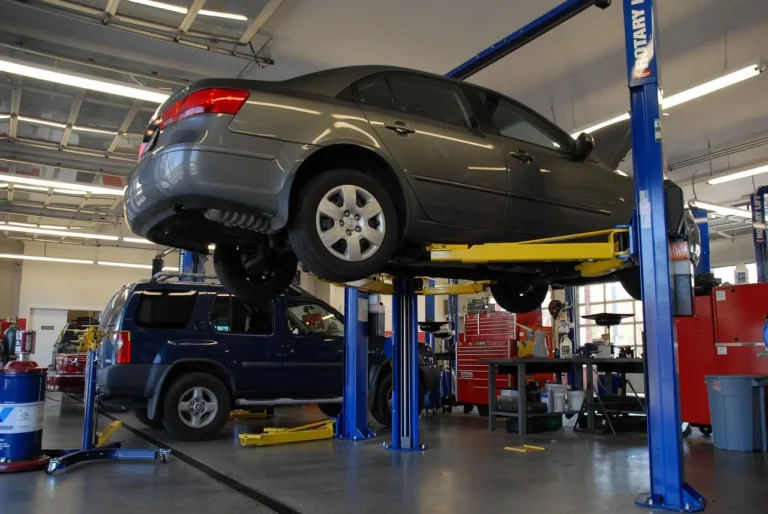
An automotive service technician diagnoses vehicle problems, uses diagnostic tools, and repairs brakes, engines, transmissions, and related systems. The work is hands-on and problem-focused, but it is not guesswork; good technicians read symptoms, confirm faults, and verify repairs before a car goes back to the customer.
Core repair and diagnosis tasks
The job often starts with a complaint: a noise, warning light, vibration, hard start, leak, or brake issue. From there, the technician checks the vehicle, reads codes, inspects parts, and isolates the cause instead of replacing parts at random.
That process can touch many systems in one vehicle. A brake complaint may turn into a hydraulic issue, a sensor problem, or a wear-and-tear repair. A drivability concern may lead to fuel, ignition, air, or transmission diagnosis.
Tools and systems used on the job
Modern diagnostic tools are part of daily workflow. They help check vehicle parts, identify strange noises or problems, and confirm whether an electrical or mechanical fault is real. Scan tools, meters, and other test equipment matter as much as hand tools.
Modern automotive work also includes electric cars and advanced computer systems. That means the work is no longer limited to wrenches and grease. It also includes software-driven faults, sensor data, and service procedures that change as vehicles change.
Where the work focuses: brakes, engines, transmissions
Some technicians stay broad. Others specialize in brakes, engines, transmissions, sports cars, or trucks. That choice changes the rhythm of the work and the kind of problems that arrive at the bay.
Say your interest is suspension noise on lifted pickups. A truck-focused shop will see that type of concern far more often than a general commuter-car repair counter. The same logic applies to performance cars, fleet vehicles, and heavy-use work trucks.
What are the biggest pros of this career?
The biggest strengths are variety, practical problem solving, and a clear path to specialization. If you like working with your hands, tracing faults, and seeing a repair go from complaint to fix, the job can fit well. Skilled auto techs also have steady demand, and automotive job opportunities are usually available.
Hands-on problem solving
This is not a paper-and-screen job all day. You inspect parts, compare readings, and decide what actually failed. For people who enjoy direct cause-and-effect work, that can be a strong fit.
The satisfaction comes from accuracy, not just speed. A good diagnosis saves time, reduces repeat visits, and keeps a vehicle safe to drive.
Specialization paths that shape the job
Specialization options can give the trade some variety. You can focus on brakes, engines, transmissions, sports cars, or trucks, and some shops narrow further into electrical diagnosis, drivability, or performance work.
That matters because it lets a technician match the work to personal strengths. Someone who likes technical troubleshooting may prefer advanced diagnostics. Someone who likes mechanical repair may prefer drivetrain or brake work.
Steady demand and why it matters
Demand matters because it can reduce the risk of training for a field with too few openings. Skilled auto techs have steady demand, and automotive job opportunities are usually available, which helps when you are weighing whether training is worth the time and money.
Steady demand does not mean every shop is hiring for the same type of work. Pay, schedule, and working conditions still vary by employer, but the trade is not dependent on a narrow set of jobs in one city.

What are the biggest cons of this career?
The trade can be physically demanding, dirty, and mentally tiring. The job can involve standing, lifting heavy parts, and working in different weather conditions. Technicians may be exposed to grease, oil, and other fluids, and the pace can wear people down if they dislike repetition or pressure.
Physical strain and working conditions
Physical demands are not a side issue. Standing for long periods, crawling under vehicles, lifting parts, and working in heat, cold, or damp conditions are part of the job. That is manageable for many people, but it becomes a real barrier for others.
A common first-timer mistake is assuming an automotive service technician only uses diagnostic software and never has to crawl under a vehicle or lift heavy parts. The body often pays a price after a full day of brake work, tire service, or underhood diagnosis in a cramped bay.
Tool costs, injury risk, and burnout pressure
Tool costs can be a hidden barrier. Many technicians build a large personal set over time, and that expense can arrive before pay feels comfortable. Apprentices may also start at lower wages while they learn, which makes early budgeting tighter.
There is also injury risk. Cuts, strains, crushed fingers, and slips happen in any hands-on trade. Burnout can follow when the work pace is fast, the problems are complex, and every missed diagnosis comes back as more labor.
Technology changes that require ongoing learning
Keeping up with new systems and tools requires ongoing learning. That pressure is not temporary. As vehicles add electric drivetrains, advanced driver systems, and more software-driven controls, technicians have to keep studying to stay useful.
That can be a benefit for people who like learning. It can be exhausting for people who want a fixed skill set and do not want regular retraining.
How do shop types change the job?
Shop type changes what you fix, how much variety you see, and how much pressure comes from time targets or repeat work. Dealerships, independent shops, fleet shops, and specialty shops each shape the day differently, so fit depends on more than the title alone.
Dealership shops
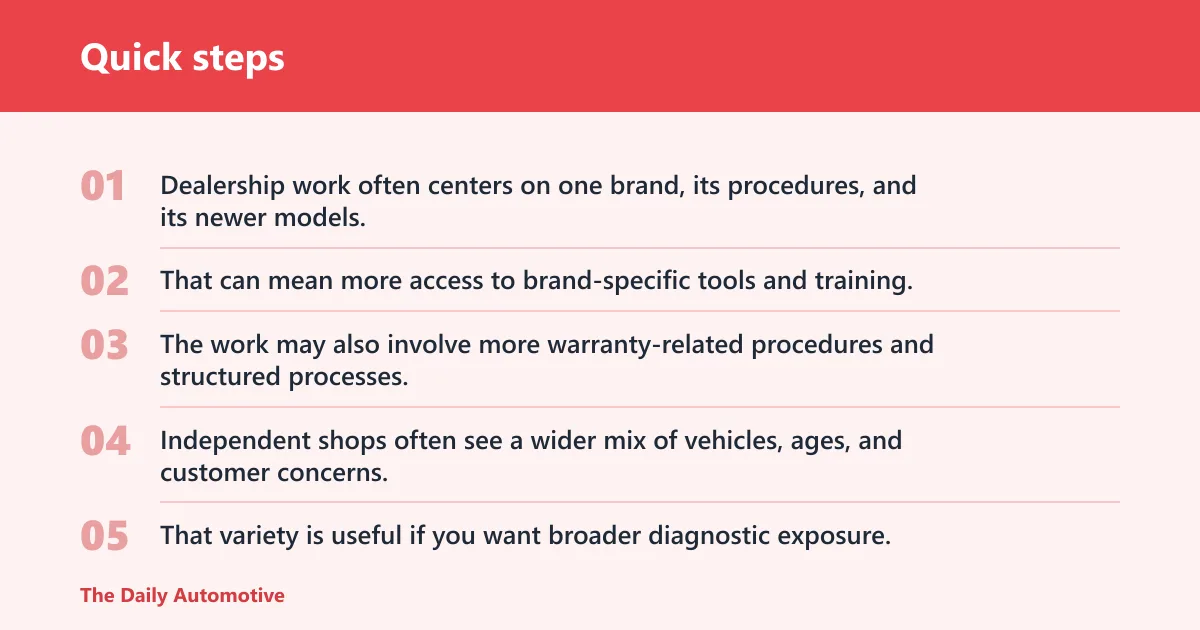
Dealership work often centers on one brand, its procedures, and its newer models. That can mean more access to brand-specific tools and training, but less variety across makes. The work may also involve more warranty-related procedures and structured processes.
Independent shops
Independent shops often see a wider mix of vehicles, ages, and customer concerns. That variety is useful if you want broader diagnostic exposure, but it can also mean more unpredictability from day to day and a constant shift between different repair styles.
Fleet shops and specialty shops
Fleet shops often focus on company vehicles, service vans, delivery units, or work trucks. The job can be more repetitive, but the vehicles may be maintained on a schedule, which changes the pressure compared with retail customer work.
Specialty shops narrow the field even more. A transmission shop, brake shop, or performance shop can be a strong fit if you want deeper focus. It can also be a poor fit if you want variety.
| Shop type | Pros | Cons | Best fit for |
|---|---|---|---|
| Dealership | Brand-specific training, newer vehicles, structured processes | Less make-to-make variety, brand procedures can narrow the job | Technicians who like one brand and repeatable procedures |
| Independent | Wide mix of vehicles, broad diagnostic exposure, varied repairs | Less predictability, frequent context switching | People who want variety and broad troubleshooting practice |
| Fleet | Scheduled maintenance, repeat systems, company vehicle focus | Can feel repetitive, often tied to uptime pressure | Technicians who like routine and preventive work |
| Specialty | Deep focus on one system or vehicle type, strong skill building | Narrower scope, less general repair exposure | People with a clear interest in one niche |
Is being an automotive service technician worth it?
It is worth it for people who like hands-on diagnosis, can tolerate physical work, and want a career that changes with the vehicles themselves. It is a weaker fit for people who want clean conditions, fixed hours, and low physical strain. The right answer depends on fit, not just demand.
Who tends to fit the work?
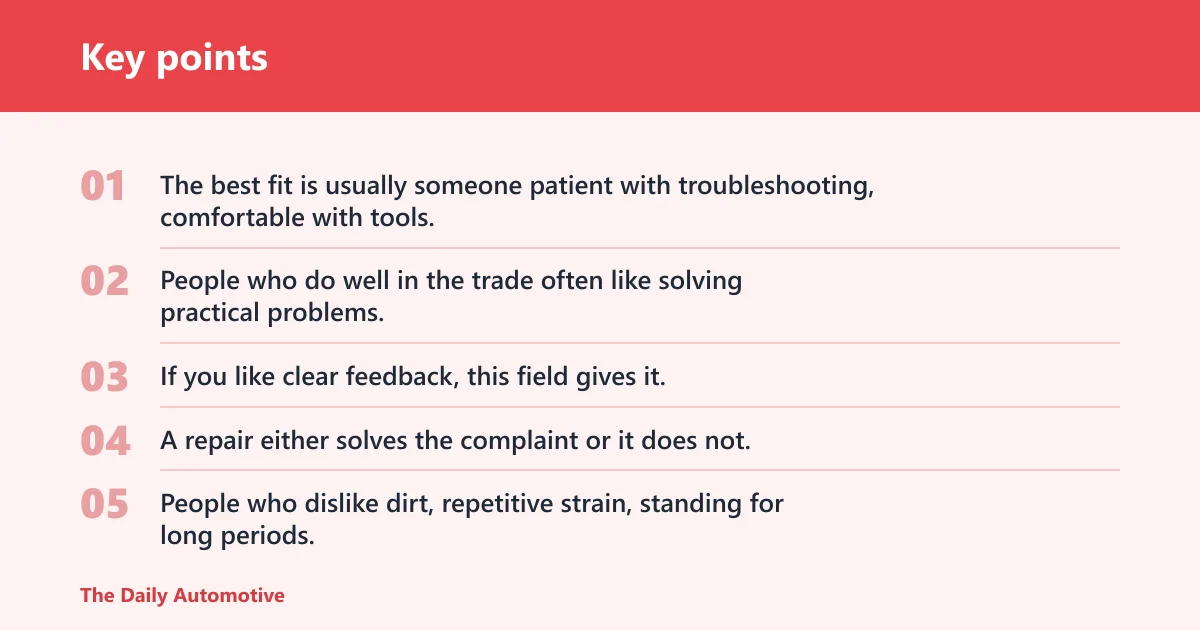
The best fit is usually someone patient with troubleshooting, comfortable with tools, and willing to keep learning. People who do well in the trade often like solving practical problems, working with their hands, and moving between mechanical and electronic faults.
If you like clear feedback, this field gives it. A repair either solves the complaint or it does not, and that can be satisfying for someone who wants work with visible results.
Who may struggle with the trade?
People who dislike dirt, repetitive strain, standing for long periods, or changing schedules may struggle. So may people who want every problem to have a quick answer. Some faults take time, and that uncertainty can be frustrating.
It can also be a rough fit if you are sensitive to pressure from customers, flat-rate targets, or fast turnaround expectations. The job asks for resilience as much as technical skill.
A simple decision rule before training starts
Start with this rule: if you want variety in diagnosis and you can accept the physical side of the work, the trade may be worth training for; if you want mostly clean, seated work, keep looking before you spend time or money. That filter is simple, but it avoids bad training choices.
Say you are comparing this trade with another technical path. If the other path gives you office time, less lifting, and similar job interest, you should compare both before enrolling. The right fit often depends on what you can do every week, not what sounds exciting once.
Pros and cons of being an automotive service technician checklist
Use this checklist before you enroll in training or buy a major tool set. A “yes” on most items suggests the work style may fit. Several “no” answers do not end the conversation, but they should make you think twice before committing.
| Fit signal | Yes | No | What it means |
|---|---|---|---|
| You like solving mechanical or electrical problems | Yes | No | Diagnosis is central to the job. |
| You are comfortable standing for long periods | Yes | No | Much of the day is on your feet. |
| You can lift heavy parts safely | Yes | No | Brake parts, tires, and components add up. |
| You do not mind grease, oil, and other fluids | Yes | No | Clean hands are not guaranteed. |
| You can work in different weather conditions | Yes | No | Some work happens outdoors or in drafty bays. |
| You are willing to keep learning new systems | Yes | No | Vehicle tech changes constantly. |
| You are okay using diagnostic tools and computers | Yes | No | Modern repair uses data as much as wrenches. |
| You can handle occasional fast-paced pressure | Yes | No | Many shops track turnaround closely. |
| You can tolerate early-career apprentice wages | Yes | No | Training time can mean modest pay at first. |
| You are open to buying tools over time | Yes | No | Tool investment is part of the trade. |
| You want steady demand rather than glamour | Yes | No | The work is practical, not flashy. |
| You can recover from physical fatigue | Yes | No | Burnout risk rises when recovery is poor. |
How to use the checklist before enrolling
- Mark every item honestly, not aspirationally.
- Count the “No” answers tied to physical strain, learning pace, and tool costs.
- Compare your answers with the shop types above.
- If most answers are “Yes,” ask about training and entry-level expectations.
- If several answers are “No,” consider another technical field before spending money.
What training paths can get you there?
Training after high school may be through a vocational school, a community college, or an apprenticeship program. Each route can build repair skills, but they differ in structure, pace, and how much learning happens in class versus on the job. (stvt.edu)
Vocational school
Vocational school is a common post-high-school route for repair skills and knowledge. It can give you structured practice on systems, tools, and common repairs, which helps build confidence before a first job.
This path can suit someone who wants a direct start and clearer classroom structure. It is often a faster way to get hands-on exposure than waiting for every skill to come through work alone.
Community college program
A community college program can combine classroom and lab work and may help with certification preparation. That mix can help if you want more theory alongside repair practice, especially for electrical diagnosis and system-level understanding.
It can also make it easier to balance school with other responsibilities. The tradeoff is that the classroom portion still needs to connect with actual shop work if you want to be ready for employer expectations.
Apprenticeship program
An apprenticeship program lets you learn on the job, guided by experienced mechanics. That work-based training route can be valuable if you learn best by doing and want direct shop exposure from the start.
The reality is that apprentice wage realities matter. Early pay may be lower while you build skills, which means you need a plan for living costs, transportation, and tools before you begin.
Certifications can matter later, but they are not a shortcut around skill. ASE, manufacturer, and school credentials can each help in different ways, yet employers still care about whether you can diagnose correctly, follow procedures, and complete repairs safely.
Frequently asked questions
How physically demanding is automotive technician work?
It is physically demanding enough to rule out the job for some people. The work can involve standing for long periods, lifting heavy parts, and working in different weather conditions. Repeated bending, reaching, and awkward positions are also common in many shops.
Do automotive technicians need ongoing training?
Yes. Keeping up with new systems and tools requires ongoing learning, especially as electric cars and advanced computer systems become part of normal repair work. Without regular training, it becomes harder to diagnose accurately and stay competitive in the trade.
Can you specialize as an automotive service technician?
Yes. Automotive service technicians can work on brakes, engines, transmissions, sports cars, or trucks. Some shops also narrow the job further into diagnostics, fleet work, or a single vehicle brand. Specialization can shape both the work and the earning potential.
What kind of salary can an automotive technician earn?
Automotive technician pay can vary depending on experience, location, and shop type. Earning potential often increases with more certifications and specialization. Because pay is so dependent on the employer and market, the better question is how the job path lines up with your long-term goals.
Products related to this article
Sponsored / affiliate links. As an Amazon Associate I earn from qualifying purchases. I may earn additional commission from eligible campaigns.