How to Get Scratches Out of a Car Window: What Actually Works
A light scratch on a car window can usually be buffed out with a cerium oxide glass polish in about 15 to 20 minutes. Toothpaste and baking soda, despite being the most-repeated DIY tips online, do very little on real automotive glass because they are formulated for enamel and dishes, not silica.
Deeper scratches, the kind that catch a fingernail when you run it across the glass, are a different story: they need a glass shop’s resin fill or, on a windshield in your direct line of sight, a full replacement for safety and inspection reasons. Here is how to tell which kind of scratch you have and what actually removes it, rather than just hiding it for a week.
How to Tell How Bad the Scratch Really Is
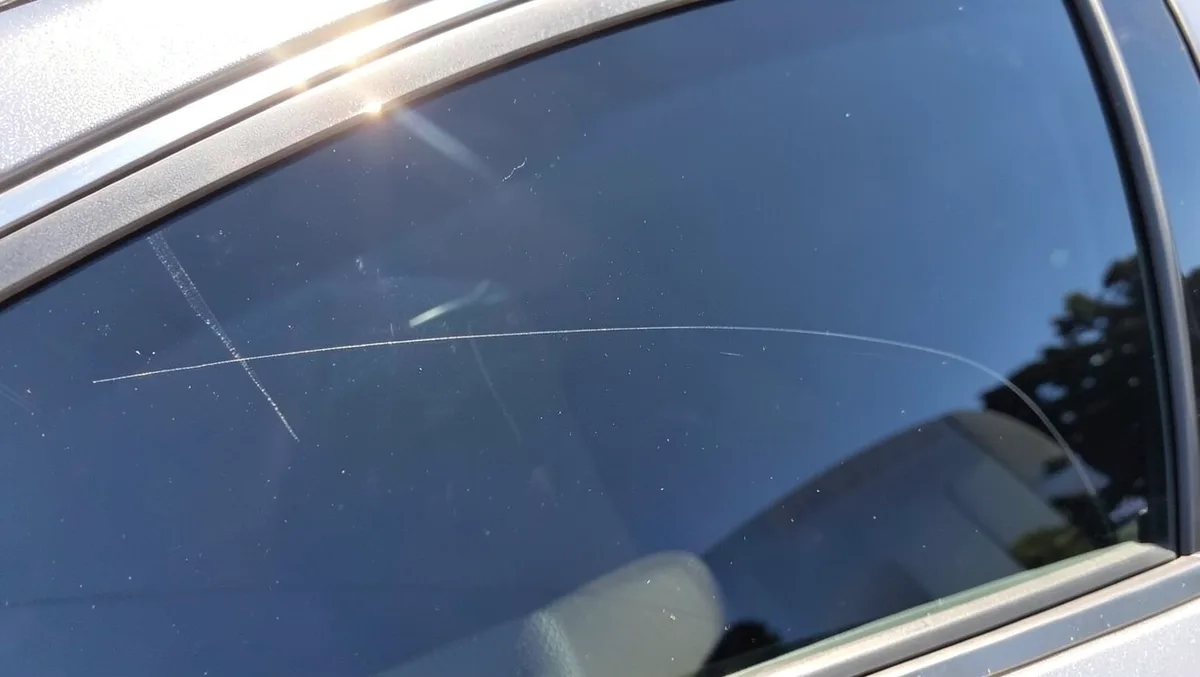
Run a fingernail across the scratch, perpendicular to the line. If your nail glides over it, the scratch is only in the very top layer of the glass and is a good candidate for polishing. If your nail catches or digs in even slightly, the scratch has gone deeper and polishing alone will not fully remove it, though it can still reduce how visible it is.
Also look at how the scratch behaves in direct sunlight. A light scratch usually looks like a fine hairline that mostly disappears when you tilt your head. A deep scratch stays visible from almost every angle and often has a slightly whitish, hazy edge where the glass has been gouged rather than just marked.
BEST FOR BUFFING OUT LIGHT GLASS SCRATCHES
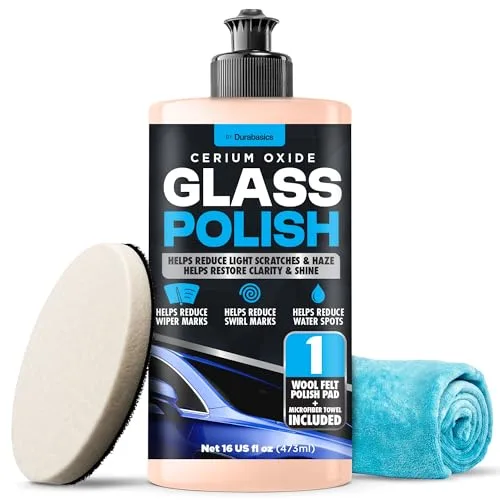 |
Durabasics Cerium Oxide Glass Polish (16 oz Kit) – $26.99 This is the compound glass shops actually use for light scratches and haze; toothpaste and baking soda are not a substitute for it.
|
Does Toothpaste or Baking Soda Actually Remove Glass Scratches?
Not reliably, and it is worth being honest about why. Toothpaste is formulated to gently polish tooth enamel, and its abrasive particles (usually silica, calcium carbonate, or baking soda) are irregular in size and much softer than what is needed to level automotive glass. On a plastic headlight lens, that mild abrasion can smooth out a scratch. On real glass, which is far harder, toothpaste mostly just fills the scratch with a thin white residue that makes it look better for a day or two before washing away.
Baking soda paste is a step more abrasive than toothpaste, so it can take the edge off the faintest surface haze, but its grit is inconsistent and can leave new micro-scratches of its own if you press too hard. Neither product uses cerium oxide, which is the compound that actually cuts glass on a molecular level without gouging it further. If a household-remedy video shows a scratch fully disappearing, look closely: it is almost always a very light haze mark, not an actual scratch you could catch with a fingernail.
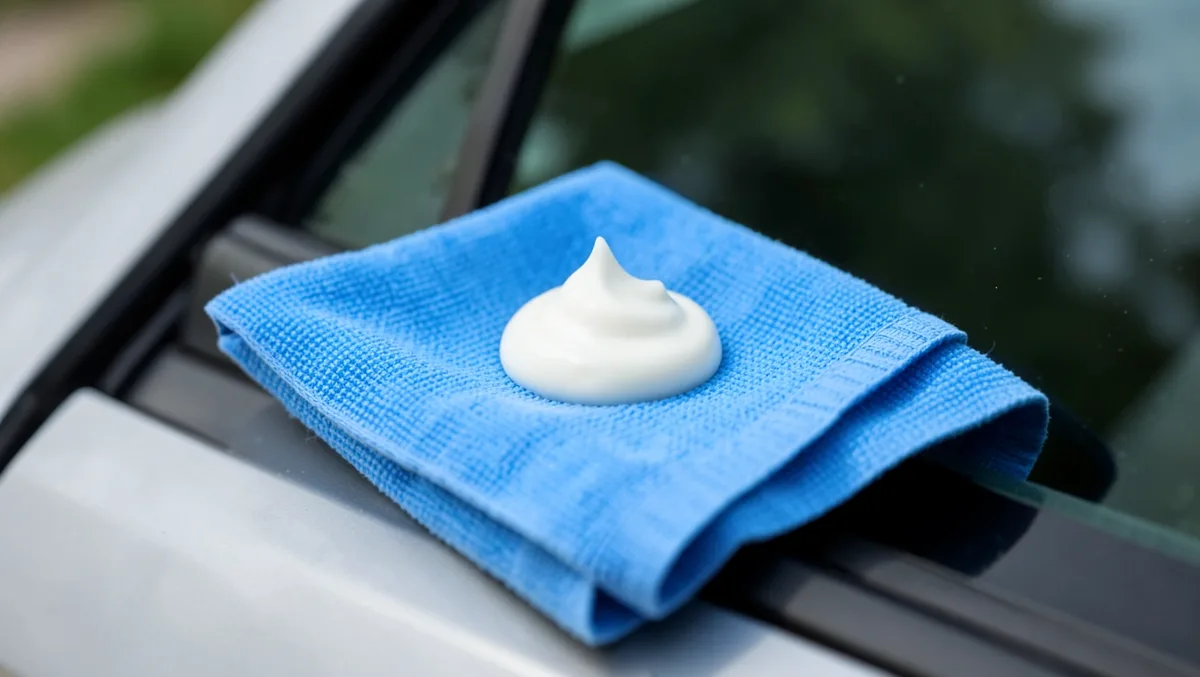
The Method That Actually Works: Cerium Oxide Polishing
- Clean the window with a proper glass cleaner and a lint-free cloth. Any leftover dirt will get dragged through the glass while you polish and can add new scratches.
- Mix cerium oxide powder with water in a small container until it forms a paste about the thickness of glue. Most kits include a pre-mixed compound, which skips this step.
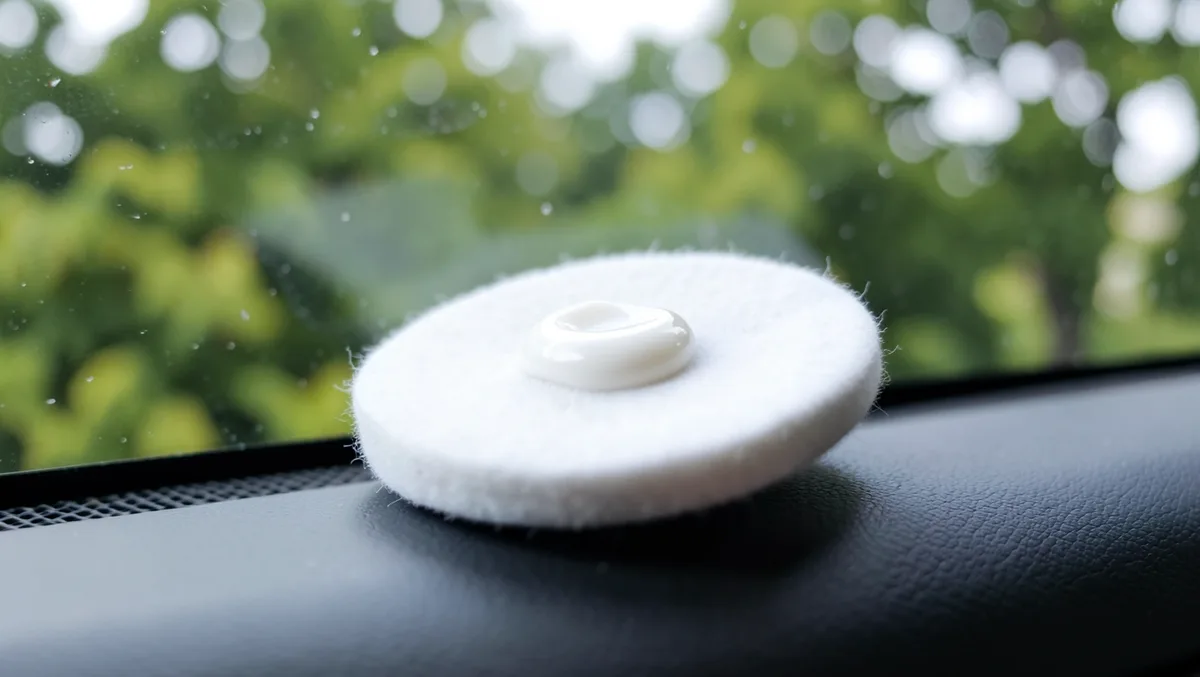
- Apply a small amount of paste to the felt buffing pad and work it over the scratch in overlapping circular motions for two to three minutes at a time, keeping the paste damp so it does not dry out and turn abrasive.
- Wipe the area clean and check your progress in direct light. Light scratches usually fade noticeably within 10 to 20 minutes of total buffing time; repeat in short sessions rather than one long one, checking often.
- Clean the glass fully once you are satisfied, and wipe down the surrounding paint or trim, since cerium oxide can leave a faint white residue if left to dry on the body.
For a full walkthrough with photos of each step, see our step-by-step car window scratch removal guide. If you want a side-by-side look at toothpaste, baking soda, nail polish, and cerium oxide against each other, our comparison of four DIY scratch repair methods breaks down which one to reach for by scratch type.
Windshield vs. Side Window: When to Replace Instead of Repair
A windshield is laminated glass, two panes bonded around a plastic interlayer, which is why chip and crack repair resin can be injected into it. A scratch that sits inside the driver’s direct line of sight is treated differently, though: many state inspection rules follow the ANSI/DOT AS-1 standard, which restricts any visible defect in that zone, so a shop will often recommend replacement rather than polishing a windshield scratch that sits right in front of the driver, even a fairly light one.
Side and rear windows are tempered glass, a single sheet that is heat-treated to shatter into small pebbles if it breaks. There is no resin fill for tempered glass. Cerium oxide polishing is the only glass-safe option, and if a scratch is too deep for that, the only real fix is swapping in a new pane, since a tempered window cannot be reground the way a windshield can.
Preventing Future Scratches
Wash your windows regularly with a dedicated glass cleaner and a clean, soft cloth rather than whatever rag is on the floor of the trunk. Most window scratches come from grit trapped under a wiping cloth, not from a single dramatic event. Avoid parking under trees, since falling branches, sap, and grit are a common cause of the fine hairline scratches on rear and rear-side glass. Fix small chips quickly rather than letting them sit, since chips tend to spread into longer cracks when they flex with temperature changes.
When to Call a Professional
Identifying Unfixable Scratches
If a scratch catches your fingernail, it has gone past the surface layer that polishing can level out. Pushing a home glass polish harder to compensate usually just widens the scratch or introduces haze around it. At that point, a glass shop’s professional-grade equipment and deeper resin or resurfacing options are worth the cost over risking the window.
Choosing a Reliable Service
Look for a shop that specializes in auto glass specifically, not just general detailing, and ask whether they use cerium oxide polishing or resin-based repair for the type of scratch you have. Read recent reviews that mention scratch repair by name, not just windshield chip repair, since the two skills do not always overlap. A shop confident in its work will usually offer some kind of guarantee if the scratch reappears or was not fully removed.
Frequently Asked Questions
Can you really get scratches out of a car window with toothpaste?
Only for the faintest surface haze. Toothpaste is made for enamel, not glass, so it can mask a very light mark for a wash or two but will not fully remove a scratch you can feel with a fingernail. A cerium oxide glass polish is what actually levels glass.
What actually works to remove scratches from car glass?
A cerium oxide glass polishing compound applied with a felt buffing pad in short, damp circular passes. It is the same compound most auto glass shops use for light scratches, haze, and wiper marks, and it works because cerium oxide is hard enough to level glass without gouging it further.
How do I know if a scratch is too deep to fix at home?
Run a fingernail across the scratch. If it catches or digs in, the scratch has gone past the surface layer that a home glass polish can level out, and you will need a glass shop’s resin fill, resurfacing, or a replacement pane instead.
Will polishing out a scratch weaken the window?
Light cerium oxide polishing removes only a microscopic layer of glass and does not meaningfully affect the window’s strength. Repeated aggressive polishing over the same large area, or polishing that is left to run hot with an electric buffer, is the main way DIY work can thin the glass enough to matter.
Is fixing a windshield scratch different from a side window scratch?
Yes. A windshield is laminated safety glass, and a scratch inside the driver’s direct line of sight often has to be replaced rather than polished for inspection and safety reasons. A side or rear window is tempered glass with no resin-fill option, so cerium oxide polishing is the only glass-safe repair, and a scratch too deep for that means a full pane replacement.
How much does professional scratch removal or glass replacement cost?
Professional cerium oxide polishing for a light scratch typically runs in the range of a standard detailing add-on, while replacing a side window pane or windshield is a larger job priced by glass type and vehicle. Ask for a quote that specifies whether they are polishing the existing glass or replacing it, since the two are priced very differently.
Conclusion
Most car window scratches people ask about online are light enough to buff out with a proper cerium oxide glass polish and a little patience, not toothpaste or a baking soda paste. Test the scratch with a fingernail first: if it does not catch, polish it out yourself in well under half an hour; if it catches, book a glass shop before it spreads further or, on a windshield in your line of sight, before it becomes an inspection problem.
Products related to this article
Sponsored / affiliate links. As an Amazon Associate I earn from qualifying purchases. I may earn additional commission from eligible campaigns.