Graphite Lubricant for Pinewood Derby Cars: How to Apply It Right
Graphite is the standard dry lubricant for Pinewood Derby axles because it cuts friction without gumming up the way oil does, and it holds up across multiple heats.
A dry graphite-and-molybdenum blend, worked into the wheel bore and burnished onto the axle, is what actually separates a fast car from a slow one on race day – not just squeezing a tube onto the axle and hoping for the best. This guide covers how much graphite to use, the burnishing technique serious racers rely on, and two lubricants worth trying.
Both lubricants below come in mess-free applicators – an easy-squeeze tube for one, a fine-tip nozzle bottle for the other – so getting graphite exactly where it needs to go on the axle takes seconds, not a shop towel and a lot of patience.
Pinewood Pro Pro Graphite
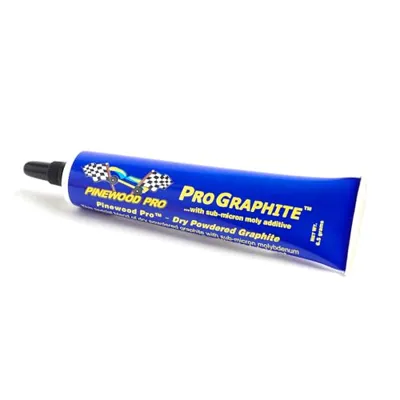
Pinewood Pro PRO Graphite is built for racers who want a precise, no-mess dose of lubricant on the axle rather than a loose pile of powder. The squeeze-tube format lets you place a small amount exactly at the point where the axle meets the wheel bore, which matters more for speed than how much graphite you use overall.
Pros:
- Increases speed by reducing friction effectively.
- Easy application with an easy-squeeze tube.
- Blended with molybdenum for enhanced performance.
Cons:
- Built for small axles, so it is not a general-purpose dry lubricant for other uses.
- Careful, light application matters – too much graphite on the tread can hurt traction instead of speed.
The dry graphite and molybdenum blend goes on smoothly and cuts friction noticeably once it is worked into the axle and wheel bore rather than just sitting on the surface. The squeeze-tube design makes it easy to reload between heats without opening a loose powder container at the track.
The tube is small enough to keep in a pit box and reapply between rounds, which matters if your pack runs several heats per car. Because the molybdenum additive resists breaking down under repeated axle rotation, one application tends to hold up better than plain graphite alone across a full race day.
To buy this product, click here.
Graphite Powder Lubricant, Dry Lube, Reduces Friction, Increases Speed
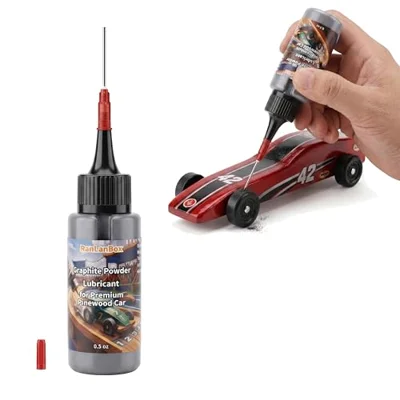
This graphite powder lubricant is a solid alternative to a squeeze tube if you prefer dispensing loose powder directly into the wheel bore. The fine-tip nozzle bottle is aimed at exactly this kind of targeted, low-waste application.
Pros:
- Precise, low-waste application: the fine-tip nozzle lets you dose graphite powder directly into the axle bore instead of dusting the whole wheel.
- Doubles as a household dry lube: the same graphite powder also silences squeaky hinges and frees up sticky door locks.
- High-purity graphite: formulated specifically with Pinewood Derby speed in mind, not a generic all-purpose grease.
- Non-greasy and versatile: works as a dry lubricant on other small mechanisms beyond just derby car axles.
Cons:
- The 0.5 oz bottle is small, so a busy pack running several cars through a season may need a second bottle.
- As a loose powder, it is easier to overapply than a squeeze tube, so light, repeated coats work better than one heavy dose.
Check the current Amazon listing for the latest price and any bundle options before buying.
To buy this product, click here.
How to Apply Graphite Lubricant the Right Way
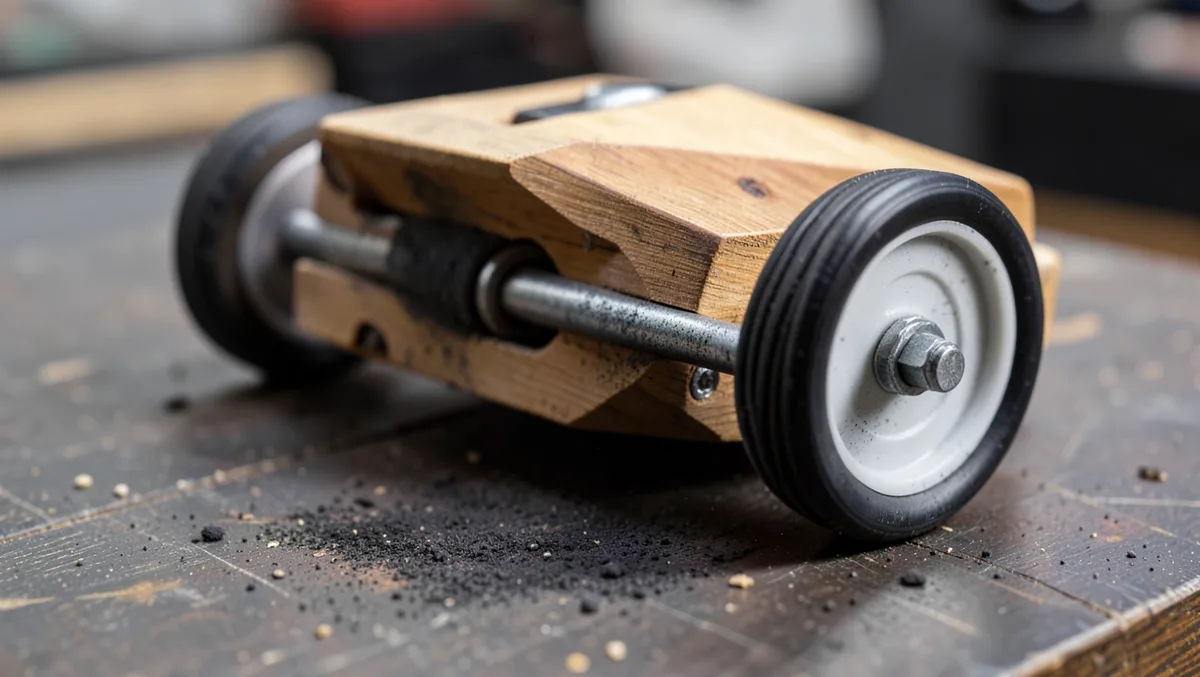
Squeezing graphite onto a dirty axle and calling it done is the most common mistake at the pinewood derby table. Clean each axle with isopropyl alcohol first to strip off any oil, mold-release residue, or old lubricant, then let it dry fully before applying anything new.
- Apply a small amount of graphite into the wheel bore and onto the axle shaft – a light coat spread thin beats one heavy dose.
- Burnish it in: chuck the axle into a low-speed drill (under 300 RPM) or a pin vise and spin it for about a minute so the graphite gets pressed into the metal’s surface instead of just sitting on top of it.
- Slide the wheel back on, roll it forward and backward on a towel a few times, and reapply a light second coat – graphite works best built up in thin layers rather than one thick one.
- Keep graphite off the wheel tread entirely. If any gets on the tread, wipe it off with a cotton swab and isopropyl alcohol, since graphite on the tread reduces grip instead of helping speed.
- If your derby has a test-run day, take one practice run to break in the graphite before the real heats – the first run after lubrication is usually the slowest one.
Reapplying a thin layer between heats matters more than most racers expect, since graphite does wear down under the axle’s rotation over a full race day. A quick touch-up with the same squeeze tube or fine-tip nozzle between rounds keeps friction low from the first heat to the last.
Frequently Asked Questions
What Is Graphite Lubricant for Pinewood Derby?
Graphite lubricant is a dry, powdered lubricant applied to a Pinewood Derby car’s axles and wheel bores. Unlike oil, it does not attract dust or gum up over multiple heats, so it keeps friction low from the first run to the last. Most racers work a graphite-and-molybdenum blend into the axle rather than just squirting it on and hoping for the best.
How Does Molybdenum Improve Graphite Lubricant?
Molybdenum disulfide is added to plain graphite because it forms an even thinner, more durable film under pressure. On its own, graphite can wear away after a few heats; graphite blended with sub-micron moly holds up longer on the axle and keeps friction consistently low across a full race day.
Why Choose Pinewood Pro PRO Graphite?
Pinewood Pro PRO Graphite blends ultra-fine graphite with a sub-micron molybdenum additive in an easy-squeeze tube, so you can dose a small, precise amount directly onto the axle without spilling powder everywhere. It is one of the more established lubricants in the hobby and works well for both beginners and repeat racers.
How Do I Apply Graphite Lubricant?
Clean the axles first with rubbing alcohol so old oil or dust does not trap the graphite unevenly. Apply the lubricant to the axle shaft and into the wheel bore, then spin the wheel by hand or with a low-speed drill to work the graphite into the metal and plastic. Wipe off any excess and keep it off the wheel tread, where it will only make the tires slip.
Should Graphite Touch the Wheel Tread?
No. Graphite belongs on the axle and inside the wheel bore, not on the tread that contacts the track. Graphite on the tread reduces grip instead of speed, which is the opposite of what you want at the starting gate. If some gets on the tread by accident, wipe it off with a cotton swab dipped in isopropyl alcohol before race day.
Conclusion
Graphite lubricant is what actually keeps a Pinewood Derby car’s axles turning freely from the first heat to the last. A dry graphite-and-molybdenum blend, applied in thin layers and burnished into the axle, does more for speed than any other single adjustment you can make in a race-day pit box.
Both lubricants above come in mess-free applicators, so getting graphite exactly onto the axle — and nowhere near the wheel tread — takes seconds. Clean the axles first, apply light coats, burnish, and do a break-in run if your pack allows one.
If you are still shaping and finishing the car itself, our guide on how to cut a Pinewood Derby car covers the body work that comes before any of this lubrication step matters. Get the shape and the axles right, and the lubricant does the rest on race day.
Products related to this article
Sponsored / affiliate links. As an Amazon Associate I earn from qualifying purchases. I may earn additional commission from eligible campaigns.

![CRC Dry Graphite Lube 03094 – [Pack of 12] 10 Wt. Oz., Dry Film Lubricant](https://m.media-amazon.com/images/I/41acrReDhHL._SL500_.jpg)