How To Launch A Car Fast: Proven, Effortless Steps
To launch a car fast, focus on proper preparation. This includes ensuring your tires have good grip, your engine is ready with fresh fluids, and you understand the specific launch technique for your car, such as releasing the clutch smoothly in a manual or using the “brake-boost” method in an automatic. Always prioritize safety and responsible driving.
Ever found yourself needing to get your car moving swiftly from a standstill? Whether it’s merging into fast-moving traffic or just wanting to feel that satisfying push back into your seat, knowing how to launch a car fast can be incredibly useful. Many drivers think this is only for race tracks, but there are simple, everyday ways to get your car off the line quickly and safely. Don’t worry if you’re new to this; we’re going to break down everything you need to know in easy, step-by-step instructions. You’ll be launching your car with more confidence in no time!
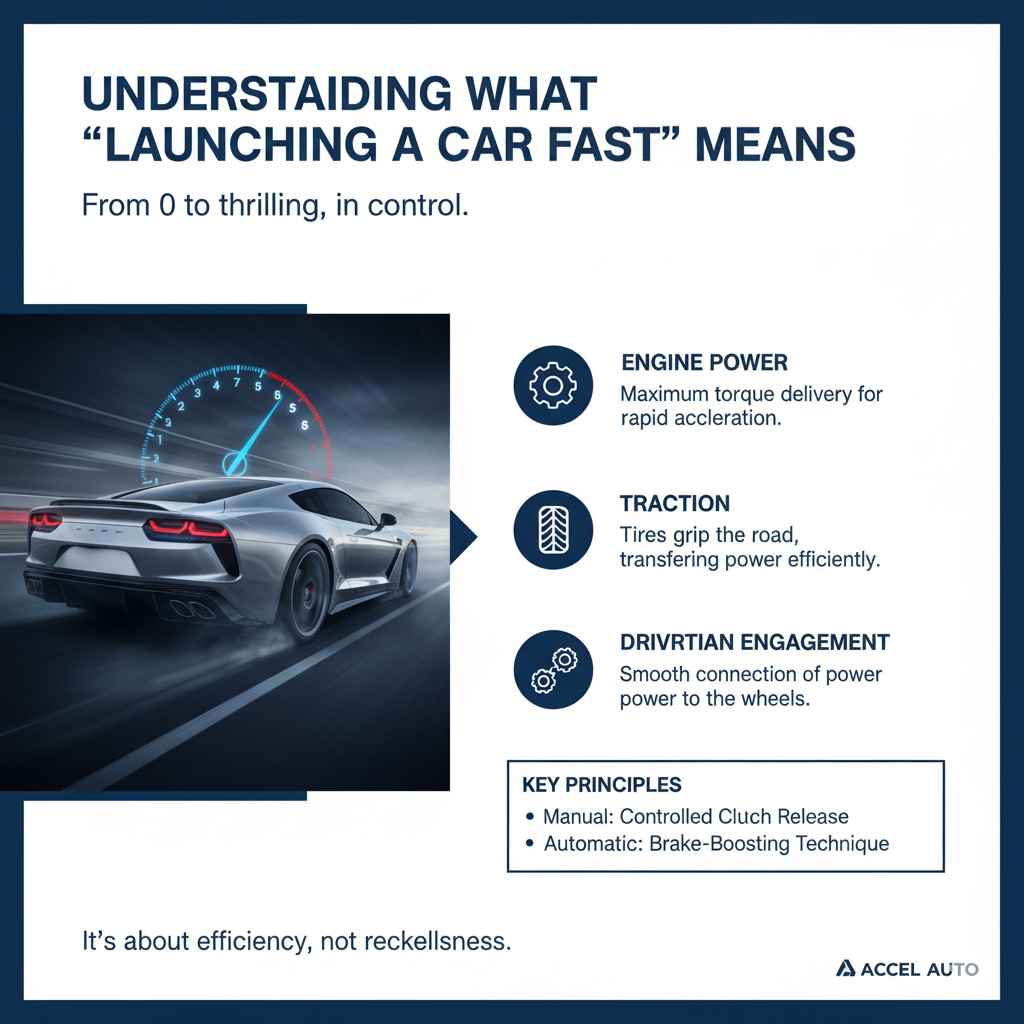
Understanding What “Launching a Car Fast” Means
When we talk about launching a car fast, we’re referring to accelerating from a complete stop as quickly and efficiently as possible. This isn’t about reckless driving; it’s about making the most of your car’s power and getting it moving smoothly and rapidly. It leverages a few key principles:
- Engine Power: Getting the engine to deliver its maximum torque efficiently.
- Traction: Ensuring your tires can grip the road effectively to transfer that power.
- Drivetrain Engagement: Smoothly connecting the engine’s power to the wheels without slipping or jarring.
The specific method will vary slightly depending on whether your car has a manual transmission (stick shift) or an automatic transmission. We’ll cover both!
Essential Preparations for a Fast Launch
Before you even think about hitting the gas pedal, a few things need to be in order. Think of this as getting your tools ready before starting a big project. Proper preparation is key to a clean, fast launch and helps protect your car.
Tire Health: Your Grip Foundation
Your tires are the only point of contact between your car and the road. If they aren’t in good shape, you won’t be able to launch effectively, and you could even spin your wheels uselessly.
- Tire Pressure: Ensure your tires are inflated to the recommendedpsi (pounds per square inch). You can usually find this information on a sticker on your driver’s side door jamb or in your car’s owner’s manual. Over-inflated tires can lose grip, while under-inflated tires can overheat and become unstable. Websites like NHTSA’s tire information page offer great insights into tire safety.
- Tread Depth: Worn treads can’t channel water away effectively, reducing grip, especially in wet conditions. If your tread is low, it’s time for new tires. A simple way to check is the “penny test”: insert a penny headfirst into the deepest tread groove. If you can see the top of Lincoln’s head, your tread is likely too low.
- Cleanliness: While you can’t always control road debris, a quick check for any large objects stuck in your treads before you plan a launch is a good idea.
Engine and Drivetrain Readiness
A healthy engine and drivetrain are crucial for delivering power smoothly and reliably.
- Fluid Levels: Ensure your engine oil, transmission fluid, and brake fluid are at the correct levels. Low or old fluids can cause damage or reduced performance. If you’re unsure, check your owner’s manual or consult a mechanic.
- Engine Temperature: It’s best to perform a quick launch when your engine is at normal operating temperature. A cold engine may not perform at its peak, and a very hot engine needs to be cooled down.
- No Warning Lights: Make sure there are no engine or transmission warning lights illuminated on your dashboard. These indicate a problem that needs addressing before attempting any aggressive maneuvers.
Know Your Car’s Capabilities
Every car is different. What works for a sports car might not be the best for a family sedan.
- Horsepower and Torque: Understand your car’s general power output.
- Transmission Type: Manual, automatic, CVT, dual-clutch – each engages power differently.
- Traction Control/Stability Control: Know whether you can turn these systems off. For a launch, turning them off can sometimes help achieve maximum acceleration, but it requires more driver skill to control wheelspin.
How to Launch a Car Fast: Manual Transmission
Launching a manual transmission vehicle quickly and efficiently is often called a “clutch dump” or a controlled clutch release. It requires coordination and practice. Here’s a step-by-step guide:
Step-by-Step: Manual Launch
- Find a Safe, Open Area: Ensure you are in a safe, controlled environment with no traffic, pedestrians, or obstacles. An empty parking lot or a designated track is ideal.
- Engage First Gear: With your foot firmly on the brake pedal, press the clutch in and shift into first gear.
- Engage Parking Brake (Optional but Recommended for Practice): For practice, engaging the parking brake can help you control the engine revs more precisely without the car immediately moving.
- Apply Throttle: Gently press the accelerator pedal to bring the engine RPMs up. For a fast launch, you’ll typically want to get the RPMs to a point where the engine is producing good power – often between 2,500 and 4,000 RPM, depending on your car. Listen to your engine; you want it to sound like it’s ready to dig in, not just revving aimlessly.
- Prepare to Release the Clutch: This is the critical step. Instead of smoothly letting the clutch out, you’ll perform a more rapid, controlled release.
-
Execute the Launch:
- If using the parking brake: Release the parking brake sharply with one hand while simultaneously releasing the clutch pedal quickly with your foot.
- If not using the parking brake: Hold your brake pedal with your left foot while you bring the engine RPMs up with the accelerator (right foot). Then, lift your left foot off the brake and immediately and quickly release the clutch pedal. You may need to keep the accelerator applied to maintain RPMs.
- Control Wheelspin: You might experience a brief amount of wheelspin. Modulate the accelerator pedal to keep the wheels spinning just enough to move forward quickly without spinning uncontrollably. If traction control is on, it may intervene, potentially slowing you down until the wheels regain grip.
- Shift Gears: As you accelerate, shift through the gears smoothly and quickly to maximize acceleration.
Key Considerations for Manual Launches
This technique puts more stress on your clutch and transmission. Regular, aggressive launches can significantly shorten the lifespan of these components.
- Clutch Wear: The friction zone where the clutch engages is where wear occurs. Rapid engagement means more friction in a shorter amount of time.
- Transmission Stress: Sudden torque can stress gears and other internal components.
- Traction is King: If your tires can’t grip, you’ll just be revving your engine and burning unnecessary fuel, or worse, spinning out of control.
How to Launch a Car Fast: Automatic Transmission
Automatic transmissions offer a simpler way to launch quickly, often using a technique called “brake-boosting.” This involves using both the brake and accelerator pedals simultaneously.
Step-by-Step: Automatic Launch (Brake-Boosting)
- Find a Safe, Open Area: As with manual launches, safety is paramount. Use a secure, traffic-free location.
- Engage Drive: Ensure your car is in “Drive” (D).
- Apply Brakes Firmly: Place your left foot firmly on the brake pedal. This holds the car stationary.
- Apply Throttle: With your right foot, gently press the accelerator pedal. You should feel the engine rev up against the brake. Listen to your engine. Many automatics have a built-in limit to prevent excessive revving when the brake is applied, but don’t push it too hard. The goal is to build up a bit of engine (and transmission) pressure.
- Release the Brake: When you’re ready to launch, lift your left foot off the brake pedal sharply.
- Full Throttle: Simultaneously, or immediately after releasing the brake, press the accelerator pedal down more firmly to the floor.
- Control: Your car should surge forward. Allow the transmission to shift through its gears.
Important Notes for Automatic Launches
Brake-boosting is less mechanically brutal on the transmission than a manual clutch dump, but it still exerts stress.
- Torque Converter Strain: This method puts a lot of pressure on the torque converter, which is the fluid coupling that transfers engine power to the transmission.
- Transmission Fluid Temperature: Repeated brake-boosting can heat up your transmission fluid significantly. Allow for cooling periods between attempts.
- Traction Control/Stability Control: Many modern cars have traction control systems that might interpret rapid acceleration from a standstill as wheelspin and cut engine power. Consider turning these systems off if your car allows it and you feel comfortable doing so. Consult your owner’s manual on how to disable these features safely.
Modern Car Technologies and Launching
Many cars today come equipped with advanced features designed to manage power delivery and stability. Understanding these can help you optimize a launch or even use them to your advantage.
Launch Control Systems
High-performance vehicles often feature “Launch Control.” This is a sophisticated electronic system designed to optimize acceleration from a standstill.
- How it Works: You typically engage it through the car’s infotainment system or a specific button. Then, you follow a procedure (e.g., holding the brake, applying throttle to a certain RPM, releasing the brake). The computer then manages engine power and traction to achieve the quickest possible launch without requiring perfect driver input.
- Benefits: Consistent, optimized launches. Reduces the risk of driver error.
- Caveats: Primarily found on sports cars and performance models. Always follow the manufacturer’s specific instructions for using launch control.
Traction and Stability Control
These systems are designed to prevent wheelspin and loss of control. While great for daily driving, they can sometimes hinder a fast launch.
- Traction Control (TC): Senses when a drive wheel is spinning faster than the others and reduces engine power or applies a brake to that wheel to regain grip.
- Stability Control (ESC/VSC): A more advanced system that can apply brakes to individual wheels and reduce engine power to help the car maintain its intended path, preventing skids.
When to Turn Them Off: For maximum acceleration from a stop, especially on dry, grippy surfaces, disabling these systems can be beneficial. This allows your wheels to spin a controlled amount, which can help you get going faster. However, this significantly increases the risk of losing control if not managed carefully. Always ensure you’re in a safe environment and comfortable with the driving dynamics before disabling these safety features.
When to Keep Them On: On slippery surfaces (rain, snow, ice, gravel) or if you are inexperienced, keeping these systems engaged is highly recommended for safety and stability.
Troubleshooting Common Launch Issues
Even with the best preparation, things might not go perfectly. Here are some common issues and how to address them:
Excessive Wheelspin
Problem: Your wheels spin much more than you’d like, and your car isn’t moving forward effectively.
Solutions:
- Reduce Throttle: Ease off the gas pedal slightly.
- Feather the Clutch (Manual): If you’re in a manual, slightly modulate the clutch pedal to reduce the engine’s power transfer.
- Check Tire Condition: Ensure your tires aren’t worn out or over-inflated.
- Improve Surface Grip: If the surface is slippery, find a more grippy spot.
- Traction Control: If you’ve disabled it and are experiencing spin, re-enable it.
Stalling (Manual Transmission)
Problem: Your engine dies when you try to release the clutch.
Solutions:
- Clutch Release Too Fast: You released the clutch too quickly for the engine RPMs.
- Insufficient Throttle: You didn’t give the engine enough gas.
- Practice the Friction Point: Focus on finding the clutch’s friction point (where it starts to engage) and bringing the RPMs up slightly just before releasing it fully.
Jerky or Bumpy Launch
Problem: The launch feels rough and uncontrolled.
Solutions:
- Smooth Clutch Release (Manual): Try a slightly smoother, more progressive clutch release.
- Gentler Throttle Application (Automatic): Smooth out your throttle input when releasing the brake.
- Traction Control: Sometimes, leaving traction control on can smooth out minor excesses of throttle application in an automatic.
Safety First: Responsible Launching
It’s crucial to reiterate that launching a car fast is not for public roads under normal driving conditions. This technique should only be practiced and used in controlled environments where you have ample space, no hazards, and are aware of any local laws or regulations.
Always Prioritize:
- Safety: Your safety and the safety of others are the absolute top priorities.
- Vehicle Condition: Ensure your car is in excellent mechanical condition.
- Environment: Use designated areas for performance driving.
- Legality: Never perform these maneuvers on public roads.
Understanding your car’s limits and your own driving abilities is part of being a responsible driver. Resources like your local Department of Motor Vehicles (DMV) or equivalent often provide information on safe driving practices and advanced driving courses.
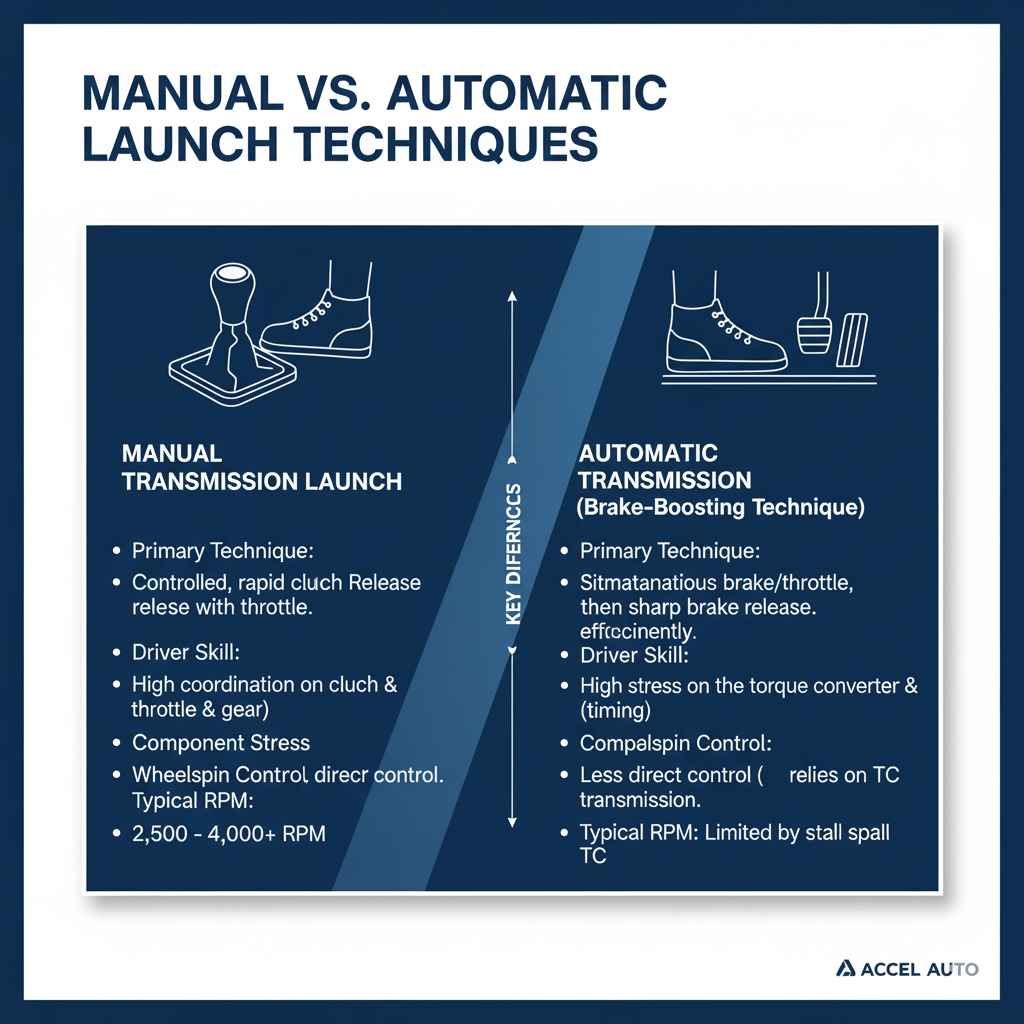
Table: Manual vs. Automatic Launch Techniques
Here’s a quick comparison of the two main methods:
| Feature | Manual Transmission Launch | Automatic Transmission Launch (Brake-Boosting) |
|---|---|---|
| Primary Technique | Controlled, rapid clutch release combined with throttle | Simultaneous brake and throttle application, then sharp brake release |
| Driver Skill Required | High coordination: clutch, throttle, gear shifting | Lower coordination: brake/throttle timing |
| Component Stress | High stress on clutch and drivetrain | High stress on torque converter and transmission |
| Potential for Wheelspin Control | More direct driver control over clutch slip | Less direct control; relies more on engine power management and TC |
| Typical RPM Range for Launch | 2,500 – 4,000+ RPM (varies by car) | Limited by vehicle’s brake-hold/torque converter stall speed |
Frequently Asked Questions (FAQ)
Q1: Will launching my car fast damage it?
A1: Yes, performing rapid launches repeatedly can put significant stress on your clutch, transmission, engine mounts, and other drivetrain components. It’s best reserved for occasional use in safe environments, not as a daily driving habit.
Q2: Can I launch my car fast in the rain?
A2: It’s generally not recommended to attempt fast launches in wet conditions due to significantly reduced traction. The risk of losing control is very high. If you must, proceed with extreme caution and be prepared for reduced performance and potential instability.
Q3: How much is too much RPM for launching an automatic?
A3: This varies greatly by vehicle. Most modern automatics will have a limit programmed to prevent excessive revving when the brake is applied, protecting the drivetrain. Listen to your engine; if it sounds like it’s straining or in distress beyond a certain point, ease off the throttle. Refer to your owner’s manual for any specific guidelines.
Q4: Is there a difference if my car is Front-Wheel Drive (FWD), Rear-Wheel Drive (RWD), or All-Wheel Drive (AWD)?
A4: Yes. RWD cars are more prone to oversteer and wheelspin. FWD cars can suffer from “torque steer” (a tugging sensation on the steering wheel). AWD cars generally offer the best traction for launching, as power is distributed to all wheels, minimizing wheelspin and maximizing grip.