How To Learn Manual: Proven Car Mastery
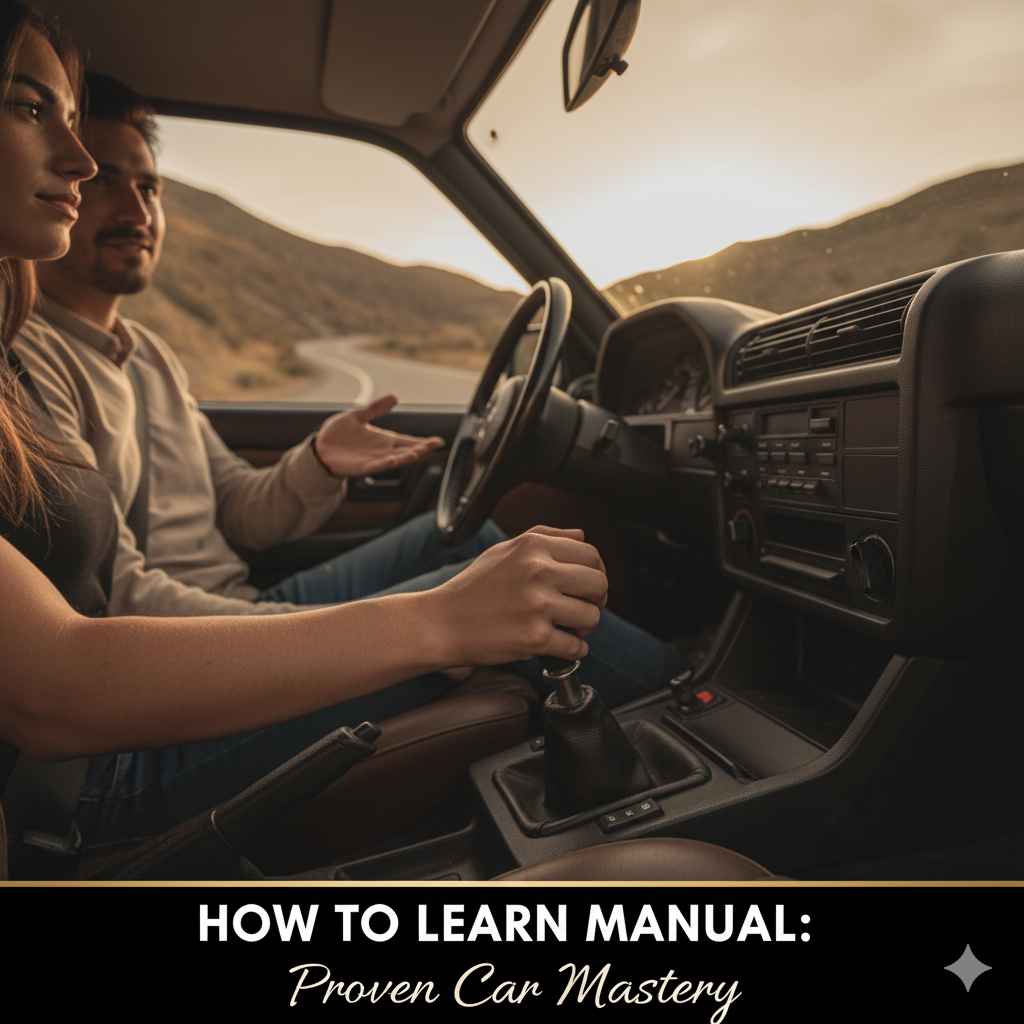
Learning to drive a manual car involves understanding the clutch, shifter, and coordinating your feet. Practice in a safe, open space, starting slow with clutch control to avoid stalling. With patience and these tips, you’ll master manual driving confidently.
Learning to drive a manual transmission car can feel a bit intimidating at first. Why do some cars have an extra pedal, and what’s that stick with all those numbers for? Many drivers find themselves a little nervous about what seems like a complex dance of feet and hands. But don’t worry! Driving a manual, often called a “stick shift,” is a skill that anyone can learn with a little practice and some clear guidance. It can even be more fun and give you a better feel for your car. We’re going to break it down step-by-step, making it easy and stress-free. Get ready to gain a new level of car confidence!
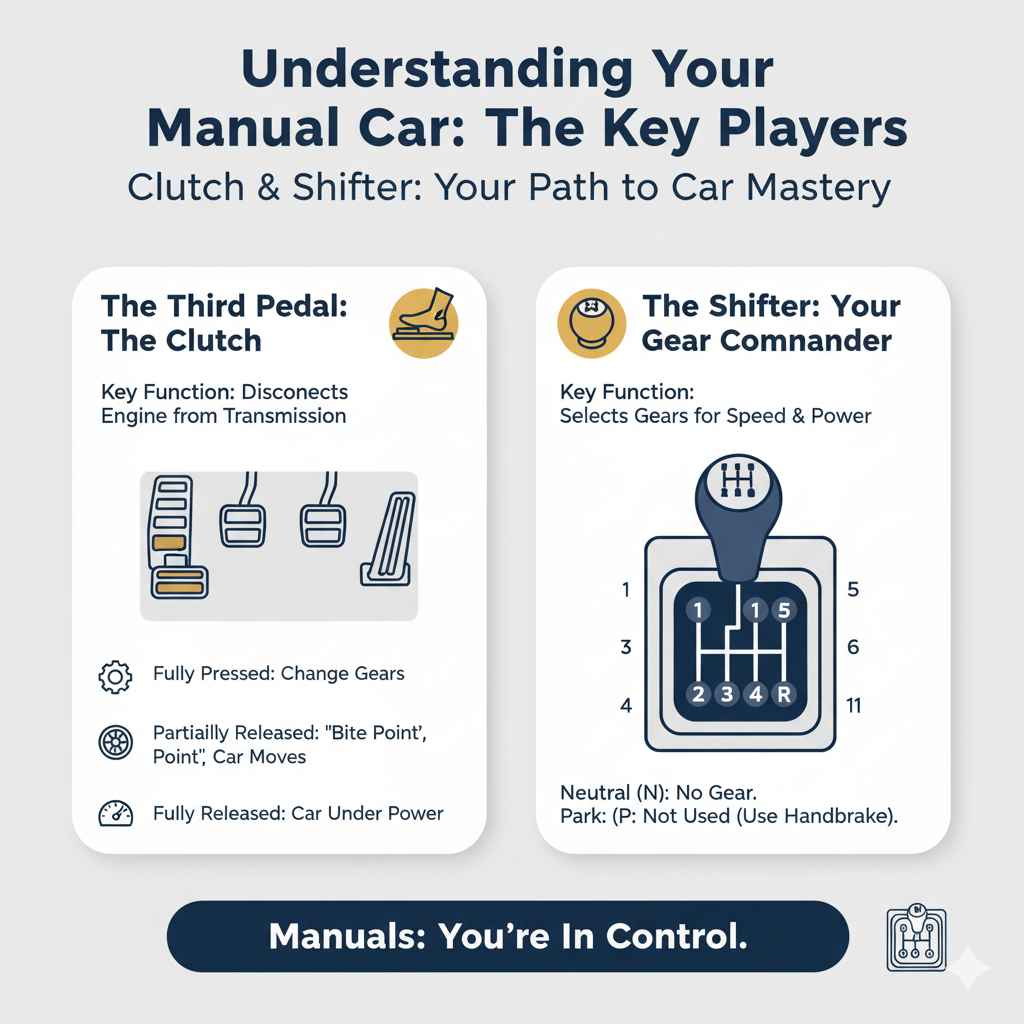
Understanding Your Manual Car: The Key Players
Before you even turn the key, it’s helpful to know what makes a manual car tick differently from an automatic. The main differences are in the clutch pedal and the gear shifter. Once you understand their roles, you’re halfway there.
The Third Pedal: The Clutch
Most cars have two pedals: the accelerator (gas) and the brake. A manual car adds a third pedal on the far left: the clutch. This pedal is crucial. When you press it down, it disconnects the engine from the transmission, allowing you to change gears smoothly. When you release it, it reconnects them, sending power to the wheels.
- Fully Pressed: Engine is disconnected from the wheels. You can change gears.
- Partially Released (The “Bite Point”): Engine and transmission are starting to connect. Car will begin to move.
- Fully Released: Engine is fully connected to the transmission. Car is moving under power.
The Shifter: Your Gear Commander
This is the lever you’ll use to select different gears. Unlike an automatic where you just put it in “D” for Drive, a manual gives you control over specific gears (1st, 2nd, 3rd, 4th, 5th, 6th) and Reverse (R). Each gear is designed for different speeds and situations. Higher gears are for faster speeds and better fuel economy, while lower gears provide more power for starting off or climbing hills.
You’ll typically see a pattern on top of the shifter knob. In most cars, neutral (N) is the position where no gear is engaged, and the car won’t move even if the engine is running. Park (P) isn’t a gear in a manual transmission car; you use the parking brake for that.
Getting Started: The First Steps to Driving Stick
The best way to learn is to find a safe, open space with no traffic. An empty parking lot on a weekend or a quiet industrial area is perfect. You’ll want to have a patient instructor with you for your first few times, someone who knows how to drive a manual and can offer calm guidance.
Inside the Car: Familiarization
Before you even think about moving, sit in the driver’s seat and get comfortable. Practice using the pedals:
- Engine Off: With the engine off, get a feel for the clutch. Press it all the way down and feel how it goes. Release it slowly. Do this several times.
- Shifter Practice: With the clutch pedal fully pressed down (always press the clutch when moving the shifter!), practice moving the shifter through all the gears. Find neutral, and then try putting it into each gear. Get a feel for how the shifter moves and clicks into place. Remember, always press the clutch pedal before moving the shifter.
Starting the Engine Safely
Once you’re comfortable with the pedals and shifter, it’s time to start the engine.
- Clutch In: Make sure the clutch pedal is pressed all the way to the floor.
- Neutral: Ensure the shifter is in neutral (N). Wiggle it a little if you’re unsure; if it moves freely side-to-side, it’s in neutral.
- Start Engine: Turn the ignition key to start the engine. If the car immediately tries to lurch forward, you likely weren’t fully in neutral, or the clutch was slightly engaged. If this happens, press the clutch all the way down again and re-center the shifter.
With the engine running, keep your foot off the accelerator. The car might idle a bit high, but it shouldn’t try to move if you’re truly in neutral with the clutch in.
The Art of the Take-Off: Moving the Car
This is often the trickiest part for beginners: getting the car moving without stalling. Stalling means the engine “dies” because it’s gotten too much pressure or not enough speed. Don’t worry, it happens to everyone!
- Foot Placement: You need to shift your right foot from the brake to the accelerator. The easiest way to start is to have your left foot firmly on the clutch pedal (all the way down) and your right foot hovering over the accelerator.
- Engage 1st Gear: Keep the clutch pedal all the way down and move the shifter firmly into the 1st gear position.
- Find the Bite Point: This is critical. Slowly begin to lift your left foot off the clutch. Listen to the engine. As the clutch starts to engage, you’ll feel a slight change in the engine’s sound and vibration. This is the “bite point.” The car might start to creep forward ever so slightly. Hold your foot steady right here for a moment.
- Gentle Acceleration: While holding the clutch at the bite point, gently press the accelerator with your right foot. You’re looking for a balance: enough gas to keep the engine from stalling as you slowly release the clutch the rest of the way.
- Smooth Release: As you add a little gas, continue to slowly release the clutch pedal all the way. The car should start to move forward smoothly.
Common Stalling Scenarios and Solutions:
- Stall: Engine dies when you try to move. This means you lifted the clutch too quickly or didn’t give enough gas. Try again, focusing on finding that bite point and gently adding gas as you release the clutch.
- Jerky Movement: Car lurches forward. You might be releasing the clutch too fast without enough gas, or your bite point coordination needs refining.
Shifting Gears: Moving Up and Down
Once you’re moving, you’ll need to shift gears to increase your speed. The general rule is to shift up as the engine RPMs (revolutions per minute) get a little higher, or when you hear the engine working hard. Smooth shifting is the goal.
Upshifting (e.g., 1st to 2nd Gear)
- Accelerate: Drive in your current gear (e.g., 1st) until you feel the engine start to rev higher or you reach a comfortable speed for that gear.
- Clutch In: Fully press the clutch pedal down with your left foot. This disconnects the engine.
- Shift Up: Move the shifter smoothly to the next gear (e.g., from 1st to 2nd).
- Clutch Out: Slowly release the clutch pedal.
- Accelerate: Gently press the accelerator to bring the car up to speed in the new gear.
Downshifting (e.g., 3rd to 2nd Gear)
You’ll downshift to slow down or prepare for turns or hills. It’s the reverse process.
- Ease Off Gas: Lift your foot off the accelerator.
- Clutch In: Fully press the clutch pedal down.
- Shift Down: Move the shifter smoothly to the lower gear (e.g., from 3rd to 2nd).
- Clutch Out: Slowly release the clutch pedal. You might hear the engine rev a bit higher, which is okay and can help you slow down more effectively.
- Brake (if needed): Use your brake pedal as necessary.
It’s important to match your speed to the appropriate gear. Trying to drive too fast in a low gear (like 3rd gear at 10 mph) will make the engine strain and can eventually damage it. Conversely, staying in a low gear when you need more speed means the engine will be screaming at high RPMs.
Mastering the Stop: Braking and Coming to a Halt
Stopping smoothly in a manual is similar to an automatic, but with one key difference.
- Ease Off Gas: Take your foot off the accelerator.
- Brake: Gently apply the brake pedal with your right foot to slow down to a slow rolling speed.
- Clutch In (as you get slow): As the car slows to a very low speed (almost stopped), press the clutch pedal all the way down. This prevents the engine from stalling.
- Brake to Stop: Continue to use the brake pedal to come to a complete stop.
- Shifter to Neutral: Once stopped, you can shift the gear lever into neutral.
- Release Clutch (optional but recommended): Once in neutral, you can release the clutch pedal.
If you forget to press the clutch in as you come to a stop, the engine will likely stall. Don’t panic; just restart and try again, remembering to clutch in before the car stops moving.
Helpful Tools and Techniques for Learning
Having the right approach and a few simple tools can make learning much easier. Remember, practice is key, but smart practice makes all the difference.
Essential Practice Scenarios
-
Hill Starts: This is a classic challenge for manual drivers. To do it:
- Apply the parking brake firmly.
- Get into 1st gear with the clutch pressed down.
- Find the bite point of the clutch. The rear of the car might slightly lower.
- Gently apply the accelerator.
- As you feel the car pull against the parking brake, slowly release the parking brake while continuing to add gas and smoothly release the clutch.
The goal is to avoid rolling backward.
- Gentle Curves: Practice slowing down with the brake, downshifting, and then accelerating smoothly through a turn.
- Traffic Starts: Once comfortable, try starting in light traffic. Be patient, and don’t feel pressured.
Professional Help and Resources
While self-teaching is possible, professional instruction can accelerate your learning and build good habits. Many driving schools offer specific manual transmission courses. These instructors are trained to help you through common sticking points.
For more in-depth understanding of vehicle mechanics, resources like the National Highway Traffic Safety Administration (NHTSA), which provides safety information, or reputable automotive forums can offer valuable insights, though always cross-reference information.
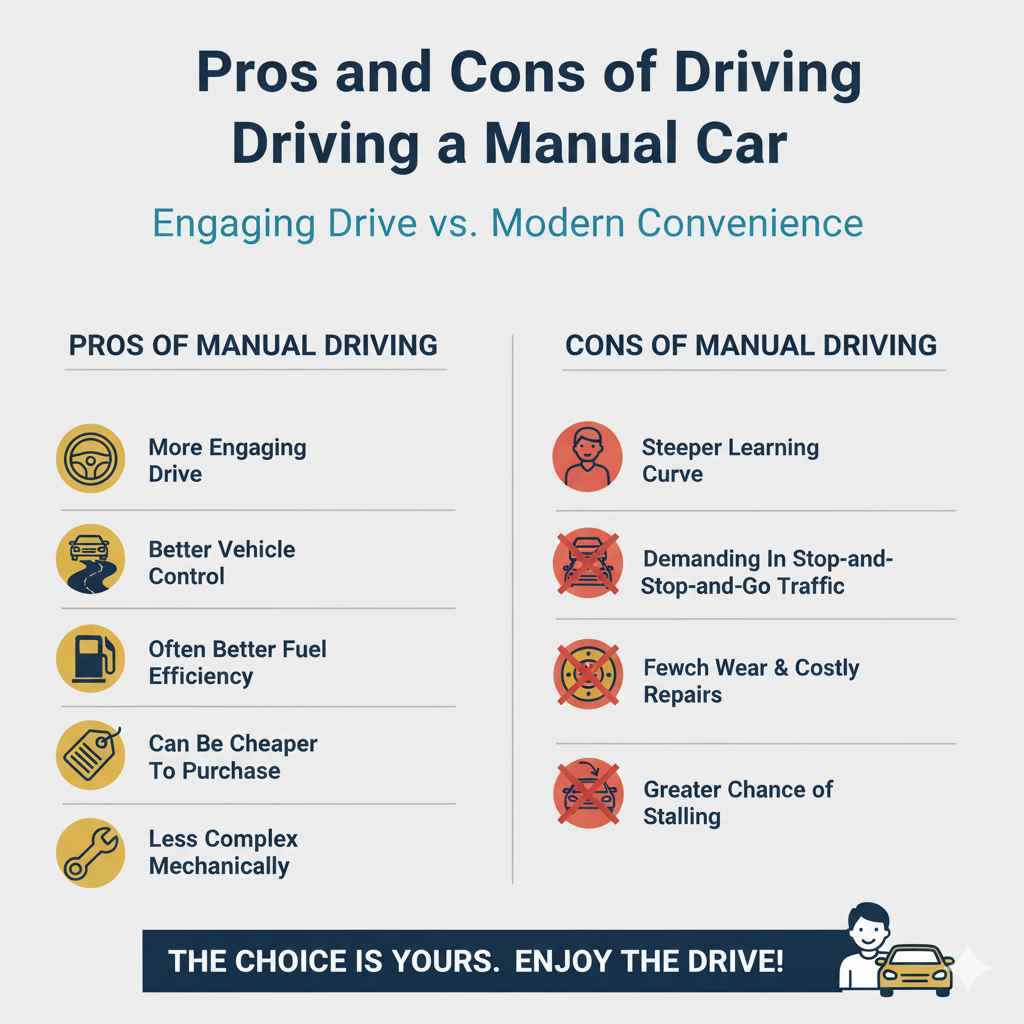
Pros and Cons of Driving a Manual Car
While learning manual might seem like a challenge, it comes with its own set of advantages and disadvantages that are worth considering.
| Pros of Driving Manual | Cons of Driving Manual |
|---|---|
| More engaging and fun driving experience. | Steeper learning curve compared to automatics. |
| Better control over the vehicle, especially in slippery conditions. | Can be more physically demanding in stop-and-go traffic. |
| Often better fuel efficiency in older models (though modern automatics are catching up). | Higher risk of clutch wear if not driven carefully, leading to costly repairs. |
| Can be cheaper to purchase initially. | More difficult to find new car models with manual transmission options. |
| Less complex mechanically than some automatic transmissions, potentially easier for DIY repairs (though clutch replacement is a major job). | Greater chance of stalling, which can be frustrating or embarrassing. |
Frequently Asked Questions About Learning Manual
Q1: How long does it take to learn to drive a manual car?
It varies for everyone, but with dedicated practice, most people can get the basics down (starting, stopping, and shifting) within a few hours over a couple of sessions. Mastering it for comfortable everyday driving might take a few weeks of consistent practice.
Q2: What’s the best way to learn if I don’t have a manual car?
If you don’t own a manual car, your best bet is to find a friend or family member who does and is willing to let you practice with them in a safe, open area. Alternatively, look for local driving schools that offer manual transmission training; they will have suitable vehicles and instructors.
Q3: Will I stall a lot when I’m learning?
Yes, stalling is a very common part of learning to drive a manual. Don’t be discouraged! It means you’re pushing the limits and learning how the clutch engages. Each stall helps you understand the balance needed between the clutch and accelerator.
Q4: How do I avoid damaging the car while learning?
The main thing to avoid is “riding the clutch,” which means resting your foot on the clutch pedal while driving. This causes unnecessary wear. Always fully engage or disengage the clutch, and avoid rapid, jerky movements.
Q5: Is it harder to drive a manual in traffic?
It can be more tiring in heavy stop-and-go traffic because you’re constantly using the clutch. However, as you become more proficient, it becomes less of a chore. Many experienced manual drivers find it manageable, especially if they’ve mastered smooth starts and stops.
Q6: What’s the “bite point” and why is it important?
The bite point is the exact spot where the clutch pedal starts to connect the engine to the transmission, making the car begin to move. Identifying and controlling this point is key to smoothly starting off without stalling and for making smooth gear changes.
Conclusion: Your Journey to Manual Mastery
Learning to drive a manual transmission car is a rewarding experience. It may seem daunting at first, but with patience, understanding the roles of the clutch and shifter, and consistent practice, you’ll build the confidence and skill to master it. Remember to start in a safe, empty location, focus on smooth pedal control, and don’t be afraid of stalling – it’s a natural part of the learning process. Enjoy the journey, the extra control, and the connection you’ll feel with your vehicle. Soon, you’ll be shifting gears like a pro!