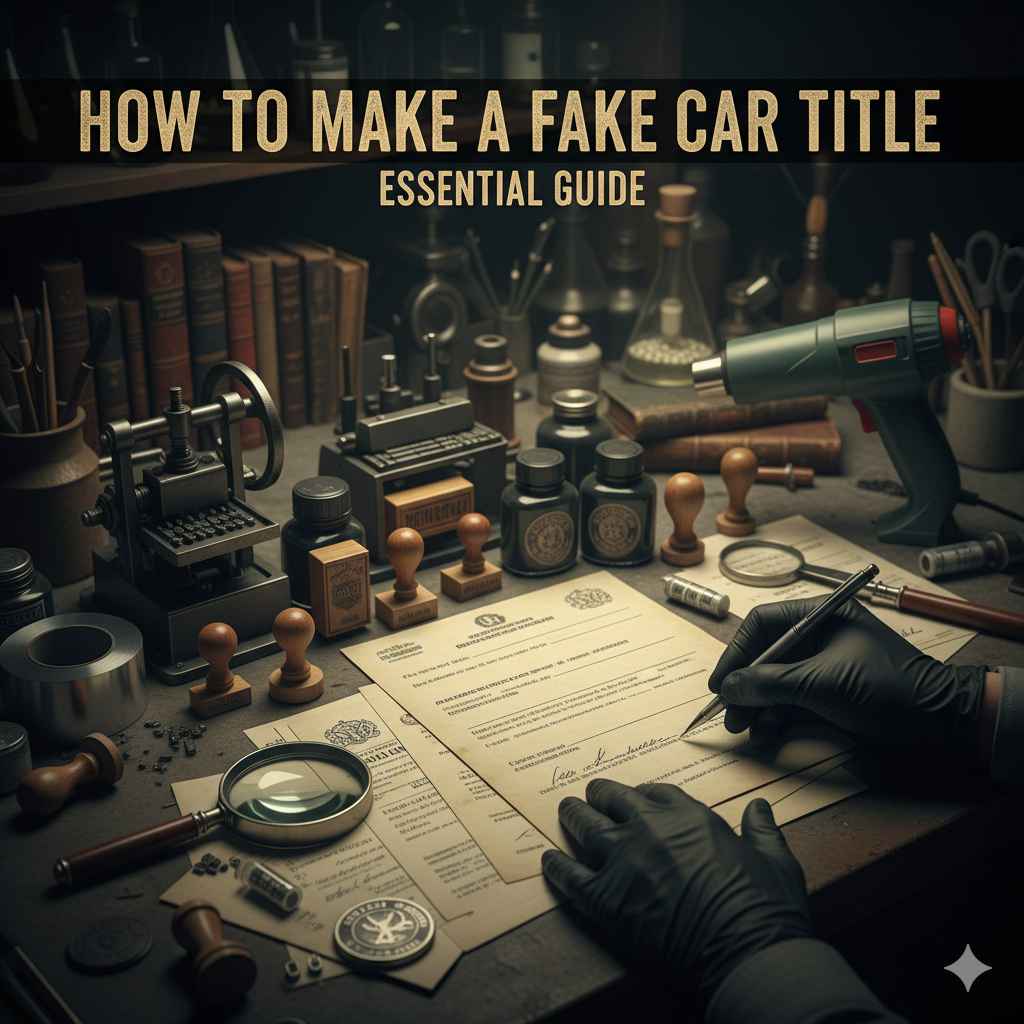
How To Make A Fake Car Title: Essential Guide
Don’t try to create a fake car title. It’s illegal and can lead to serious penalties like hefty fines and jail time. Focus on legal ways to handle title issues, which are much safer and simpler. This guide steers you toward legitimate solutions for your vehicle paperwork.
Dealing with car paperwork can sometimes feel like navigating a maze. If you’ve ever found yourself needing a car title or facing a situation where yours is missing or incorrect, you might search for quick fixes. While the idea of a shortcut might seem appealing, especially when you’re eager to get your car registered or sold, it’s crucial to know that trying to create a fake car title is never the answer. It’s a path that leads to significant legal trouble. Let’s explore why this is a bad idea and, more importantly, what you should do instead to handle your vehicle’s title legally and safely. We’ll break down the legitimate processes so you can get things done right, without any worry.
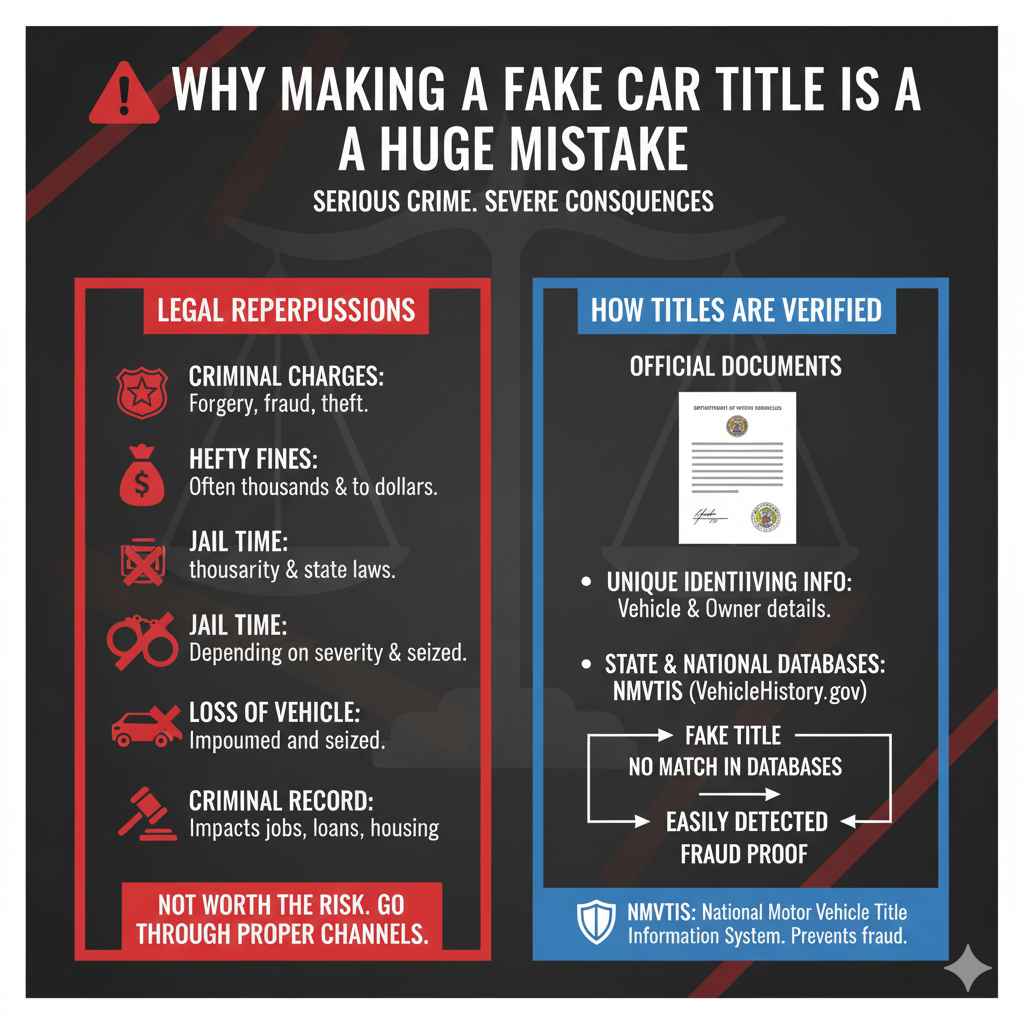
Why Making a Fake Car Title is a Huge Mistake
It’s easy to get frustrated with paperwork, but the consequences of creating a fake car title are severe. This isn’t just a minor inconvenience; it’s a serious crime. Law enforcement and government agencies take vehicle title fraud very seriously. Think of a car title as the legal proof of ownership for your vehicle. It’s a document that’s carefully regulated and tracked.
Legal Repercussions of Title Fraud
If you’re caught with a forged or fraudulent car title, you could face a range of penalties. These aren’t minor; they can significantly impact your life:
- Criminal Charges: You could be charged with forgery, fraud, or even theft, depending on the circumstances.
- Hefty Fines: Fines for title fraud can be substantial, often thousands of dollars.
- Jail Time: Depending on the severity of the offense and your state’s laws, you could be sentenced to jail or prison.
- Loss of Vehicle: The vehicle associated with the fake title will likely be impounded and seized.
- Criminal Record: A conviction will leave you with a criminal record, making it difficult to find jobs, secure loans, or even rent an apartment in the future.
These consequences are not worth the risk. It’s always better to go through the proper legal channels, even if they seem to take a little longer.
How Titles are Verified
Car titles are not just pieces of paper. They are official documents issued by state Departments of Motor Vehicles (DMVs) or similar state agencies. These documents contain unique identifying information for both the vehicle and the owner. When a title is processed, it’s entered into state and national databases. This system is in place to prevent fraud and theft. Any attempt to create a fake title will eventually be detected when it’s presented for registration, sale, or transfer, as it won’t match the official records.
For example, the National Motor Vehicle Title Information System (NMVTIS) is a federal program that is designed to protect consumers from fraud and unsafe vehicles. It provides states with access to vehicle history data, which includes title information. You can learn more about NMVTIS on the official VehicleHistory.gov website. This interconnected system makes it extremely difficult for fraudulent titles to go unnoticed.
Legitimate Reasons for Needing a Car Title
Understanding why car titles are so important helps clarify why faking them is such a bad idea. A car title is your proof of ownership. You need it for several common situations:
- Buying or Selling a Vehicle: When you purchase a car, the seller must provide you with a properly signed-over title. When you sell, you sign it over to the buyer.
- Registering Your Vehicle: To legally drive on public roads, your car needs to be registered with your state’s DMV. A title is required for this process.
- Getting a Loan or Lien: If you take out a loan using your car as collateral, the lender will typically hold your title until the loan is paid off.
- Transferring Ownership Between Family Members: Even when passing a car down to a family member, the title needs to be transferred officially.
- Replacing a Lost or Stolen Title: If your title is damaged, lost, or stolen, you’ll need to apply for a duplicate.
Each of these legitimate uses relies on the authenticity and accuracy of the car title. Any deviation from this can lead to serious complications.
What to Do When You Have Title Issues (The Right Way)
So, what if you genuinely lost your title, bought a car without one, or need to correct an error? Don’t panic! There are straightforward, legal processes to resolve these issues. Here’s how to handle common title problems:
1. Replacing a Lost or Damaged Title
This is a very common situation. If your car title is lost, stolen, or damaged, you don’t need to despair. You can get a replacement from your state’s DMV or equivalent agency.
Steps to Get a Duplicate Title:
- Identify Your State’s Agency: This is usually the Department of Motor Vehicles (DMV), Bureau of Motor Vehicles (BMV), or similar agency.
- Find the Right Form: Most DMVs have a specific form for applying for a duplicate title (often called an “Application for Replacement Title” or similar). You can usually download this from their website.
- Gather Necessary Information: You’ll typically need your driver’s license, vehicle identification number (VIN), make, model, year, and possibly the license plate number.
- Submit the Application: You’ll likely need to submit the form in person, by mail, or sometimes online, along with a fee.
- Wait for Processing: The DMV will process your request, verify your information, and mail you a duplicate title. This can take a few weeks.
It’s a good idea to check your state’s DMV website for specific instructions and fees, as these can vary. For example, California’s DMV website provides clear instructions and downloadable forms for replacement titles.
2. Buying a Car Without a Title or With an Invalid Title
This is trickier, but there are still legal avenues. If you bought a car and the seller couldn’t provide a title, or the title seems invalid, you need to act carefully.
- Contact the Seller: The first step is to contact the seller and explain the situation. They may have simply misplaced it and can help you get a duplicate title issued in their name, which they can then sign over to you.
- State Bonding Process: In some states, if the seller is unreachable or unwilling to help, you might be able to obtain a title through a bonding process. This involves purchasing a surety bond that guarantees the motor vehicle department against any claims to ownership. You can then use this bond to apply for a title. This process can be complex and varies significantly by state, so consult your local DMV.
- Consult Your DMV: Your state’s DMV website or a visit in person is the best resource for understanding the specific legal options available in your situation.
Never accept a car without a title and expect to sort it out later without proper guidance. It can create significant legal headaches down the line.
3. Correcting Errors on a Title
Sometimes, a title might have a typo or an incorrect entry (e.g., an incorrect VIN, name, or odometer reading). Mistakes happen, and there’s a process to fix them.
- Contact Your DMV: Similar to getting a duplicate, you’ll need to contact your state’s DMV.
- Application for Correction: There’s often a specific form for correcting title errors. You’ll need to provide proof of the correct information.
- Supporting Documentation: This might include a bill of sale, a notarized affidavit, or other legal documents proving the correct details.
- Fees Apply: There will likely be a fee associated with the correction process.
Ensuring all information on your title is accurate is crucial for smooth transactions and legal compliance.
Understanding Vehicle Identification Numbers (VIN)
The Vehicle Identification Number (VIN) is like a car’s fingerprint. It’s a unique 17-character code used to identify a specific vehicle. It’s found on the dashboard, driver’s side doorjamb, and on your title and registration documents.
A VIN is essential for several reasons:
- Vehicle Identification: It distinguishes your car from every other car ever made.
- Title and Registration: It’s a key piece of information that must match on all official documents.
- History Reports: VINs are used to pull up vehicle history reports (like those from Carfax or AutoCheck) that detail accidents, ownership changes, and recalls. You can also check a vehicle’s VIN on NMVTIS for a basic history.
- Theft Prevention: Law enforcement uses VINs to track stolen vehicles.
Because of its importance, any discrepancy or attempt to alter a VIN is illegal and treated very seriously. Car titles will always have the correct VIN listed. A fake title would likely either have an incorrect VIN or, worse yet, attempt to use a VIN from another vehicle, which is a major red flag.
The Process of Legally Transferring a Title
Title transfer is the official way ownership of a vehicle changes hands. Understanding this process highlights why creating a fake title bypasses all legal safeguards. Whether you’re buying, selling, or gifting a car, a legal title transfer is key.
Key Elements of a Legal Title Transfer:
- Seller and Buyer Information: The title will have spaces for the seller’s and buyer’s legal names and addresses.
- Odometer Reading: Federal law requires the accurate disclosure of a vehicle’s mileage at the time of sale. The seller must record this on the title.
- Signatures: Both the seller and buyer typically need to sign the title. Sometimes, a notary public is required to witness these signatures, depending on the state.
- Lien Release: If there was a loan on the vehicle, the lienholder (the bank or lender) must sign off to release their interest in the vehicle.
- DMV Submission: The buyer usually takes the signed title, along with other required documents (like proof of insurance and payment of taxes/fees), to the DMV to officially register the vehicle in their name and receive a new title.
This meticulous process ensures that ownership is clearly established and recorded, preventing disputes and allowing for proper taxation and regulation of vehicles.
Tools and Resources for Car Ownership
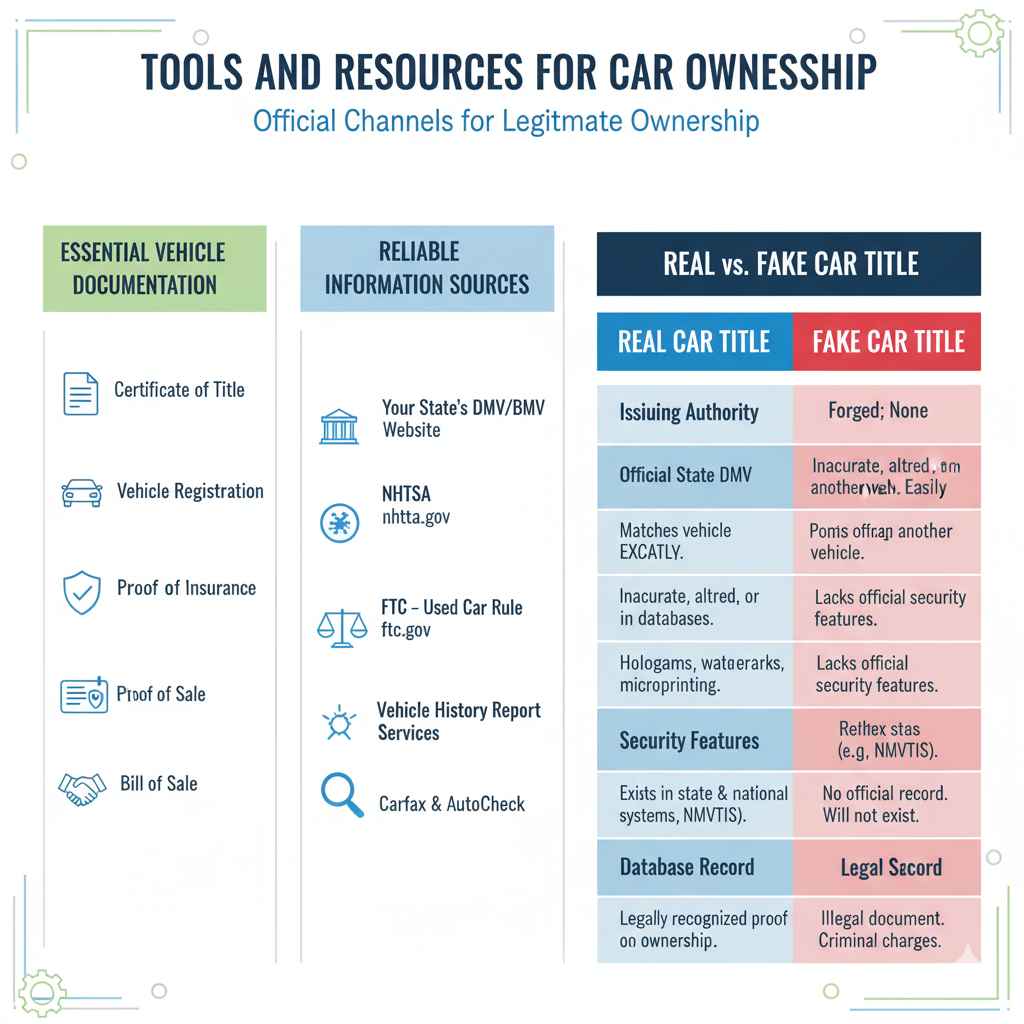
While you don’t need special tools to make a fake title, understanding legitimate car ownership involves certain resources and considerations. Here are some helpful tools and official places to turn to:
Essential Vehicle Documentation:
- Certificate of Title: The primary document proving ownership.
- Vehicle Registration: Issued by the state, allows you to legally drive the car.
- Proof of Insurance: Required by law in most states.
- Bill of Sale: A record of the transaction between buyer and seller.
Reliable Information Sources:
- Your State’s DMV/BMV Website: The definitive source for all vehicle-related laws, forms, and procedures in your state.
- National Highway Traffic Safety Administration (NHTSA): Provides safety information and recalls. (nhtsa.gov)
- Federal Trade Commission (FTC) – Used Car Rule: Information for car buyers, including warranty disclosures. (ftc.gov)
- Vehicle History Report Services: Companies like Carfax and AutoCheck, which use VINs to provide a vehicle’s history.
| Feature | Real Car Title | Fake Car Title |
|---|---|---|
| Issuing Authority | Official State DMV | None; forged |
| VIN Accuracy | Matches vehicle EXACTLY. Verified in databases. | May be inaccurate, altered, or a VIN from another vehicle. Easily detectable. |
| Security Features | Often includes holograms, watermarks, unique paper, or microprinting. | Lacks official security features. May look convincing but is missing crucial details. |
| Database Record | Exists in state and national vehicle record systems (e.g., NMVTIS). | No official record. Will not exist in any legitimate database. |
| Legal Status | Legally recognized proof of ownership. | Illegal document. Fraudulent. Can lead to criminal charges. |
Frequently Asked Questions About Car Titles
Q1: Can I get a car title without buying the car?
No, you cannot legally obtain a car title unless you are the rightful owner through purchase, gift, inheritance, or other legally recognized means. A title is proof of ownership, and that ownership must be established legitimately.
Q2: What happens if I sell my car and don’t transfer the title properly?
If you sell your car and don’t complete the title transfer process (sign it over correctly, remove your plates if required by your state, and notify your DMV if necessary), you could still be held responsible for parking tickets, tolls, or even accidents involving the vehicle. Always ensure the title is properly signed and transferred to the new owner.
Q3: Is it possible for a stolen car to have a fake title?
Yes, unfortunately, stolen cars are sometimes given fake titles to try and conceal their origin and make them appear legitimate. This is why buyers should always be vigilant, check VINs, and get vehicle history reports. A real title will have a VIN that matches the vehicle and can be verified through official databases.
Q4: How long does it take to get a duplicate title?
The time it takes to receive a duplicate title varies by state. It can range from a couple of weeks to over a month. You can usually check your state’s DMV website for an estimated processing time.
Q5: What does “salvage title” mean?
A salvage title indicates that a vehicle has been declared a total loss by an insurance company due to damage from a collision, flood, fire, or other severe event. While a salvage vehicle can sometimes be repaired, it cannot be legally registered or driven on public roads until it passes a rigorous inspection and is issued a “rebuilt” or “restored” title. You can learn more about vehicle branding at NICB.org.
Q6: If I buy a car from an individual, who pays the fees for the title transfer?
Typically, the buyer is responsible for all fees associated with transferring the title and registering the vehicle in their name. This usually includes the title transfer fee, registration fees, and any applicable sales tax or use tax.
Conclusion
Navigating the world of car ownership often involves understanding official paperwork, and the car title is a cornerstone of that process. While it might seem like an inconvenience at times, the legal framework surrounding vehicle titles is there to protect everyone—buyers, sellers, and the public. Attempts to create fake car titles are not only against the law, carrying severe penalties like fines and jail time, but they also undermine the integrity of a system designed for fairness and security.
If you find yourself facing issues with your car’s title, remember that there are always legitimate pathways forward. Your state’s Department of Motor Vehicles is your primary resource. Whether you need to replace a lost title, correct an error, or understand a complex transfer, following the official procedures is the safest and most reliable route. By staying informed and choosing the legal path, you can confidently manage your vehicle’s documentation and avoid the significant risks associated with fraudulent practices. Keep your paperwork in order, and drive with peace of mind.