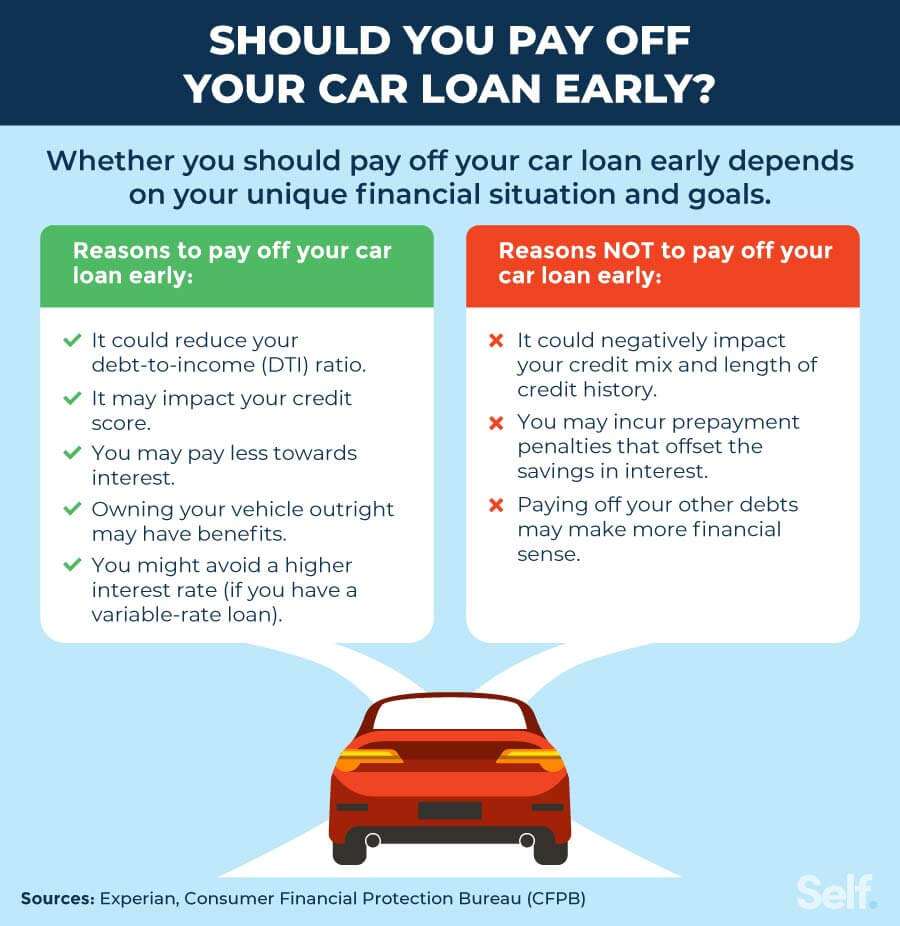
How to Pay Off a Car Loan Faster: The Exact Math, Strategies, and Trade-Offs
You’re staring at a 60-month car loan and realizing the interest is eating your budget alive. Paying off a car loan faster sounds great, but the real question is whether your specific loan structure makes it worth the effort. This guide walks you through the exact dollar math, the strategies that actually work, and the hidden trade-offs most people miss.
The Real Cost of Your Car Loan (And Why Early Payoff Matters)
Most people look at their monthly payment and think that’s the cost of the car. It isn’t. The real cost includes every dollar of interest you pay over the life of the loan. On a $25,000 loan at 6% APR for 60 months, you’ll pay roughly $4,000 in interest alone. That’s a plane ticket, a used motorcycle, or three months of groceries.

Starflower Solutions
Auto Car Truck RV Loan Payment Calculator…
- Accurately calculates monthly car loan payments for all 50 states.
- Fast, flexible, and easy to use
- Makes a Cha-Ching cash register sound when you press the calculate buttons.
The longer the loan term, the worse the math gets. A 72-month loan at the same rate pushes interest past $4,800. And because car loans amortize — meaning early payments go mostly toward interest — you don’t start chipping away at the principal until halfway through the term. That’s why even small extra payments early on can save you hundreds.
Before you start throwing money at the loan, grab a free or paid calculator to see your specific numbers. Something like the Auto Car Truck RV Loan Payment Calculator Pro from Starflower Solutions lets you plug in your loan amount, rate, and term to see exactly where your money goes. It’s a handy tool for running different payoff scenarios without doing the algebra by hand.
How to Read Your Amortization Schedule Like a Pro
Your lender’s amortization schedule is a table showing every payment, how much goes to interest, and how much goes to principal. Most people never look at it. That’s a mistake, because it tells you exactly when extra payments stop being useful.
In the first year of a 5-year loan, roughly 70% of each payment goes to interest. By year three, that flips — most of your payment hits principal. The “sweet spot” for extra payments is the first half of the loan. Every dollar you pay early skips the highest-interest months at the front of the schedule.
Here’s a concrete example. On a $25,000 loan at 6% for 60 months:
- Month 1: $125 goes to interest, $358 goes to principal
- Month 12: $109 goes to interest, $374 goes to principal
- Month 24: $91 goes to interest, $392 goes to principal
- Month 36: $70 goes to interest, $413 goes to principal
- Month 48: $47 goes to interest, $436 goes to principal
Notice the pattern. An extra $100 payment in month 1 saves you interest on that $100 for all 60 months. The same $100 in month 48 only skips a few months of interest. So if you’re going to pay extra, do it early.
Your lender’s online portal usually shows the amortization schedule. If not, ask for it. It’s your right as a borrower, and it takes two minutes to request.
7 Proven Strategies to Pay Off Your Car Loan Faster
No single strategy works for everyone. Pick the one that fits your cash flow and personality. Here are the seven that actually move the needle.
1. Switch to Biweekly Payments (The “13th Payment” Trick)
Instead of one payment per month, pay half every two weeks. That sounds like the same thing, but it isn’t. There are 52 weeks in a year, so you make 26 half-payments — which equals 13 full payments. The extra payment goes straight to principal, and you barely feel the difference in your budget.
On a $25,000 loan at 6% for 60 months, this shaves about 5 months off the term and saves roughly $600 in interest. Not bad for a scheduling change. Check with your lender first — some apply biweekly payments automatically, others need you to set it up manually.
2. Round Up Your Payments to the Nearest $50
If your payment is $483, send $500. The extra $17 goes to principal. It’s a small amount, but it compounds. Over 60 months, rounding up by even $20 per month saves about $400 in interest and cuts the loan down by 3-4 months.
The trick is making it automatic. Set up recurring payment instructions with your bank so the rounded amount goes out every month. You’ll never miss the money because you never see it.
3. Make Lump-Sum Principal-Only Payments
Tax refunds, work bonuses, inheritance — any windfall should go straight to the loan’s principal. But you have to specify “principal-only” when you make the payment. Otherwise, the lender may apply it to next month’s payment, which doesn’t save you a dime in interest.
Call your lender and ask how to designate a principal-only payment. Most allow it online, but some require a phone call. It’s worth the 10 minutes. A single $1,000 principal-only payment on a $25,000 loan at 6% saves about $300 in interest and shortens the term by 3 months.
4. Refinance to a Shorter Term (When It Makes Sense)
Refinancing isn’t just about getting a lower rate. You can also refinance to a shorter term — say, from 60 months to 36 months. Your payment goes up, but you kill the loan much faster.
Run the numbers before you do this. If your current rate is 8% and you can refinance to 5% with a 36-month term, you’ll save thousands. But if your credit score has dropped since you bought the car, refinancing could actually raise your rate. Check your credit score first, then shop around. Credit unions often have the best rates for auto refinancing.
5. Cancel Add-Ons and Useless Warranties
You probably bought the car with a few extras you didn’t need — extended warranties, GAP insurance you don’t need because you’re not underwater, or dealer-installed accessories. These add to your loan balance, which means you’re paying interest on them for years.
Call the finance office and ask to cancel any add-ons you haven’t used. Many lenders will refund the prorated amount and apply it to your principal. This isn’t a payoff strategy per se, but it reduces your balance without you spending an extra dollar.
6. Use the Debt Snowball Method for Your Car
The debt snowball works by paying off your smallest debts first, then rolling those payments into the next one. If your car loan is your only debt, you can still use the principle: take any “found money” — a raise, a side gig, a freelance check — and send it to the car loan.
The psychological win matters more than the math here. Watching the balance drop faster than expected keeps you motivated. That’s real, even if it’s not purely rational.
7. Automate a “Side Hustle” Direct Deposit to the Loan
If you drive for Uber, sell stuff online, or do any gig work, set up a separate bank account for that income and have it auto-transfer to your car loan every week. You never touch the money, so you never spend it.
This works because it removes the “payment fatigue” trap. Paying extra feels good for the first few months, then it gets old. Automation means you don’t have to remember or decide — the money just moves.
The $2,000 Example: A Real-World Math Breakdown
Let’s put all this together with a real scenario. You have a $25,000 loan at 6% APR for 60 months. Your monthly payment is $483. Over the life of the loan, you’ll pay $4,000 in interest.
Now let’s say you find $2,000 — maybe a tax refund or a side gig — and you send it as a principal-only payment in month 1. Here’s what happens:
- Your loan balance drops to $23,000 immediately
- You save about $360 in interest over the life of the loan
- Your loan is paid off about 5 months early
But what if you spread that $2,000 out as $100 extra per month for 20 months? The math is slightly different. You save about $280 in interest and shorten the term by 4 months. Still good, but less efficient. The lump sum wins because it attacks the principal earlier.
Now compare that to investing the $2,000 in a stock market index fund earning 8% annually. Over 5 years, that investment grows to about $2,940. You’d net $940, which beats the $360 in interest savings. That’s the opportunity cost question we’ll tackle next.
When NOT to Pay Off Your Car Early (The Investment Trade-Off)
The math gets uncomfortable here. If your car loan is at 3% and you can invest in a diversified portfolio earning 7-8% historically, you’re better off investing the extra cash. The stock market beats your loan rate by 4-5 points per year.
But that assumes you actually invest the money. Most people don’t. They say they’ll invest, then the money sits in a checking account earning 0.01%. If you’re not disciplined about investing, paying off the car is the better choice — guaranteed returns beat hypothetical ones.
Here’s a simple decision tree:
- Is your loan rate above 6%? Pay it off early.
- Is your loan rate below 4%? Consider investing instead, if you’re disciplined.
- Between 4-6%? It’s a toss-up. Go with whichever keeps you motivated.
- Do you have high-interest credit card debt? Pay that off first, always.
- Do you have an emergency fund? Build that before paying extra on the car.
The emotional angle matters too. Being debt-free feels good. If that feeling keeps you from taking on new debt, the psychological benefit may outweigh the math. Just be honest with yourself about which factor is driving your decision.
How Early Payoff Affects Your Credit Score and Insurance
Paying off a car loan early won’t hurt your credit score as much as you think. Yes, closing an installment account can cause a small dip — usually 10-20 points — because your credit mix changes and the average age of your accounts shifts. But the dip is temporary, and it recovers within a few months.
The bigger issue is your auto insurance. Lenders require comprehensive and collision coverage while the loan is active. Once you own the car free and clear, you can drop comprehensive coverage and save money on premiums. That’s a real monthly savings that can go toward your next financial goal.
But here’s the trade-off. If you drop comprehensive coverage and total your car next month, you get nothing from the insurance company. The car’s value is gone. So only drop coverage if you can afford to replace the car out of pocket if something happens.
Also, check your state’s minimum insurance requirements before you reduce coverage. Some states have strict liability minimums, and going below them is illegal.
Frequently Asked Questions
Will my monthly payment go down if I pay extra?
No, unless you specifically request a recast. Most lenders keep your monthly payment the same when you pay extra. The extra money shortens the loan term instead of reducing the payment. That’s actually good for you — it means you pay less interest overall. If you want a lower payment, you’d need to refinance to a longer term, which usually costs more in interest.
Are there prepayment penalties on car loans?
Rarely, but they exist. Most auto loans from major banks and credit unions have no prepayment penalty. Some subprime lenders or buy-here-pay-here lots charge a fee if you pay off early. Read your loan contract or call your lender to confirm. If there’s a penalty, calculate whether the interest savings outweigh the fee. Sometimes it’s still worth paying off early.
Should I pay off my car or save for a house?
This depends on your loan rate and your down payment timeline. If your car loan is at 6% or higher, paying it off frees up cash flow for a mortgage payment. If your car loan is below 4%, saving for a house down payment might be smarter, especially if you’re buying within 2-3 years. Also consider your debt-to-income ratio — lenders look at that when approving mortgages. A paid-off car removes a monthly obligation, which helps your DTI.
Will paying off my car loan early hurt my credit score?
It can cause a temporary dip of 10-20 points, but it won’t destroy your score. The dip happens because your credit mix changes and the account closes. Your payment history — the biggest factor — stays positive. If you’re planning to apply for a mortgage or another loan soon, you might want to wait until after that approval to pay off the car. Otherwise, don’t worry about it.
What’s the fastest way to pay off a 72-month car loan?
The fastest way is a combination of biweekly payments and lump-sum principal-only payments. Biweekly payments add one extra payment per year, and lump sums attack the principal directly. If you can also refinance to a shorter term, that accelerates things further. The key is to start early — the first half of the loan term is where extra payments save the most interest.
Your Action Plan for Paying Off the Loan Early
- Pull up your amortization schedule and find your current principal balance — that’s your starting point.
- Call your lender and confirm you can make principal-only payments without a prepayment penalty.
- Set up biweekly payments if your lender supports it — it’s the easiest way to add a 13th payment without feeling it.
- Round up your monthly payment to the nearest $50 and automate it so you never miss.
- Send any windfall — tax refund, bonus, gift — straight to the principal, not to your checking account.
- Cancel any add-ons or warranties you don’t use and apply the refund to the loan.
- Run the numbers on refinancing to a shorter term if your credit score has improved since you bought the car.
- Before you pay extra, make sure your emergency fund has at least $1,000 in it — you don’t want to be forced back into debt.
- If your loan rate is below 4%, seriously consider investing the extra cash instead of paying off the car.
Products related to this article
Sponsored / affiliate links. As an Amazon Associate I earn from qualifying purchases. I may earn additional commission from eligible campaigns.
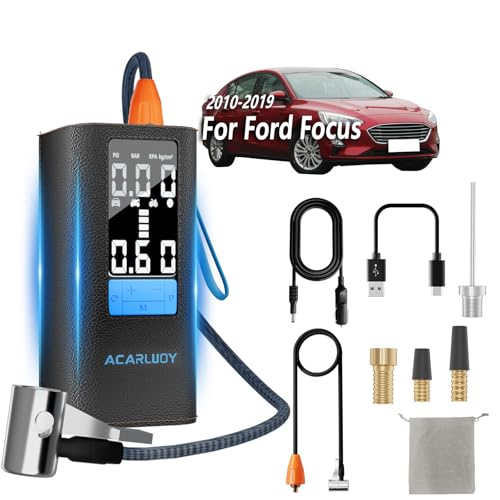 ACARLUOY Air compressor for tires that work off car outlet,Fit for Ford Focus 2010-2019,Suitable for Ford Focus Pickup 150PSI portable tire inflator,12V DC compact air compressor
 Air compressor for tires that work off car outlet,Fit for BMW I3 (2013-2025),Suitable for BMW I3 150PSI portable tire inflator,12V DC compact air compressor