Tire Patch Kit for Cars: What Is Inside, How It Works & Buying Guide
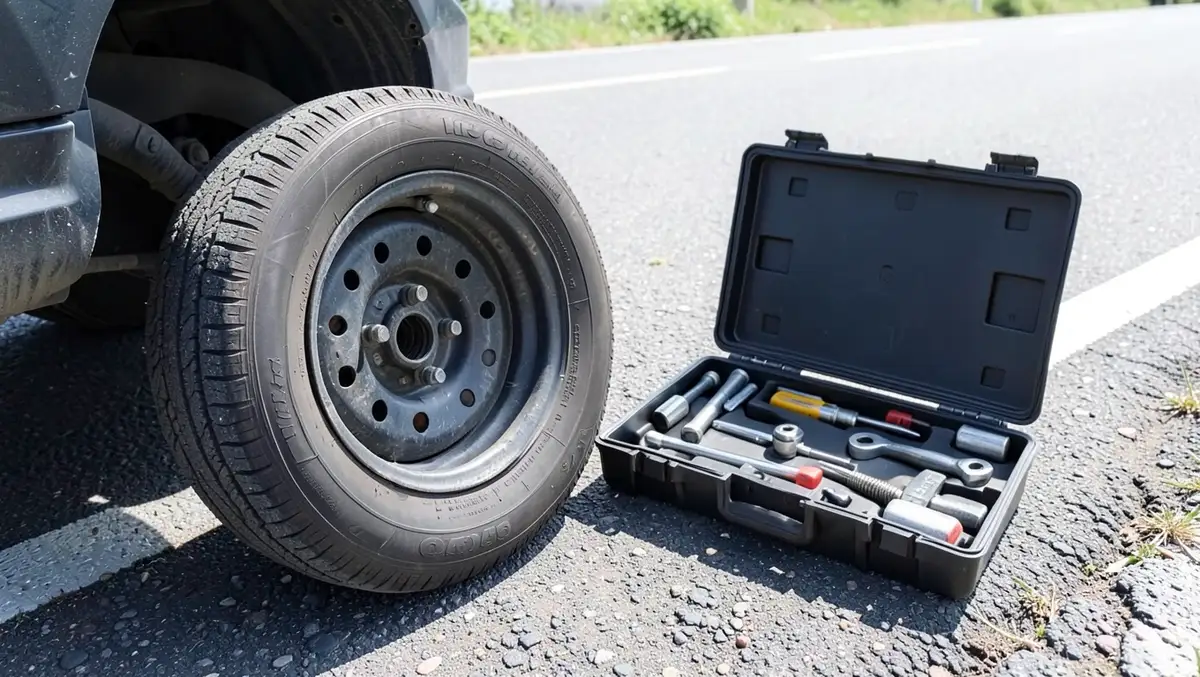
A tire patch kit lets you plug a small puncture in the tread of a tire so you can drive to a repair shop or finish your trip — it is a roadside fix, not a replacement for a proper shop repair.
Every kit works roughly the same way: a reamer tool cleans out the puncture, an insertion tool pushes a rubber plug coated in vulcanizing cement through the hole, and the plug seals the leak from the inside of the tread. Kits like this fit in a glove box or trunk and work on cars, trucks, motorcycles, ATVs, and trailers alike. But they only work within specific safety limits — a plug repairs a small hole in the tread, not a torn sidewall, and most tire manufacturers still consider a plug-only repair temporary. Here is what a good kit actually contains, how the repair works, and where the real safety limits are.
What Is a Tire Patch Kit and What Comes Inside One?
86-PIECE HEAVY-DUTY KIT
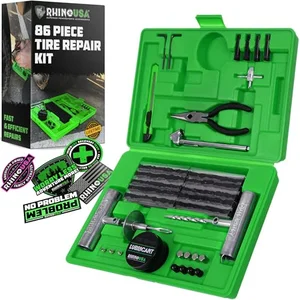 |
Rhino USA Tire Repair Kit (86-Piece) – $34.90 A full set of steel reamer and insertion tools plus enough plugs and cement to handle several tread punctures before you need to restock.
|
Most standard kits share the same core tools, whether they come in 14 pieces or 86. You will usually find a reamer (a rasp-like metal rod that cleans and slightly enlarges the puncture channel), an insertion tool (a forked handle that threads a plug through the eye of the tool and pushes it into the hole), and a supply of rubber plugs or strips pre-coated in a sticky vulcanizing cement. Larger kits add pliers for pulling out the object that caused the flat, spare valve cores, a tire pressure gauge, and sometimes a small tube of extra cement. Very few roadside kits include an air source; you will usually need a separate 12V compressor or CO2 inflator to bring the tire back up to pressure after the plug is in.
How a Tire Patch Kit Actually Repairs a Puncture
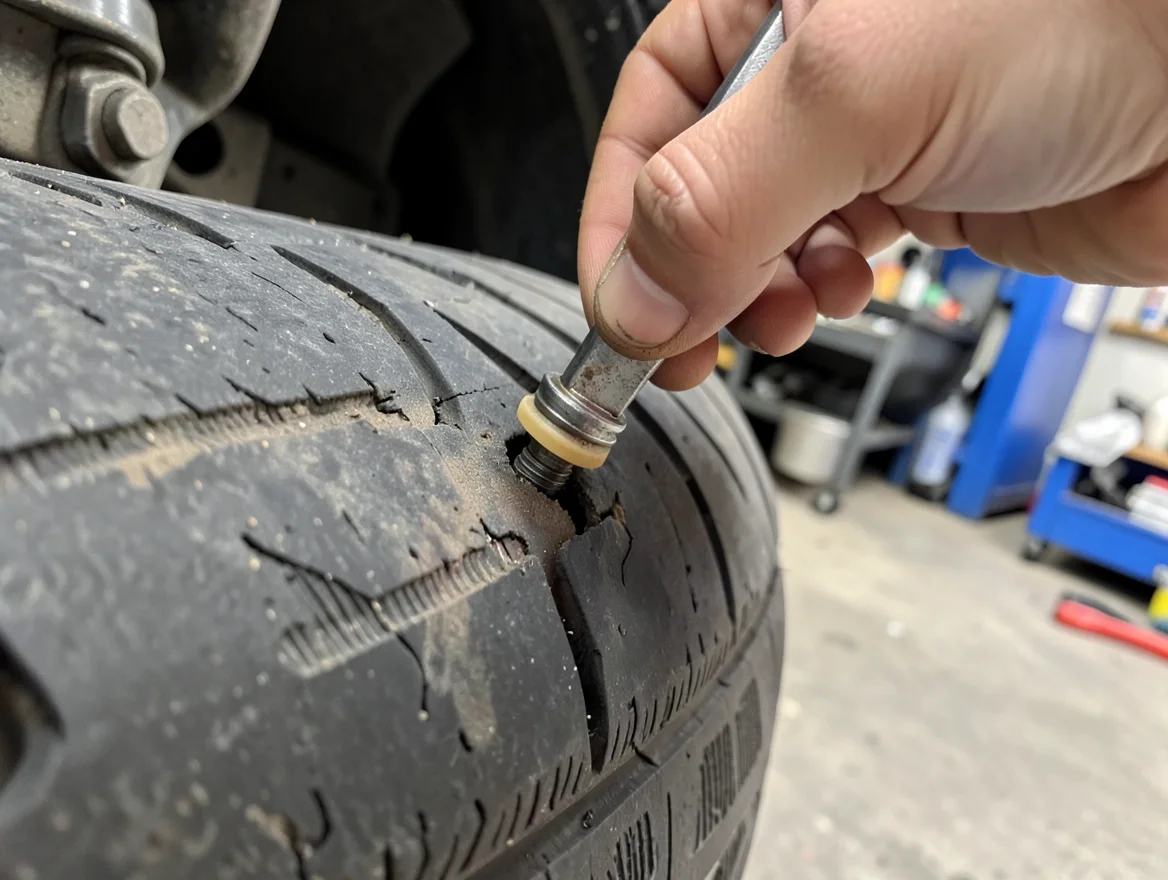
The repair works from the outside in. You locate the puncture (soapy water makes the leak bubble and easy to find), remove whatever caused it, and run the reamer straight in and out a few times to clean debris out of the channel and give the plug something to grip. You then thread a plug through the eye of the insertion tool — leaving roughly half of it sticking out on each side — and push it firmly into the hole. Pulling the insertion tool back out leaves the plug wedged in the puncture, where the cement bonds it to the surrounding rubber as the tire flexes and warms up. Once you trim the excess plug and reinflate the tire, the seal is doing its job if a soapy-water test shows no more bubbles.
Is a Tire Patch Kit a Safe, Permanent Fix?
A plug-only repair is a genuinely useful emergency fix, but it is not the industry-recognized permanent repair, and it is worth knowing the difference before you rely on one. The U.S. Tire Manufacturers Association (USTMA) does not recognize an external plug by itself as a complete, permanent repair. The only method it endorses as permanent is a combination plug-patch unit installed from the inside of the tire after the tire has been removed from the wheel — something a roadside kit cannot do, since it repairs the puncture from the outside without ever dismounting the tire.
The USTMA’s repairable-area guidance also sets hard limits on what any patch or plug can safely fix. Acceptable repairs are limited to punctures no larger than about a quarter-inch (6mm) across, located in the center tread area only. A puncture on the sidewall or in the shoulder area is not repairable by any method, plug or patch, because that part of the tire flexes constantly as you drive and a repair there cannot hold reliably.
| Situation | Can a Plug Kit Fix It? |
|---|---|
| Puncture in the center tread, under 1/4 inch (6mm) | Yes, as a temporary repair — get it properly patched at a shop afterward |
| Puncture on the sidewall or shoulder | No — not repairable by plug or patch; the tire needs replacing |
| Hole larger than 1/4 inch, or a slice/tear rather than a round puncture | No — too large or the wrong shape for a plug to seal |
| Multiple punctures close together, or a tire with existing repairs nearby | No — have a tire shop inspect it before you drive on it |
| Object still embedded and tire holding air for now | Drive straight to a shop; do not pull the object out yourself unless the tire is already flat |
Tire Plug vs. Plug-Patch Combo: What Is the Real Difference
A plug alone is what every roadside kit installs: a rubber insert pushed in from the outside of the tire, no disassembly required, done in a few minutes at the roadside. A plug-patch combo is a shop repair: a technician removes the tire from the wheel, inspects the inside of the tire for hidden damage, and installs a combined plug-and-patch unit from the inner liner. The plug fills the puncture channel and keeps moisture out of the steel belts, while the patch seals the inner liner and holds the plug in place. That combination is the only method USTMA calls a permanent repair — which is exactly why a roadside plug should be treated as a way to get you to a shop, not as the final word on the tire.
Using a Tire Patch Kit: The Short Version
The short version of the process looks like this:
- Pull over somewhere flat and safe, set the parking brake, and locate the leak (soapy water shows you exactly where it is bubbling).
- Remove the object causing the puncture with pliers, if it is still in the tire.
- Ream the hole straight in and out to clean and slightly widen the channel.
- Thread a cement-coated plug through the insertion tool and push it firmly into the hole.
- Pull the insertion tool straight back out, leaving the plug seated, then trim the excess.
- Reinflate to the pressure listed on your door jamb sticker and re-test with soapy water before driving.
That covers the basic mechanics, but a first-time repair goes much more smoothly with the full walkthrough, including how to find a hidden leak, how much force the insertion step actually takes, and the mistakes that most often cause a plug to fail. Our step-by-step guide to using a car tire patch kit covers each of those steps in full detail.
What to Look for When Buying a Tire Patch Kit
Piece count alone is not a great way to judge a kit — a 68-piece kit padded out with extra valve caps is not necessarily better than a well-made 20-piece kit. A few things matter more:
- Reamer and insertion tool quality. Solid steel tools hold up to the force needed to push a plug into a stiff, cold tire; thin stamped metal can bend on a tough repair.
- Plug type. String/rope plugs (the kind included in most kits) work for round punctures; mushroom-style plugs seat from the inside and need the tire dismounted, so they are a shop tool, not a roadside one.
- Whether an air source is included. Most kits do not include one — plan on pairing the kit with a 12V compressor or CO2 inflator so you can actually reinflate the tire after the repair.
- Cement freshness. The vulcanizing cement in a kit can dry out after a few years sitting in a hot trunk; check it periodically and replace an old kit rather than trusting cement that has gone hard.
- Case size vs. glove box space. A larger kit like the one above carries enough plugs for repeat use, but a compact 14-to-20-piece kit is easier to actually keep on hand in a smaller car.
Frequently Asked Questions
How Does a Tire Patch Kit Work?
A tire patch kit repairs a puncture by cleaning out the hole with a reamer and then pushing a cement-coated rubber plug into it with an insertion tool. The plug wedges into the puncture channel and the cement bonds it to the surrounding rubber, sealing the leak from the outside of the tread.
Can I Use a Tire Patch Kit on Any Vehicle?
Most kits work on cars, trucks, motorcycles, ATVs, and trailers, since the plug-and-cement method is the same across tubeless tires. Always check the specific puncture size and location limits below rather than assuming the kit works for every kind of damage, and check your kit’s packaging for any vehicle-specific notes.
What Should a Good Tire Repair Kit Include?
A solid kit includes a reamer, an insertion tool, and several cement-coated rubber plugs at minimum. Pliers, spare valve cores, a tire pressure gauge, and extra cement are useful additions. Plan to keep a separate 12V compressor or CO2 inflator with the kit, since most kits do not include a way to add air.
How Long Does a Tire Patch Last?
A properly installed plug can hold for years, but tire manufacturers still treat a plug-only repair as temporary rather than permanent. Get the tire inspected and, if needed, professionally patched from the inside as soon as it is convenient, and keep an eye on tire pressure in the meantime in case the seal starts to seep.
Are Tire Repair Kits Easy to Use?
Most kits are straightforward with clear instructions, though pushing the insertion tool through a cold, stiff tire takes real physical effort the first time. With a little practice, most drivers can complete a basic plug repair in the center tread without special training.
Can a Tire Patch Kit Fix a Sidewall Puncture?
No. Sidewall and shoulder punctures are not repairable by a plug or a patch, according to USTMA guidance, because that part of the tire flexes too much for any repair to hold reliably. A tire with sidewall damage needs to be replaced, not patched.
Is a Tire Plug a Permanent Repair, or Do I Still Need a Shop Patch?
Treat a roadside plug as temporary. USTMA only recognizes a combination plug-patch unit, installed from inside the tire after it has been removed from the wheel, as a permanent repair. Use the roadside plug to get to a tire shop, then have the puncture inspected and properly patched from the inside.
The Bottom Line
A tire patch kit is one of the most useful things you can keep in a trunk: it is cheap, it fits almost anywhere, and it turns a roadside flat into a five-minute job instead of a tow call. Just keep its real limits in mind — it only works on a small puncture in the center of the tread, it cannot touch sidewall damage, and even a well-installed plug is a temporary fix until a shop patches the tire properly from the inside.
Products related to this article
Sponsored / affiliate links. As an Amazon Associate I earn from qualifying purchases. I may earn additional commission from eligible campaigns.