How to Protect a Car Battery From Cold: 8 Steps That Work
The single best way to protect a car battery from the cold is to keep it fully charged, clean, and insulated — a fully charged battery can survive down to about -76°F, while a battery that is only half charged can freeze solid at just 0°F.
Cold weather does not just make a car battery sluggish. At 32°F a battery loses roughly 35% of its cranking power, and at 0°F it can lose 60%, according to AAA. That is exactly the moment the engine needs the most help, because thickened, cold engine oil forces the starter motor to draw up to twice its normal current just to turn the engine over. A battery that was borderline in October often will not survive that combination in January.
This guide walks through why cold weather hits batteries so hard, the eight steps that actually keep one alive through winter, how to use a battery blanket the right way, and when it makes sense to remove the battery entirely instead of insulating it in place.
Why Cold Weather Is So Hard on Car Batteries
A lead-acid battery makes electricity through a chemical reaction between lead plates and a sulfuric acid electrolyte. That reaction slows down as the temperature drops, which is why a battery that cranks the engine instantly in July can sound weak or refuse to turn over at all in January, even though nothing about the battery itself has changed.
The problem is really two problems happening at once. The battery’s ability to deliver current drops as it gets colder, while the engine’s need for current goes up because cold, thickened oil resists being pumped through the engine. A battery rated at 600 cold cranking amps might only be able to deliver a fraction of that on a sub-zero morning, right when the starter is asking for more than usual. That gap is why a marginal battery so often fails on the coldest day of the year rather than a mild one.
Cold Weather Battery Protection
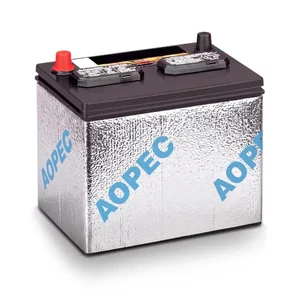 |
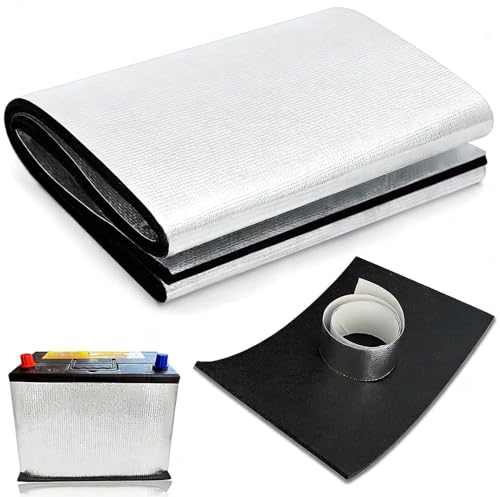
40×7 In Universal Car Battery Insulation Kit – $15.99 Wraps around the battery case to slow heat loss, which matters most for a battery already exposed to the cold cranking-power losses described above.
|
The Single Best Defense: Keep the Battery Fully Charged
Every other step in this guide matters, but none of them matters as much as this one. A battery’s state of charge changes the temperature at which its electrolyte can actually freeze, and the swing is dramatic.
| Battery State of Charge | Approximate Freezing Point |
|---|---|
| 100% (fully charged) | Around -76°F |
| About 75% charged | Around -40°F |
| About 50% charged | Around 0°F |
| Fully discharged | 32°F (same as plain water) |
A fully charged battery is chemically very hard to freeze. A discharged one is barely different from a bottle of water left on the porch. This is why a battery that seemed fine all fall can freeze and crack its case during the first real cold snap: normal winter parasitic drains (interior lights, alarm systems, infotainment memory) quietly pulled the charge down first, and the cold finished the job. Test the battery’s voltage before the cold arrives, not after.
| Resting Voltage | Approximate Charge Level | What to Do |
|---|---|---|
| 12.6V or higher | 100% | Good to go for winter |
| 12.4V – 12.5V | ~75% | Charge it before cold weather hits |
| 12.2V | ~50% | Recharge now; freeze risk rises fast below this |
| 12.0V or lower | 25% or less | Charge immediately or have it load-tested |
8 Ways to Protect Your Car Battery From the Cold
These steps work together. Skipping the charge check and going straight to a battery blanket, for example, just means insulating a battery that is already at risk.
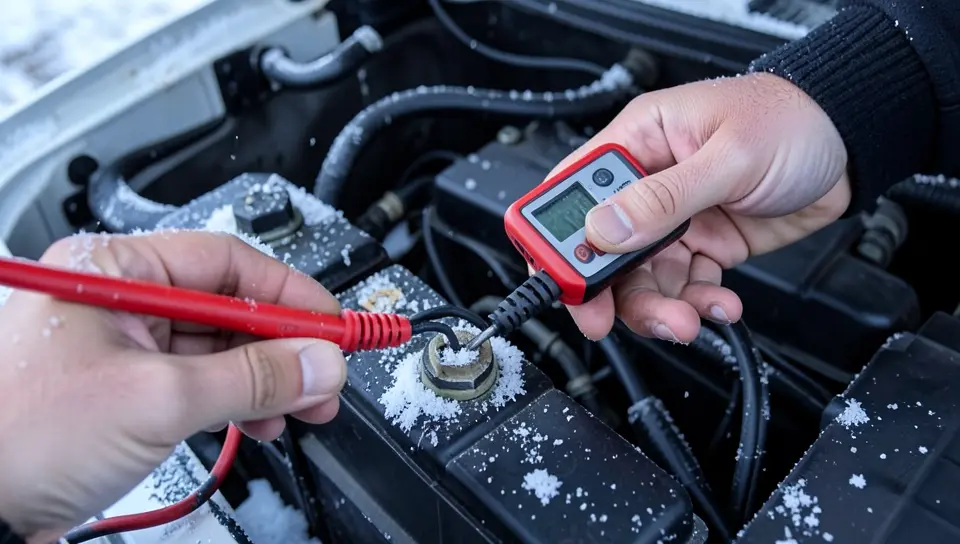
- Test the voltage before winter arrives. Use a digital multimeter or voltmeter on the terminals with the engine off. Anything below 12.4V should be charged before the first hard freeze, using the table above as a reference.
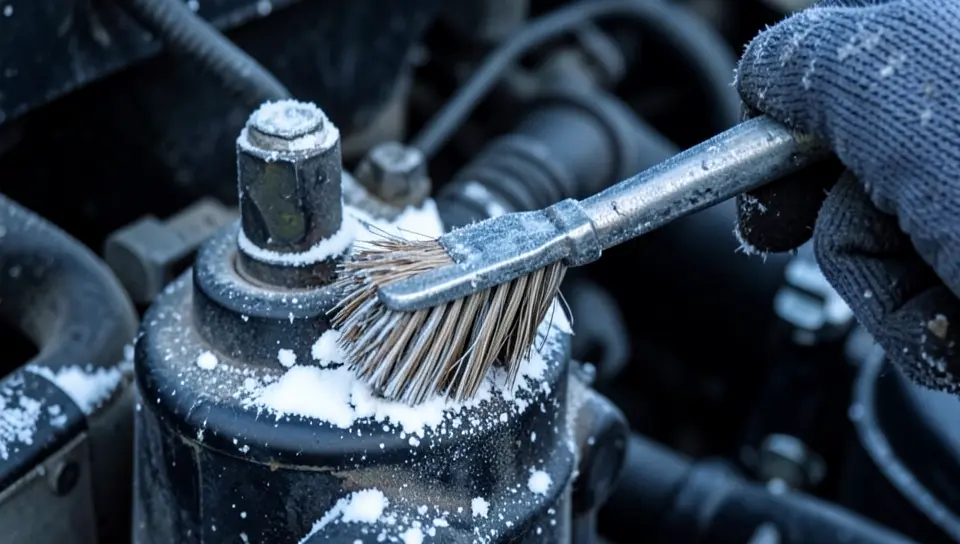
- Clean corroded terminals. White or bluish-green powder on the terminals adds resistance and weakens the connection right when the battery needs every bit of current it has. Disconnect the negative cable first, scrub with a wire brush and a baking-soda-and-water paste, then rinse and dry thoroughly.
- Tighten every connection. A loose terminal clamp can mimic a dead battery. Confirm both cables are snug with the engine off before you assume the battery itself is the problem.
- Park somewhere sheltered. A garage, carport, or even a wall that blocks wind keeps the ambient temperature around the battery several degrees higher than an open driveway, which measurably slows how fast it loses charge.
- Limit short trips. Driving less than 10 to 15 minutes at a time, especially with headlights, heated seats, and the rear defroster running, often uses more power than the alternator can put back in. Combine short errands into one longer trip when possible.
- Add a battery maintainer for vehicles that sit. A car parked for more than a few days – a second vehicle, a seasonal car, an RV – benefits from a smart trickle charger that holds it at full charge without overcharging.
- Match the Cold Cranking Amps (CCA) rating to your climate. Check the owner’s manual for the minimum CCA the manufacturer recommends, then buy a replacement battery at or above that number, not below it, if you live somewhere winters are severe.
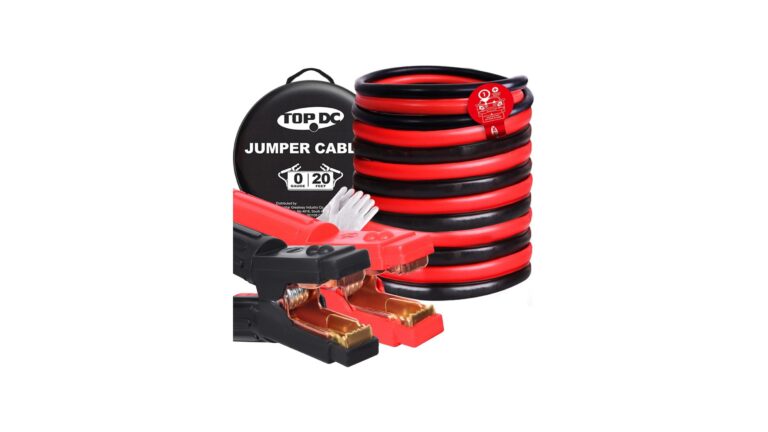
- Keep a jump starter kit in the trunk. A charged portable jump starter turns a dead battery from a tow-truck call into a five-minute fix, and it works even when there is no other vehicle around to jump from.
How to Use a Battery Blanket Safely
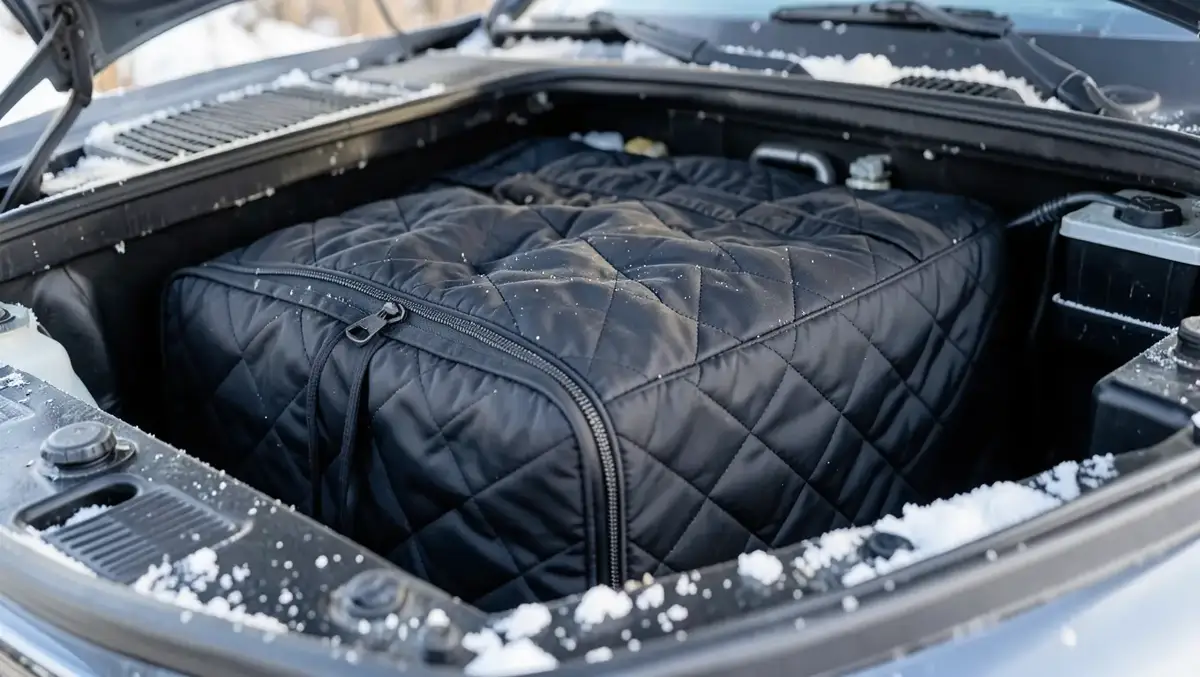
A purpose-built battery blanket or insulation wrap is a legitimate way to slow heat loss from the battery case. It is not the same thing as throwing a household blanket over the battery, and the distinction matters for safety.
- Use a product made specifically for this – most are built from fire-resistant materials rated to withstand direct heat far beyond anything a battery generates in normal operation.
- Wrap it snugly around the case, following the product’s instructions, and keep any cords or straps clear of moving belts, pulleys, and fans.
- If the wrap has a heating element and plugs into a power source, disconnect it before jump-starting the car or running a charger on the battery, to avoid backfeed into the heating circuit.
- Keep the wrap away from oil, coolant, or brake fluid leaks nearby – insulation soaked in a flammable fluid is the real fire risk, not the wrap itself.
- Never substitute a plain fabric blanket, towel, or moving blanket. These are not fire-resistant and can trap heat unpredictably around the terminals.
Used this way, an insulation wrap does not overheat or catch fire – it simply slows down how fast a charged battery loses heat to the surrounding cold, which is exactly why it pairs so well with the charge-first approach covered above.
Should You Remove Your Battery From the Car in Extreme Cold?
For a vehicle driven regularly, no. Removing and reinstalling a battery every cold snap adds risk of a dropped battery, a stripped terminal, or a reset infotainment/radio code, for no real benefit – a fully charged battery left in the car is already resistant to freezing down to around -76°F.
Removal makes more sense in one specific situation: a vehicle that will sit unused for an extended period, generally more than a few days, such as a seasonal car, a boat trailer, or a vehicle in storage. In that case, disconnecting the negative terminal (or removing the battery entirely and bringing it indoors) prevents the slow parasitic drain that would otherwise leave it discharged, and therefore vulnerable to freezing, by the time you need it again. If you do bring a battery inside, set it on a wood shelf or a stack of cardboard rather than directly on a concrete floor, and keep it away from open flames or heat sources.
Signs Your Battery Is Already Struggling in Cold Weather
Catching these early usually means a $15 charge or cleaning fixes it, instead of a $150 tow truck call on the coldest morning of the year.
- Slow or labored engine crank. The starter turns the engine over noticeably slower than usual, especially first thing in the morning.
- Dim headlights or interior lights. Lights that look weaker than normal, particularly at idle, point to reduced battery output.
- Dashboard warning light. A battery or check-engine light that appears mainly on cold starts is worth investigating right away.
- Clicking sound with no crank. A rapid click when turning the key usually means the battery cannot supply enough current to engage the starter.
- Visible corrosion on the terminals. White, ashy, or greenish buildup around the posts adds resistance and should be cleaned before it gets worse.
Frequently Asked Questions
How do I protect my car battery from the cold?
Keep the battery fully charged, since a discharged battery freezes far more easily than a charged one. Clean corroded terminals, park in a sheltered spot when possible, and consider a purpose-built insulation wrap for a battery that lives outside in severe winter climates. A battery maintainer is worth adding for any vehicle that sits for days at a time.
Should I remove my car battery in cold weather to keep it from freezing?
Not for a vehicle you drive regularly. A fully charged battery left installed will not freeze until roughly -76°F, so removal is unnecessary day to day. Removal is worth doing only when a vehicle will sit unused for more than a few days, since that is when a slow parasitic drain could discharge the battery low enough to make it vulnerable to freezing.
Is it safe to cover a car battery with a blanket?
Yes, as long as it is a purpose-built battery insulation wrap or blanket, not a household fabric blanket. These products are typically made from fire-resistant materials designed to slow heat loss without trapping dangerous heat. Avoid substituting an ordinary blanket or towel, and disconnect any heated wrap before jump-starting or charging the battery.
Does spraying foam on a car battery help in cold weather?
There is no legitimate product designed to spray foam directly onto a battery for cold protection, and doing so is not recommended – it could clog the case vents or interfere with the terminals. What people are usually thinking of is a foam-insulated battery wrap or blanket, which is a solid rigid or semi-rigid material that wraps around the outside of the case rather than a spray applied to it.
How often should I start my car to keep the battery charged in winter?
If a vehicle is driven at least a few times a week for trips of 15 to 20 minutes or more, no separate starting routine is needed. For a vehicle that otherwise sits unused, start it and let it idle for 10 to 15 minutes roughly twice a week, or better yet, connect a battery maintainer, which recharges more reliably than idling alone.
At what temperature does a car battery freeze?
It depends entirely on the state of charge. A fully charged battery resists freezing down to roughly -76°F, a battery at about 50% charge can freeze around 0°F, and a fully discharged battery can freeze at 32°F, the same temperature as plain water. This is why keeping the battery charged matters more than any other single step for cold-weather protection.
Conclusion
A car battery does not need to be a winter liability. Test the voltage before the first hard freeze, clean the terminals, park somewhere sheltered when you can, and add a battery maintainer or insulation wrap for a vehicle that spends its winter parked outside or sitting unused. Keep a charged jump starter kit in the trunk as a backup, and the coldest morning of the year becomes a minor inconvenience instead of a tow-truck call.
Products related to this article
Sponsored / affiliate links. As an Amazon Associate I earn from qualifying purchases. I may earn additional commission from eligible campaigns.