How to Read a Car Gas Gauge (Gas Meter): E, F & Low Fuel Light
A car gas meter, better known as the fuel gauge, is an approximate indicator, and the E mark does not tell you how many gallons are left. That number is set by the maker: the 2024 Honda Civic Sedan manual puts its low fuel light at about 1.8 US gallons (7.0 liters), while a Mazda CX-30 manual ties its light to about 9 liters (2.3 gallons) or 31 miles of range. This guide shows how to read the markings, what the arrow means, and when to stop trusting the gauge.
What Is a Car Gas Meter?
Best Fuel Funnel Pick for Low-Fuel Days
 |
FloTool Automotive Funnel with Splash Guard (10718WR): $9.99 If the gauge ever leaves you needing to pour fuel from a gasoline-approved can, a funnel with a splash guard keeps more of it in the filler neck and off your paint. This one is a low-cost option.
|
As an Amazon Associate we earn from qualifying purchases.
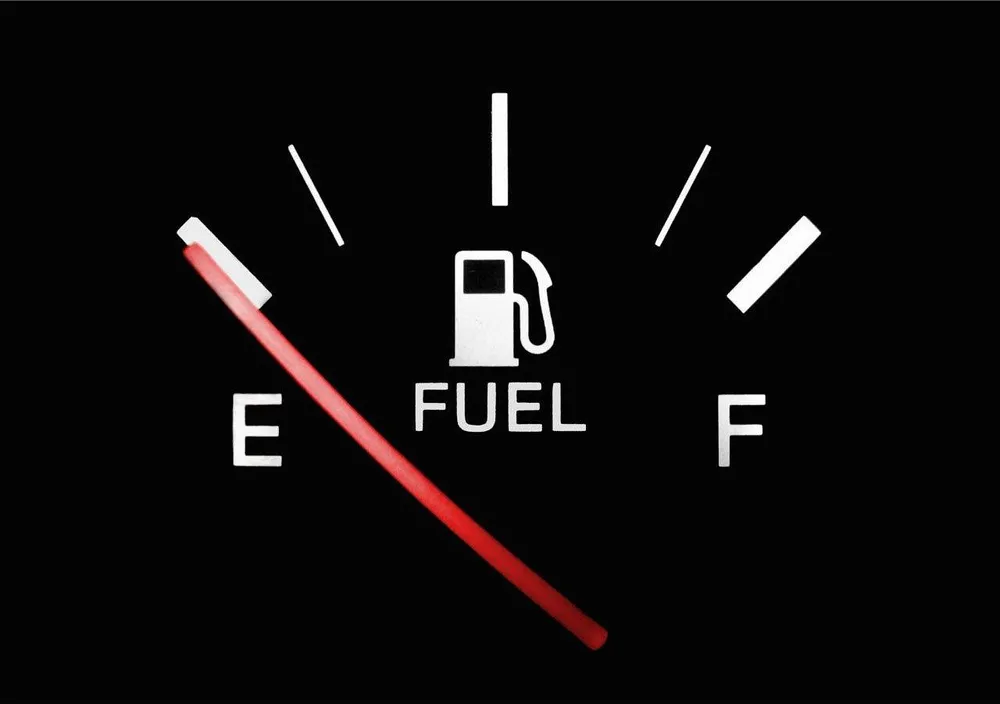
A car gas meter is the fuel gauge on your dashboard: a needle dial or a digital display with F for full and E for empty, usually beside a fuel pump icon. It reads a signal from a fuel level sender in the tank and turns it into a needle position or a set of bars. (If you were searching for the natural gas meter on a house, that is a different device; this page covers only the vehicle gauge.)
Why the Reading Is Only an Estimate
Fuel sloshes as you accelerate, brake and corner, so the needle is smoothed or averaged. Mazda’s owner’s manuals say the indicator may deviate on a slope or curve because the fuel moves in the tank, and may take some time to stabilize after refueling. Treat the gauge as a rough level, not a measuring cup.
How to Read Your Car’s Gas Meter: Step-by-Step
Reading a fuel gauge takes seconds once you know what each part tells you. Follow these four steps.
Step 1: Find the Fuel Gauge
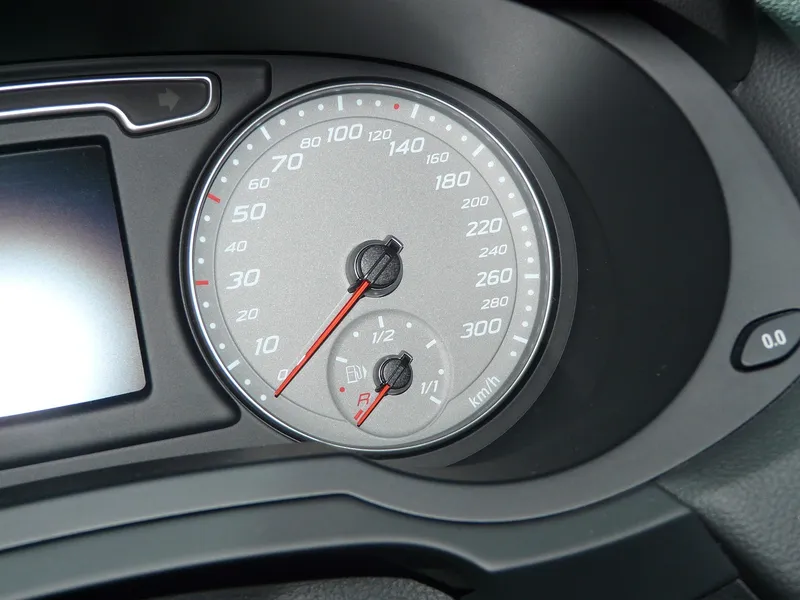
Look in the instrument cluster in front of the driver for a fuel pump icon with F at one end and E at the other. On a digital cluster it may be a row of bars or a percentage, and some cars show the fuel level on a small screen between the dials.
Step 2: Check the Needle or Display
On a needle gauge, note where the needle sits between E and F. Halfway is roughly half a tank. On a digital gauge, count the bars; fewer bars means less fuel. Wait until the ignition is on and the car is level for the steadiest reading.
Step 3: Understand the Markings
Many analog gauges show F, 3/4, 1/2, 1/4 and E. To turn a mark into gallons, multiply the fraction by your tank capacity from the owner’s manual. For a 15-gallon tank, a needle on 1/4 is about 3.75 gallons by simple arithmetic, but remember the gauge itself is approximate.
Step 4: Watch for the Low Fuel Warning
When the low fuel light comes on, refuel as soon as it is safe to do so. The amount left is not the same on every car, which is why the next section matters.
What the Low Fuel Light Really Means: Examples From Owner Manuals
The popular rule that the light means 1 to 2 gallons left and 20 to 50 miles of range is not a standard. Some makers trigger the light on a fixed volume, others on estimated range. These are the figures we could read from maker documents, and they are examples for those models only:
| Maker and model | What the document says | What it means for you |
|---|---|---|
| Honda Civic Sedan (2024 manual) | Low fuel indicator comes on at approximately 1.8 US gal (7.0 L); blinks if there is a fuel gauge problem | A fixed-volume trigger; a blinking light is a fault, so have a dealer check it |
| Mazda CX-30 (manual) | Light comes on at about 9 L (2.3 US gal) or when distance to empty is 50 km (31 miles) or less | Volume or range, whichever comes first; it may come on at different points because fuel shifts |
| Mazda CX-5 (manual) | If low fuel causes inconsistent performance or stalling, refuel and add at least 10 L (2.7 US gal); keep the tank over 1/4 full | If it stalls, the first few gallons may not be enough to restart it |
| Ford (support page) | The low fuel alert can come at up to 80 miles with heavy highway driving, or 35 miles or less when towing or idling | The alert depends on how you drive, not a single reserve number |
Rule of thumb that holds up: arithmetic is not a promise. At 30 mpg, 1.8 gallons works out to about 54 miles on paper, but hills, wind, a cold engine and stop-and-go driving shorten it, and the gauge may be reading differently from the tank.
Notice the contrast: Ford alerts by remaining range, while Honda’s manual quotes gallons. That is why a friend’s “I drove 50 miles on the light” tells you nothing about your own car.
Digital vs. Analog Fuel Gauge: Key Differences
Analog (needle) gauges move smoothly between E and F, and the needle can dip or rise on hills and corners because of slosh. Digital gauges show bars, a percentage or a distance-to-empty number. The distance figure is a calculation from your recent fuel economy and the fuel level, so it falls fast after a stretch of highway driving or towing. Ford’s support page says different driving styles can affect its Distance to Empty calculation, and for more on reading that number see our guide to what a miles-to-E display means.
Both gauge types start from the same fuel level sender, so a failed sender confuses an analog needle and a digital bar display alike.
What the Arrow on Your Gas Gauge Means
The small arrow or triangle next to the fuel pump icon points toward the side of the car where the fuel filler is. If it points left, pull up with the filler on the left-hand pump side. Mazda’s manual, for one, says its arrow shows that the filler flap is on the left. The idea is credited to Ford designer Jim Moylan, who proposed it in 1986, and reports say the arrow was approved for 1989 model year Fords, so it did not appear on cars in 1986 as is sometimes claimed. Not every car has one, so look at the gauge before you pull into an unfamiliar rental.
Why Your Gauge May Be Wrong (and Warning Signs of a Faulty Sender)
| Gauge position or symptom | Typical meaning | Caveat |
|---|---|---|
| Needle at F after a fill-up | Tank is full or nearly full | May take time to settle after refueling (Mazda manuals); stays pinned after adding only a few gallons, suspect a fault |
| Needle drops faster at first, then slowly (or the reverse) | Normal gauge calibration and tank shape | Not every car follows a straight line from F to E |
| Needle near 1/4 | About a quarter of capacity by the gauge | Mazda recommends keeping the tank over 1/4 full; multiply by tank size for gallons |
| Low fuel light on | Maker-set reserve threshold | Volume-based or range-based depending on the car; see the table above |
| Low fuel light blinking (Honda) | Problem with the fuel gauge itself | Have a dealer check it; do not rely on the gauge |
| Needle jumps or sticks on flat road | Possible fault with the fuel level sender or wiring | A shop needs to test it; use trip odometer and fill-ups to track range |
| Needle swings on hills or curves | Fuel sloshing in the tank | Normal; check the gauge again on level ground |
Tips for a More Accurate Read
- Read it on level ground: a slope or curve moves the fuel and the indicator.
- Know your tank size: our guide to how many gallons a car holds helps you convert fractions to gallons.
- Use the trip odometer: reset it at each fill-up and compare it with the gallons you add; pair that with the EPA mpg rating at FuelEconomy.gov.
- Do not rely on the light: Mazda’s manual recommends keeping the tank over 1/4 full.
If the Gauge Is Broken or You Are Running Low
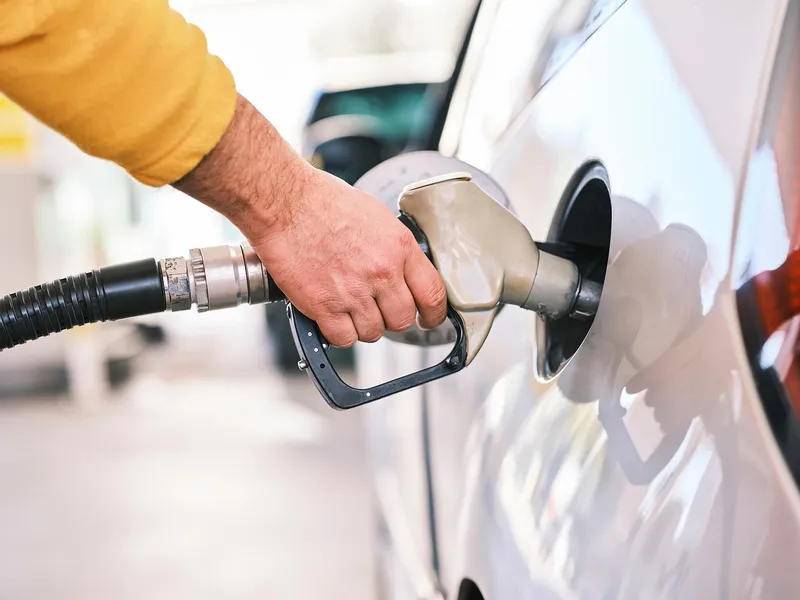
If you suspect the gauge is wrong, track range by hand: fill up, reset the trip odometer, and refuel well before you reach the distance your car normally covers on a tank. See our guide on how to fix a gas gauge for what a repair involves.
Safety: if the engine sputters or stalls from low fuel, move to a safe place off the road and turn on the hazard lights. Do not siphon fuel by mouth, and use only a container made for gasoline. If you stall in traffic, call roadside help instead of walking along the road.
Common Mistakes to Avoid
- Treating E as a reserve you can use: the manual figure is a warning point, not spare fuel.
- Assuming every car has the same reserve: compare Honda’s gallon figure with Ford’s range-based alert above.
- Ignoring a blinking light on a Honda: the manual says it points to a fuel gauge problem.
- Judging the level on a hill: the indicator can deviate on a slope, so check again on level ground.
Frequently Asked Questions
What Does “E” Really Mean on a Gas Meter?
E means the gauge has reached its empty mark, not that the tank is physically dry. How much fuel is left at E depends on the maker and model, so use the manual. The 2024 Honda Civic Sedan manual says its low fuel indicator comes on at approximately 1.8 US gallons (7.0 liters), and a Mazda CX-30 manual says its light comes on at about 9 liters (2.3 US gallons) or when the range is 50 km (31 miles) or less. Do not plan to drive on whatever is left.
How Accurate Is My Car’s Fuel Gauge?
Fuel gauges show approximate level. Mazda’s manuals say the gauge shows approximately how much fuel is left, may deviate on a slope or curve because the fuel moves in the tank, and may take some time to stabilize after refueling. Distance-to-empty figures are estimates too: Ford says driving style affects its Distance to Empty calculation.
Can a Fuel Gauge Break?
Yes. Common signs are a needle that sticks, swings wildly on flat road, or reads the same after you add fuel. Honda’s manual adds that a blinking low fuel indicator means a problem with the fuel gauge and should be checked by a dealer. A shop has to test the fuel level sender and wiring, so we do not give a repair price here because it varies by vehicle.
How Far Can I Drive on a Low Fuel Warning?
There is no safe universal number. Ford says the warning on its vehicles can come as early as 80 miles of remaining fuel with heavy highway driving, or at 35 miles or less when towing or idling. Mazda’s CX-30 manual ties its light to 31 miles or less. Refuel as soon as it is safe to do so.
What’s the Arrow by My Gas Gauge?
It points to the side of the car where the fuel filler is. A Mazda manual, for example, describes the arrow as showing the filler flap is on the left side of that vehicle. If you are in a rental or borrowed car, look for the small triangle beside the fuel pump icon.
Why Does My Gauge Show Full After a Partial Fill?
Gauges can take time to settle after refueling, and Mazda’s manuals note the indicator may take some time to stabilize. If it stays pinned at F after you added only a few gallons, or never moves, treat it as a fault and have the fuel level sender checked.
Conclusion
Read the needle or bars on level ground, convert the fraction with your tank size, and check your own owner’s manual for the low fuel threshold, because Honda, Mazda and Ford all set it differently. If the light blinks, the needle sticks or the reading never changes after a fill-up, have the fuel level sender and gauge checked.
Products related to this article
Sponsored / affiliate links. As an Amazon Associate I earn from qualifying purchases. I may earn additional commission from eligible campaigns.