How To Remove a VIN Number: Proven Methods
Removing a vehicle identification number (VIN) from a car is a complex process, often associated with illegal activities like vehicle theft. Legitimate reasons for VIN alteration are rare and usually involve official procedures for salvage, reconstruction, or titling. If you need to address a VIN issue, it’s best to consult with your local Department of Motor Vehicles (DMV) or a legal professional first.
You’ve probably seen the VIN on your car’s dashboard or door jamb. It’s like your car’s unique fingerprint, a 17-character code that identifies it specifically. But what if you’re wondering about removing it? For most car owners, this isn’t a common concern. However, understanding what a VIN is and why it’s protected is important, especially if you’re dealing with a salvaged vehicle, a restoration project, or even just curious about automotive security.
Removing or altering a VIN is generally illegal because it’s the primary way to track a vehicle and prevent fraud. Cars with altered VINs are often linked to stolen vehicles. This can lead to serious legal trouble. So, when we talk about “removing” a VIN, it’s usually not about wiping it clean. Instead, it might involve understanding how VINs are legally replaced or re-marked under specific circumstances, typically overseen by authorities.
In this guide, we’ll explore the nuances of VINs, why they’re critical, and the legitimate, legal processes that sometimes involve VINs being addressed. We’ll break down what you need to know so you can feel confident about handling any situation involving your car’s identification.
Understanding the VIN: Your Car’s Unique Identifier
Before we talk about any kind of removal or alteration, it’s super important to understand what a VIN is and why it’s there. Think of the Vehicle Identification Number (VIN) as your car’s social security number. It’s a 17-character code, made up of letters and numbers, that is unique to every single vehicle manufactured since 1981. It tells us a lot about a car:
- Who made it: The first few characters identify the manufacturer.
- Where and when it was made: Other characters indicate the plant and model year.
- What it is: It details the car’s features, like engine type and body style.
- Its unique serial number: The last few numbers are a sequence specific to that exact car.
This number is stamped directly onto the car’s chassis and recorded on important documents like your title and registration. It’s a crucial tool for keeping track of vehicles, ensuring safety recalls are properly addressed, and fighting against car theft and fraud. Because of its importance in identification and security, tampering with a VIN is a serious offense in most places.
Why Would Someone Consider “Removing” a VIN?
The idea of “removing” a VIN often comes up in discussions about potentially problematic situations. It’s essential to clarify that for most everyday car owners, there’s no legitimate reason to remove or alter a VIN. The illegal act of altering a VIN is almost always associated with attempts to disguise a stolen vehicle. Law enforcement uses VINs to trace stolen cars and identify their rightful owners.
However, there are very specific, legal, and often bureaucratic situations where a VIN might be replaced or re-assigned. These scenarios are far from a simple DIY job and are strictly regulated. They typically involve:
- Salvage or Rebuilt Titles: When a vehicle is declared a total loss by an insurance company (salvage) and then repaired to be roadworthy again, it often receives a new VIN through a specialized inspection process. This ensures the vehicle’s history is clear and it’s properly identified.
- Custom-Built Vehicles: If you’re building a car from scratch or heavily modifying a kit car, you’ll need to apply for a unique VIN from your state’s motor vehicle agency.
- Restoration Projects: In some extensive restoration cases, especially if the original VIN plate was damaged or lost, a new VIN might be issued after a thorough verification process.
- Administrative Errors: Very rarely, a clerical error might necessitate a VIN correction, which is handled by the relevant Department of Motor Vehicles (DMV).
It bears repeating: these processes are designed to ensure identification and prevent fraud, not to make a VIN disappear. They involve strict procedures and official oversight.
The Legality of VIN Alteration: A Serious Warning
Let’s be crystal clear: altering or removing a VIN from your vehicle without proper legal authorization is a crime. This is true in the United States, Canada, and many other countries. The National Highway Traffic Safety Administration (NHTSA) has strict regulations regarding VINs to protect consumers and combat crime. In the U.S., intentionally removing, defacing, altering, or replacing a VIN can lead to severe penalties, including hefty fines and imprisonment.
Here’s why it’s so serious:
- Vehicle Theft: The most common reason criminals alter VINs is to hide the identity of stolen vehicles. They might swap VIN plates from a legitimate car onto a stolen one, making it harder for police to track.
- Fraud: Altered VINs can be used to commit other types of fraud, such as selling a flood-damaged car as if it were in good condition or misrepresenting a car’s history.
- Safety Concerns: A VIN is linked to recall information. If a VIN is altered, it becomes impossible to accurately track safety recalls, potentially putting drivers at risk.
If you encounter a vehicle with a VIN that appears to have been tampered with, it’s crucial to report it to the authorities. Trying to “fix” a VIN issue yourself without following legal channels can inadvertently put you in legal jeopardy.
Legitimate VIN Re-Identification Processes: What You Need to Know
While you can’t just “remove” a VIN, there are specific, legal pathways for vehicles that require new identification. These aren’t about erasing the past but about properly identifying a vehicle for legal road use. These processes are managed by state motor vehicle departments and often involve specialized facilities.
1. Salvage and Rebuilt Vehicle Titling
When a vehicle is declared a total loss due to an accident, natural disaster, or theft, its title is often branded “salvage.” To put such a vehicle back on the road, it must undergo rigorous inspections to prove it’s safe and roadworthy. If it passes, it typically receives a “rebuilt” or “reconstructed” title. In many states, this process includes the assignment of a new VIN or a specific state-issued VIN.
Steps typically involved:
- Receipt of Salvage Title: The vehicle owner or buyer obtains a salvage title.
- Repair and Restoration: The vehicle is repaired by a qualified mechanic or shop.
- State Inspection: The repaired vehicle undergoes a specialized inspection at an authorized facility. This inspection verifies the repairs and the vehicle’s safety.
- VIN Assignment/Verification: If the original VIN is intact and verifiable, it might be retained. However, if the VIN plate was destroyed or if required by state law, a new, state-issued VIN plate will be affixed. This new VIN will be permanently marked and recorded on the rebuilt title.
- Obtaining a Rebuilt Title: Once all inspections and procedures are complete, the vehicle can be issued a rebuilt title, allowing it to be registered and driven legally.
This process ensures that vehicles with a history of being declared a total loss are properly identified and their condition is transparent to future buyers. You can find more information on how states handle these titles through resources like the USA.gov guide on state vehicle titles.
2. Special VINs for Custom-Built and Kit Cars
If you’re building a car from scratch, perhaps using a kit car or fabricating unique components, your creation won’t have a pre-assigned VIN. You’ll need to obtain one from your state. The process varies by state, but it generally involves thorough documentation and inspection.
Typical steps for custom vehicles:
- Parts Documentation: You’ll need to provide proof of ownership and origin for all major components, especially the engine and chassis.
- Application: Submit an application to your state’s DMV or equivalent agency for a custom vehicle VIN.
- Inspection: The vehicle will likely need to pass a safety and identification inspection. Inspectors will ensure the vehicle meets all safety standards and verify the components used.
- VIN Assignment: If approved, the state will assign you a unique VIN.
- VIN Application: You will then be issued a metal VIN plate that you must securely affix to the vehicle, usually on the dashboard or doorjamb, in a location specified by the state.
This ensures that even home-built vehicles are identifiable and registered correctly.
3. VIN Correction or Re-issuance
In rare instances, a VIN plate might be damaged beyond recognition during a repair, or there might be a legitimate administrative error in a vehicle’s documentation. If this happens, the vehicle owner must contact their local DMV to initiate a process for VIN verification and potential re-issuance. This is a formal procedure that requires proof of ownership and a detailed explanation of why the VIN needs attention. A new VIN plate will be issued and permanently affixed after the vehicle passes inspection.
Tools and Methods for VIN Identification (Not Removal!)
While discussing VINs, it’s also helpful to know how VINs are constructed and where they are found, as this aids in understanding why they are so hard to illegitimately remove and why official re-identification methods are so stringent.
Where to Find Your VIN
Your VIN is stamped in several locations on your car. The most common places are:
- The driver’s side dashboard, visible from outside the windshield.
- The driver’s side door jamb (the frame of the door).
- The engine block (less common and may be hard to read).
- Vehicle registration and insurance documents.
How VINs Are Applied to Vehicles
Manufacturers apply VINs in ways that make them difficult to remove or alter without leaving obvious signs. Common methods include:
- Stamping: The VIN is pressed into metal parts of the car’s frame or body using steel dies. This creates a permanent impression.
- Laser Etching: Some manufacturers use lasers to etch VINs onto glass or metal components.
- Riveted VIN Plates: Many vehicles have a metal VIN plate, typically in the engine bay or on the dashboard, permanently attached with rivets.
These methods make it very hard to cleanly remove a VIN without damaging the surrounding material or leaving evidence of tampering. Authorized VIN replacement procedures use similar robust methods, often involving specialized stamping equipment or secure, official plates.
Can You Truly “Remove” a VIN? The Reality
So, can you actually “remove” a VIN in the way one might imagine – like wiping it away? The short answer is no, not without engaging in illegal activity or undertaking a highly official, government-sanctioned VIN re-identification process.
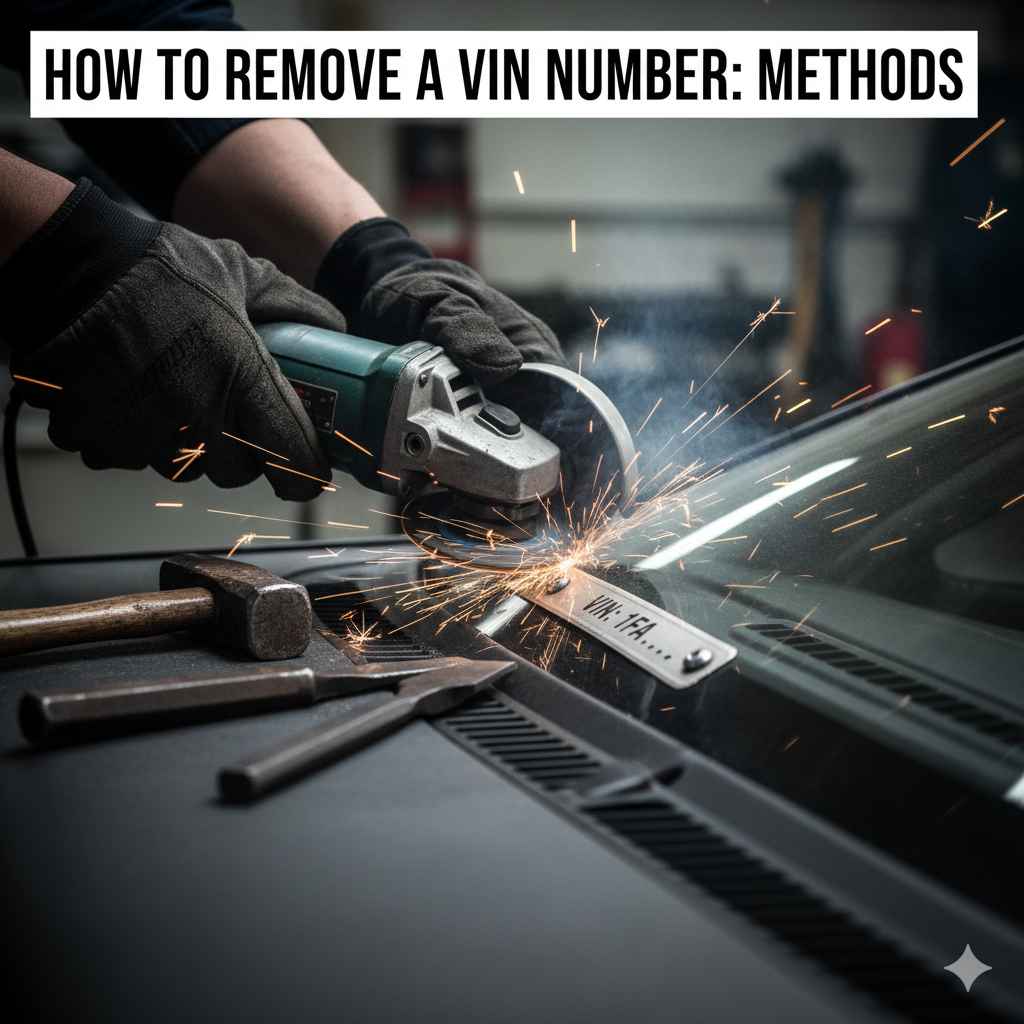
Physical Removal: If you’re thinking about physically grinding off, cutting out, or otherwise obliterating the VIN stamping or plate, you are almost certainly engaging in illegal VIN tampering. Even if successful, the act of attempting to remove it leaves traces. Law enforcement and expert inspectors can often detect signs of alteration, such as:
- Scratches, grinding marks, or welds around the VIN location.
- Uneven or mismatched stamping that doesn’t match the factory standard.
- Evidence of a new plate being affixed.
- Discrepancies between the VIN on different parts of the car.
Digital Removal: In modern vehicles, the VIN is also stored in multiple electronic control units (ECUs). While diagnostic tools can read and sometimes program ECUs, attempting to alter VIN data stored electronically is also illegal and can have serious consequences for the vehicle’s function and legality.
The only legitimate “removal” or replacement of a VIN occurs when a state authority assigns a new VIN to a vehicle due to specific legal circumstances, such as salvage or reconstruction, as described earlier. This is a formal, documented process, not a DIY project.
Important Considerations and Safety
If you are dealing with a vehicle that has a damaged or missing VIN, or if you are involved in a project that legitimately requires VIN reassignment, it’s crucial to act responsibly and legally. Always consult official resources.
When to Contact Authorities or Experts
- Suspicious VIN: If you buy a car and suspect its VIN has been tampered with, do not try to fix it yourself. Contact your local police or DMV immediately.
- Salvage Rebuilds: If you are planning to rebuild a salvage vehicle, understand your state’s specific requirements for inspections and titling from the outset.
- Custom Builds: For kit cars or custom builds, research your state’s DMV requirements for VIN application and inspection before you start building.
The Cost of Illegal VIN Tampering
Let’s summarize the risks associated with illegal VIN tampering:
| Consequence | Description |
|---|---|
| Criminal Charges | Felony charges, leading to fines and jail time. |
| Vehicle Confiscation | The vehicle can be seized by law enforcement. |
| Difficulty Selling | A car with a questionable VIN is unsellable legally. |
| Insurance Issues | Insurance companies may deny claims for vehicles with altered VINs. |
It’s never worth the risk to try and alter a VIN without going through the proper legal channels. Focus on understanding the regulations in your specific area.
Frequently Asked Questions (FAQ)
Q1: Is it legal for me to remove the VIN plate from my car to clean it?
A: No, it is generally illegal to remove a VIN plate. While cleaning around it carefully might be permissible, actual removal can be seen as tampering. If a VIN plate becomes damaged or detached during an authorized repair, you must follow official state procedures to have it re-affixed or replaced.
Q2: My VIN plate is severely rusted and hard to read. What should I do?
A: If your VIN plate is damaged, you should contact your local Department of Motor Vehicles (DMV) or equivalent agency. They can guide you through the process of getting a VIN verification and, if necessary, a replacement VIN plate issued by the state. Never attempt to repair or replace it yourself without authorization.
Q3: I’m restoring an old car, and the original VIN is gone. Can I just make up a new VIN?
A: Absolutely not. Making up a VIN or using one from another vehicle is illegal. For restorations where the VIN is lost or destroyed, you must apply to your state’s motor vehicle agency for a new, state-assigned VIN. They will likely require extensive documentation and inspections.
Q4: What is the difference between a VIN and a serial number?
A: A VIN (Vehicle Identification Number) is a unique 17-character code for a specific vehicle. A serial number can refer to various components on a car (like an engine or transmission) and is unique to that specific part, not the entire vehicle. The VIN is the master identifier for the car itself.
Q5: If a car has a rebuilt title, does it still have its original VIN?
A: Not always. A rebuilt title means the car was previously declared salvage and then repaired. Sometimes, the original VIN is retained and noted on the new title. However, in many cases, especially if the original VIN was damaged or lost during the incident that caused the salvage branding, the state will issue a new, state-specific VIN.
Q6: How can I check if a VIN has been tampered with?
A: Look for signs of physical alteration around the VIN plate or stamping. This includes scratches, grinding marks, extra welds, or mismatched fonts or characters. Discrepancies between the VIN on the dashboard and the door jamb are also red flags. If you suspect tampering, do not proceed with a purchase and contact authorities.
Q7: Are there any tools I can buy to remove a VIN?
A: No reputable tools exist for the legal removal of a VIN. Tools that claim to do so are likely intended for illegal activities. The only legitimate ways to address VIN issues involve official state processes and authorized VIN replacement plates or stampings.