How to Rent a Car at the Airport: Steps, Age Rules & Fees
Renting a car at the airport comes down to six steps: book online in advance, bring a valid driver’s license and credit card, find your rental company’s counter or shuttle, inspect the car before you drive off, and return it with a full tank on time. Most of the stress people run into comes from three things this guide covers in detail — the age and young-driver fees, the credit card deposit hold, and the fuel policy — not the booking itself.
Quick Answer
Book online ahead of time, bring your driver’s license and a credit card in the renter’s name, take the rental shuttle or walk to the on-site counter, inspect the car and photograph any existing damage, then return it full of fuel before your contract time to avoid a late fee (most companies allow a 29-minute grace period). Most U.S. companies require drivers to be at least 21, with a young-driver surcharge of roughly $15–$35 per day for anyone under 25.
How to Rent a Car at the Airport, Step by Step
- Book in advance. Reserve online at least a few days ahead — booking early locks in a lower rate and guarantees the car class you actually want instead of whatever is left on the lot.
- Gather your documents. A valid driver’s license, your reservation confirmation, and a credit card in the driver’s name. A few companies also ask for a return flight itinerary if you’re paying with a debit card.
- Get to the rental center. At most large airports this means a courtesy shuttle from arrivals; at smaller airports the counter is inside the terminal itself. Follow the rental-car signage, not the taxi or ride-share signs.
- Check in at the counter (or skip it). Hand over your license, confirmation, and card, or use your rental company’s express program if you’re enrolled — see the section below.
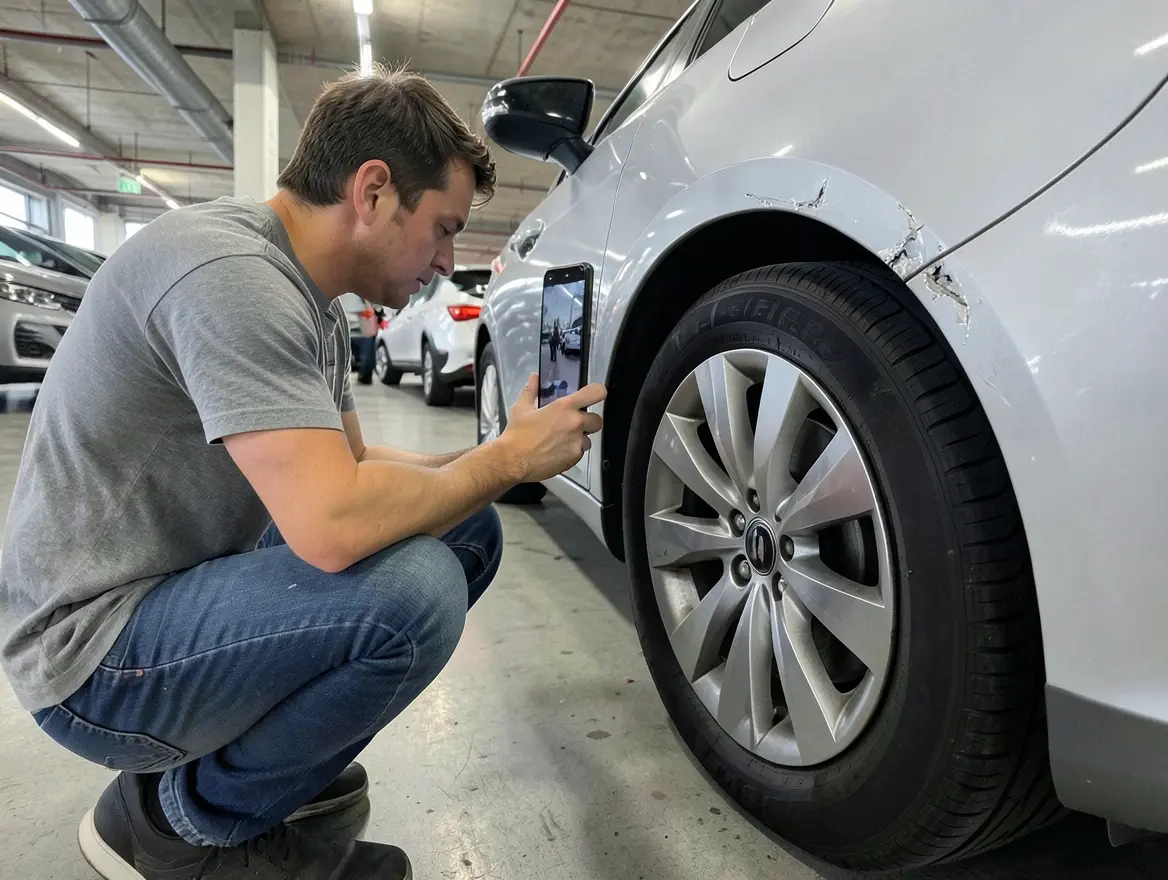
- Inspect the car before you leave the lot. Walk the full exterior, check the tires and windshield, and photograph anything that’s already damaged.
- Drive and return on schedule. Refuel to match your fuel-policy agreement and return the car by your contracted time to avoid a late fee.
Skip the Counter: Express Pickup Programs
Every major airport rental brand now runs a free loyalty tier built specifically to cut counter time. Enroll before your trip (it takes a few minutes online) and at participating airports you can walk straight past the line to your assigned car.
| Company | Program Name | How It Works |
|---|---|---|
| Hertz | Gold Plus Rewards | Your name and stall number appear on a board in the Gold lot; walk to your car and drive to the exit gate. |
| Avis | Avis Preferred / QuickPass | Skip the desk at 40+ major airports; an agent checks your license at the exit gate. |
| Enterprise / National | Emerald Club / ReadyPass | A digital pass is scanned like a boarding document, sending you directly to your vehicle. |
| Budget | Fastbreak | Proceed to the lot, choose an available car in your class, and show your license at the gate. |
| Alamo | Skip the Counter | Look up your reservation online before arrival to bypass the counter entirely. |
These programs don’t remove every check — a driver change, a vehicle upgrade, or a payment-method issue can still route you back to the counter. If your reservation is straightforward, though, enrolling ahead of time is the single easiest way to shorten an airport rental pickup.
Age Requirements and Young-Driver Fees
Most U.S. states set the minimum rental age at 21, though New York and Michigan require companies to rent to drivers as young as 18. Turning 21 doesn’t mean you’ll pay the same rate as an older renter, though: nearly every major company charges a young-driver surcharge for anyone between 21 and 24, typically $15 to $35 per day on top of the base rate. That surcharge usually disappears once you turn 25, and some luxury or specialty vehicle classes aren’t offered to renters under 25 at all. If you’re near either age cutoff, ask the counter agent directly — the fee varies by location, not just by company policy.
Credit Card Holds and Deposits
Airport counters place a temporary authorization hold on your card that’s separate from your actual rental charge. At most companies this runs $200 to $500 above the estimated rental cost, and airport locations tend to hold more than neighborhood branches. A credit card is the easier path: the hold simply reserves credit and releases within a few days of return. A debit card works at most companies too, but the hold draws directly from your checking balance, can take 7 to 15 business days for your bank to release even after the rental company clears it, and almost always requires a return flight itinerary landing at the same airport. If you’re paying by debit, call ahead and confirm the exact hold amount and documentation needed before you land.

Before you decide whether to buy the counter’s collision or liability coverage, check what you’re already carrying. Many personal auto policies extend to rentals, and some credit cards include their own rental car insurance as a cardholder perk — which can make the counter’s add-on coverage redundant.
Fuel Policy: Full-to-Full vs. Prepaid
Most airport rentals use a full-to-full policy: you receive the car with a full tank and are expected to return it full. Save the gas station receipt from near the airport as proof if you’re at all worried about a dispute. Some companies offer a prepaid fuel option instead, where you pay for a full tank upfront and can return the car at any fuel level — convenient if your flight is early, but it almost always costs more per gallon than pumping it yourself, since you’re paying for gas you may not fully use. If you skip both and return the car under a full tank with no prepaid option, expect a refueling charge that runs well above the local pump price.
Inspecting the Car Before You Drive Off
Walk the entire exterior before you leave the lot — bumpers, doors, wheels, and the roof. Check the windshield for cracks and the tires for visible wear or low pressure. Sit inside and confirm the seats and dash are undamaged, then test the headlights, brake lights, horn, and seatbelts. Photograph or video anything you find, including the odometer and fuel gauge, and point it out to the counter agent before you drive away. This single habit is the most common way renters avoid being billed for damage that was already there.
Returning the Car and the Late-Return Grace Period
Follow the rental-return signage back to the same airport lot (or the location named in your agreement), park in the marked return spot, and remove all your belongings. An agent will scan the car and email your final receipt, or you can drop the keys with the attendant and check your email later. Most major companies — Hertz, Enterprise, Avis, and Budget among them — allow a 29-minute grace period past your contracted return time before an hourly late fee kicks in at the 30-minute mark. Beyond a few hours late, some companies switch to charging for a full extra day, so call ahead if you know you’ll be significantly delayed.
Frequently Asked Questions
How Does Renting a Car From the Airport Work?
You book online, then bring your driver’s license, reservation confirmation, and a credit card to the rental counter or an express-pickup program at the airport. After signing the agreement, inspect the car for existing damage before driving off, and return it to the same lot with a full tank by your contracted time.
What Are the Age Requirements to Rent a Car at the Airport?
Most U.S. states require renters to be at least 21, except New York and Michigan, where the minimum is 18. Renters between 21 and 24 typically pay a young-driver surcharge of about $15 to $35 per day, which usually goes away at age 25.
How Much Will a Rental Company Hold on My Credit Card?
Airport locations commonly place a hold of $200 to $500 above your estimated rental cost, and some companies hold as much as $850 for higher vehicle classes. The hold releases automatically within a few days of return with a credit card; debit card holds can take 7 to 15 business days for your bank to release.
Is It Cheaper to Rent a Car at the Airport or Off-Site?
Off-site locations are usually cheaper because airport rentals include facility and concession fees that off-site branches don’t charge. The tradeoff is convenience — off-site pickup means arranging your own transportation from the terminal, so weigh the savings against the extra time and cost of getting there.
What Happens if I Return the Rental Car Late?
Most major companies allow a 29-minute grace period. Past that, you’re typically charged an extra hour at the hourly rate, and being more than a few hours late can trigger a full extra day’s charge. If you know you’ll be late, call the location directly — it can prevent an unnecessary escalation to a daily rate.
Can I Rent a Car Just to Drive to the Airport?
Yes. Most rental companies offer one-way rentals for exactly this purpose. Book in advance to confirm availability and ask about any one-way or drop-off fees, since these are often charged separately from the base daily rate.
Conclusion
The airport rental process itself is simple — book ahead, bring the right documents, inspect the car, and return it on time. The details that actually cost people money are the ones easy to overlook: the young-driver surcharge if you’re under 25, the size of the credit card hold, and whether you’re on a full-to-full or prepaid fuel plan. Confirm those three before you land and the rest of the process takes only a few minutes.
Products related to this article
Sponsored / affiliate links. As an Amazon Associate I earn from qualifying purchases. I may earn additional commission from eligible campaigns.